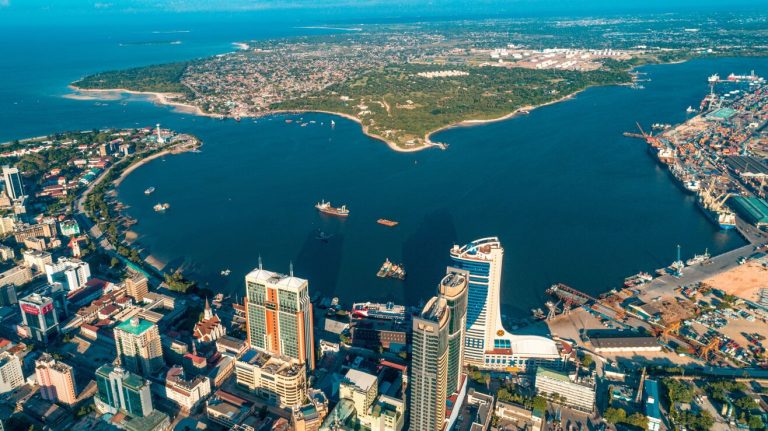
Zanzibar is an island of many unforgettable scenes and experiences.
From the winding alleys of historic Stone Town to the soft-sand beaches, colourful coral reefs, dolphin pods, and neat seaweed farms tended by ladies in bright dresses, Zanzibar Island is a destination with an embarrassment of riches.
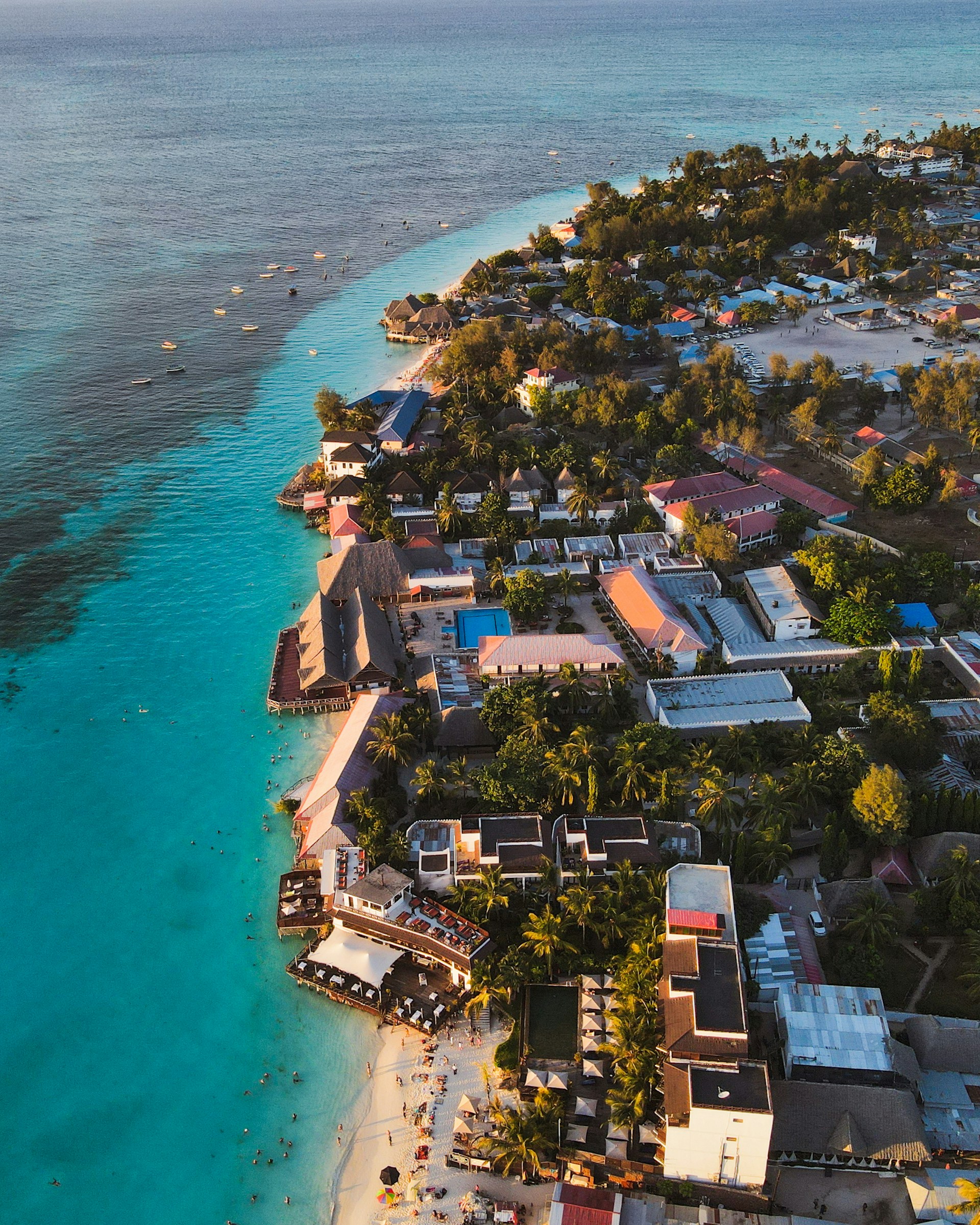
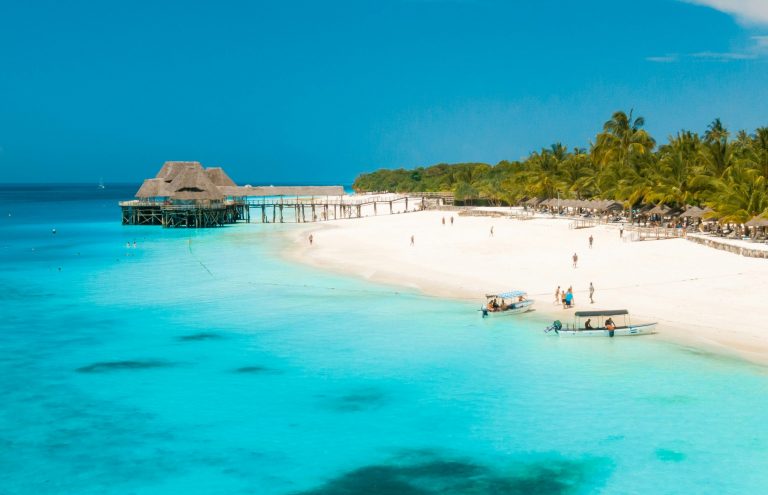
One of the main reasons for its popularity is that it offers the quintessentially relaxing tropical island getaway. For many, a visit here is simply about sun and surf – gentle sea breezes and waveless, warm shallows offer respite from urban lives and cold climes. The coconut palms, vibrant hibiscus plants, and leafy sea almonds lining the beaches complete the scene perfectly.
The other main pull is that it’s one of the world’s top diving locations. Zanzibar is a biodiversity hotspot and contains some of the Indian Ocean’s most ecologically important and visually stunning coral reefs. What’s more, visitors can hope to spot various exciting aquatic animals on boat tours or from the beach even, like sea turtles, rays, dolphins, sharks, and whales.
But that’s not all there is to Zanzibar. Far from it.
Why Visit Zanzibar Island?
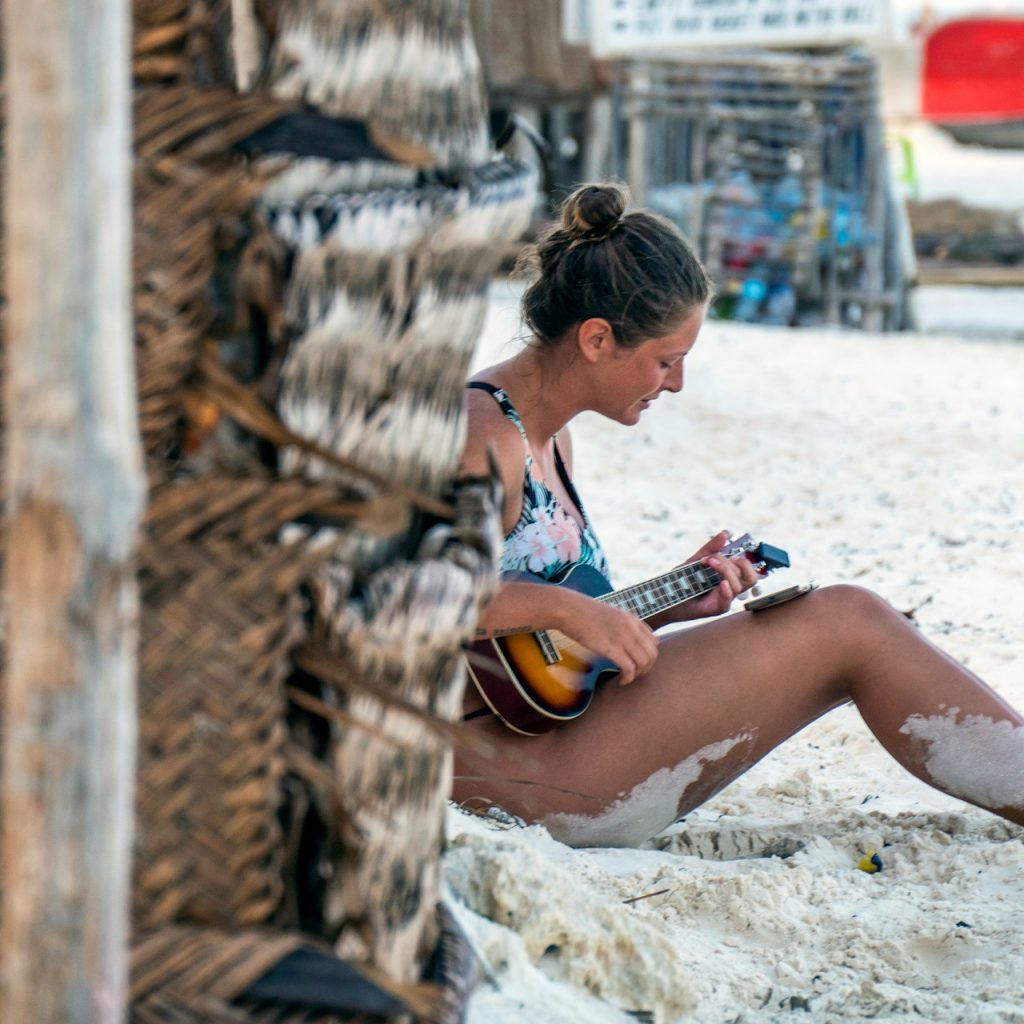
Zanzibar Island is a great destination for various sorts of people. Active types can go diving, kayaking, or hiking. Culture aficionados have historical tours, ruins, and handicraft workshops. Foodies have seafood dishes uniquely spiced. Wildlife enthusiasts have turtle nesting sites and migratory whales. And the worn-out can bury their toes in the sand and take a zizz under a palm tree.
So let’s try to cover, in brief, the many allures of Zanzibar Island …
1. Get wet and explore the island’s underwater treasures
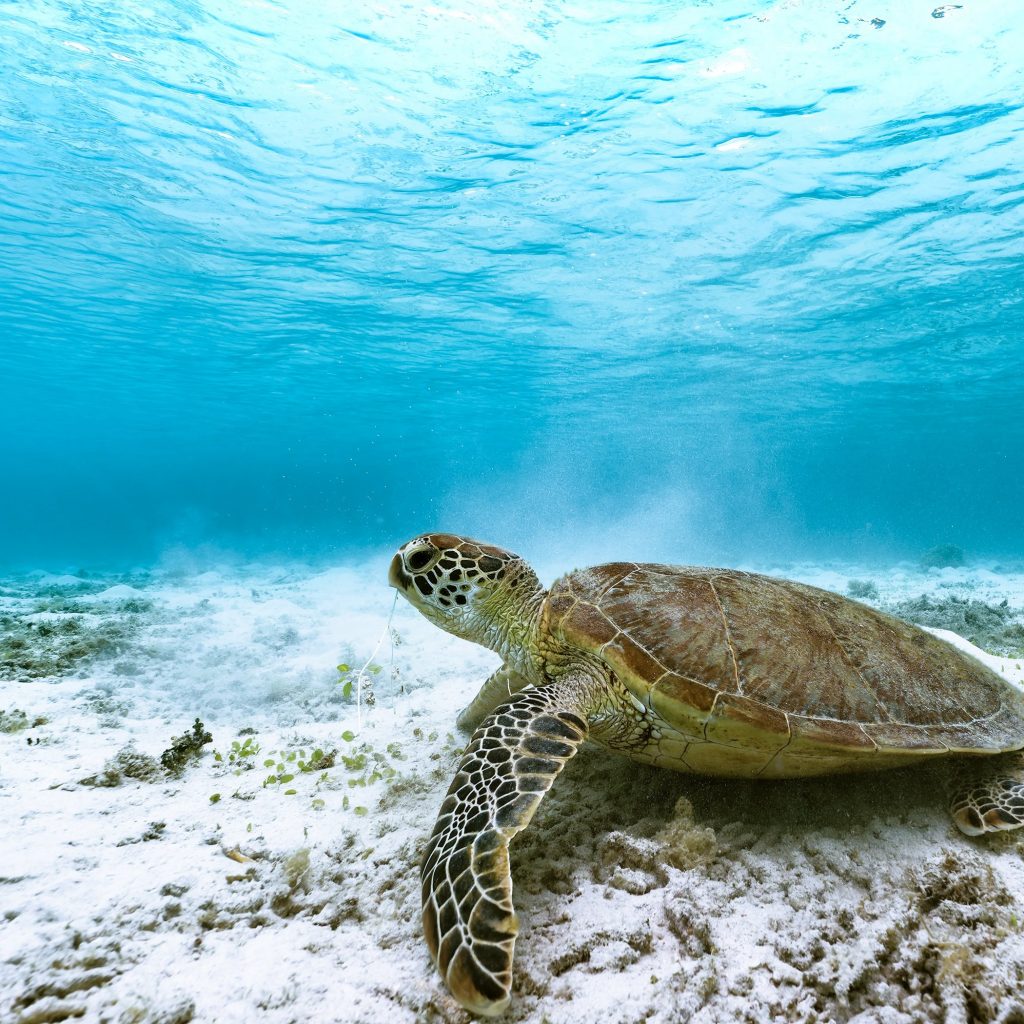
Whether you want to stick close to the shoreline with just some goggles and a snorkel, or you plan to venture further out to sea on a scuba diving day, you need to make time for what is arguably Zanzibar Island’s biggest treasure: its incredible marine life.
The island is surrounded by beautiful, diverse, and pristine marine ecosystems. These include shallow lagoons, mangrove forests, seagrass beds, fringing reefs, barrier reefs, coral patch reefs, and atolls like the heart-shaped Mnemba Atoll. These myriad habitats absolutely teem with life, including endangered green and hawksbill turtles, whale and reef sharks, and blue-spotted ribbontail and spotted eagle rays.
When exploring the reefs, it’s common to spot clownfish, butterflyfish, angelfish, parrotfish, lionfish, and pipefish, among others. You’ll also be delighted by the various captivating invertebrates, like giant clams, sea stars, sea cucumbers, and colourful anemones.
Intermediate divers often head to Chumbe Island Coral Sanctuary, where you find an exceptionally pristine reef system of soft and hard corals, reef fish, and nudibranchs, as well as dramatic drop-offs and overhangs. Advanced divers love Leven Bank, which offers deep drift diving and a chance to see pelagic fish.
2. Head out on the water – kitesurf, whale spot, boat to Prison Island, and more

Zanzibar is heaven for watersports. You can sail, kitesurf, jet ski, paddle in transparent kayaks, cave swim, and more.
If you head to the south of the island, there are dolphin tours where you head out to sea to look for bottlenose and Indo-Pacific humpback dolphins. I would encourage you to research and select the more ethical operators – those that don’t try to draw too close to the dolphins. Let your guide know you don’t want to risk bumping or disrupting the pods.
Whale outings take place from various points around the island and mostly focus on finding humpbacks, though if you head further out to sea, you might be lucky enough to see sperm and melon-headed whales.
You might also like to hop on a boat to visit nearby Prison Island, which is surrounded by beautiful coral rag forest. The island is named for the prison that was built there in the 1890s but never used. Today, its main inhabitants are duikers (small antelopes) and Aldabra giant tortoises. You can snorkel the island’s coral reefs and then enjoy lunch on a sandbar. You’re rewarded on the return trip with a picture-perfect view of the historic buildings lining Stone Town’s promenade.
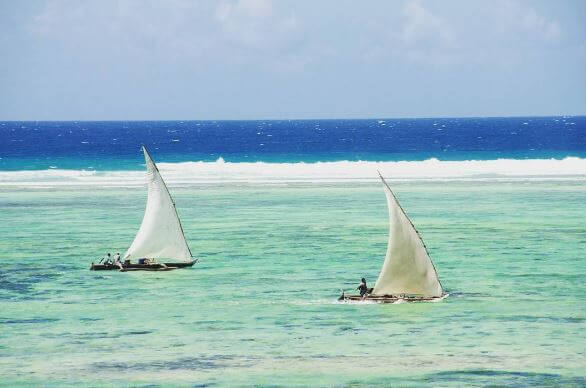
A great way to spend an afternoon is to take a dhow cruise from Nungwi Beach in the north. The cruises take place on dhows, which are traditional sailing boats, and usually last two to three hours. You can expect to slide into harbour around sunset, as it should be.
3. Explore Stone Town – bazaars, walking tours, workshops

Stone Town was once one of the Swahili Coast’s most prominent port cities thanks to its strategic position within the wider Indian Ocean maritime network. Over the centuries, the city became a melting pot of different peoples, languages, and cultures from East Africa, Arabia, India, and Europe. This unique heritage earned the city UNESCO World Heritage status.
Today, it’s a rewarding experience to wander Stone Town’s labyrinthine lanes, either on a guided tour or to get lost.
During your stroll you’ll find hefty and intricately carved wooden doorways that seem to promise many stories of yore if only they could talk. There are also plenty of invitingly shadowy little clothing and souvenir shops to visit, and bazaars to browse.
If you like pop culture, look for the surprising Jaws mural on the corner of Cathedral Street. Then visit the Freddie Mercury Museum, which pays homage to the island’s most famous citizen.
You can also do a guided tour of the ruined Omani fort and nearby slave sites, which tell of a dark but not-to-be-forgotten chapter in the island’s history.
Finally, know that various artisans and cooperatives – both in Stone Town and elsewhere in Zanzibar Island – offer a range of workshops teaching traditional skills. Choose between dhow-making demonstrations, basket-weaving, Tinga Tinga painting, kanga fabric painting, beaded jewellery making, and more. Such experiences offer a vital form of income for artisans, whilst also letting you go home with a meaningful souvenir you made yourself.
4. Enjoy food markets, courtyard coffee, and a rock-top restaurant

Zanzibar’s dining scene is known for three things: arabica coffee, excellent seafood, and lots of spice.
While in Stone Town, be sure to visit a baraza (social courtyard) or café to witness a traditional coffee ceremony.
Head to Forodhani Gardens by the promenade one evening to enjoy the night market. To the sound of live music, you can try specialties like spicy seafood kebabs and dessert pizzas.
Then, travel to the Rock Restaurant located off Michamvi Pingwe Beach on the east coast if you have time, as this iconic establishment sits atop a rocky outcrop that’s cut off from the mainland during high tide. A little boat ferries guests to and fro when the tide is in.
Finally, please note that you can sign up for various cooking classes while in Zanzibar – I can’t think of a more culturally immersive experience than this.
5. Venture inland – hikes, wildlife, butterflies, and spices
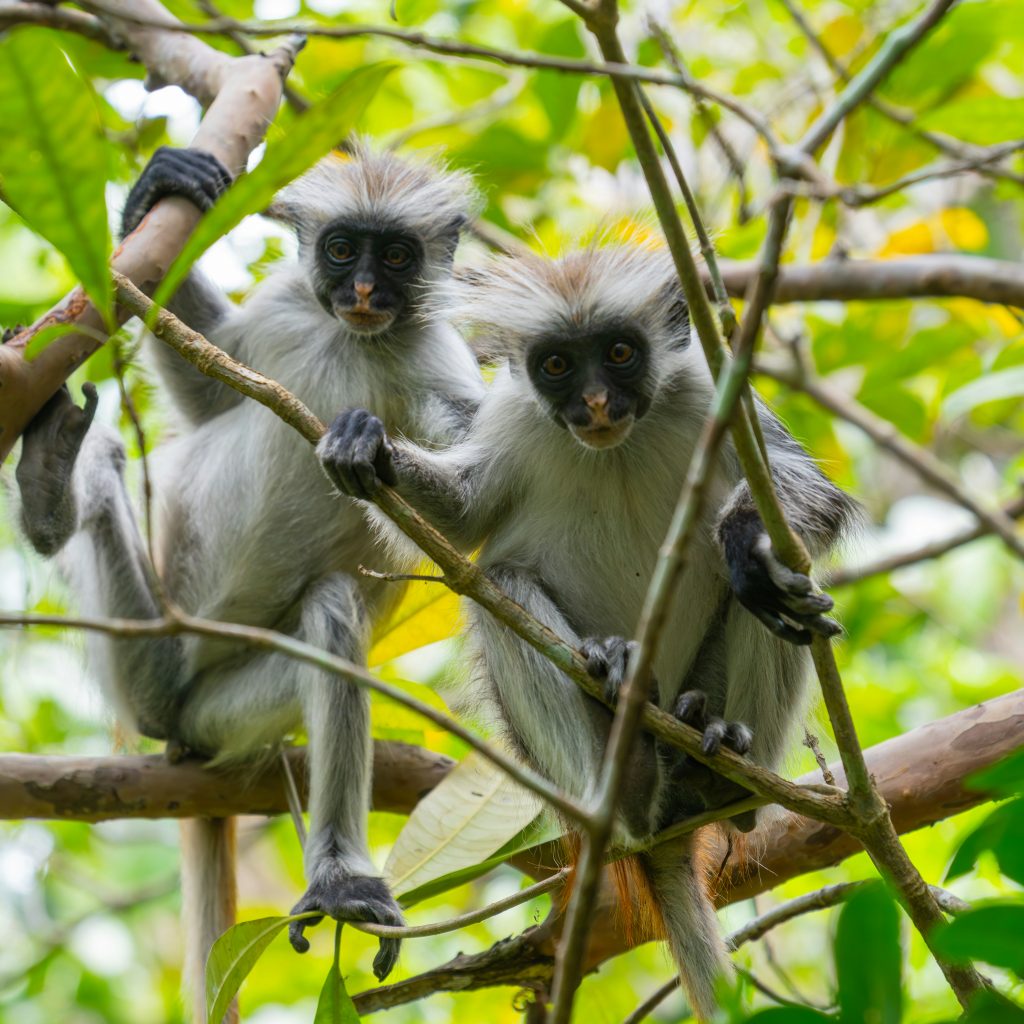
Jozani Forest in the southeast of the island has a network of forest trails where you can find monkeys, tiny antelopes, and over 200 species of birds. You can choose between short strolls and a half-day hike. Excitingly (at least in my opinion), the trails become a boardwalk when you hit the mangroves of Chwaka Bay.
Some of the rarer wildlife to look for during your walk are endangered red colobus monkeys and Ader’s duikers. Also be sure to have your binos with you so you can do some quality birding. Look for the likes of Fischer’s turacos, Zanzibar red bishops, somber greenbuls, African pygmy kingfishers, and golden-tailed woodpeckers.
Most people pair their trip to Jozani Forest with a vist to the nearby community-run Zanzibar Butterfly Centre in Pete village. Here you can wander around in a large netted tropical garden to admire the 20 butterfly species it protects. It’s a great venture to support, as it’s run by mostly women and provides income to the locals who farm butterfly pupae.
Another popular interior activity is a spice farm tour. Spices like cardamom, clove, and cinnamon have long been integral to the Zanzibari economy, even earning it the moniker The Spice Island. On a spice farm tour, you’ll do plenty of smelling and tasting when learning how the spices are prepared and used in traditional dishes.
6. Explore the coastline – kayak, visit a seaweed farm, look for turtle nests
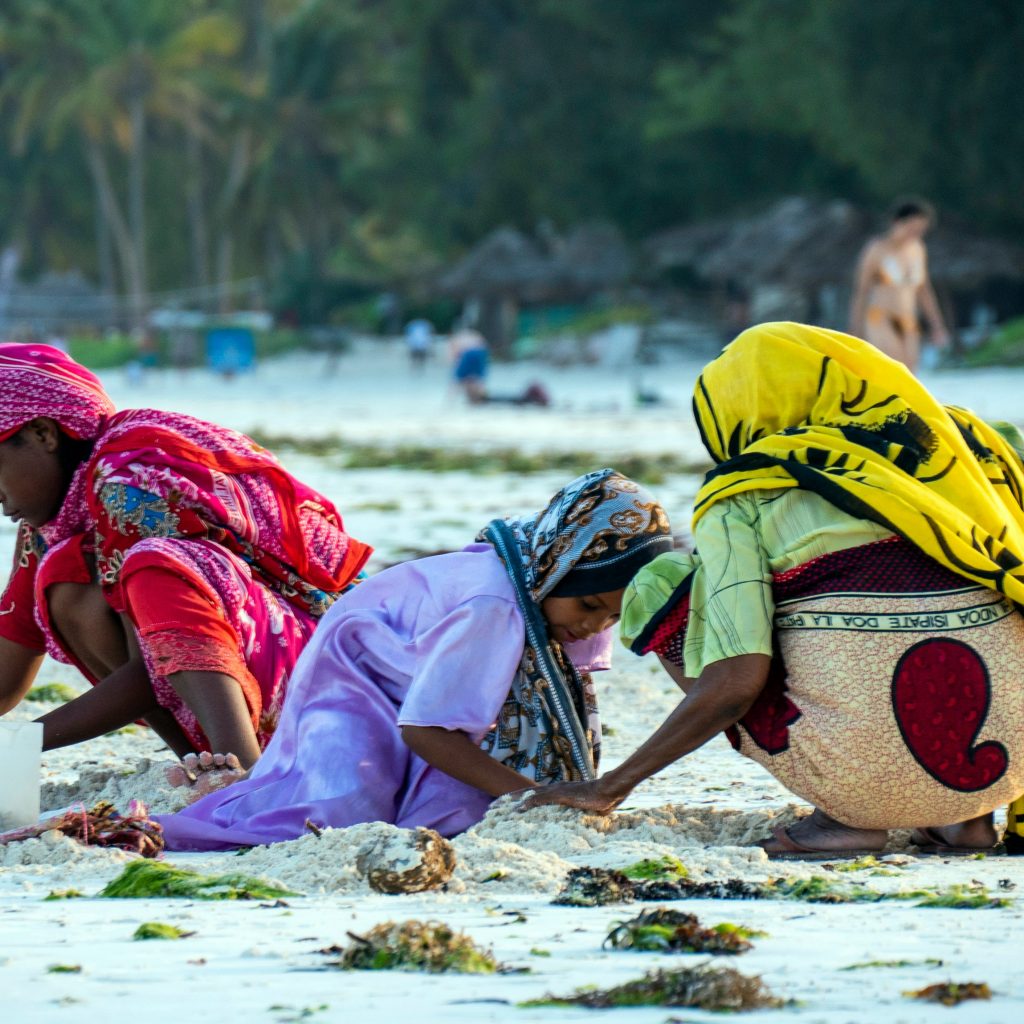
One of the very best experiences on offer in Zanzibar, in my opinion, is kayaking. There are many isolated coves and rocky bits of shoreline you can only really explore at leisure in a kayak. You can also wend your watery way through the mangroves of Chakwa Bay and elsewhere. This lets you leave the bustling tourist spots and experience an entirely different side of Zanzibar Island.
I also encourage you to stop by Paje Beach on the east coast, where you will, in season, find women tending the seaweed farms in the shallows. Many thousands of Zanzibaris (primarily women) earn their living through seaweed farming, which is a highly sustainable industry. Be sure to visit Paje’s Mwani Seaweed Centre, where you can see the seaweed being turned into top-drawer skincare products.
Finally, there’s a sea turtle sanctuary called Mnarani Marine Turtles Conservation Pond at the northern tip of the island. Begun in the 1990s by local villagers, different species of sea turtle are protected here within a natural tidal pool. Visitors are welcome, and you can learn about the important conservation efforts underway to protect these endangered animals.
Ready to visit?
So there you have it. There are many, many compelling reasons to visit Zanzibar Island. And even if you and your travelling companions don’t like all of the same things, there’s something for everyone. Would you like to include Zanzibar as part of your overlanding trip with African Overland Tours? Check out these exciting Tanzanian packages that include Zanzibar Island.
Note: This blog post was rewritten on 15 December 2025.