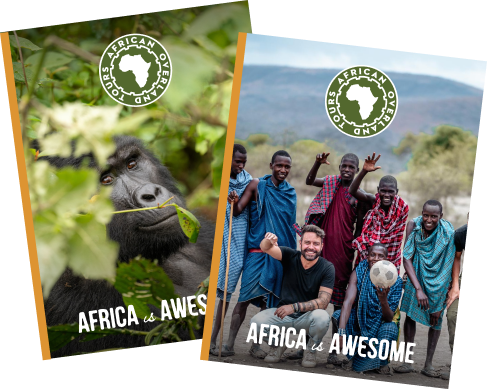
Be sure to book a walking safari in Africa to enjoy a very different sort of wildlife experience
When someone says the word safari, we usually picture people being driven across the savannah in a 4×4. Safari game drives are wonderful, as they let you safely cover much ground and see a variety of wildlife. But they’re not the only type of safari experience on offer. There are also boat safaris, hot air balloon safaris, and walking safaris, among others.
Each safari type has its own unique attractions. But walking safaris are my favourite. Also called nature hikes or bush walks in certain contexts, they tend to be more immersive, the wildlife encounters more intimate, and you learn so much in ways that really stick.
If you’re unfamiliar with walking safaris, or aren’t convinced they’re for you, here are three compelling reasons to include a walking safari in your visit to Africa …
1. Walking safaris are sensory and immersive
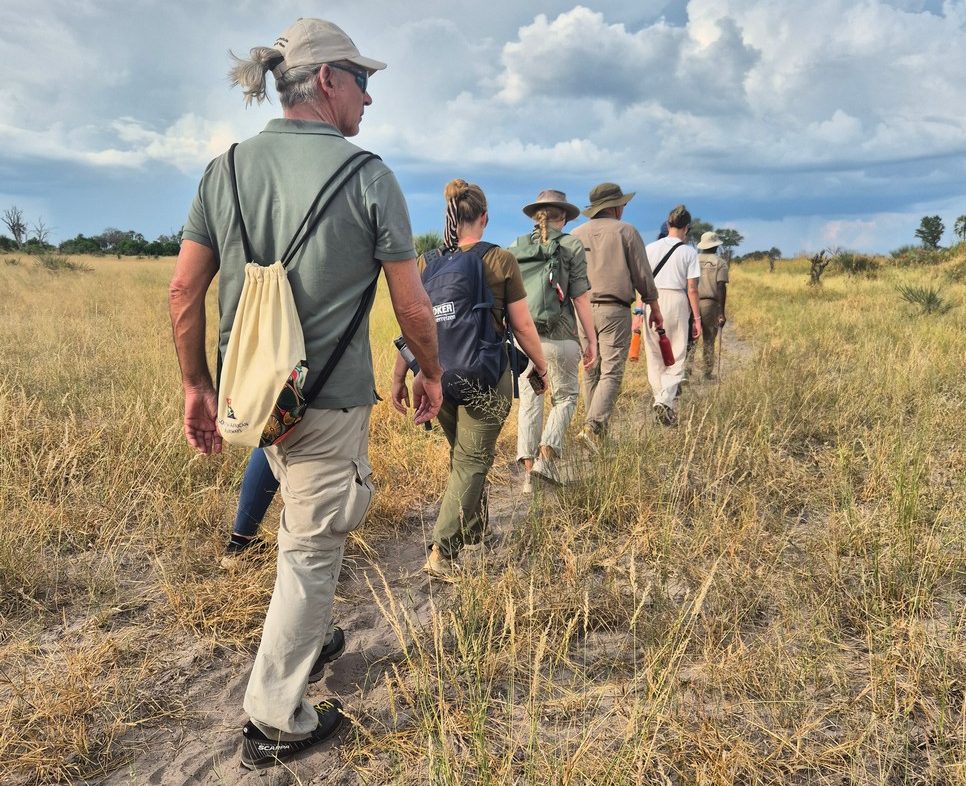
On a walking safari, everything slows down. There’s no rushing off to another site because someone on the radio has called in an exciting find. Rather, you choose a location and with that comes freedom – freedom to simply be present where you are and see what unfolds.
A walking safari is also the most sensory sort of safari experience. For starters, you walk quietly, noticing the smaller sounds of nature, like leaves moving in the breeze, insects chirping, and birds calling. You also, of course, listen for sounds from larger wildlife, like grunts or barks, that can guide you to nearby animals.
Then there are the many smells to appreciate on a walking safari. With fumes gone, and your position nearer the ground, you notice scents like dewy grass, ripe vegetation, flowers and berries. Sometimes you also smell the animals themselves, their dung (faeces), and maybe even a rotting carcass.
For various reasons, you shouldn’t touch anything on a safari, not even the plants, without your guide’s go-ahead. But when given the okay, it’s wonderful to touch different objects and so experience the habitat in a tactile way. Especially as certain things can often surprise you. For instance, there’s the bark that’s astonishingly cool to the touch, the dewy-looking petal that turns out to be very dry, and the leaf that oozes sticky milk when broken.
Finally, you might sometimes be invited to taste a berry or herb, chew on a piece of grass, or suck the nectar from a flower if you’re lucky.
2. You draw closer to wildlife
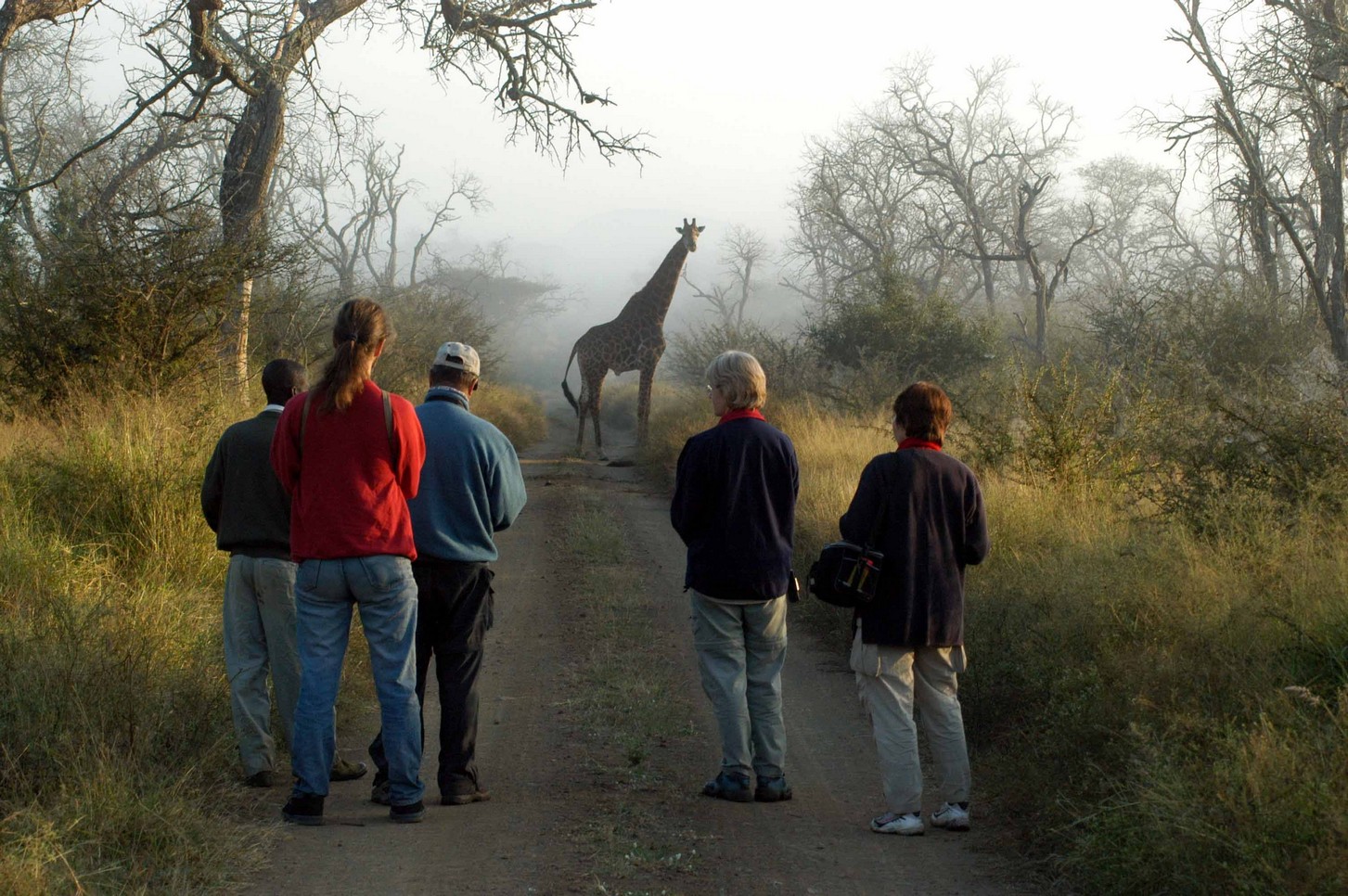
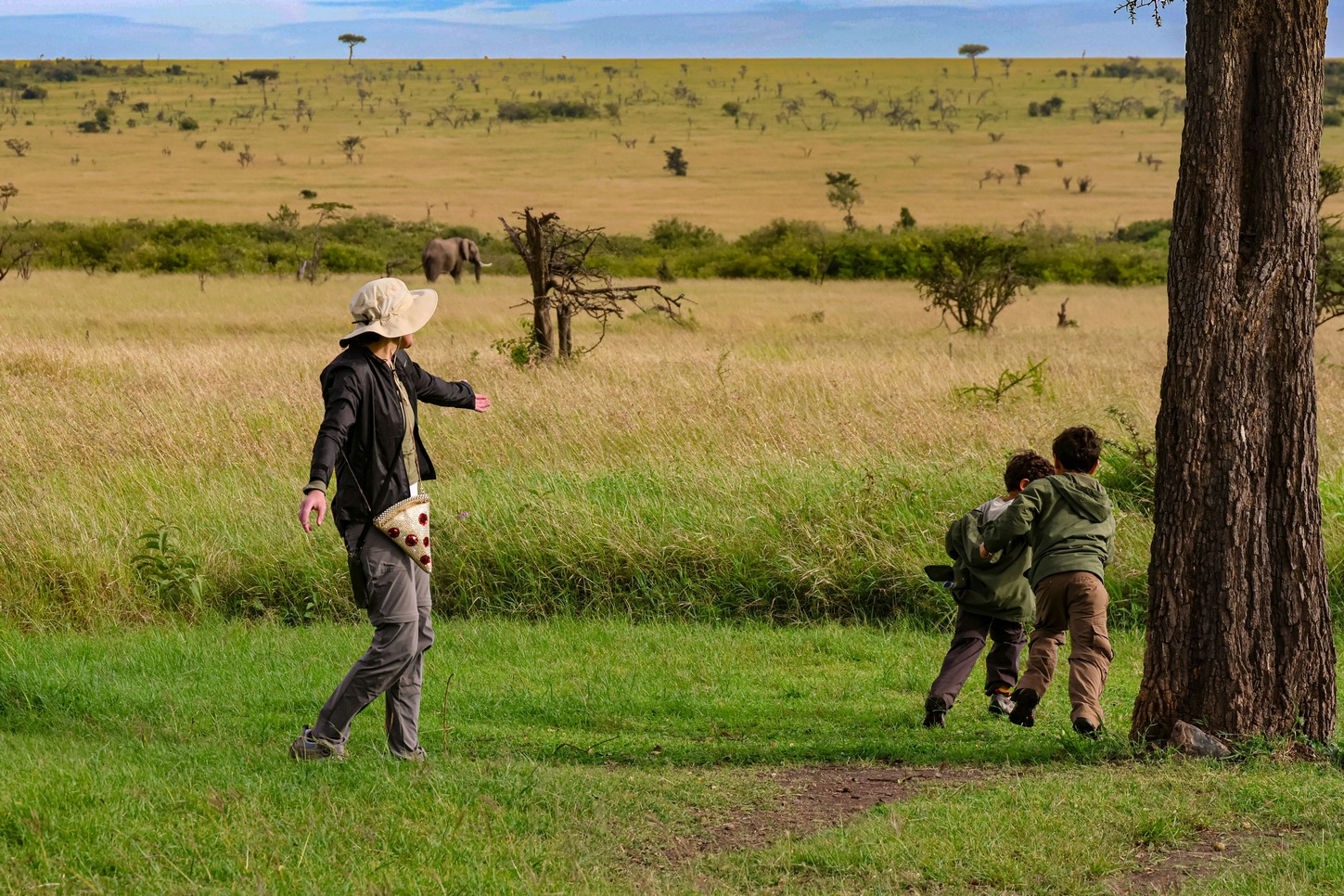
A walking safari lets you move quietly through the landscape, so you’re often able to draw closer to the wildlife. Especially the shy types, and those that startle easily, like from the rev of a motor.
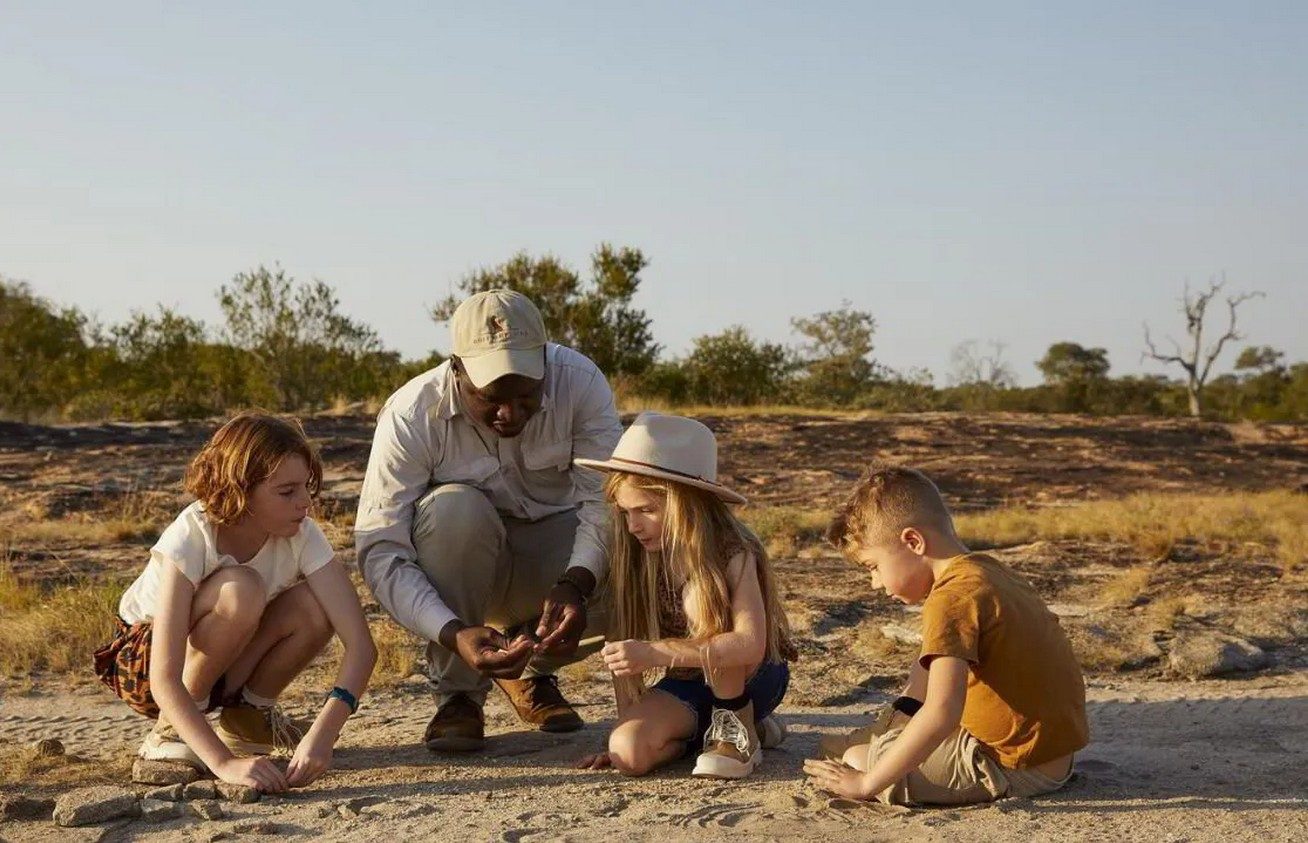
As a walker, you also approach animals from a lower angle. Sometimes you might even crouch down, perhaps to see the small ones at eye level. This not only lets you appreciate them from a different angle, but also allows you to understand the surrounding habitat from their perspective.
You also stand a chance of noticing the really little guys and those that are well-camouflaged, like shrews, beetles, and chameleons. You’re able to appreciate how much more life the ecosystem actually supports.
You also see more detail on a walking safari. This might be the shape of a hoof, the texture of fur, or how scales overlap. And then there’s the vegetation. You can eyeball those thorns in a way that really drives home their formidableness. And you can photograph individual blooms, bark patterns, and unusual lichens.
A walking safari also lets you stand still, or sit, for a space of time, and this helps you to notice any movements around you. Animals might sometimes even eventually move towards you, which is always thrilling. Birds too might flit or hop into view. So always pack a pair of binoculars on a walking safari.
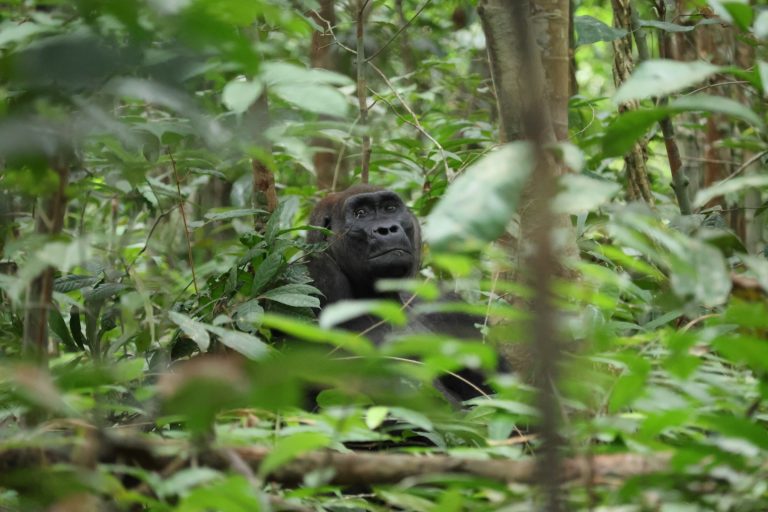
Finally, I must say that walking safaris are one of the best safari activities for very intimate animal encounters. Indeed, certain wild animals can only be approached on foot. A prime example is mountain gorillas. You need to trek into their dense mountain jungle home to find them. Moreover, once you’ve found a troop, you settle down relatively close to them. Often close enough to look into their eyes and feel the sort of connection that’s unique to walking safaris.
3. You learn so much, like how to track wildlife
Walking safaris are incredibly educational. And we all know that what we experience stays with us far longer than what we’re told.
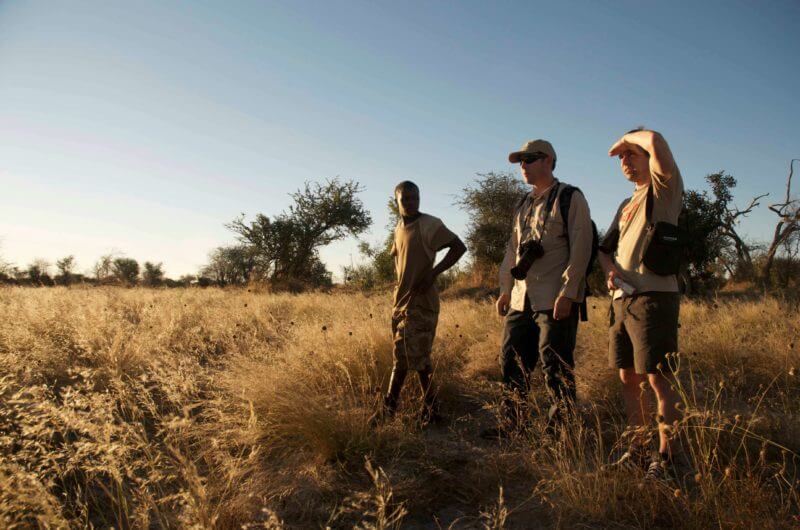
On a walking safari, you can expect to not only look at wildlife, but also examine the evidence of wildlife. So you’ll pause to examine spoors (animal tracks), carcasses, dung, broken twigs, ripped bark, flattened grass, and more. You’ll also peer into burrows, nests, tree hollows, and the like. It’s amazing the range of information we can acquire from each, and the stories they tell. Or rather, I should say, the stories they prompt your guide to tell. Because a good walking safari guide is a storyteller, able to help you connect little details with the bigger picture.
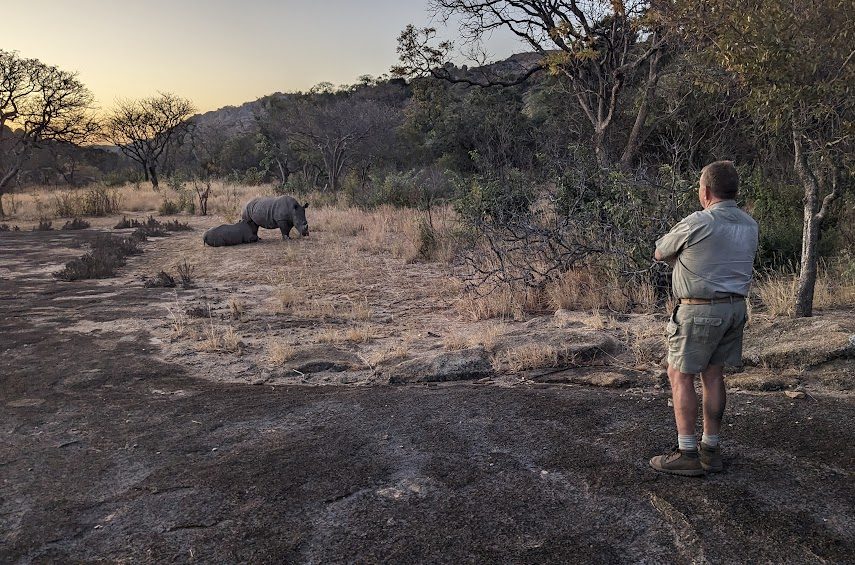
Then there are specialised walking safaris, where you literally track a particular species. This is what you do on a gorilla or chimpanzee trek, for instance. But there also walking safaris that relate to specific savannah animals, like the rhino. This is usually the case where a wildlife reserve has a mandate to focus on the conservation of a particular species.
In such cases, you can join a tracking expedition, which usually involves a guide, ranger, and perhaps a scientist or conservationist. En route you’ll be taught how they find, tag, and monitor the wildlife. And you’ll learn about the challenges they face, from tricky terrain to finding a wily species that wishes to stay hidden.
The highly immersive nature of walking safaris means they’re experiences that stay with you always. I hope you’ll do yourself the great service of booking at least one walking safari on your visit to Africa. You’ll be so glad you did.
Note: A version of this blog post was first written by Sarah Duff in 2013. It was rewritten by Megan Abigail White in 2026.
Just because something is permissible doesn’t mean it’s ethical Africa is the most popular continent for wildlife encounters. Not surprising! There are many iconic species here that you can’t find elsewhere, like bush elephants, black rhinos, giraffes, hippos, and chimpanzees.…
So you’ve finally booked that African overland tour you’ve been dreaming of. Your bags are packed and your head is filled with the prospect of exploring the continent’s misty rainforests, vast savannah plains, and glorious tropical coastlines. Whether you’re a…
Let’s discuss the main differences between East African and Southern African safaris to help you choose the right destination for you Both East Africa and Southern Africa offer varied and thrilling African safari experiences. You can find a wonderful variety…