































Other information
What are adventure tours?
If you’re a traveller that loves adventure, and you want to immerse yourself in African nature and heritage, our camping and exploration tours are what you need. You will see the beauty of the African landscape and enjoy the hospitality of local residents while travelling on our trips. You will also meet a fantastic group of people who go with you on your tour groups. If your fitness level is excellent, and you are attracted to trekking through dense forests to see mountain gorillas and travelling long distances with nothing to see but a never-ending landscape, then an adventure tour is for you.
What does a typical day look like?
Every day on an adventure tour will give you a new and exciting experience. You will learn fantastic things, like cooking scrumptious meals over a campfire and setting up camp if you don’t know how to do so already.
What you can expect from a camping or accommodated overland tour is an early morning wake up call. You’ll enjoy the breathtaking sights of an African sunrise while sipping on a warm cup of tea or coffee. You’ll have some breakfast before packing up the campsite or checking out of your accommodation if you’ve chosen the comfort traveller package. We’ll then hit the road as a tour group, where you can see the best of nature that Africa has to offer.
On short travel days, we usually arrive at the campsite in the afternoon to enjoy lunch and a planned afternoon activity, such as hiking or a guided nature walk. You can choose to either rest and have a relaxed afternoon or take part in the scheduled activity, which could be a nature walk or a hike. A fantastic aspect of short days is enjoying the sunset – a sight you will find quite memorable. As soon as evening comes, we sit around the campfire as a group to enjoy a hearty dinner and great conversation.
We do our best to arrive at a scheduled destination on time. However, delays can happen. These delays could be caused by wet weather conditions or slow travel as we navigate through tough terrain. Your safety is top of mind for us, so if we delay travel time, we do so to ensure the safety of everyone. Our overland safari vehicles are comfortable and spacious, with enough space for your luggage. All you need is a high level of stamina to power through the long and often bumpy drives from one location to the next.
What type of vehicles do we use?
We drive custom-built and self-sufficient overland trucks on our tours. They are spacious, being able to accommodate your luggage, and safe to navigate through rough and rugged terrain. Our vehicles have large glass windows and comfortable seats with ample leg room. When we need to drive through narrow terrain or on uneven roads, we use smaller 4×4 vehicles.
Distances and road conditions
We want you to enjoy the beautiful natural surrounds of Africa, with nothing but blue skies, warmth and a never-ending landscape while on vacation with us. We do this by covering long distances on our tours, often spending many hours on the road. You can expect a drive of between 350 kilometres and 650 kilometres a day. Bear in mind that we will be travelling mainly on gravel roads or fairly poor tar roads and these will ultimately define the pace.
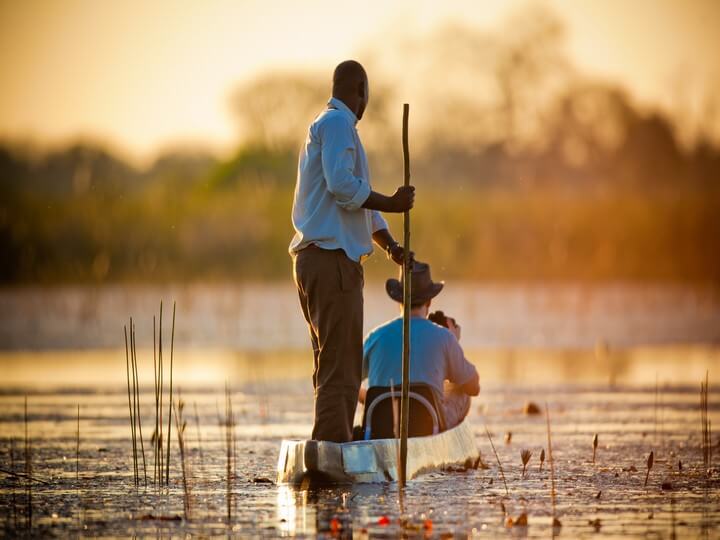
More detail about our overland vehicles, 4×4 safari vehicles, ferries, minibuses, and mokoros
We have an array of safari vehicles to suit specific group sizes and tours. Our vehicles range from large overland tour trucks to 4×4 safari vehicles and minibuses.
We make sure to maintain our vehicles at our workshops regularly to minimise breakdowns on the road as a safety precaution. We aim to avoid breakdowns at all costs; however, the occasional breakdown can happen while en-route on a trip.
Our overland trucks do not have an air-conditioning system, but they have windows that you can open for fresh air. Each seat in the vehicle has a power socket with a UK/Kenyan 3-prong outlet to charge your electronic devices.
We spend long hours on the road, so when you book your tour, we’ll provide you with the approximate time and distance of the journeys we cover. This information will help you to choose a tour that you would be comfortable doing. Please bear in mind that wet conditions will increase the travel time.
Travelling on a group trip
We understand that group travel is exciting for some while daunting for others. You can be sure that you’ll enjoy an overland safari tour with travellers of different ages and nationalities. Think of it as expanding your social network to make it a memorable experience.
Please note that for privacy reasons, we cannot provide you with details of your group members before departure.
A group will have different personality types, preferences and needs, so please be mindful of navigating the social dynamics with respect and an open mind.
Please make sure that you arrive on time to start the itinerary of the day. Punctuality is respectful to your group members and the tour crew, and it ensures that the tour moves as scheduled.
We design our group trips for shared accommodation, which don’t involve a compulsory single supplement. Same-gendered single travellers will share accommodation, including twin rooms or multi-share dormitories. Accommodation on some of our group trips is booked on a shared mixed gender basis. If you are unsure, please ask your sales consultant for details of accommodation on your chosen tour.
Some trips allow you the option to get private accommodation by booking and paying a single supplement if it is available. The single supplement option only applies during the tour. We will reserve a single room for your pre-trip and post-trip accommodation.
What about children on tour?
The minimum accepted age on our overland tours is 18. We will consider travellers between the ages of 12 and 17 depending on the tour, time of travel and tour availability. Age limits for privately-arranged charter tours will also be assessed based type of tour you choose and the route.
We offer family departures on selected tours, and these are better suited for children aged 12 to 17. The age limit for gorilla trekking tours is 16.
General rules
For the safety of all travellers, we will not tolerate any form of violence (verbal or physical) or sexual harassment between or from travellers or involving our partners, crew or local residents.
We don’t tolerate the use or possession of illegal drugs on our trips. We encourage you to drink responsibly should you choose to consume alcohol during your trip. Please abide by local laws governing alcohol consumption.
We strictly forbid any sexual relations between members of our tour crew and travellers.
We do not tolerate the patronising of sex workers on our tours as this exploits vulnerable communities and undermines the development of sustainable tourism in Africa.
Please note that you agree to adhere to these rules if you travel with us. The tour leader has the right to remove any group member for non-adherence to any of these rules, with no right of refund.
Please let your tour leader know should you feel that any group member is misbehaving while on a trip. You can also contact our emergency number provided in the “problems and emergency contact” list.
Responsible travel
We believe that it is crucial to minimise the negative aspects of tourism on the local communities and environments that we visit. We always strive to highlight positive aspects and contribute in a meaningful way to the communities and habitats we interact with. Our website has more details on how you can be a responsible traveller.
Important touring tips
Please take note of these essential touring tips:
- The itinerary is subject to change as we go through the tour, please view the itinerary as a guide ONLY.
- Each tour has a vibrant mix of people of different nationalities, heritage and age.
- Please ensure that you carry light luggage as space in our trucks is limited.
- We create the tours in a circular route, meaning that where one journey ends, another begins.
- You won’t have high-end, 5-star luxuries on these tours – you will have an experience of living and working with basic necessities.
- Most countries in Africa, including Kenya, Uganda and Botswana, have banned plastic bags. Please don’t pack these with your luggage to avoid receiving a fine from authorities.
- If you are booking 45 days ahead of the departure date, we will need to confirm the availability of a gorilla permit.
- We can only offer a single supplement if it is available. Please speak to your consultant if you have queries on booking single supplements.
Cape Town water shortage
Cape Town has experienced water shortages due to a severe drought. The city’s municipality reduced the daily water quota to 50 litres. There is a sufficient amount of water for travellers’ essential daily needs, such as personal hygiene and using the toilet.
According to the city’s guidelines, shower times should be no longer than 2 minutes, and using baths is discouraged. Some hotels are using ocean water in their swimming pools, and restaurants have removed meals that require the use of lots of water during preparation from their menus.
Please consider the shortage when planning laundry days within your itinerary. We advise that you follow the water usage instructions of our local suppliers in the city.
DETAILS ABOUT WHAT YOU CAN EXPECT ON A CAMPING OR ACCOMMODATED TOUR
Camping tours
If going on an African safari adventure to get the full experience of Mother Nature is high on your bucket list, you need to come on a journey with us to enjoy a night’s rest under the stars while listening to the sounds of nature. Don’t underestimate the strength and stamina that you’ll need for a camping safari – an excellent level of fitness will keep you going.
Our camping safaris are better suited for travellers who may prefer to travel in a younger group with an age range of between 18 and 39. You can also choose to travel in a mixed group aged between 18 and 60. We’re more than happy to help you decide on the best tour to book.
During your tour, you will stay in sizeable two-person dome canvas tents which are spacious and can accommodate each person’s luggage. You can also opt to have a private tent, including the single supplement, which is valid on select camping tours.
Your tour leader will teach you how to put up and take down your tent if you’re unsure how to do so. All tents have a door and a window for ventilation. They also have a mosquito net covering and a fly-sheet for the rain. Most camping safaris include a sleeping mat, but please check with us to make sure of this inclusion. Items that you will need to bring include; a sleeping bag, pillow and towel.
The campsites are basic and comfortable, and you will be able to upgrade your accommodation at most of the places we cover if this option is available. Some campsites have flushing ablution and showering facilities, while others offer natural ablutions and makeshift showers. A temporary shower is usually a hosepipe that spurts out cold water. It’s also common for most ablution facilities to not offer toilet paper.
Each tour route is different, so the type and variety of accommodation will be dictated by the route. Some routes have a mixture of campsites and wild camps, while city and town routes have hotels. When we stay in cities and towns, we enjoy local cuisine at the surrounding establishments.
We occasionally stop for a night’s stay in the grounds of a hotel or at a campsite where rooms or cabins may be available. In this case, you could have a choice of camping or upgrading to a room, but please bear in mind that a room cannot be pre-booked. Rooms costs range from US$60 to US$120 per room per night for a twin room. The standards of these rooms vary, so we recommend that you view the room before purchasing the night’s accommodation. The day-by-day itinerary offers advice when upgrades may be possible. These upgrades are subject to availability. Please keep in mind that if we are staying in dormitory accommodation, you’ll need to share these rooms with other travellers of the same sex.
Your tour crew will do most of the work, including driving, cooking and making sure that the trip runs as smooth as possible. We will require you to help with chores on the campsite. Chores will be assigned to group members based on a roster that you and your tour leader create. These chores include helping with food preparation, grocery shopping, washing the dishes, setting up the campsite and your tent, and cleaning out the truck.
Accommodated Tours
If you want to have extra comforts while experiencing the best of African wildlife, then an accommodated safari tour is for you. On these safaris, you can enjoy the surrounds of vast landscapes and the sights of wildlife roaming at your door-step.
We use a variety of accommodation located at each destination for these safaris, including hotels, lodges and permanent safari camps along with more basic accommodations such as bungalows, traditional huts or chalets .
If you’re travelling in pairs, we book a twin room for you. Single travellers get single rooms, including a single supplement. Most of the time in the Southern African region, we stay in one to three-star properties with en-suite bathrooms. Properties in this region are more established and comfortable. Eastern Africa accommodation has en-suite bathrooms and shared bathrooms. Properties in this region range from basic to reasonable and convenient. Overall, accommodation choices are limited because of the remote nature of our tours. This limitation means that you can expect an authentic outback experience.
What will you eat on safari?
Our safari tours will allow you to be creative with food shopping and preparation. You can also learn how to cook great tasting food over an open fire or on the gas stove supplied in the truck.
We stock our vehicles with dry goods at the start of each tour and buy fresh fruits and vegetables daily while on tour. Fresh produce might not always be available during the hot summer months. During this time, we become creative with what we have, like substituting potatoes for rice.
Each camping and accommodated tour includes meals as per the itinerary. We offer breakfast, lunch and dinner, and you have the opportunity to enjoy some local cuisine at available markets or restaurants. Tea is served along with coffee and fruit juice with meals, and you can buy alcohol, soft drinks and bottled water at the campsite bar or local stores we find en-route.
We cater for most dietary requirements, including allergies, vegetarian, and lactose intolerance. Other requirements such as gluten-free may be more challenging on remote routes in destinations where starch is a staple food. Please inform us about your specific dietary requirements so that we can advise.
We prepare our meals over an open campfire or on the overland vehicle’s gas stove. All cooking equipment is provided, including pots, pans, cutlery and crockery. We maintain excellent hygiene standards at all times during food preparation and when washing up kitchen equipment. Your tour cook will provide you with a separate washing basin filled with warm, soapy water so that you’re able to wash your hands before and after each meal.
For breakfast, you will enjoy some toast with spreads, cereal, or eggs, pancakes, and tea and coffee. Lunch consists of a sandwich with a healthy salad and assorted fillings, sometimes fruit. There are also opportunities to enjoy local cuisine while on a trip.
Dinner consists of a BBQ, rice dish or a pasta dish, or local cuisine from a market or restaurant.
Treated water that’s safe to drink is available on our overland trucks. We would prefer if you use this water over buying bottled water to minimise plastic waste. Your crew leader will use this treated water for cooking and providing drinks such as tea and coffee at meal times.
When you choose to book an overland trip, this includes your participation in a camping tour. On this tour, you and your group members will be assisting the crew leader with meal preparations. You will also help with grocery shopping. Your designated crew leader will come up with meal ideas and quantities needed for large groups. Your crew leader will draw up a duty roster so that everyone in the group rotates based on the different chores that need to be done. This chore rotation is mainly for groups with 5 to 6 people.
PREPARING FOR YOUR TOUR
Pre-tour accommodation
Please arrive a day before the start day of your tour to catch all the pre-departure meetings. We cover the essential information that you need to know about your trip. Please let us know beforehand of your pre-tour arrival so that we can make the best possible hotel reservation for you.
Packing for your tour
Packing for your tour depends on the trip style you have chosen, the countries you are visiting and seasonal times you are travelling. In general, we recommend that you pack as lightly as possible. Make sure that you can carry and lift your luggage, as well as walk with it for short distances.
We recommend that you carry your luggage in a backpack or an overnight bag that has a shoulder strap. These types of bags are convenient to carry. You’ll also need a smaller day bag to take things like a water bottle and your camera.
Each overland vehicle has a passenger safe where you can keep essential items such as money, passports, flight tickets, and credit cards. Your tour leader holds the keys for safekeeping, and they will advise of safety requirements that are in place concerning the safe.
Below are more helpful tips on what you need for your trip.
Essentials to bring include:
- A sleeping bag and a travel pillow: we recommend that you bring a 3 – 4 season sleeping bag as temperatures dip at night during the winter months in desert and mountainous regions. You can also hire sleeping bags with us. Please contact us 14 days before your departure if you wish to hire one.
- Closed shoes: we go bushwalking during the trip, so we recommend that you pack comfortable and closed shoes, such as hiking boots. These shoes will help to protect your feet from cuts and scratches when walking through bush and grasslands. They will also act as a protective barrier from the bites and stings of dangerous insects and animals found in this environment.
- Lightweight and warm clothing: you’ll need a mixture of lightweight and warm clothing, as well as long shirts and trousers to help protect you against mosquitoes in malaria areas. Make sure that your clothes are easy to wash and dry, and instead opt for cotton clothing over nylon and other synthetics. Cotton clothing is a lot more comfortable to wear, especially in hot weather. Please do not bring ex-military or military-style clothing and equipment. You can pack jeans, but please bear in mind that they are tough to dry, and you should avoid wearing them when trekking.
- A waterproof or windproof jacket: This is great to bring for wet days and early morning, or evening game activities when temperatures tend to be low.
- You can also pack in a warm beanie for morning and evening game drives, as well as sun protection, including a hat, sunscreen, sunglasses, and towels for personal use.
Recommended items to bring include:
- A waterproof toiletry bag: it will be useful to bring one that you will be able to hang on a nail on the back of a door.
- A good quality, high-beam headlamp or torch: these are useful for when there is no power on the campsite, and you need to navigate your way around it. Our trucks carry lamps for meal times.
- A personal medical kit: your tour leader will have an extensive medical kit, but we recommend that you bring a private medical kit with items such as mild pain killers, electrolytes, antidiarrheal medication, antibacterial gel, wet wipes, insect repellent and bandaids or plasters.
- A water bottle: we recommend a water bottle that has a capacity of 1.5 litres. Carrying a water bottle helps to decrease the amount of plastic from bottled water.
- Tech equipment: you can bring a camera with a spare battery or power bank, as well as binoculars.
Optional items to pack include:
- A sleep sheet: this will increase your level of comfort, especially if you are travelling during the hot months.
- Thermarest: this you can bring should you want extra comfort in addition to the basic camping mattress provided.
- Earplugs: this helps if you have a tent mate that snores.
- A book to read, or a journal to write down your thoughts and experiences during long drives.
- We would also recommend you bring a small bottle of biodegradable laundry soap if you’re planning on washing your clothes during the tour.
Luggage limit
We limit the weight of luggage to 20 kilograms due to the size of individual lockers available on our trucks. The size of these lockers are 26 inches long, 18 inches wide and 10 inches high.
Your main luggage will go into these lockers, which is why we recommend that you pack light in a backpack or an overnight bag. Your luggage shouldn’t be larger than the locker dimensions. You’ll be able to keep your day bags at your feet or on the overhead shelf. We also recommend that you bring a 20-30mm sized padlock to secure your locker. If you feel that the luggage limitation will be a challenge for you, please get in touch with your booking consultant.
Valuables
We advise that you keep flashy and expensive jewellery and other valuables at home to avoid unwanted attention and loss of these items. You can use your hotel safe and the safe on the overland truck to store your money and essential travel documents. You can also buy a money belt or pouch, which you can hide behind a jacket or jersey. We recommend that you have photocopies of all essential documents. Even though they’re not valid, a photocopy makes it much easier to obtain replacements if necessary.
Power
We have UK socket power outlets at each seat in our safari trucks. You can use these to charge your electronic devices while travelling. We recommend that you bring a power bank and multi-country power converters as you might need them for your electronic devices. Some campsites will have adequate electricity.
Conservative dress for women
Please note that women are expected to dress in a certain way in different locations across Africa according to the cultural customs of a specific country. In general, women travellers should opt for shorts or skirts that reach the knees and tops that cover the shoulders. If you are visiting a coastal area, it is advisable to cover up when you are off the beach.
Gorilla trek
You can expect conditions to be wet, muddy and uncomfortable most of the time when trekking through dense forests to see gorillas. You will need a pair of waterproof and robust hiking boots to prevent your feet from getting wet, and to prevent scratches from prickly foliage. We recommend that you bring protective gear for your hands, such as gardening gloves so that you will find it easier and less painful to grab onto trees and bushes when pulling yourself up the hillside. Please also pack pairs of long socks. You’ll be able to tuck your trousers into them to avoid any ants or insects getting to your ankles while we trek through forests.
Zambia dress code
Zambia has a specific dress code for both men and women that you will need to follow. Clothing items the country has listed as indecent include leggings, skirts and short that do not reach the knees, crop tops, sagging trousers, lace clothing, skinny jeans and tight-fitting dresses. If you are found wearing these clothing items, you could be fined a hefty fee or face arrest and deportation.
Plastic bag bans across Africa
Many countries across Africa have banned plastic bags. In Namibia, anyone found with a plastic bag when entering game parks is liable for a fine of N$500 or imprisonment. Botswana’s plastic ban makes the importing, trading and commercial use of plastic bags a criminal offence. The country makes exceptions for plastics that are essential for health and hygiene.
These two countries join many other African countries, including Tanzania, Kenya, Uganda and Rwanda, who have banned the use of plastic bags. South Africa only imposed a levy on plastic bags in 2004 and not a ban. The countries enforcing this ban are conducting luggage searches for plastic at border posts, so please ensure that you do not pack plastic bags in your luggage. Instead pack waterproof reusable bags, which you can buy at camping stores before you leave for your tour.
Climate and seasonal information
In general, African has warm and pleasant weather conditions. However, temperatures do dip during the winter months, so it’s essential to bring a warm sleeping bag and warm clothes to cater to these low temperatures. Please check weather reports before travel.
Essential information on passport and vaccination requirements, and safety on the tour
Passport
In general, most countries expect your passport to have a minimum of six months’ validity when travelling. Your airline ticket and booking should have the same names listed on your passport. Your booking consultant will contact you as they will need your passport details to complete your reservation.
As a general rule of safety, ensure that you take a copy of the main passport pages and other essential documents with you, and leave another copy at home with family or friends.
Visas
Obtaining a visa is your responsibility, so please visit the relevant consular website of the country or countries you’re visiting for up-to-date visa information specific to your nationality. Please apply timeously for your visa to prevent any hiccups in your booking process. Should you need any help with further advice on visas, you’re more than welcome to contact your consultant.
South Africa
Many nationalities do not need to get a visa to visit South Africa as a tourist for up to three months. Please ensure that you check with the South African Department of Home Affairs for detailed and up-to-date visa requirements.
New Zealand passport holders
All visitors from New Zealand coming to South Africa need to obtain their visa at the South African High Commission located in Wellington or Auckland before departure. Travellers may need to apply for a visa in person. In cases where in-person applications are not possible, travellers can use Travcour NZ. If you need more information about the application process and all documents required for the visa application, please visit the South African Department of Home Affairs here. You can also request supporting documentation via your booking agent.
Entry requirements – passports
Please note that South Africa does not accept non-machine readable passports. You will need a machine-readable travel document (e-passport) if you’re planning to visit the country. Immigration officers will refuse for you to enter into the country if you’re unable to present an e-passport. If you are a traveller with a valid visa that is issued in a non-machine readable passport, immigration officers will handle this on a case-by-case basis, but you will still be liable for a fine.
Entry requirements – yellow fever certificate
All travellers of one year of age and above who arrive or are transiting through South Africa from a region or country infected by yellow fever, as per the list by the World Health Organization, need a valid yellow fever vaccination certificate. Immigration officers will deny you entry into the country if you fail to present a valid yellow fever vaccination certificate issued at least ten days before arrival in the country. There is no option to receive a vaccination on arrival if you don’t have a valid vaccination certificate. This requirement is also applicable to travellers transiting through an infected country or region.
Entry requirements – travelling with children
When you travel with a child under the age of 18, you will need to produce an original unabridged birth certificate. The South African government put this regulation in place to protect children from being abducted, kidnapped and trafficked.
The country’s Department of Home Affairs has urged all parents to apply for unabridged certificates for their children. Immigration officers may need further documentation, including permission to travel, if only one parent is travelling with a child or children. These requirements are from the immigration regulation 6 (12)(a) for parents travelling with children. Please read more here.
Namibia
Most nationalities are not required to obtain a visa to enter Namibia as a tourist if travelling for a maximum period of 90 days. For up-to-date information on visa requirements, please contact the local consulate or embassy.
Zambia
Most nationalities require a Zambian visa, including those from the EU, U.S. and Australia. For other nationalities, Zambian visas are available at the point of entry. Please check with the Zambia embassy in your country for current visa requirements. You will need US$50 in cash if you plan on obtaining your visa on arrival. Please check with the Zambian Embassy for more information.
Botswana
Please check with the Botswana embassy in your country if your nationality requires a visa to enter the country. For travellers needing a visa to Botswana, application forms can be downloaded here.
Tourism development levy: effective 1 June 2017
You will need to pay a compulsory tourism development levy of US$30 when visiting Botswana. You’ll need to pay this levy, either by cash or credit card, at your first port of entry into the country. The tourism levy is valid for 30 days and can be used for multiple entries.
Entry requirements for Botswana – a yellow fever certificate
All travellers of one year of age and above who arrive or are transiting through Botswana from a region or country infected by yellow fever, as per the list by the World Health Organization, need a valid yellow fever vaccination certificate. Immigration officers will deny you entry into the country if you fail to present a valid yellow fever vaccination certificate issued at least ten days before arrival in the country. There is no option to receive a vaccination on arrival if you don’t have a valid vaccination certificate. This requirement is also applicable to travellers transiting through an infected country or region.
Children travelling to Botswana
When you travel with a child under the age of 18, you will need to produce a certified copy of the child’s full unabridged birth certificate. Without it, officers will deny you entry into the country. The unabridged birth certificate should list the child’s details and the details of both parents. A short birth certificate, which only contains the child’s details, won’t be accepted.
If one parent only is travelling with the child, or the child is travelling with neither biological parents or is unaccompanied, you’ll need to provide an affidavit of the consent of the parent(s) as proof that the parents of the child permitted you to travel with them. Should you have questions about the documents you need to travel with children, please contact the Botswana embassy.
Zimbabwe
Most nationalities require a Zimbabwean visa, including those from the EU, U.S. and Australia. For other nationalities, Zimbabwean visas are available at the point of entry. You will need between US$30 and US$45 in cash if you’re planning to obtain your visa on arrival. Please visit the Zimbabwean embassy in your country for up-to-date information on visa requirements.
If you are a tourist from a country that requires a visa before arrival, you can get more information and apply for your visa here.
Kaza Visa
When travelling between Zambia and Zimbabwe, you will need to obtain a Kaza visa at the cost of US$50. It is valid for 30 days as long as you stay within Zimbabwe and Zambia. You can get it at land borders at Livingstone (Zimbabwe border) and Kazungula (Botswana border).
Malawi
If you are a tourist from the UK, U.S., Canada, the Schengen member states, Australia and New Zealand, you will have to pay US$75 upon arrival in Malawi to get a visa.
Some nationalities will need to get a visa before arrival at the nearest Malawi Diplomatic Mission. If you’re unable to get a visa before you arrive in Malawi, you can obtain one when you enter into the country if you have received prior authorisation in the form of a visa letter from the Malawi Immigration Department. Please contact permitcounter@gmail.com to apply for visa letters.
Tanzania
You can obtain a single entry tourist visa for US$50 in cash at these below main entry points in Tanzania if you fulfil all of the country’s immigration and health requirements. Due to new regulations, obtaining a visa on arrival is a lengthy process which requires you stand in 3 queues which may take up to 2 hours:
- Julius Nyerere International Airport in Dar es Salaam
- Abeid Amani Karume International Airport on Unguja Island in the Zanzibar Archipelago
- Kilimanjaro International Airport located in northern Tanzania
- The Namanga border point between Tanzania and Kenya
- Tunduma border point between Tanzania and Zambia
You can also obtain an e-visa 4 weeks before departure via Tanzania visa Application – note this application can take 2-3 weeks but this is the recommended process to ensure you have your visa before arrival. There are some nationalities who are expect from visas – please see the list and guidelines HERE.
Currently, you don’t need a multi-entry visa to enter Kenya, Tanzania and Uganda. These three countries have an agreement to navigate entry from tourists. Should your tour require you to exit Kenya into Tanzania, you can re-enter Kenya on the same visa. However, if you will need to enter Tanzania twice after visiting a country that is not Kenya or Uganda, you may need to obtain two visas.
East Africa tourist visa
The East Africa tourist visa is a multiple-entry visa that is valid for 90 days. It allows for travel between Kenya, Uganda and Rwanda with the same multiple-entry visa. The visa costs US$100 and is the best option for visitors travelling to all three of the listed countries.
If Kenya is your first country of arrival, you will receive the East Africa tourist visa at the Jomo Kenyatta International Airport on arrival. It is the only type of visa to obtain. You will need to complete the visa form and pay US$50 in cash for the East African visa. Please ensure that the immigration officers that process your visa provide you with all three visas.
If you are starting your trip in Rwanda, you can apply for your visa through the Rwanda Online Visa Application System. If you’re only visiting Kenya and Uganda and arriving at Jomo Kenyatta International Airport in Kenya to cross into Uganda by land, we advise that you apply for an e-visa for Kenya, and get your Ugandan visa on arrival. You will need to pay cash for your Ugandan visa.
Kenya only
You can get a visa either on arrival into Kenya or via e-visa Kenya before arrival. Single-entry visas (business or tourism) cost US$50, €40, or £30, and a transit visa, which is valid for three days, is US$20. You can only pay in cash for your visa if you’re obtaining it on arrival.
You can enter into Kenya multiple times for a period of 90 days with a single entry visa. This allowance is only valid if you don’t leave the East African region.
You can complete the four-step e-visa process through the immigration website here. You will need to submit an application form and passport-sized photo as part of the application process. The processing duration for e-visas is up to seven working days. You will need to present to immigration officers your printed e-visa upon entry to Kenya.
Please ensure that you have multiple copies of your e-visa to present at each border crossing.
Uganda
We advise that you get your Ugandan visa on arrival at a cost of US$50 in cash if you are arriving into Uganda by land. Alternatively, you can obtain an East Africa visa on arrival at the Jomo Kenyatta International Airport. Unfortunately, there are no appropriate facilities at Ugandan land borders to process the e-visas.
When paying in cash, please have U.S. dollar bills that are in excellent condition, and that are dated 2006 and newer. These are the only bills that Ugandan immigration will accept.
If you are flying into Uganda, you can apply for your visa here. The application process requires you to upload a clear copy of your current passport, your yellow fever vaccination certificate and a passport photo. You can either pay for your e-visa online or when you arrive in Uganda. The amount you’ll need to pay is US$50. If you want to pay for your visa on arrival, you will receive a barcoded email notification that you can print to present to immigration officers. You’ll need to pay for your visa in cash.
Homosexuality in Uganda
Homosexuality is illegal in Uganda. This is a sensitive and controversial topic, and it’s important to approach it with understanding.
-
The Law: The Anti-Homosexuality Act of 2013 criminalized same-sex acts, with penalties ranging from imprisonment to life sentences in some cases. While parts of the law were struck down by the Ugandan Constitutional Court in 2014 on procedural grounds, the core aspects remain in place.
-
Impact: This legislation has created a climate of fear and discrimination for LGBTQ+ people in Uganda. Many face harassment, violence, and social exclusion.
-
International Response: The international community has widely condemned the Anti-Homosexuality Act, with some countries imposing sanctions or travel restrictions.
Travel insurance
It is compulsory for you to have comprehensive adventure travel insurance on all overland tours. At a minimum level, we need you to be covered for medical expenses, including personal liability, emergency repatriation, curtailment, cancellation, and loss of luggage and personal effects.
Medical insurance is also compulsory for you to have when going on an overland tour. You won’t be allowed on a trip if you do not have it. Medical insurance is for your safety should anything happen while on tour, especially when in a remote location.
We will need your travel insurance details when booking your vacation. We will include these details on the traveller list. Please bear in mind that most travel insurance policies do not include cover for adrenaline sports and adventure activities. These activities include white-water rafting, skydiving and bungee jumping. We advise that you go through your policy to see for details on what it covers.
You will need to present your travel insurance documents and the insurer’s 24-hour emergency contact number to your tour leader, who will then allow you to join the travel group. Unfortunately, we cannot permit travellers who don’t have travel insurance to join any tours.
For travellers with credit card insurance, you will need to provide your group leader with the below details:
- The name of the insurer or underwriter
- The level of coverage
- The policy number of the credit card insurance
- The emergency contact number of the insurer
Your bank will provide you with these details.
Please note: some Namibian hospitals do not recognise some travel insurance policies, so please check with your insurer. Please seek alternative coverage if it is necessary.
WorldNomads Insurance offers adventure travel insurance and cancellation insurance. As we mentioned above, we recommend that you choose travel insurance that includes cancellation and curtailment insurance. The majority of tour departures are confirmed to depart, but in the unlikely event that we cancel a tour departure due to unforeseen circumstances, you would be protected.
Many credit card companies offer standard credit card insurance, so please check your insurance policy to see what it includes and excludes in its cover. If you opt to use your credit card insurance, you will need to contact your bank to get your policy details. Here are instructions on how to do so:
- Contact your bank – they will ask you for your bank card number
- Complete their account verification steps which they will give you on the call
- Ask for the insurance company name and your policy number
- Store the contact number that you dialled in your contact list
Money matters
Every traveller’s budget is different on a trip. We recommend that you bring a bit more money than you think you’ll need as a budget buffer. Please include amounts for things like meals not included, drinks, shopping, optional activities, tipping and laundry in your budget.
Please also ensure that you’ve read your trip details thoroughly to make sure that you know what’s included and excluded in the trip price. Doing this should make budgeting a little easier.
The recommendations we’ve made for additional costs are in U.S. dollars, so to have a better idea of the expenses for your budget, we advise that you convert these amounts to your local currency.
Meals not included
Food is one of the most fantastic ways to learn about the heritage and culture of a new destination. We do encourage you to try the local cuisine of the different locations that we will be visiting during the tour. Doing this will give you a comprehensive cultural experience and an opportunity to mingle with local residents.
We give you a chance to enjoy local cuisine on the occasion that we don’t include lunch or dinner. Your tour leader will recommend food options, markets and restaurants where you can safely have local cuisine. You can budget between US$10 and US$15 per meal for lunch, and between US$12 and US$25 for main meal dinner options. Please note that these are indicative prices only.
Tipping
Giving gratuity is a great way to show your appreciation to service providers for their excellent service. It makes a significant difference to service providers in the local tourism industry, and it inspires a motivation on the part of service providers to keep a high quality of service. Tipping is optional, and should you choose to tip, the average amount is between US$7 and US$10 per person, per day.
We’ve put together this concise tipping guide using the feedback we’ve received from past travellers and our staff on the ground. This guide will help you with budgeting for tipping as you go on a tour:
- Please consider tipping your tour crew members, including tour leaders, drivers and cooks if you feel that they provided you with outstanding service throughout your trip. It is not compulsory to give a tip, and the amount you choose to give is up to you. In general, a tip of US$3 or US$4 each staff member per day will be great. You can give each staff member their tip at the end of your tour.
- Local guides: on occasion, a local tour guide will join the group to work with your tour leader. If you would like to tip the local tour guide, we suggest an amount of US$2 or US$3 per local guide, per day.
- At restaurants: if your bill includes the 10% service fee, you won’t need to tip further. If the restaurant does not add the service fee to your bill, you can tip a minimum amount of 10% of your total bill.
Group kitty for tipping
We’ve found that some groups prefer putting money together for tips to overcome challenges such as not having the correct amount of small change to pay a tip.
Your tour leader might suggest a group kitty for tipping, where all members of the tour group contribute an equal amount of money to pay for tips. They will keep a running record of all monies spent, except for restaurant tips. Group members can check the running record at any time, and any remaining amounts will be returned to group members at the end of the tour. Group members exclude tips for the tour crew from this group kitty.
Emergency funds
Emergency funds are essential for dealing with unforeseen circumstances that we can encounter while travelling, such as natural disasters or a medical emergency. Please add US$500 to your travel budget to cater for emergencies. When unexpected circumstances occur, we will need to implement immediate changes to our itineraries, and these changes might involve extra costs.
Credit cards, ATMs and money exchange
In general, tourist shops and some restaurants across Africa accept credit cards. The preferred cards are Visa and Mastercard. If you have American Express and Diners, we suggest that you opt for the preferred options to lessen your payment worries. Most of Africa is cash dominant, so we recommend that you carry cash, especially for making purchases at small restaurants and local markets. You can exchange foreign currency at exchange bureaus, which usually offer the best rates.
With the increased availability of ATMs in many major towns, cities and campsites, you can access money conveniently using debit or credit cards. Please check the withdrawal limits and international bank charges with your bank as these amounts vary from country to country.
Please remember to notify your bank about the countries you’ll be visiting before your departure. Banks may freeze cards which show sudden transactions in other countries as a safety measure against fraud.
Your tour leader will give you an estimate of the amount you’ll need while travelling on a multi-country tour. Please remember that you will need U.S. dollar bills that are in excellent condition, and that are dated 2006 and newer when you pay in cash. Most businesses and banks, especially in East Africa, may refuse any old or damaged notes.
Accessing cash in Zimbabwe
Please bear in mind that obtaining money in Zimbabwe is difficult due to the current cash crisis. We advise that you bring enough cash in U.S. dollars to support your stay while you’re in the country. If you have any queries about accessing cash in Zimbabwe, please chat with your consultant. Your tour leader will be able to assist while travelling.
Departure tax
Various countries, including Zimbabwe, require you to pay an airport departure tax when departing on an international flight. You can expect to pay between US$10 and US$60, depending on the departure time.
Personal health and vaccinations
You will need excellent fitness levels to deal with the strenuous nature of our overland tours. Great fitness levels will also help you to enjoy the planned activities. We urge you to assess your fitness level when reading the itinerary to make an informed choice about your ability to cope with our tours.
If any traveller is unable to complete the itinerary without significant risk to themselves and other group members, the tour leader or local guide has the right to exclude them from part or all of a trip. If you are excluded from a part or all of the itinerary, please note that you will not be refunded. It is for this reason that we encourage you to access your fitness level when selecting a tour.
Please consult your doctor before departure for up-to-date medical travel information, including any necessary vaccinations and anti-malarial requirements. We encourage you to have a personal first aid kit that includes your specific medication.
Yellow fever
All travellers of one year of age and above need to present a valid yellow fever vaccination certificate on arrival at the airport or border crossing. If you don’t have one, immigration officers will deny you entry into the specific country. You might also need to present a valid vaccination certificate at the airport in your home country when you return from your vacation. Please make sure that you check all yellow fever requirements with a travel doctor.
Typhoid
Please ensure that your Typhoid vaccinations are up to date if you are travelling to Harare. Parts of the city have experienced a typhoid outbreak, with over 1,500 cases reported since 2011. Please seek advice from your travel doctor.
Tsetse Fly
While travelling on safari, please avoid wearing blue, black and other dark coloured clothing as they attract the tsetse fly. A bite from the tsetse fly can cause sleeping sickness, with the chronic form of the illness being trypanosomiasis. Symptoms of sleeping sickness include fever, abnormal behaviour, headaches and swollen lymph nodes.
Drinking water
In general, we encourage you not to drink local tap water as you might fall ill. Your body will react adversely to a different region’s water standards. Falling ill, even if it’s an upset stomach, will spoil a day or two of your vacation. Many lodges and hotels provide safe drinking water, while bottled water is another alternative. We recommend that you include rehydration salts, painkillers, motion sickness medication, and diarrhoea blockers in your private first aid kit.
Crew and guides
A tour crew, consisting of a tour leader, a cook and a driver, will accompany a group. Regardless of the country of origin, we choose our crew members for their leadership skills and excellent service delivery. They are fantastic ambassadors for our company and our beautiful continent and its people. We include experienced and new crew members in our team, so there may be occasions where you travel with a new crew member or one that is undergoing training.
Your tour leader manages trip logistics to ensure that the tour runs smoothly, safely and timeously. They help with setting up camp and drawing up the chore roster for the group. On some occasions, they may drive. They will be able to give you historical, environmental, cultural, religious and social insight into the various destinations covered during the tour. The local guide will have in-depth knowledge of these various aspects.
Tour cooks handle the preparation and cooking of meals during a tour. They make sure that high hygiene standards are kept at all times while camping. Grocery shopping and meal preparation times are fantastic for bonding together as a group. Your cook will enjoy a great conversation with you while sharing in the task of preparing meals.
Getting to the next location on the itinerary safely and timeously is the responsibility of the driver. They also ensure that our safari trucks undergo regular maintenance for roadworthiness.
Everyone is expected to participate and carry their share of camp duties. The duties Rota system ensures that all members share a load of general camp duties. This includes cooking, shopping, and washing up. If the whole group participates in doing chores, it will be quicker and more fun to get through all of them.
Safety on tour
We go to great lengths to make sure that our tours are as safe as possible. These include maintaining our vehicles to ensure maximum roadworthiness and checking local travel advisories for up-to-date safety information. With safety being a primary priority for us, group tour leaders have the authority to change or cancel any portion of the trip itinerary should safety concerns arise. Please make sure to cooperate with them and adhere to their advice.
Please ensure that you check your government’s latest travel information before departure. We urge you to verify that your travel insurance covers you for all areas your itinerary covers.
We advise that you keep valuable documents and money in a money pouch that you can hide in a jacket. Many of the hotels that we use have secure safety deposit boxes if you prefer to use them for storing your valuable documents. Getting a safety lock to secure your luggage is also a great safety precaution. Please remember to leave your expensive jewellery at home for safety reasons.
You will have some free time during your trip to explore a given location at your leisure. Should you choose to do an activity that isn’t part of the itinerary, please bear in mind that we are not liable for the safety standards of the activity and the standard of operators running them. Please use your discretion when selecting optional activities to do during your free time. You can ask your tour leader for advice on optional exploration activities to do – they will be more than happy to help.
Fire precautions
Not every accommodation facility that we use has a fire exit, fire extinguishers or smoke alarms. We will advise on what to do should an emergency arise at the facilities on tour.
Balconies
Many accommodation facilities in Africa are basic. Expect to either have a facility with a small balcony or a facility that doesn’t have a balcony.
Details about traffic and driving
The different countries that we visit on our tours drive on different sides of the road. For example, Kenya and South Africa drive on the left, and Rwanda drives on the right. Before you cross the road, please remember to look left and right. Traffic may be busier than what you’re used to in your home country.
Seat belts
Please bear in mind that local laws governing transportation safety may differ from those in your home country. Not all the transport we use provides seat belts.
Pick pocketing and personal safety
In order to safeguard as much as possible against pick pocketing, especially in touristy cities, please be cautious when walking at night. We encourage you to walk in groups and only on main, well-lit areas. Please also be careful when using public transport. Simple protection measures for your belongings include carrying your day pack on your front and only carry the things you’ll need for the day. It’s best to leave valuables stored in safety boxes in your hotel room or the overland truck.
Water safety
Waves and currents in the ocean, river or open water bodies can be unpredictable. Please be cautious when taking in any water activities, and please ensure that you can swim. If you want to partake in swimming activities, please ask for local advice before entering the water.
Unfenced campsites
Please note that we will be staying in unfenced camp sites located inside national parks on some trips. Here, you will experience nature in its most authentic form. We ask that you adhere to any advice given to you by our tour leaders and the park rangers. Their guidance will ensure your safety and that of the entire group.
Homosexuality in Tanzania
Please note that homosexuality is illegal in Tanzania, including Zanzibar. In June 2017, the Tanzanian government announced that it was unlawful for LGBQTI rights advocates to operate in the country and that these actions will result in arrest and imprisonment. Public displays of homosexuality, such as hand-holding, could lead to arrest and up to 30 years’ imprisonment. If you are affected by this law, please see your country’s current travel advisory for further information.
Bilharzia
Bilharzia is caused by parasitic worms found in fresh water that has been contaminated by animal and human waste. Symptoms include a skin rash, vaginal bleeding, body aches, fatigue and blood in the stool. Please be mindful of shallow reedy waters in the vicinity of villages.