


African Overland Tours
https://www.facebook.com/AfricanOverlandTourscom/
https://www.instagram.com/african_overland_tours/
https://www.youtube.com/@africanoverlandtoursandsafaris
+27 (0) 21 448 0997
Customer Service
Worldwide

African Overland Tours
https://www.facebook.com/AfricanOverlandTourscom/
https://www.instagram.com/african_overland_tours/
https://www.youtube.com/@africanoverlandtoursandsafaris
+27 (0) 21 448 0997
Customer Service
Worldwide
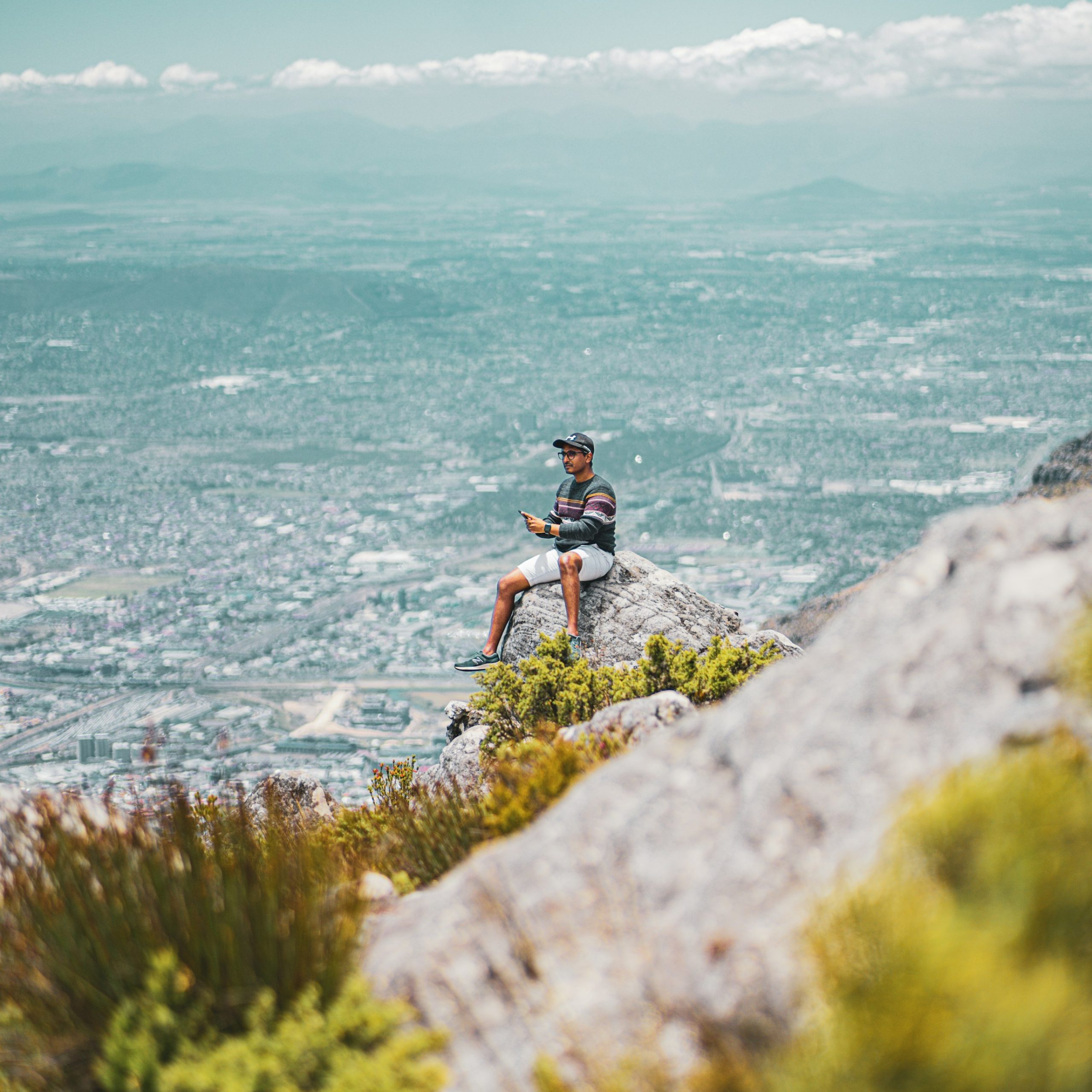
Here are 15 of the best photography spots within the city of Cape Town
Cape Town is a truly fortunate city. Why? It’s been blessed by nature with an abundance of beauty. There are the ocean views, the mountains, the unique floral heritage, and also the beaches, bays, and islands that support various marine mammals. On top of all this, its human inhabitants have, for centuries, been building a legacy that reflects the multicultural soul of the place.
What photographer wouldn’t want to try capture as many of these beautiful, iconic, intriguing, and humbling sights as possible?
Yet deciding on the most photogenic spots in Cape Town can bring on some anxiety – how do you possibly whittle it down? I’ve put together a highly subjective list of the 15 best photography spots in Cape Town. I’ve included landscapes, nature, and architecture, as well as those scenes that have come to be calling cards for the city.
Importantly, each location holds the potential for far more than just one perspective – so while some of the sites are highly photographed, you can absolutely find a shot that makes it your own.
Some scenes are so distinctive that they’ve become synonymous with South Africa’s Mother City …
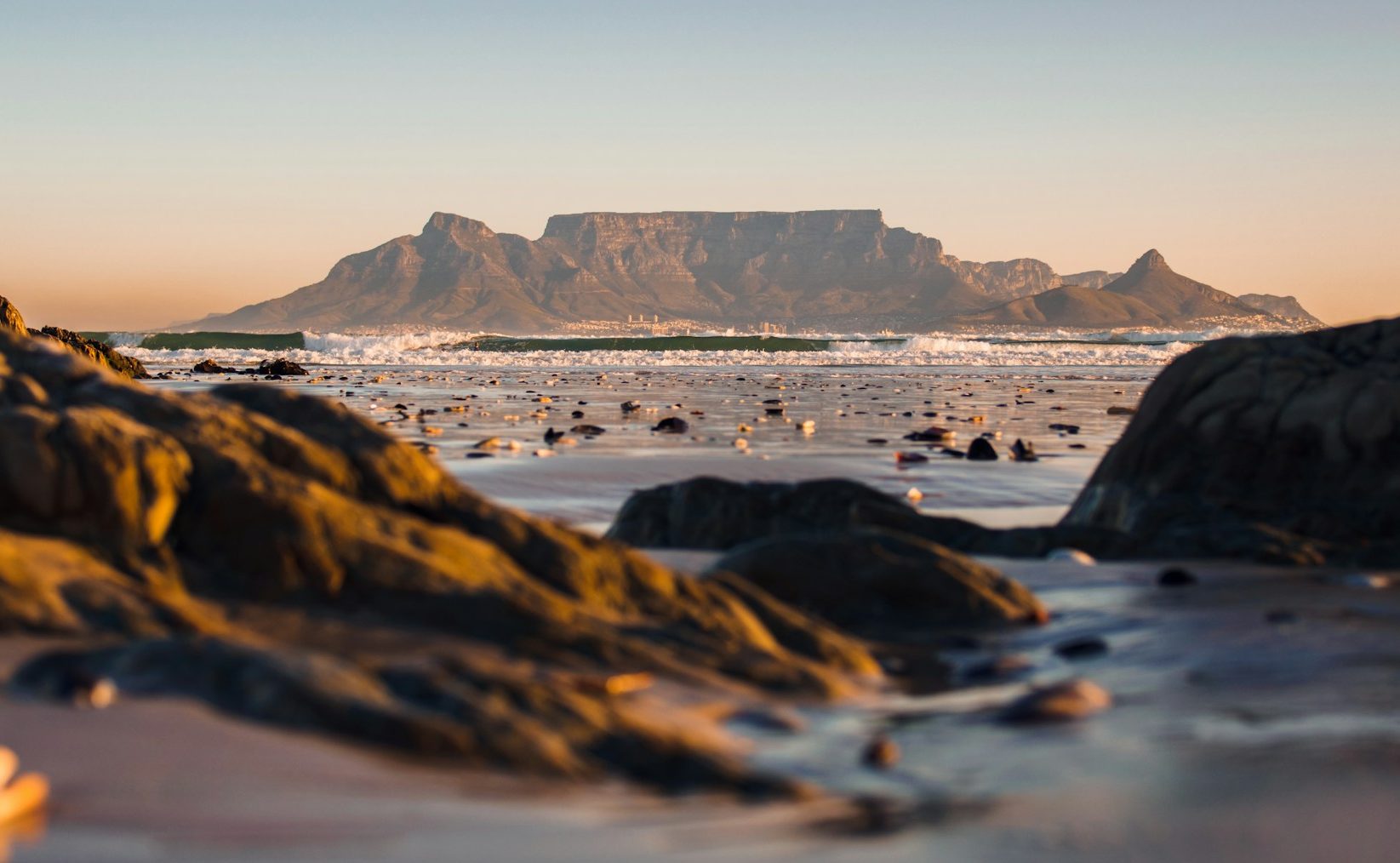
When you view the north face of Table Mountain from Blouberg Beach or nearby, you see it across the waters of Table Bay and enjoy a ‘full frontal’ of the mountain’s most famous side. This is the side where the 3 km-wide plateau at its top looks remarkably flat, like a table. You also have Devil’s Peak and Lion’s Head flanking the mountain. It’s truly Cape Town’s most recognisable scene.
Photography thoughts
Most times, folks try to capture this shot on a clear-sky day, so the flatness of the mountaintop is on full display. But sometimes the mountain is covered in its so-called tablecloth – cloud covers the top and slides down the sides. This offers its own sort of moody magic.
Then there’s the nighttime view with the city bowl lights at the base, which is also memorable. And the famous lightning storms that sometimes play around the mountain make for excellent rewards for anyone willing to put the effort into time-lapse photography.
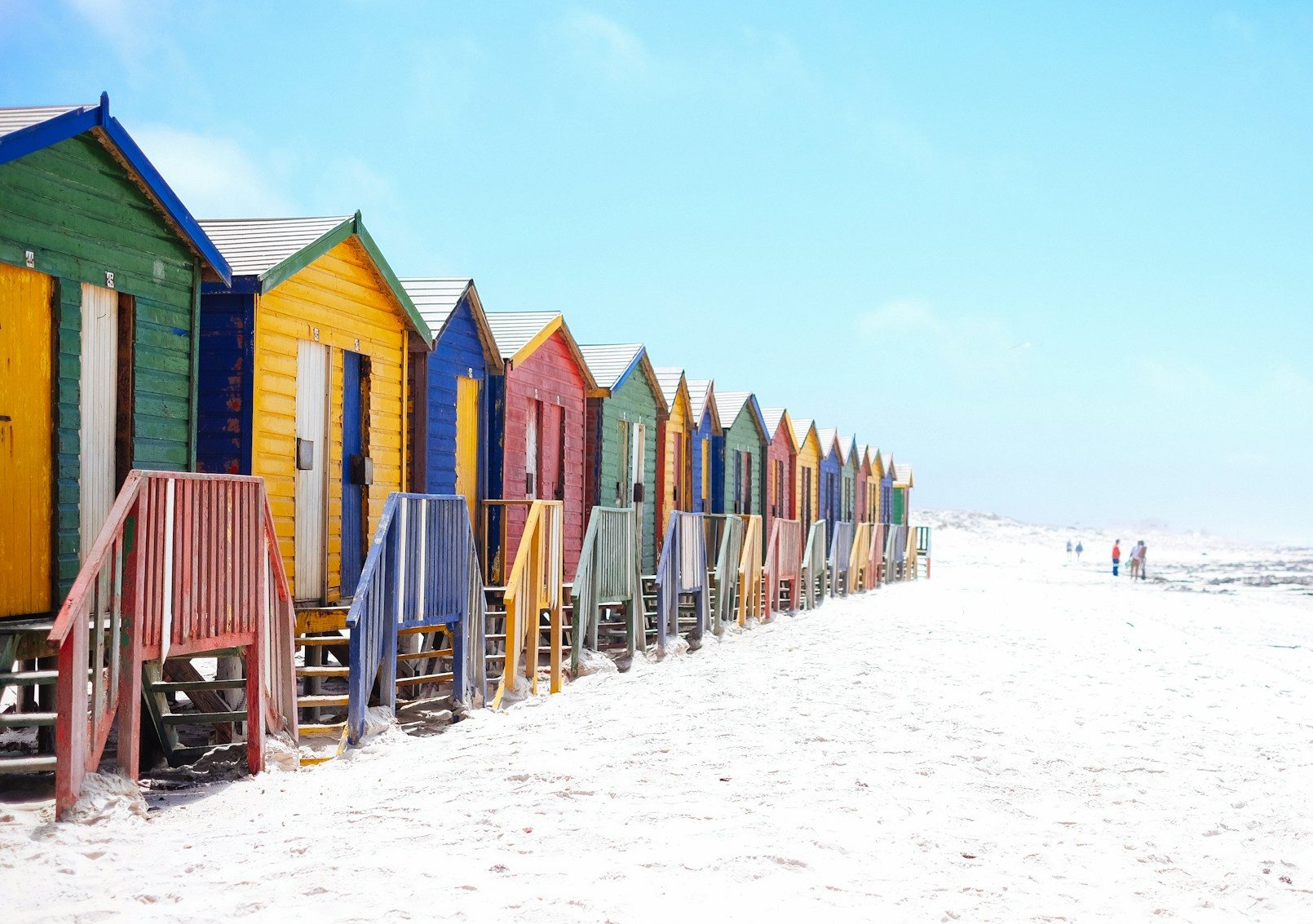
One of the best photography spots in Cape Town is Muizenberg, where you find the famous line of brightly painted huts on the sandy beach. These huts were erected in the early 1900s to allow bathers to change in privacy. At first purely utilitarian, they were later painted in their vivid hues and have become one of Cape Town’s most iconic sights.
Photography thoughts
Sunrise is a great time to photograph the huts with Muizenberg peak behind it in soft light, as the beach faces east. Visit later in the day to snap the huts from behind with the vast sweep of False Bay as backdrop.
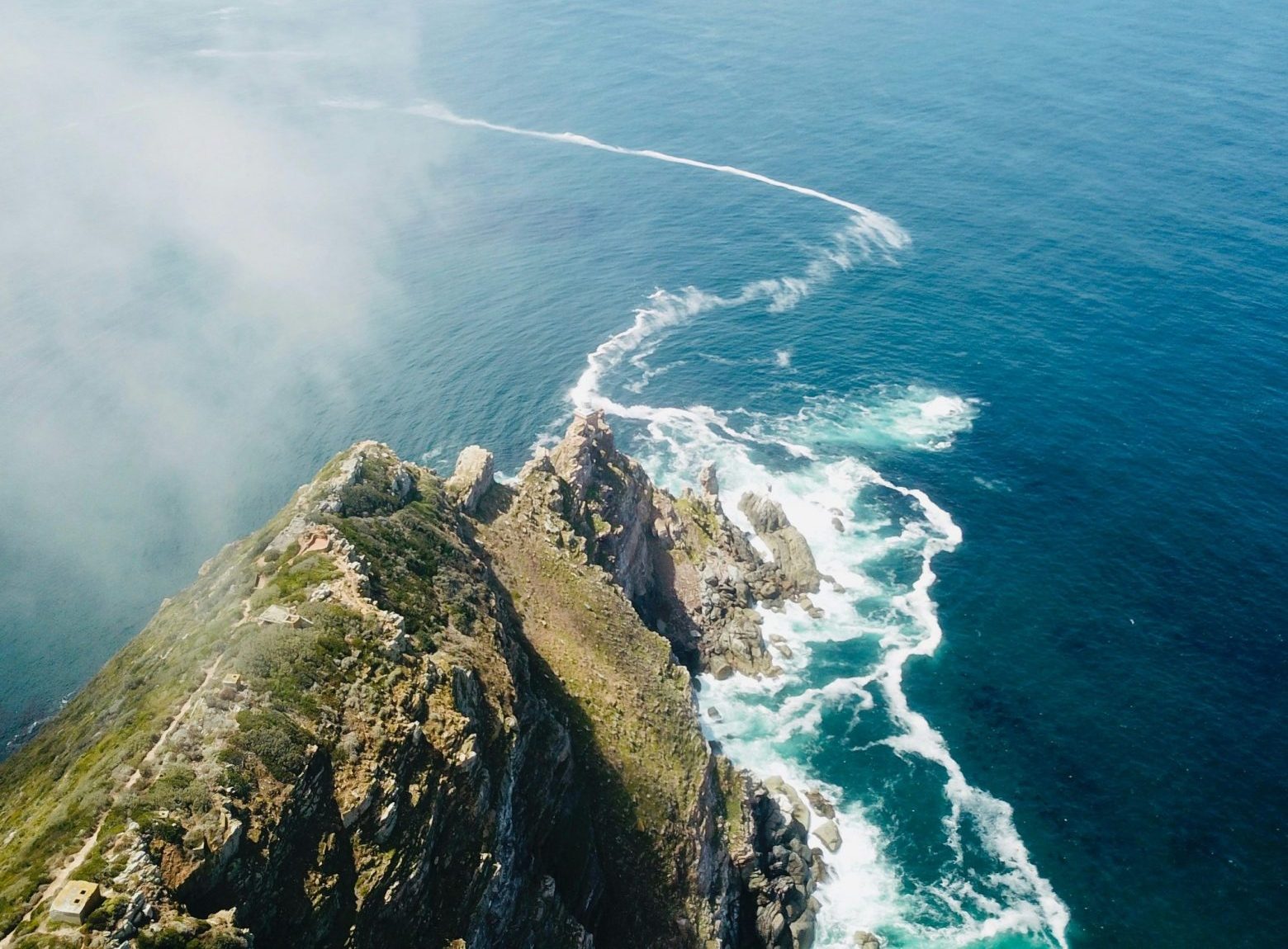
Cape Point is the tip of the Cape Peninsula and the city’s southernmost point. It’s a remote location, requiring more than an hour’s drive from the city centre to reach. Once arrived, there’s a path as well as a funicular leading up to the old lighthouse. From here, you can look south towards the endless sea, knowing there’s no more land until Antarctica.
Photography thoughts
Most of us will only manage to take photographs of the peninsula’s point and its lighthouse from behind, so to speak. If you have a drone, however, you can fly it south and turn back for that classic view of the peninsula jutting out into the ocean. Also, if you’re willing to hike down to one of the beaches, you can capture some interesting upward angles. And there are almost always baboons in the area if you wish to capture some within your shots.
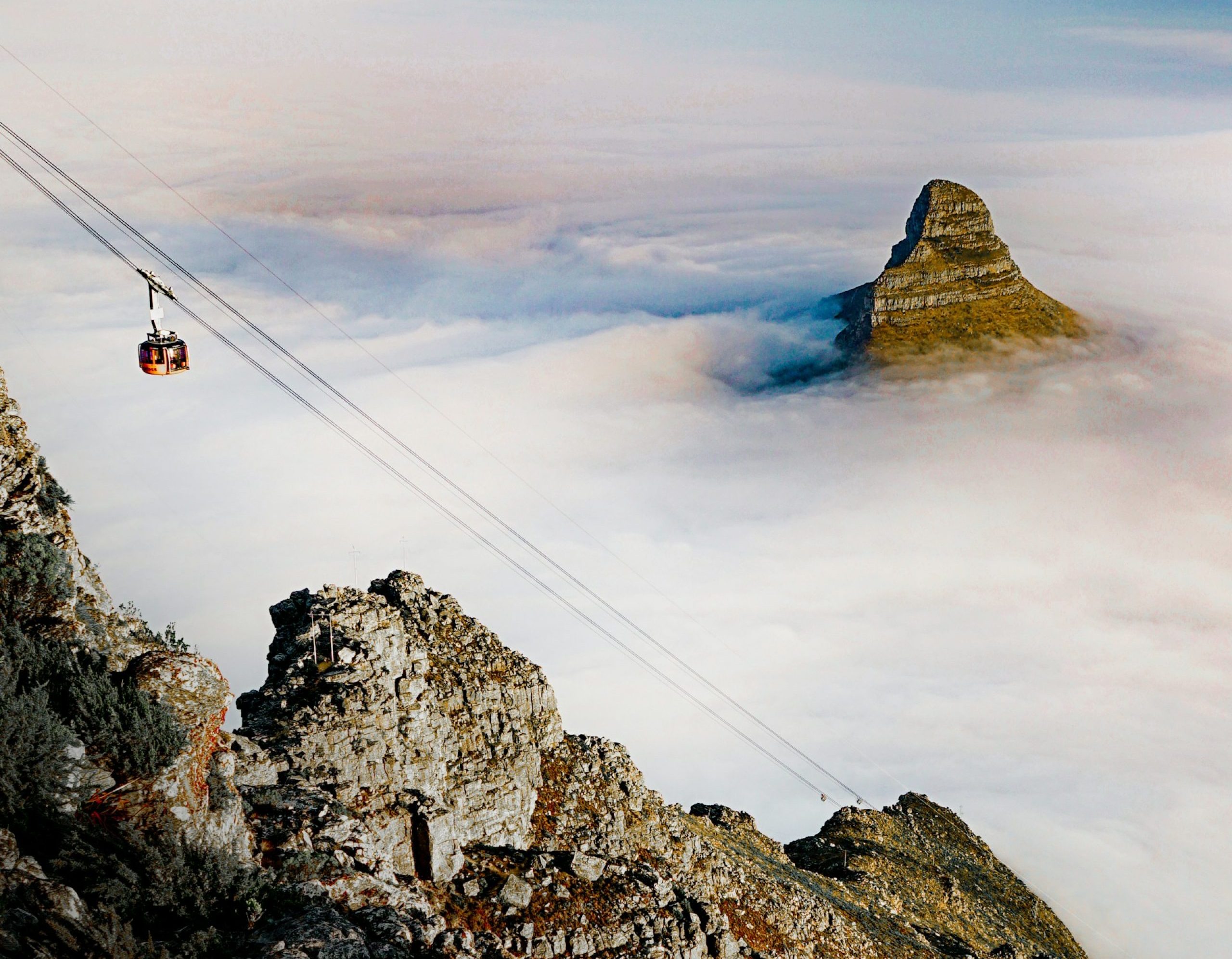
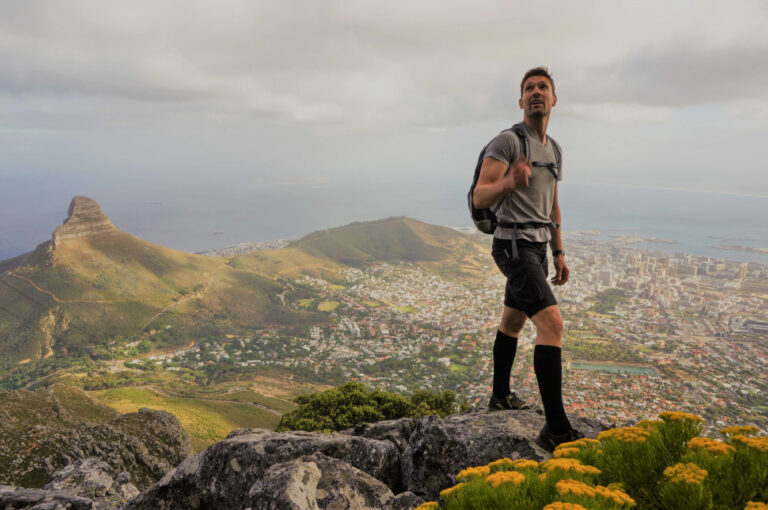
There are so many sublime views from atop Table Mountain, as depending on how much you’re willing to walk, you can look in every direction and appreciate wholly different spectacles of land and ocean. Most people ascend via the cable car on the northern side of the mountain, and then look down towards Lion’s Head, with the cable car in view. This is the view that most people immediately recognise as being Cape Town.
Photography thoughts
Table Mountain famously has many moods, depending on what the clouds and light are doing at any given point. You can stay into the evening and enjoy sunset photography to the west. You can also do some nighttime photography, which is special given the sweep of city lights far below.
I must also say that nature photographers will enjoy taking photos from atop Table Mountain. You’re within Table Mountain National Park, and there’s beautiful fynbos vegetation and smaller wildlife to be spotted if you step away from the crowds.
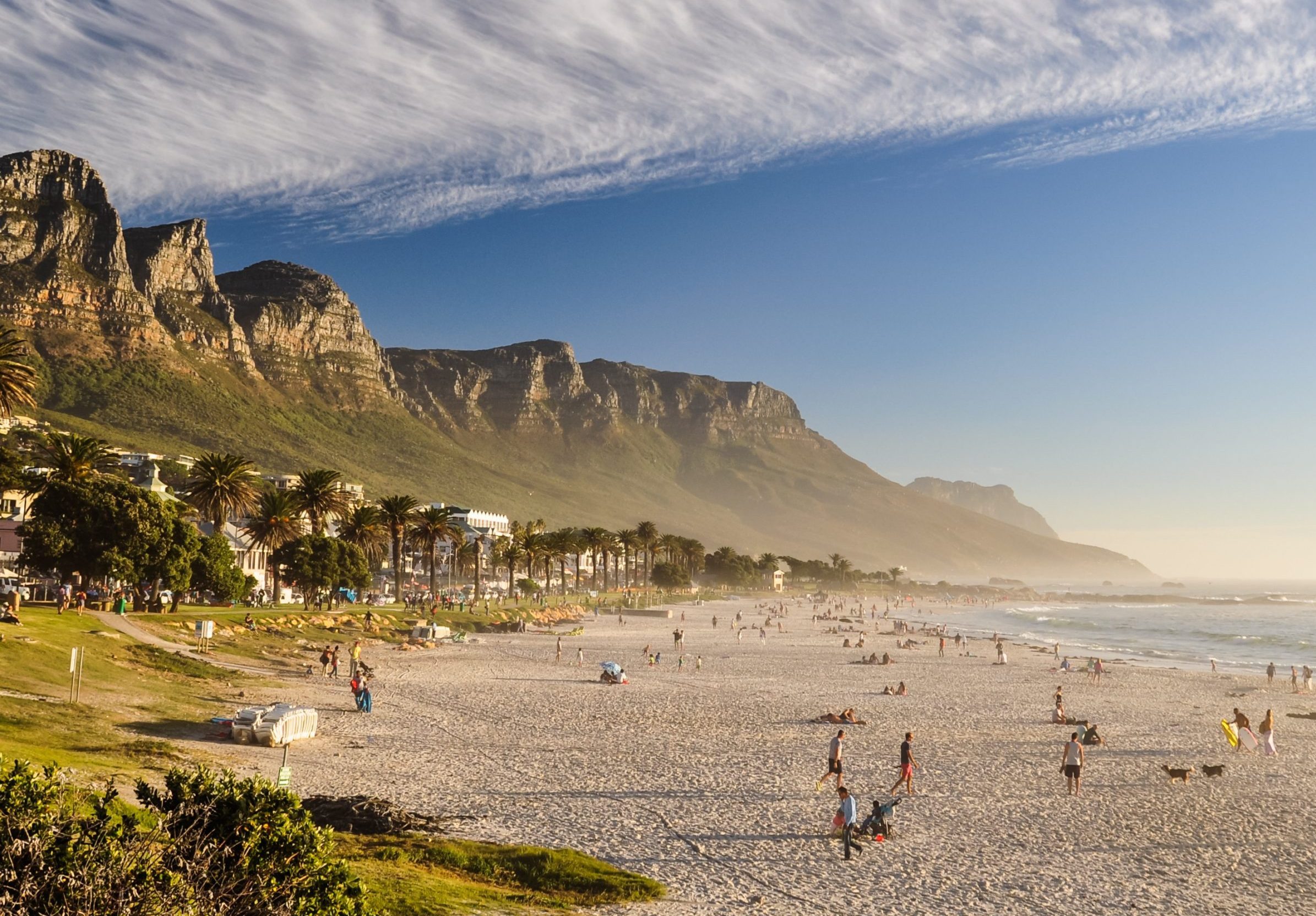
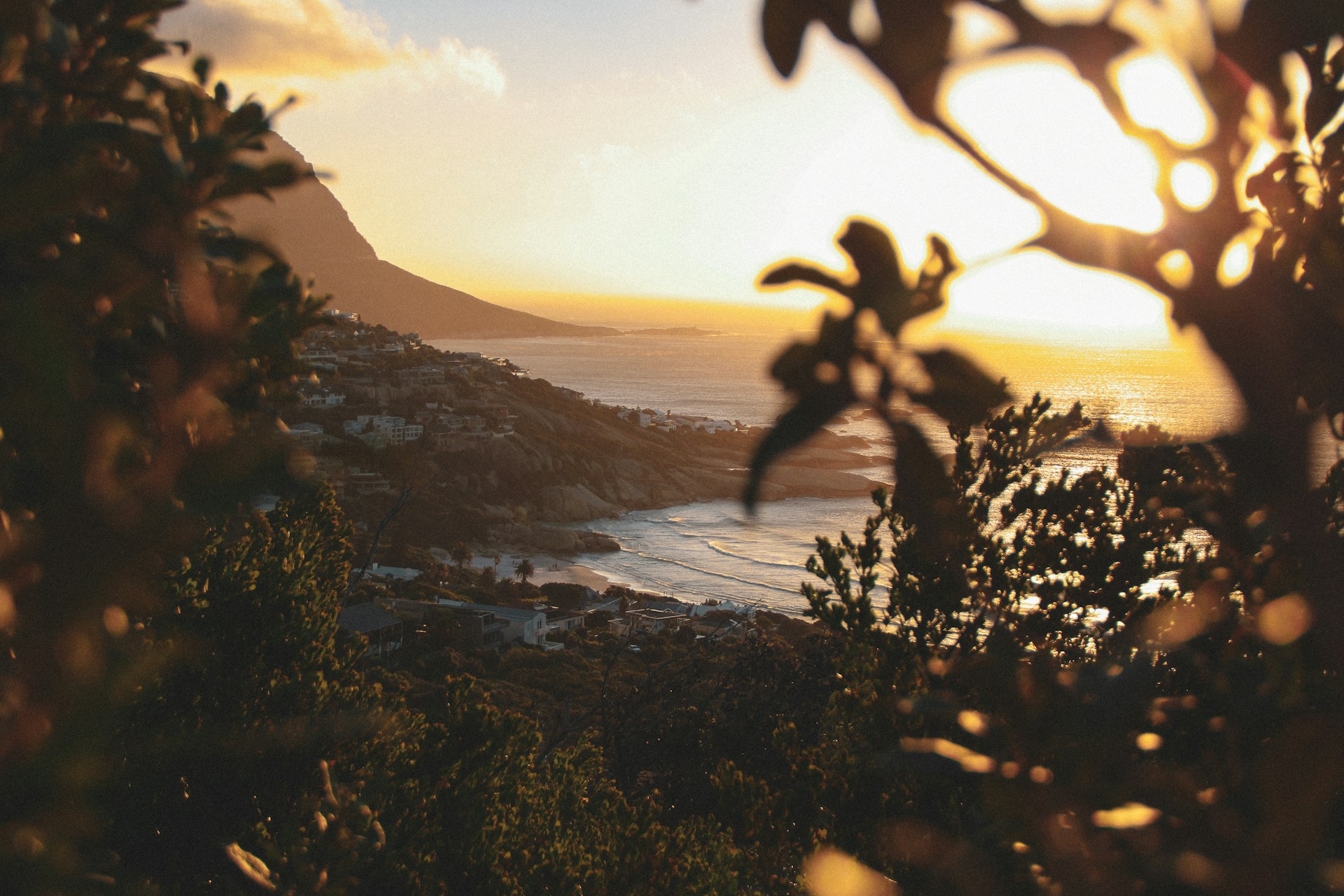
The Atlantic-facing side of the Table Mountain complex has a series of peaks called the Twelve Apostles. They run for a few kilometres between Maiden’s Cove in the north and Llandudno Beach in the south. There’s a series of beautiful beaches and coves beneath the Twelve Apostles that together form Camps Bay.
Photography thoughts
On a clear day, it’s wonderful to snap a classic shot of the Twelve Apostles with the ocean on the right from Maiden’s Cove. This side of Table Mountain is also famous for its glorious sunsets, where the setting sun blazes a trail across the water that leads the eye to the mountains, which are bathed in a deep orange light. So be sure to visit for great sunset photography. Also, note that you can often spot whales and dolphins in the ocean between June and November.
Let’s talk about some further Cape Town scenes that make for incredible landscape photography …
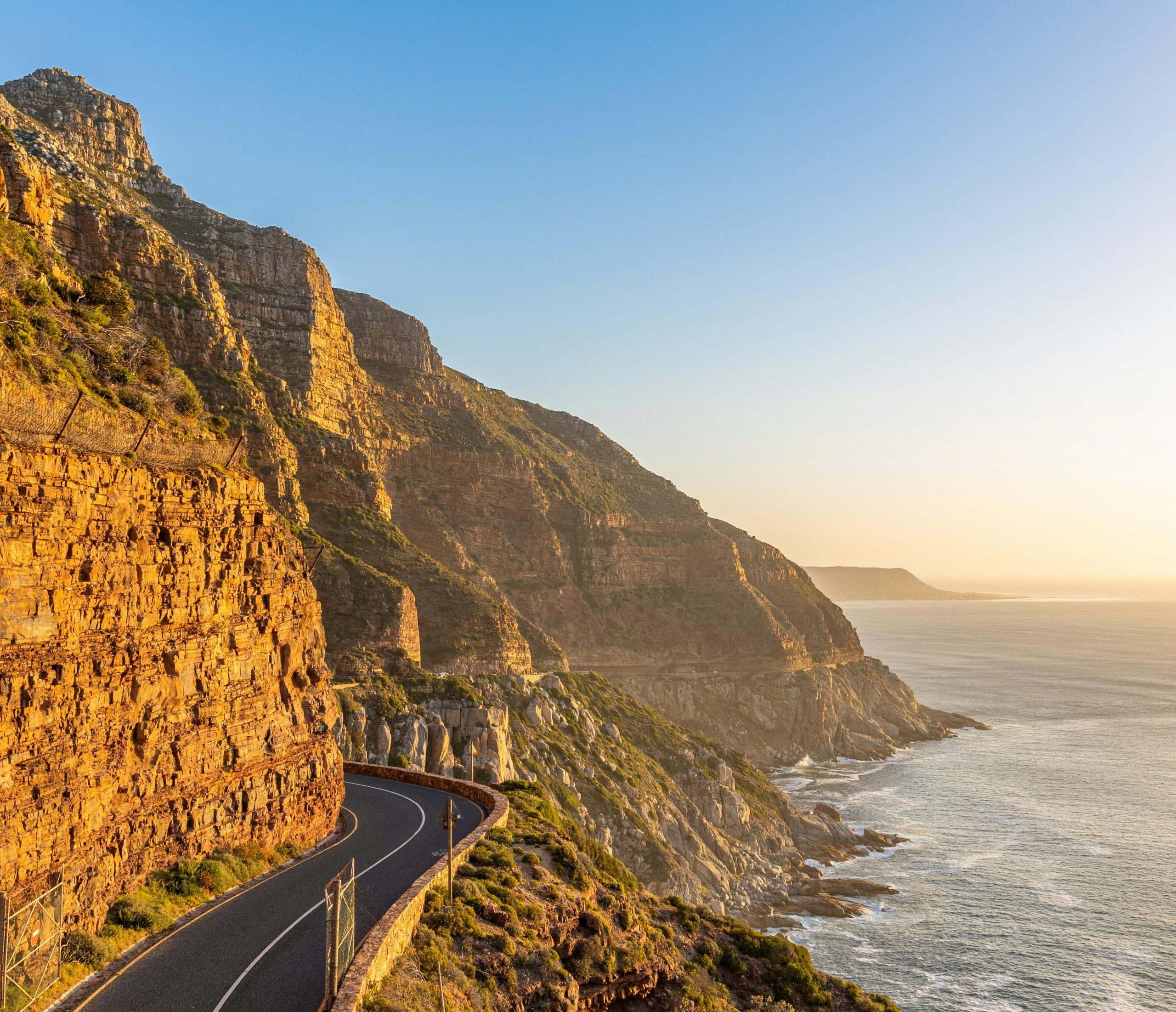
Chapman’s Peak Drive is a winding, 9 km-long coastal road between Noordhoek and Hout Bay that is nothing short of spectacular. It’s part of Cape Town, yet also not. I say this because it’s out of the way, little used, and feels far removed from city life. It’s a quiet slice of space, sliced into a steep mountainside. It’s so thrilling and breathtaking that you almost can’t believe you’re allowed to be there.
Photography thoughts
There are various waysides and picnic spots on Chapman’s Peak Drive. So simply visit as many as you like and get creative. Do note that this is an Atlantic-facing road, so the sunsets can be sublime.
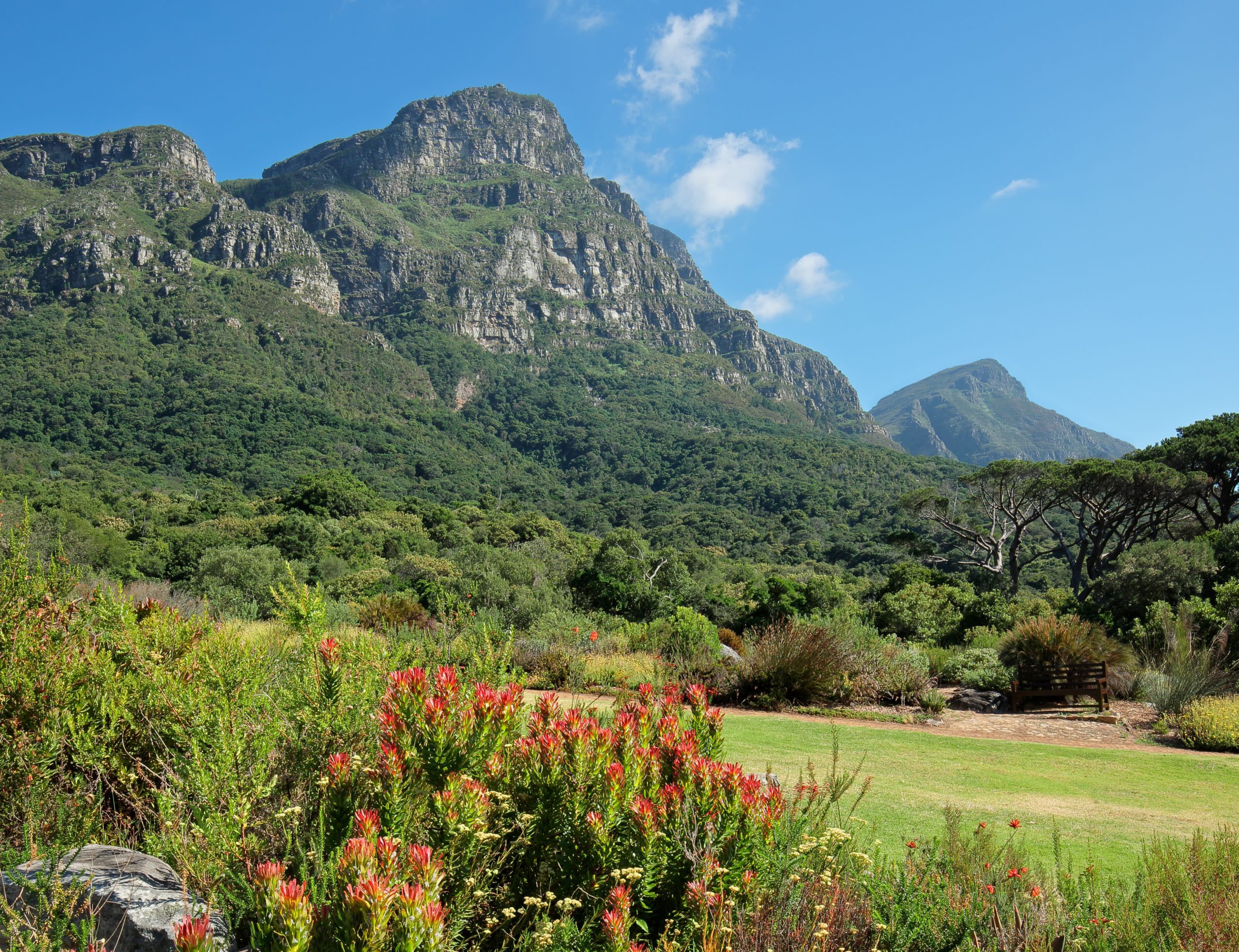
Kirstenbosch is a world-class botanic garden, even when you don’t count the fact that it has a magnificent backdrop by virtue of lying on the eastern slope of the Table Mountain massif. Devil’s and Fernwood Peaks rise directly above the gardens, making for some excellent photography options that pair incredible flora with striking mountain views.
Photography thoughts
Kirstenbosch is an enormous garden, and different parts have been planted and landscaped differently. For instance, there’s a main ‘lawn’ with a stream, a treetops walkway, and an indigenous sculptures garden. So I recommend wandering around and finding different foregrounds for framing the mountain peaks.
Note that sunrise in Kirstenbosch is particularly rewarding, as the light first pours through a crack in the peaks at a near-horizontal angle, turning the rockface a warm orange while the garden remains in shadow.
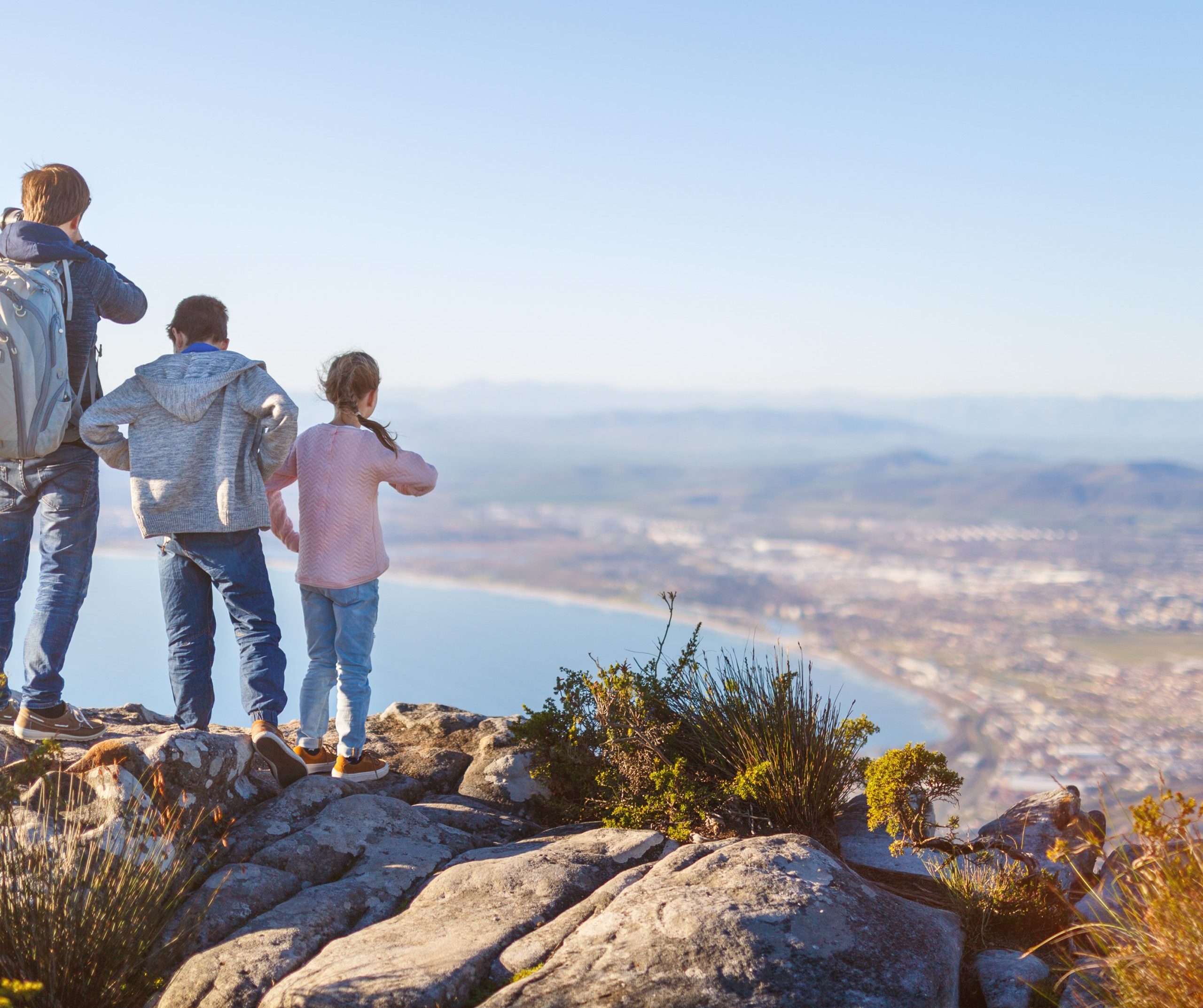
Signal Hill is a flat-topped hill in northern Cape Town that’s connected to the higher Lion’s Head and then Table Mountain by land bridges. What makes it so special is that you can move around and enjoy panoramic views in every direction.
Photography thoughts
While Signal Hill is most famous for its views of the city bowl, Table Mountain, and the Atlantic Ocean, you’re actually high enough to also look across the whole peninsula and take photos that include False Bay. So really there’s a whole world of photography options here. And the view at night is also sublime, as the city and harbour lights provide plenty of light.
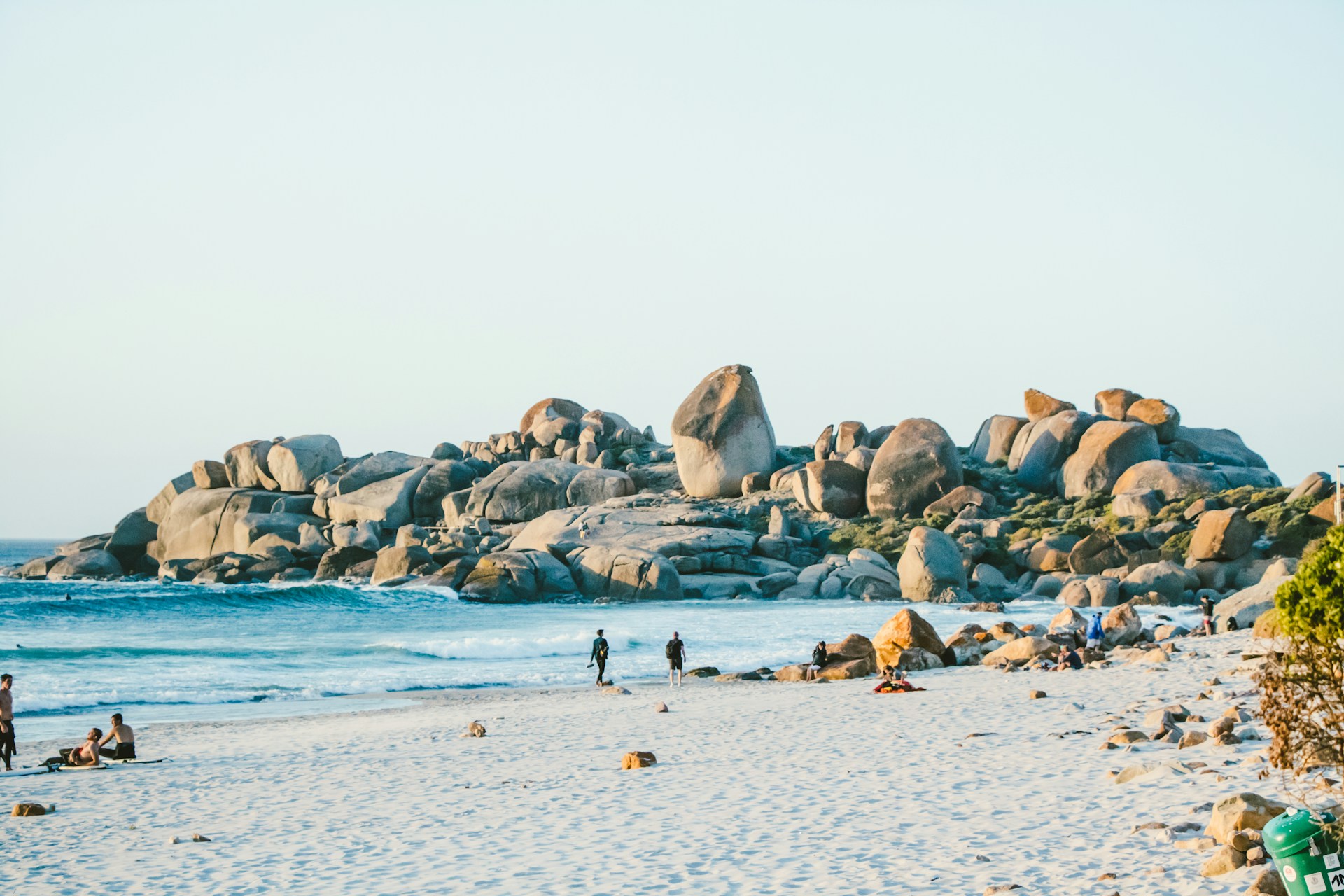
Cape Town has many beautiful beaches, but Llandudno on the west coast is one of the prettiest. It’s a small, relatively remote cove with an attractively messy pile of granite boulders on its northern edge. Rising steeply behind Llandudno is Judas Peak, the most southerly of the Twelve Apostles peaks.
Photography thoughts
Pictures taken from Llandudno Beach that look out to sea are fabulous, particularly with the boulders in frame. Turning around and capturing the mountainous backdrop is also lovely. The fynbos vegetation lining the beach and sprouting between the boulders helps to give photographs extra contextual detail. Finally, if you climb above the beach a little, you can capture a teasing shot of the cove framed by trees.
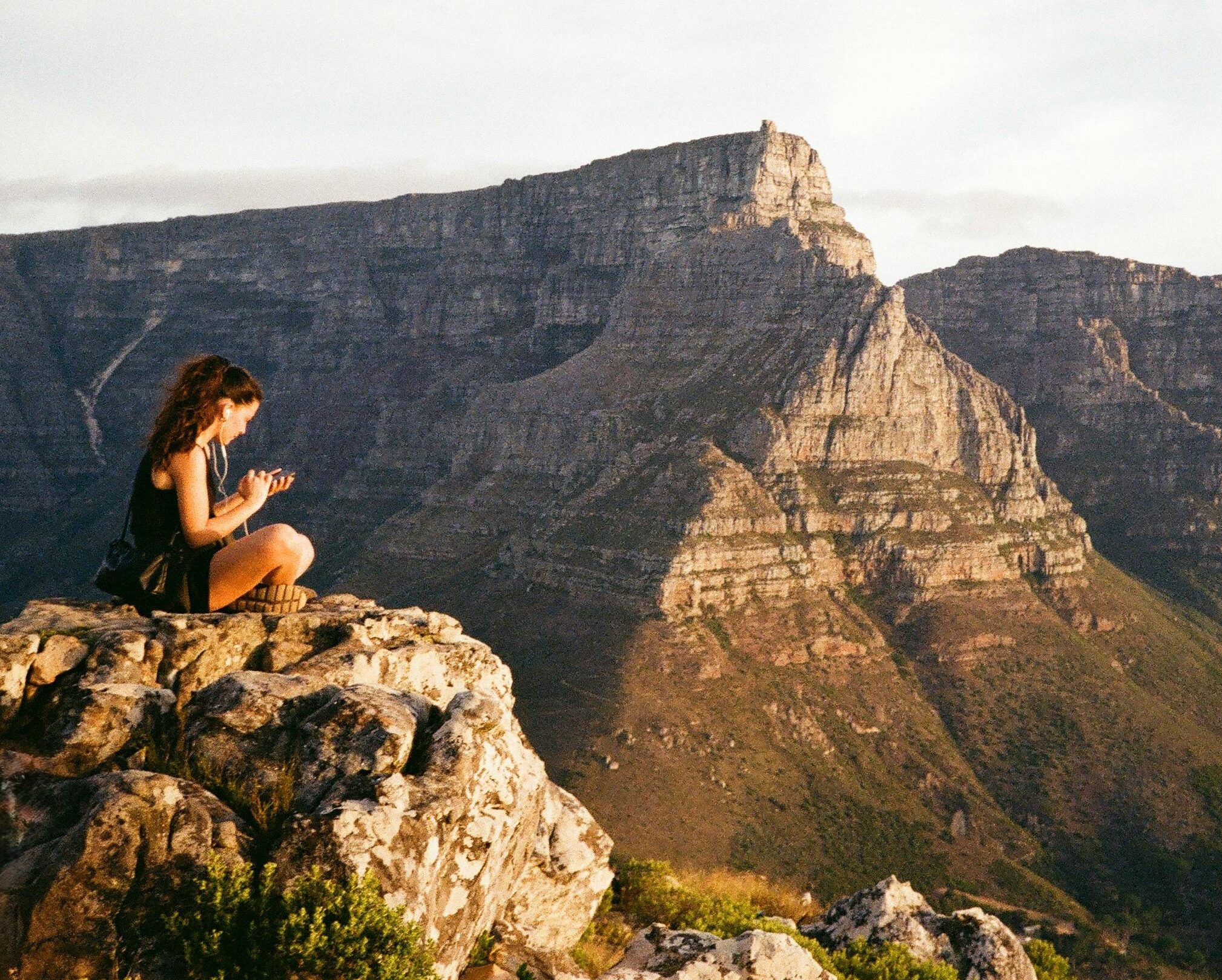
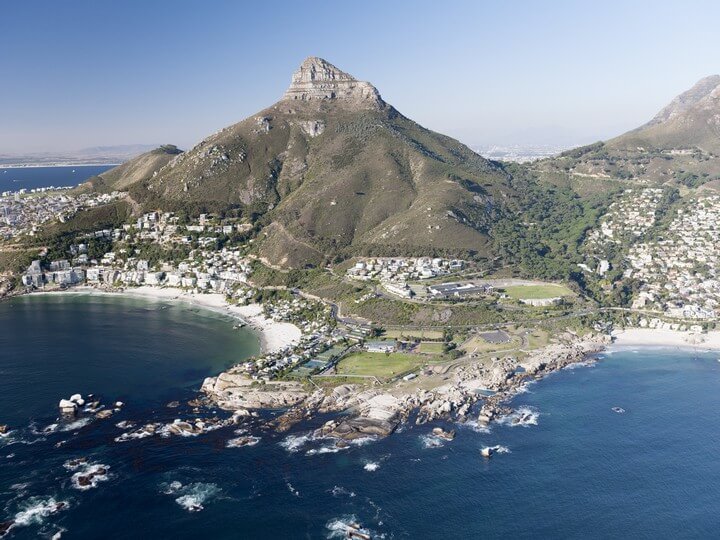
Lion’s Head is the nearly 700-metre-tall mountain that sits alongside Table Mountain. It has a granite cap peak. Below this, the land slopes outwards conically and is covered in fynbos. It’s a popular hiking spot, as the top offers panoramic 360-degree views.
Photography thoughts
Sunset hikes are the busiest on Lion’s Head, but they’re incredibly rewarding, as you look out over Camps Bay and the Twelve Apostles as they’re bathed in low light. There’s a festive spirit to the experience, given its popularity. If you’d prefer a quieter climb, head on up for sunrise, as then you see the city centre and the classic side of Table Mountain in soft light, which is also beautiful.
The fabric of Cape Town has been shaped over the centuries by various cultures. Here are just three architectural treasures with very different origin stories …

The Bo-Kaap is an historic and predominantly Muslim area of the city that sits on the eastern slope of Signal Hill. It’s beloved by tourists and photographers as its pre-1850 terraced houses are painted various bright colours, and some streets retain their cobblestones.
Photography thoughts
The Bo-Kaap has a distinctive look and identity not shared with anywhere else in the city. I recommend visiting it as part of a guided tour in order to fully appreciate the story of the place and the significance of its various details, which include some impressive street murals. Your photographs will have so much more meaning if you understand the centuries-old history of the place.
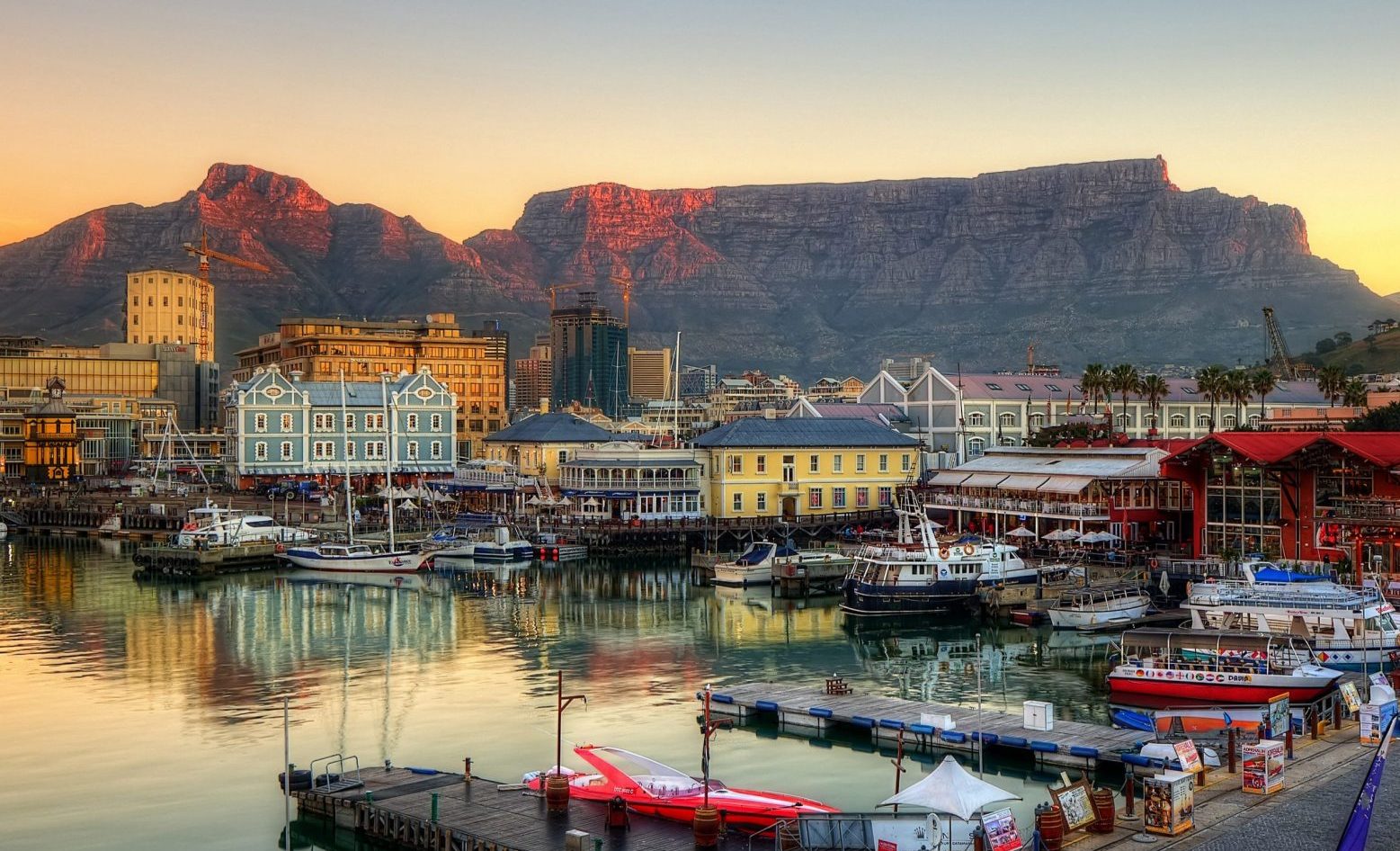
The Victoria and Albert Waterfront (or V&A for short) is a popular tourist spot on the site of the oldest working harbour in the Southern Hemisphere. Its Victorian-style architecture and Ferris wheel give it a charming appearance, while the iconic side of Table Mountain serves as backdrop. What’s not to love? The history of the place actually goes far further back, however, as it sits on
Photography thoughts
Being a large complex, the V&A offers a multitude of subjects for photographers. Apart from the obvious landscape view discussed above, you can gain a higher vantage point by taking a ride in the Cape Wheel. There are also various historic landmarks to photograph, like the Victorian Gothic clock tower, which dates from 1882.
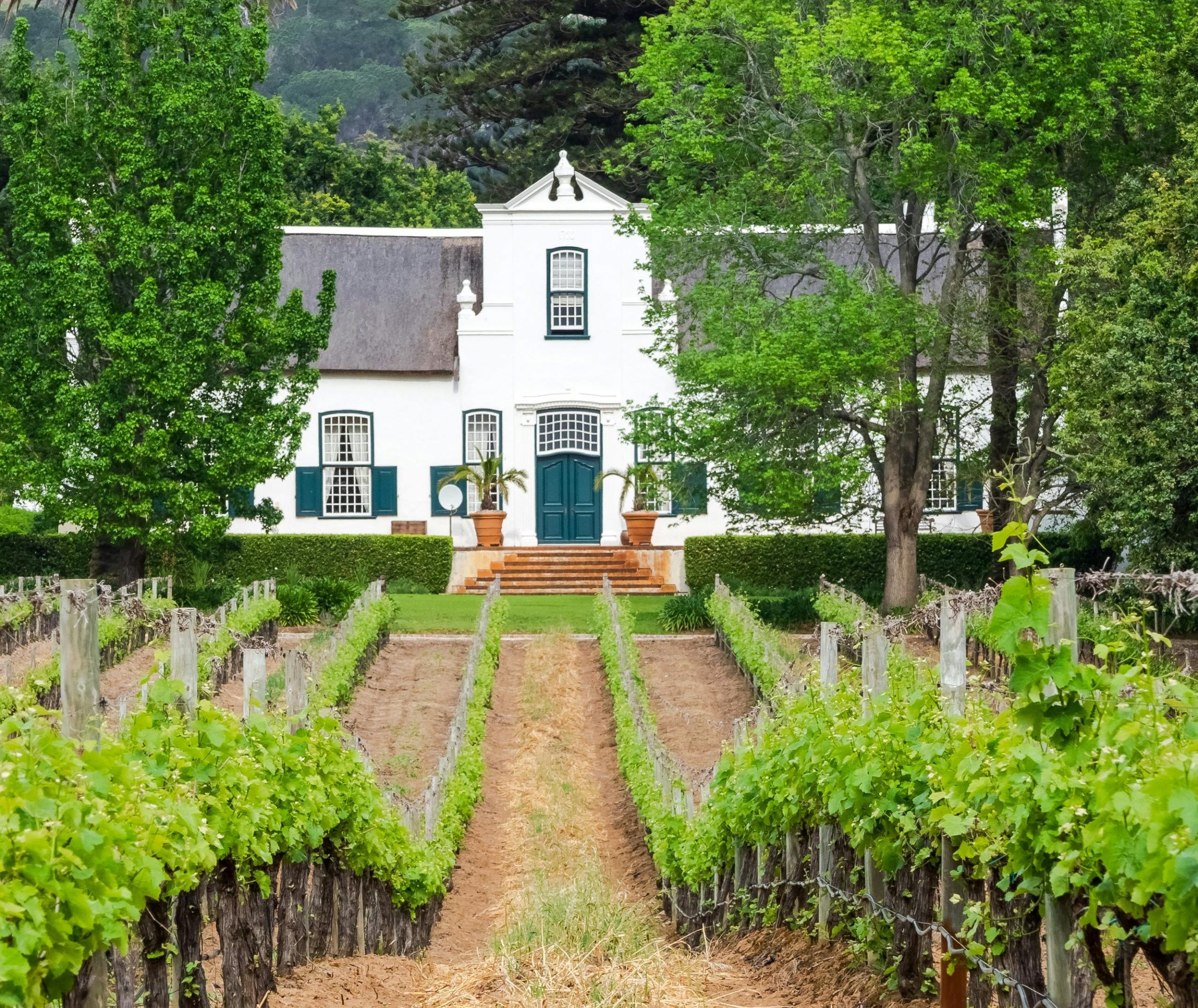
The Dutch settled the Cape region of South Africa in the mid 1600s and developed a distinct style of architecture known today as Cape Dutch. It’s notable for its white-washed walls, thatched roofs, and decorative gables, among other things. Later that same century, French Huguenots settled in the Cape too, and brought their viticulture skills. The result of this is that today there are many wine estates in the region which are beautified by historic Cape Dutch buildings.
A prime example of this distinctive heritage within the city of Cape Town itself is the Groot Constantia Wine Estate within the suburb of Constantia. Established in 1685, this is South Africa’s oldest wine-producing estate, and it’s both a Provincial Heritage Site and a living museum.
Photography thoughts
Groot Constantia is a wonderful place to visit for various types of photography. Firstly, you can take snaps of gorgeous architectural details. Then you have scenes of the buildings within their vineyard setting. And you can also indulge in food photography – particularly wine photography – with all the beautifully preserved accoutrements on show.
Finally, let’s consider two locations that allow for some wonderful close-up nature photography …
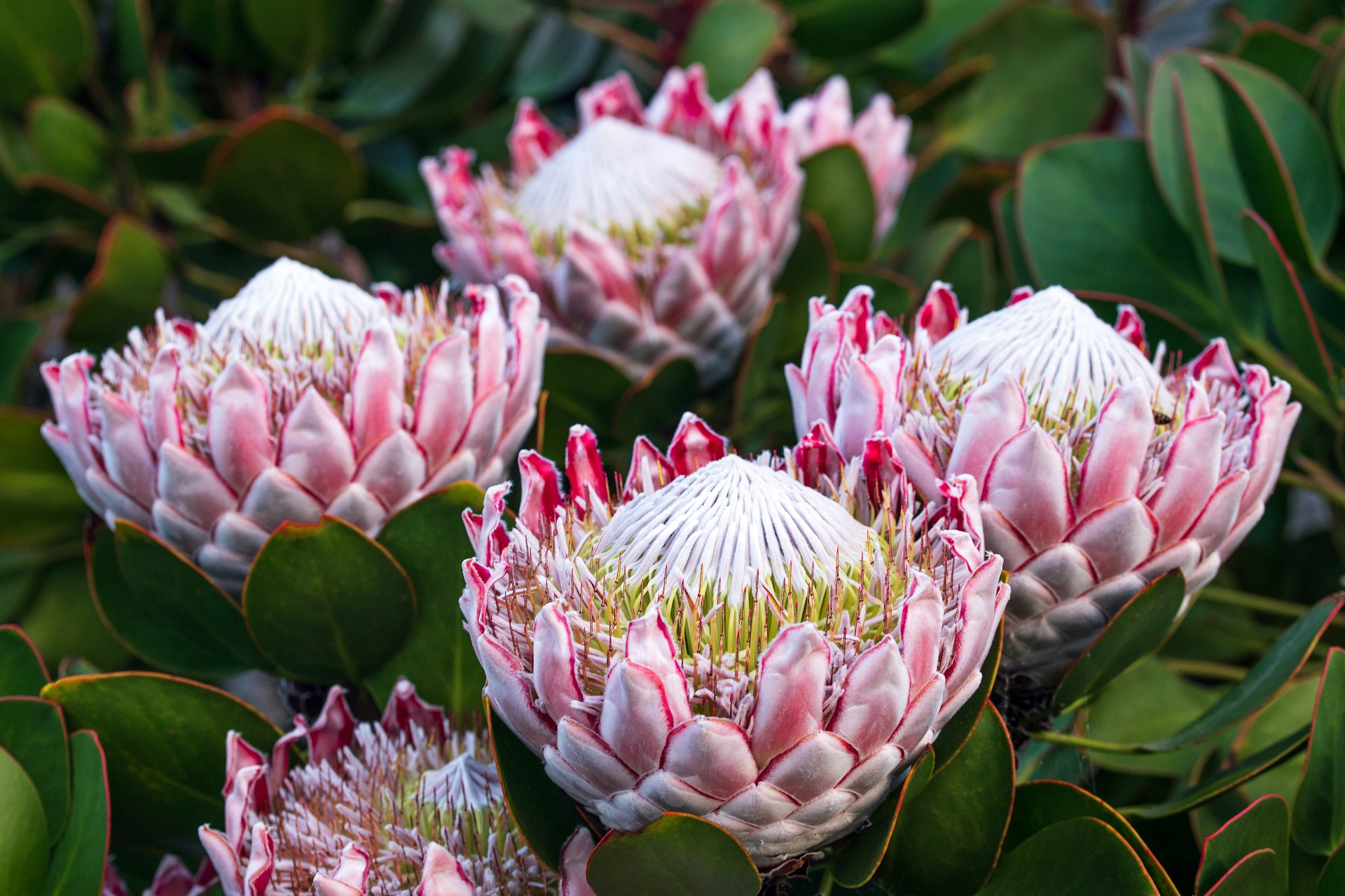
The upper southern portion of Kirstenbosch is full of protea bushes, which are endemic to South Africa. proteas and pincushions. But there are over 100 species within the genus, so the wonderful thing is how varied they are, in shape, colour, composition, size, and more. If you enjoy flower photography, this is the perfect Cape Town spot for you!
Photography thoughts
Proteas tend to have large, architectural blooms, many of which are chalice-shaped. So close-ups of the blooms are the obvious name of the game. But given the slope of the ground, you can walk around the bushes and capture various backdrops, from one with Fernwood Peak in the background to one of the sprawling suburb below with a ribbon of ocean in the distance.
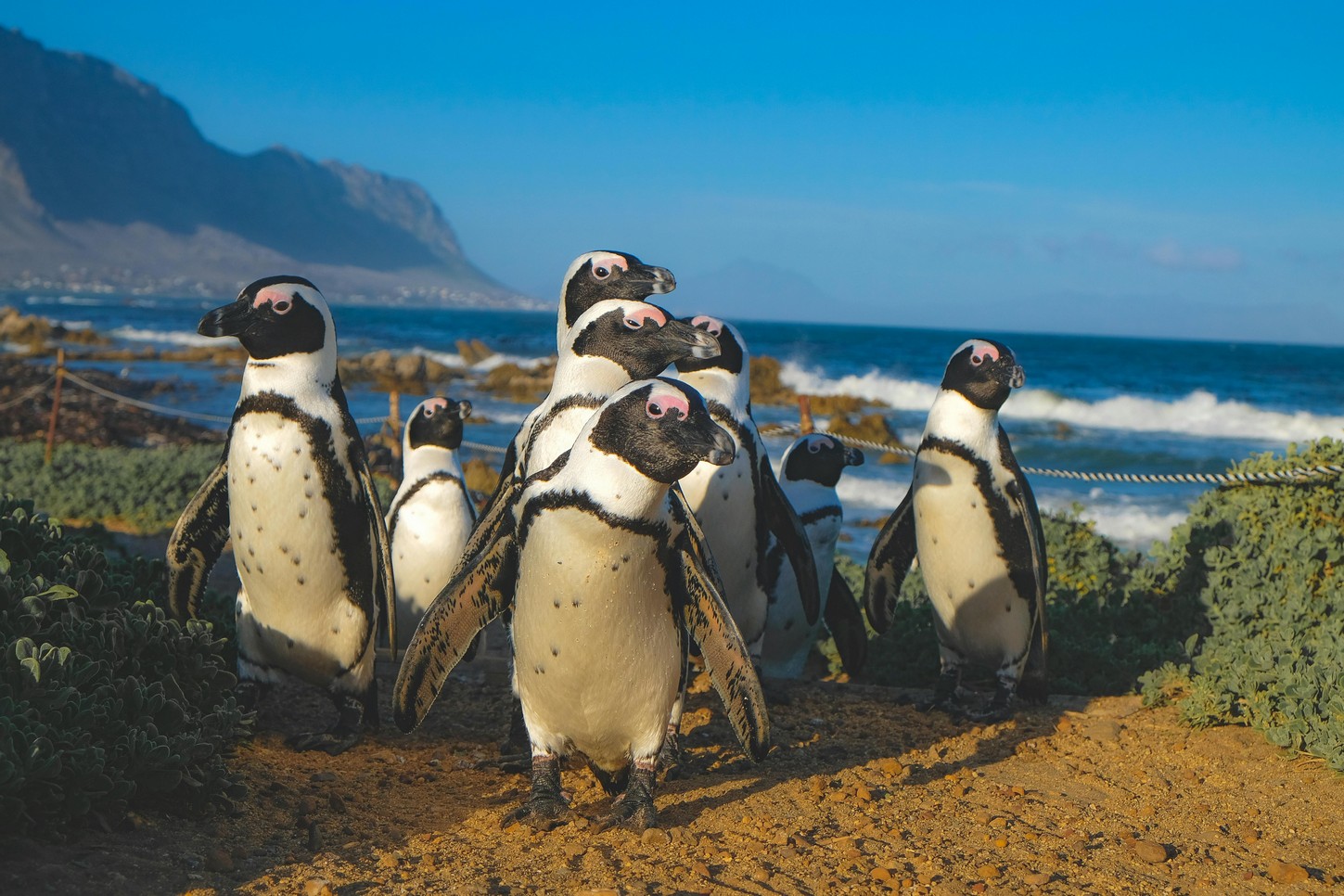
Boulders Beach by Simon’s Town on the peninsula is a wonderful spot for photographing endangered African penguins. While an endangered species, you’ll have no trouble finding birds here, as the colony is home to over 2,000 birds. The penguins enjoy the protection from wind and waves provided by the large granite boulders clustered on the shore.
Photography thoughts
Once you’ve taken some close-ups of the penguins, you can also snap them moving around the boulder-strewn sandy beach, which has pretty rock pools. Then there’s the boardwalk, which lets you move among the dunes and vegetation to find further feathery friends and fresh vantage points. And finally, you might like to zoom out as there’s the wider False Bay setting with Robben Island in the far distance.
I hope this list of my choice of the 15 most photogenic spots in Cape Town has inspired you in your planning. If you’re coming from abroad and are keen to find a tour operator to look after you, know that African Overland Tours starts many of its African overlanding tours in Cape Town, and can take you to explore all of the memorable places mentioned here.
Note: This blog post was created by Sarah Duff in 2015. In 2026, it was completely rewritten by Megan Abigail White.
15 best photography spots in Cape Town
5
1

Price From
R57,125
2
Price From
R81,299
3

Price From
R68,765
4
Price From
was
R92,950
R83,655
5
Price From
was
R265,950
R239,355

Southern Africa is home to dozens of UNESCO World Heritage Sites – Here’s a List of 11 of the best From South Africa up to Malawi, and from Namibia on the west coast across to Mozambique, you can find many…

Cape Town, the mother city of South Africa (as she is affectionately known); is one hip and happening mother. Beautiful white sandy beaches; mountains crossed with hiking trails; spend hours scouring museums and galleries, or shop till you drop at…
South Africa is one of the most visited places in Africa and there are more than a few reasons why. This is a country that has been through many trials and tribulations, but the people of South Africa united and…

Africa has no shortage of fabulous beaches and idyllic tropical islands, with two long coastlines stretching along both the Atlantic and Indian Oceans. Here’s our pick of the best beaches to lay your towel out on – all of which…
Southern Africa is where National Geographic documentaries come to life, where you’ll have experiences most people only see on television. From the world-famous Kruger National Park to the water wonderlands of the Okavango Delta, Southern Africa offers safari adventures and…

"*" indicates required fields