

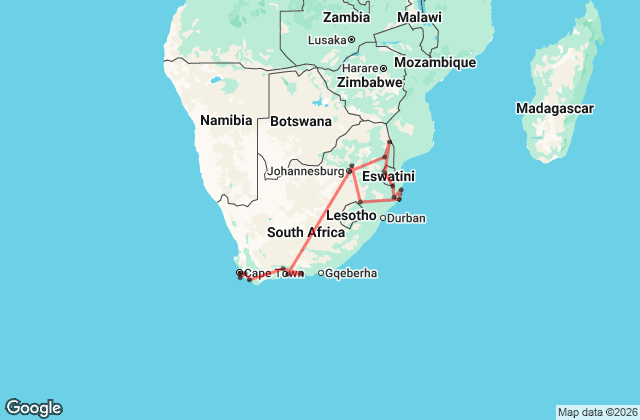

Explore Uganda
20 days
Cape Town
Places you'll visit
African Overland Tours
https://www.tripadvisor.co.uk/Attraction_Review-g312659-d13131637-Reviews-African_Overland_Tours-Cape_Town_Central_Western_Cape.html
https://www.reviews.io/company-reviews/store/africanoverlandtours-com
https://www.facebook.com/AfricanOverlandTourscom/
https://www.instagram.com/african_overland_tours/
https://www.tiktok.com/@africanoverlandtours
https://uk.trustpilot.com/review/africanoverlandtours.com
https://www.youtube.com/@africanoverlandtoursandsafaris
+27 (0) 21 448 0997
Customer Service
Worldwide

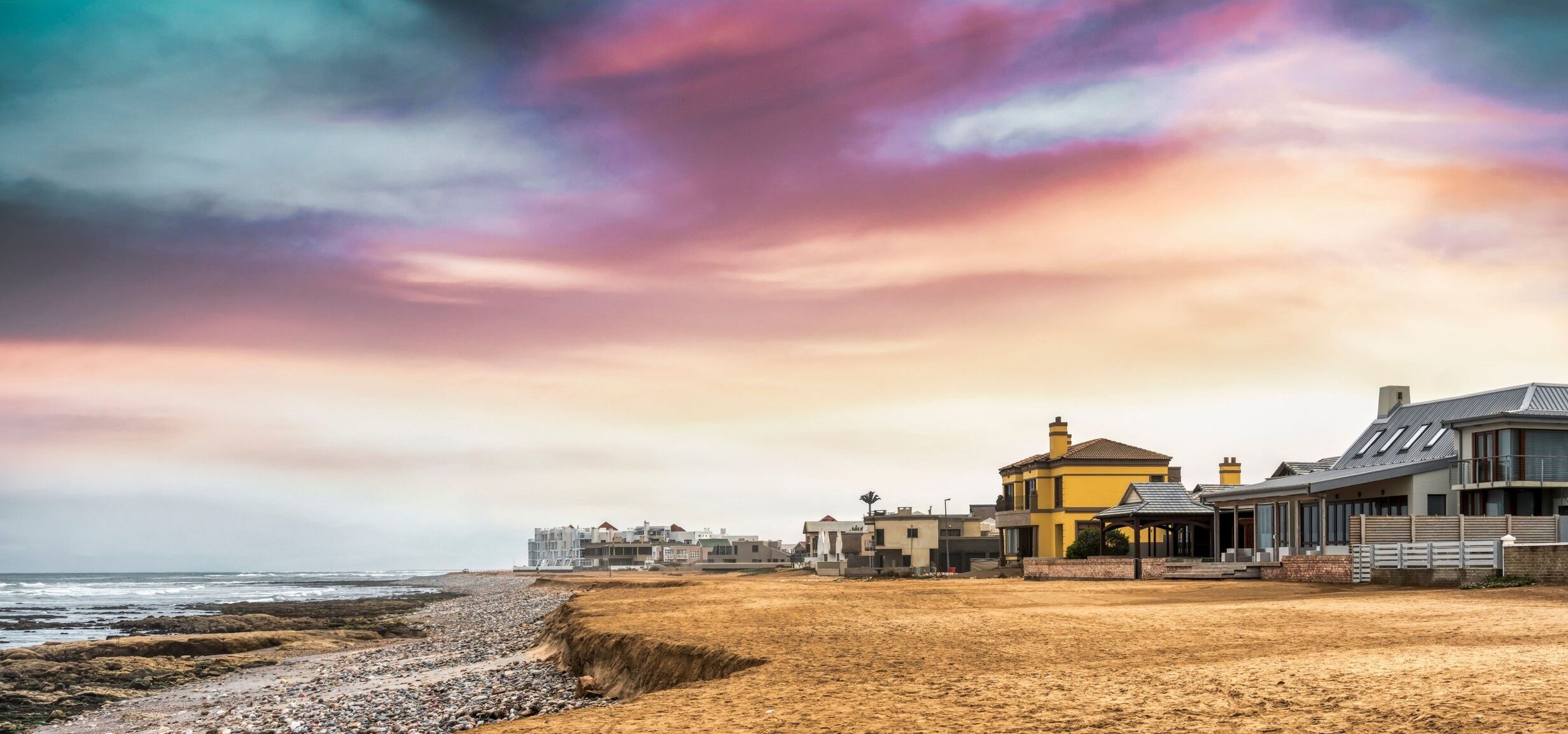
Here are the five best things to do in Namibia’s coastal city of Swakopmund to get the most out of your visit.
Swakopmund is a small, quirky city wedged between dunes of the Namib Desert and the Atlantic Ocean. It sits at roughly the halfway mark on the Namibian coastline, so many roadtrippers visit en route from the dunes of Sossusvlei in the south to Etosha Pan in the north. And what an excellent stopover destination it is! The city itself has some great attractions, from the world’s largest quartz crystal cluster to some truly unique architectural gems. With that in mind, I discuss the top things to do in the city of Swakopmund to appreciate its unique history, culture, scenery, and natural marvels …
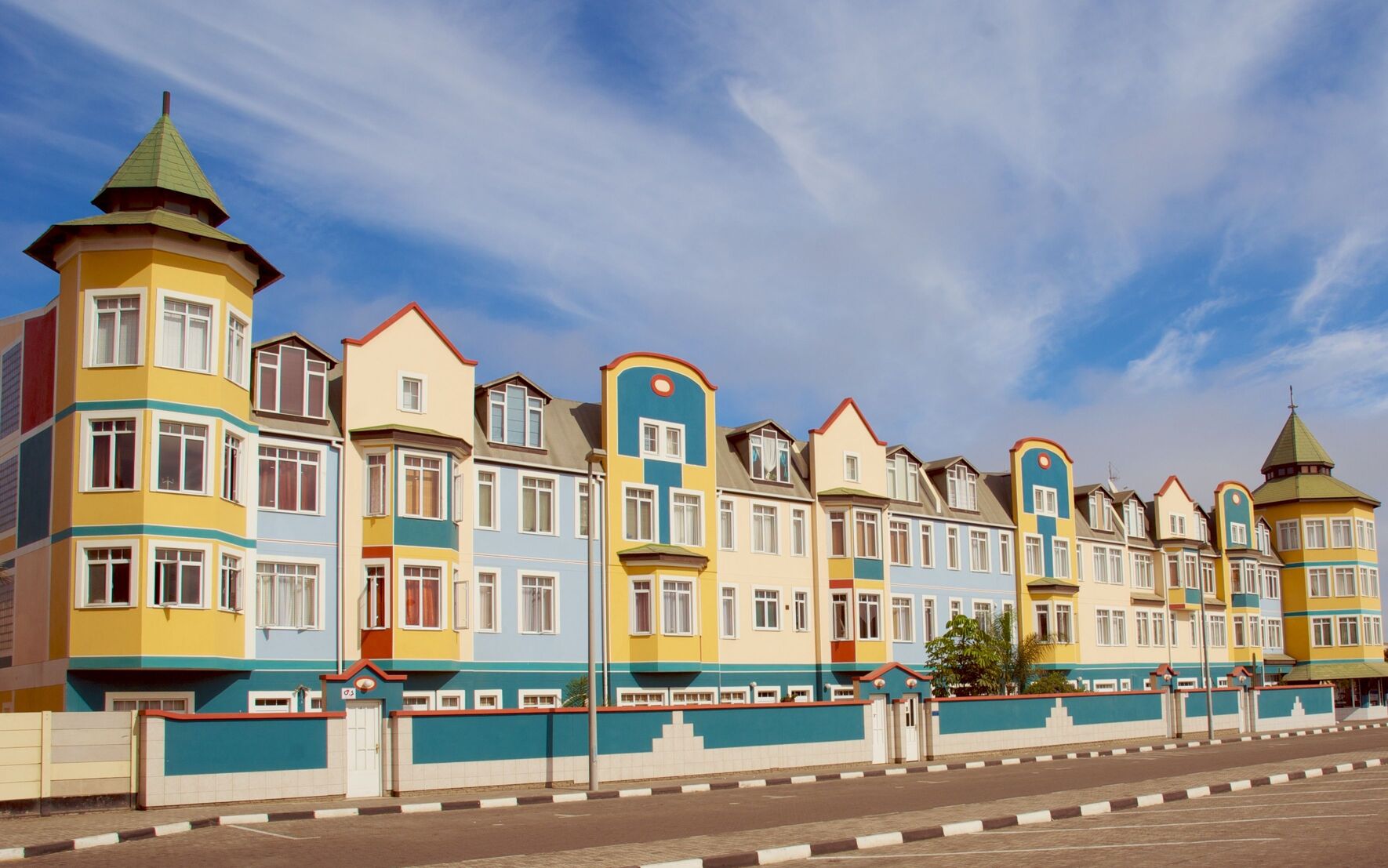
Swakopmund, founded in 1892, is Namibia’s most German town. And the buildings in its historic centre make that clear. Only, nowadays, many are painted in bold colours or pastels, and since palm trees line some streets, you have charmingly unusual tableaus.
Be sure to visit Woermannhaus, completed in 1905, which is now a public library and gallery. You can climb its watchtower for a great view of the town and sea beyond. The neo-baroque Hohenzollern Building, once a hotel but now a residential building, is another must-see. It has a large statue of Atlas holding up the world atop its corner gable.
Coffee culture is strong in Swakopmund, and there are lots of great cafés in the historic quarters to help fuel your explorations. Some of the best are Village Café (utterly charming, and tasty food), Two Beards Coffee Roastery (has the best coffee), and Wild Rocket (wonderful healthy food options). Or visit Café Anton for delicious German baked goods.
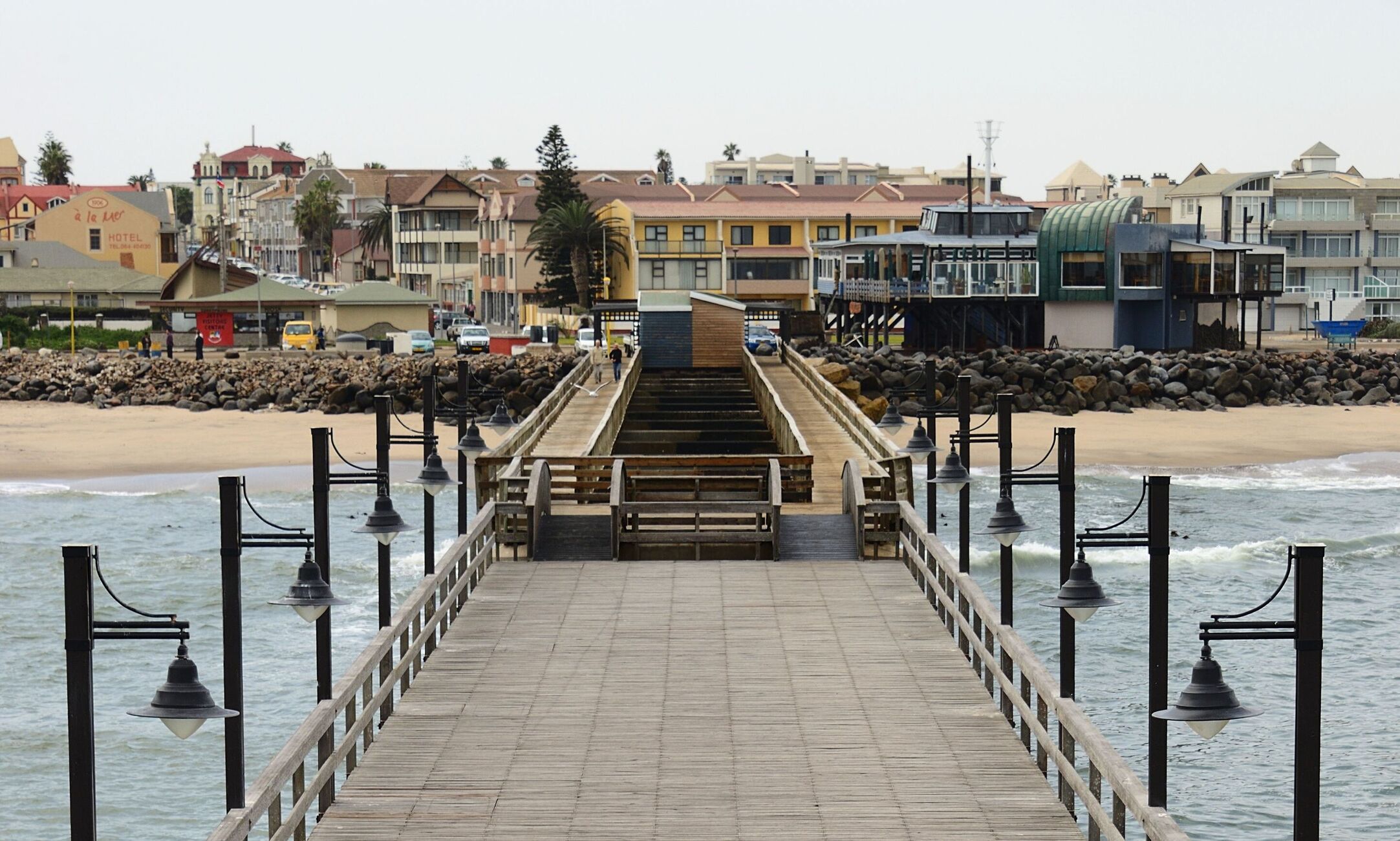
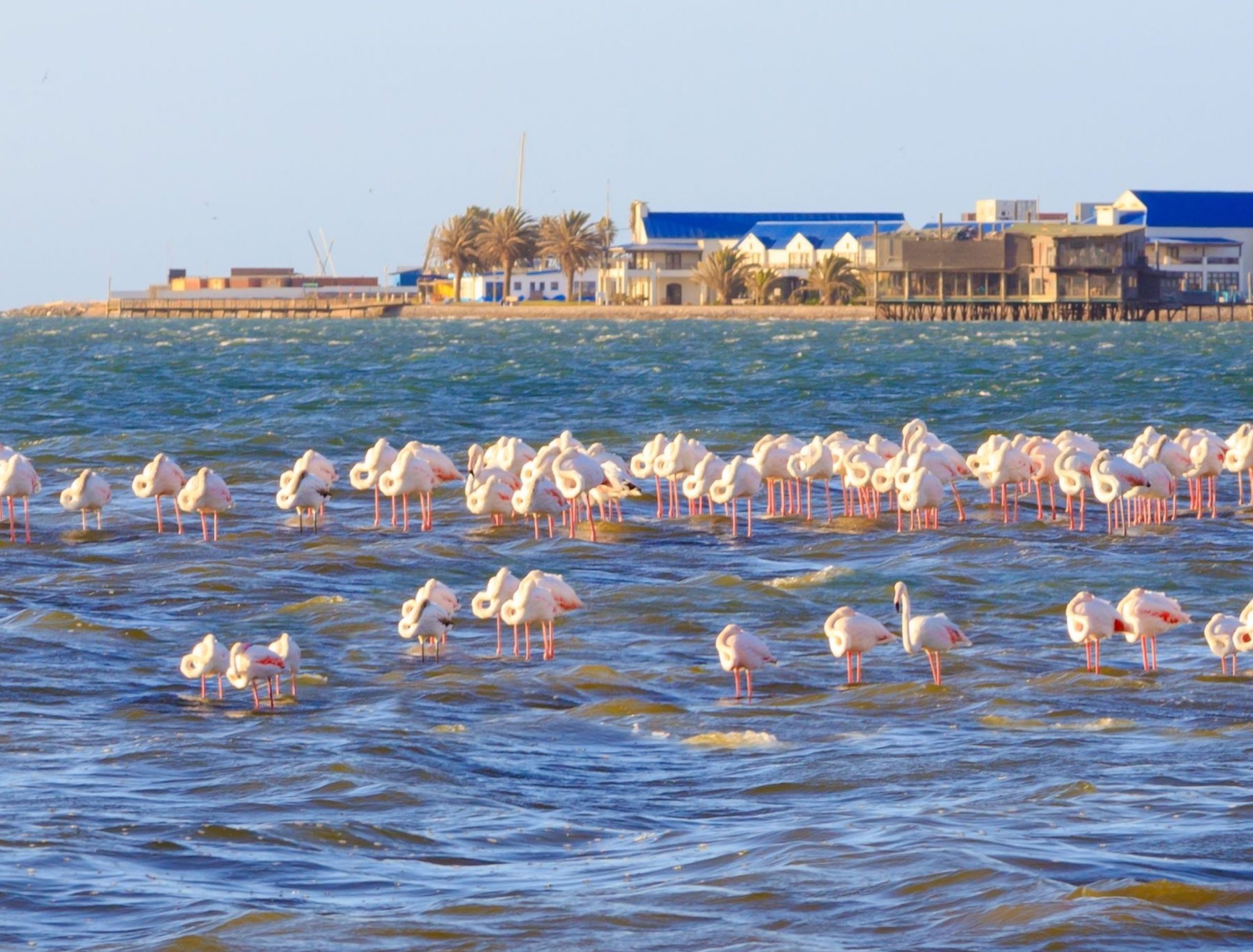
Swakopmund is relatively small, so you can easily explore the historic centre and then just amble on to the waterfront. Here you’ll find a red-and-white lighthouse, which is a beloved icon. There’s also Swakopmund Mole, a harbour wall built at the end of the nineteenth century that soon silted up to form a beach. And there’s the historic Swakopmund Jetty, built in 1905, that you can walk for a nice view back of the city’s waterfront, as shown above.
While morning fog coming off the cold ocean is common, days often turn sunny and mild by late morning thanks to the desert climate. So it’s wonderful to just spend some time relaxing at the beach. And there’s a playground for kids.
Like any self-respecting promenade, there are plenty of eateries. Of special note is the smart Tug Restaurant, where you dine on an old tugboat and have an unobstructed view of the ocean. The promenade’s Farmhouse Deli is also a lovely option, and it too offers a sweeping sea view.

ZAR
88000.00https://schema.org/InStock
African Overland Tours
Price From
R88,000
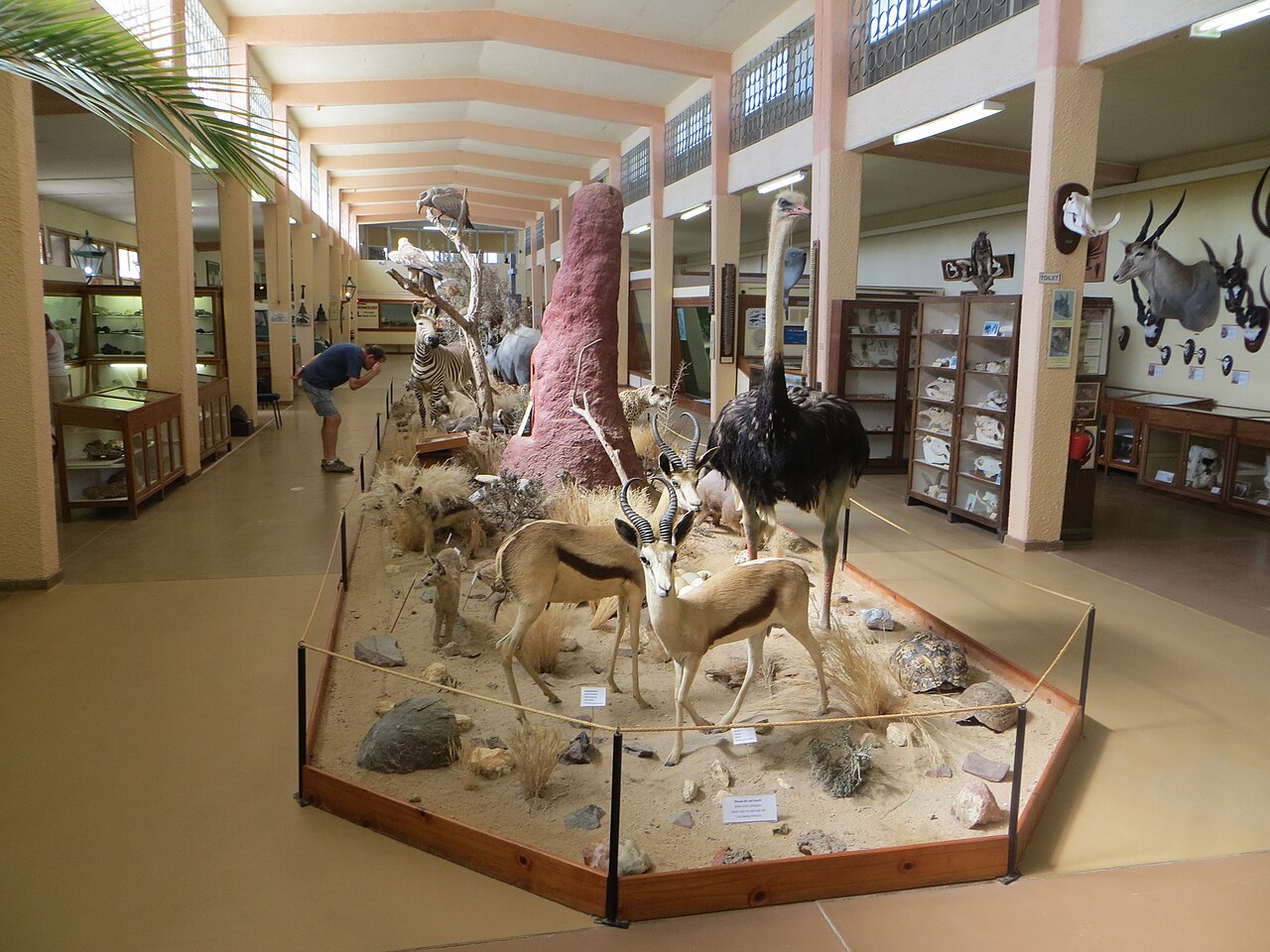
This image inside the museum is used courtesy of Visem
Unless you’re going to do a guided tour of the city, in which case you’ll get a dose of local history that way, head to the Swakopmund Museum to learn about the city’s colonial history, Namibia’s different cultures, and old modes of transport in the country, among other things.
The museum also focuses on natural history. So you can learn about the fascinating ecology of the surrounding Namib Desert, which is extremely old and has some of the highest dunes found anywhere in the world.
The west coast of Namibia is so different from everywhere else in Southern Africa in terms of its geography and consequently its history too. Spending an hour or two at the museum is therefore a fascinating exercise, and one that also really helps you appreciate all that you see and experience on a trip here.
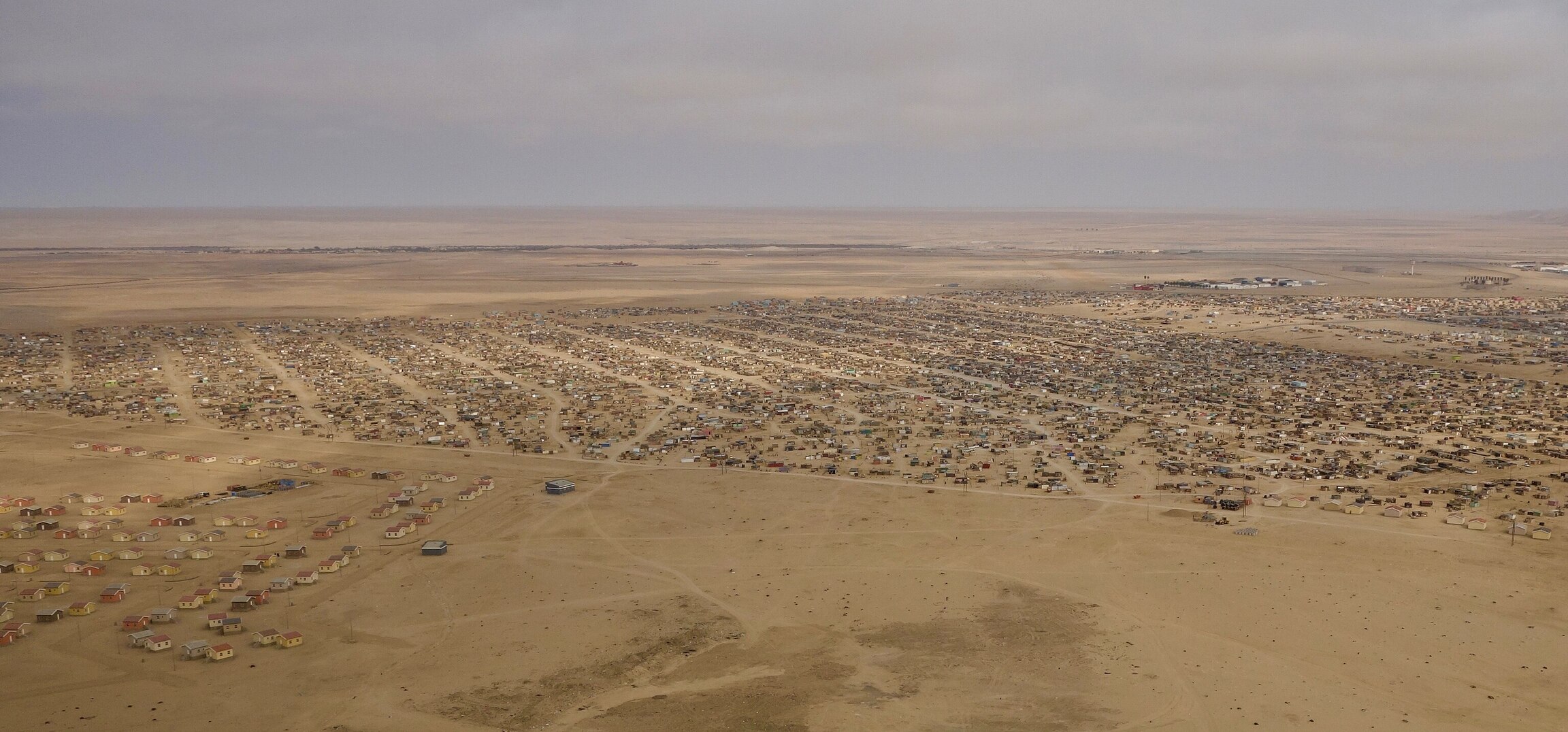
This partial view of Swakopmund’s townships is used courtesy of Sonse
While Swakopmund’s German heritage is a crucial part of its story, another vital part lies with the history and culture of the city’s indigenous inhabitants. These include the Ovambo, Herero, Damara, Nama, and San.
When Namibia was administered by South Africa (1915 to 1990), it endured similar apartheid laws; understanding these racist policies and their legacy is critical to understanding the Swakopmund – and Namibia – of today. So to see the other side of Swakopmund’s story, so to speak, I recommend doing a walking township tour with a local guide. Typically, this means exploring the multicultural inland neighbourhoods of Mondesa and the Democratic Resettlement Community (or DRC).
Different tours focus on different activities. Most will take you to explore a local market or two. You often enjoy a meal with a family in their home and listen to stories tying the past to the present. Other activities may include visiting a local school, shebeen (bar), or handicrafts initiative, learning some words in the click-based Damara-Nama language, and visiting a traditional herbalist.
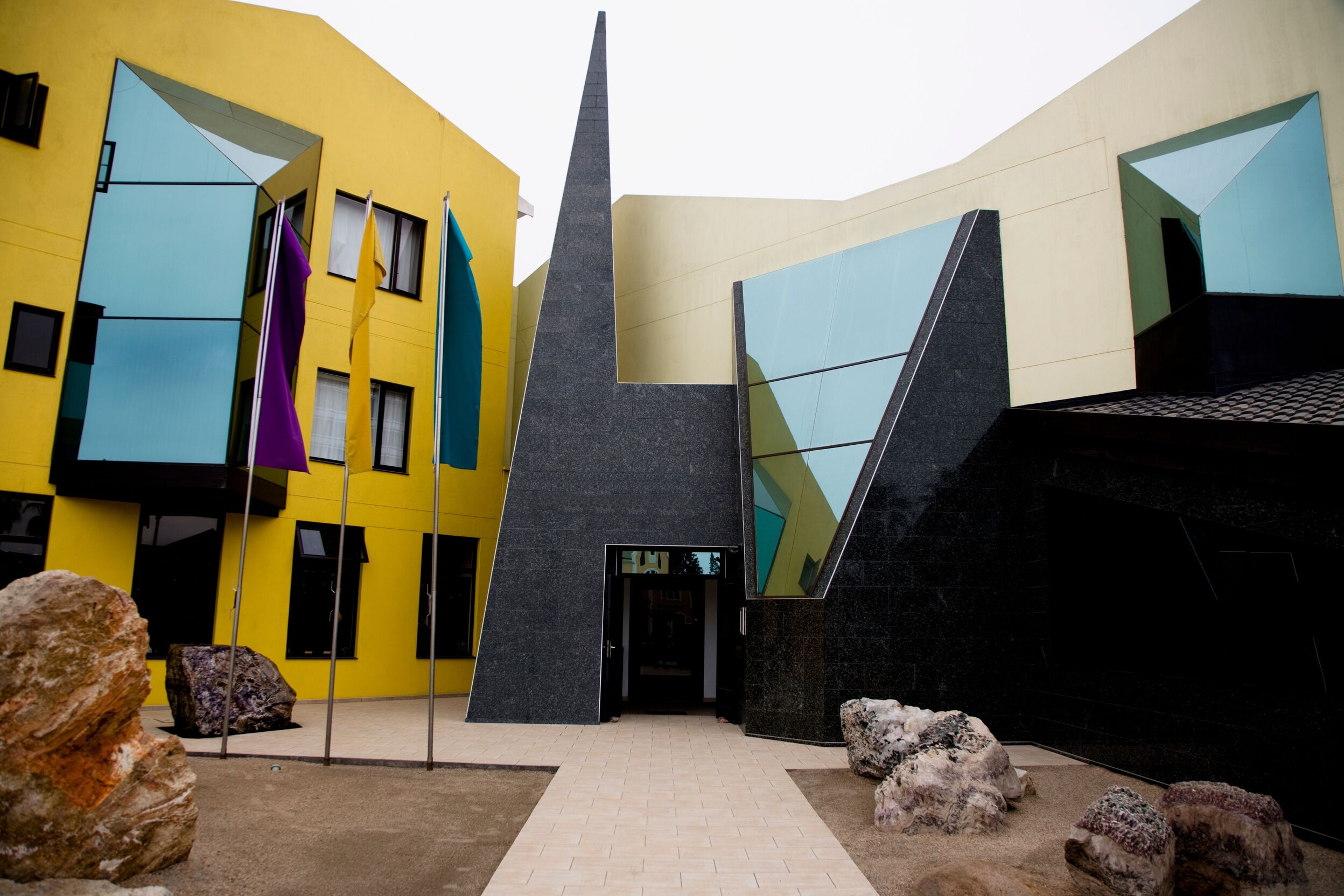
If you’re interested in geology, then Kristall Gallery is a must. Or if you simply like beautiful or astonishing things, then it’s also a must!
Housed in the striking building seen above, the Kristall Gallery contains an exhibition of rare and enormous crystals and gemstones. Most notably, you can admire the largest known quartz crystal cluster in the world. It took excavators years to get it out, and it’s a true natural marvel, being roughly 3 metres by 3 metres and weighing … wait for it …14,100 kg! (That’s 31,085 lb for you imperial folks.)
Another highlight is walking the narrow and winding tunnel through walls of crystals in the so-called Rock Cave. The cave was made to replicate the Otjua Tourmaline Mine in the nearby Karibib district.
The Kristall Gallery complex also has a gemstone scratch patch for kids. Then there’s the artists’ studio, where you can watch artisans work with the stones. And finally, there’s a souvenir shop and some jewellery boutiques. A useable item like a necklace with a semi-precious gemstone mined in the country you visited makes for a lovely gift or keepsake, in my opinion.
I’ve focused on things to do in Swakopmund itself. But there are various thrilling full- and half-day excursions you can do from the city. Of particular note to my mind are:
There really is so much to do in and around Swakopmund. For most international travellers, a Namibian tour is a once-in-a-lifetime trip. So know that one of the safest and also most economical and sustainable ways to explore the country’s highlights, including Swakopmund, is on a small-group overlanding trip like those shared below!
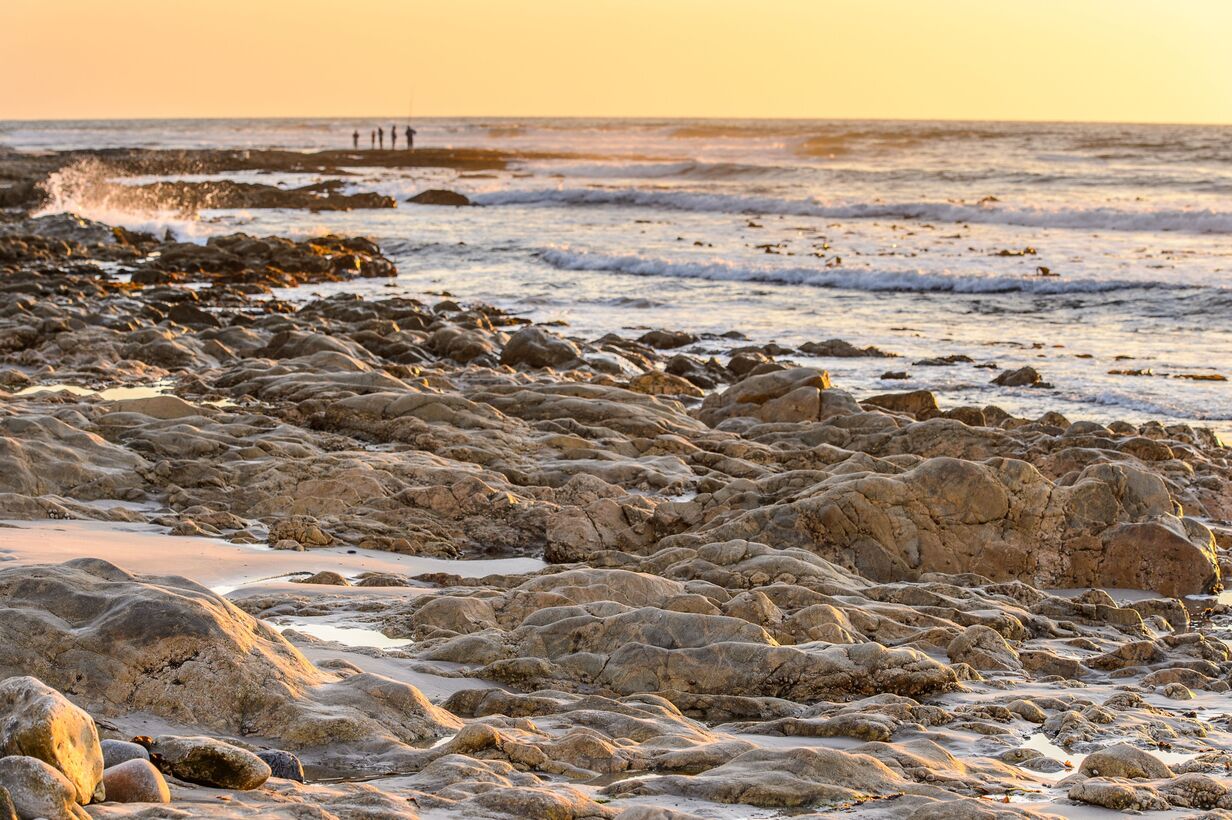
Note: This blog post was created in 2013 by Bronwyn Paxton. It was completely rewritten in August 2026 by Megan Abigail White.
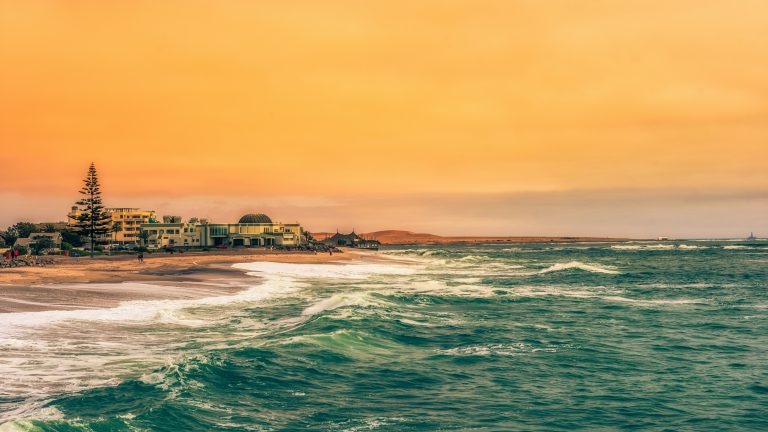
Imagine walking down a street lined with pastel-coloured, German colonial architecture, and the scent of fresh Apfelstrudel wafting from a nearby baker… only to look up and see massive, ancient sand dunes looming on the horizon. Swakopmund is Namibia’s surreal…
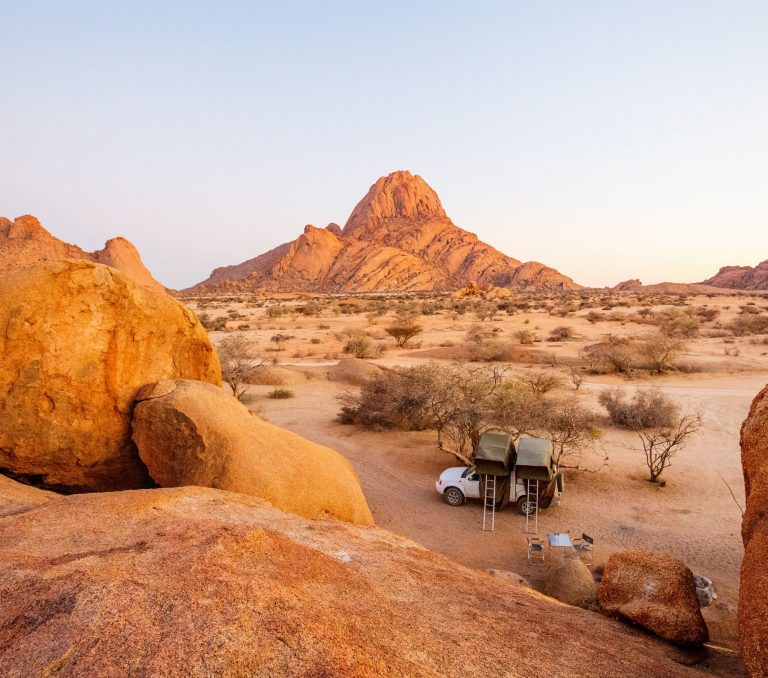
Namibia is a land of bold, contrasting, and mesmerising scenes There are the strong lines of its desert dunes. Shipwrecks rusting in misty, forgotten coves. Rugged mountain ranges scarred by canyons. River-wallowing wildlife and waterfalls. Forgotten towns, cracked salt pans,…
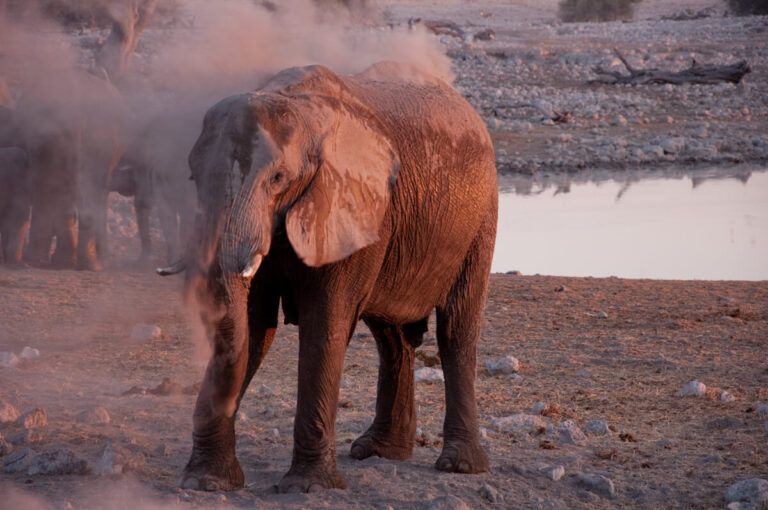
Namibia is often overlooked as a safari destination in favour of the more famous South Africa, Kenya and Tanzania. Namibia, a huge, sparsely populated country to the north west of South Africa, may not have the stereotypical safari settings of…

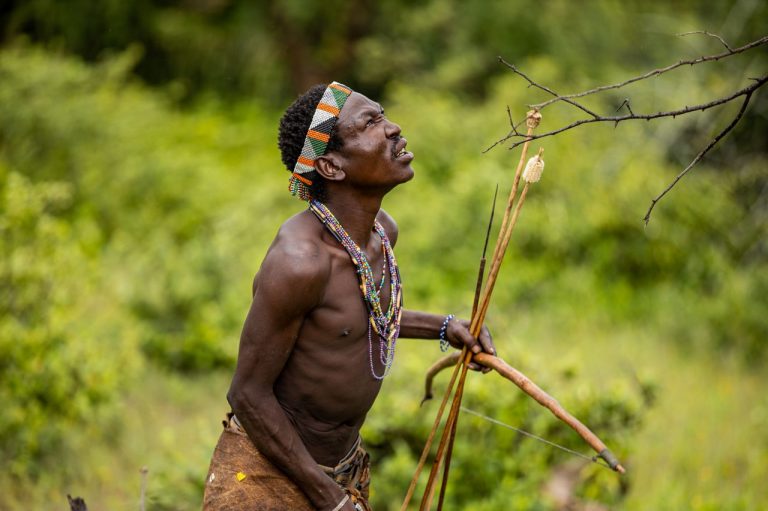
The San Bushmen are the oldest known people group in Southern Africa, alongside the Khoe. If you ever visit the Kalahari Desert (which you absolutely should if you can, for so many reasons!), you’ll encounter the San Bushmen and artefacts…

The Himba are a proudly traditional people who live in the coastal Kaokoveld Desert of northern Namibia and southern Angola Apart from the Herero, the Himba are probably Namibia’s most well-known ethnic group, not least because of the women’s distinctive…
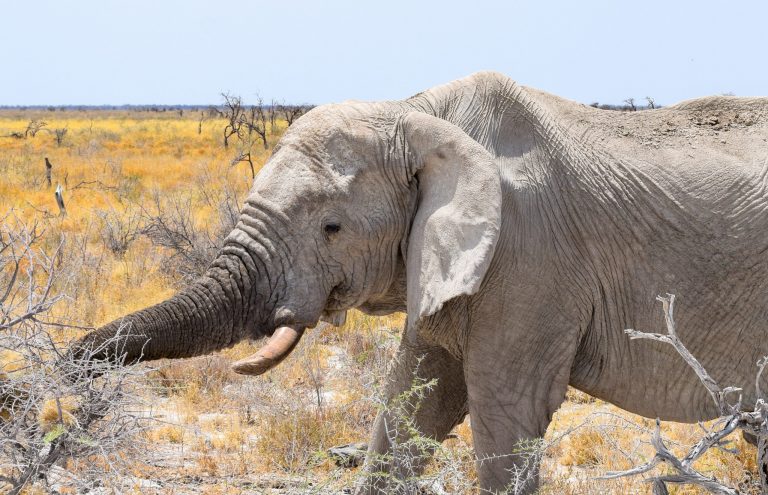
Ever heard of the “Great White Place” that can be seen from space? Etosha National Park is Namibia’s largest wildlife sanctuary, home to one of Southern Africa’s best safari destinations. It was established in 1907, spans about 22,750 square kilometers,…
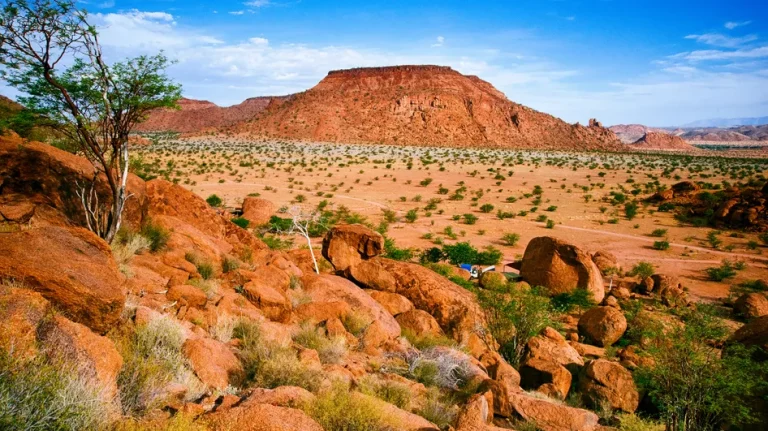
In Damaraland, the earth holds and breathes history. This is a realm of profound humming silence, where time layers itself into a rust-red chronicle of the ancient world. Cradled in Namibia’s wild heart, between the shimmering mirages of Etosha and…
Best things to do in the city of Swakopmund
5
1

Price From
R43,800
2
Price From
R92,300
3

Price From
was
R92,950
R79,007
4


Price From
R89,500
5
Price From
R74,375