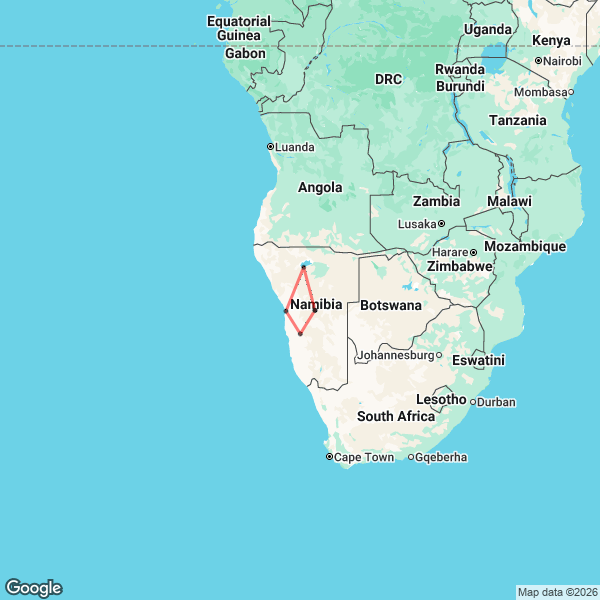
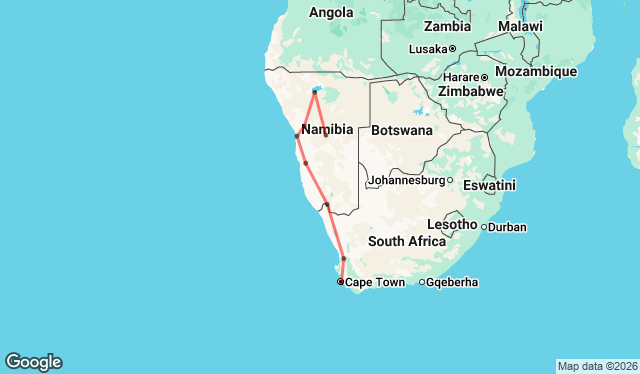
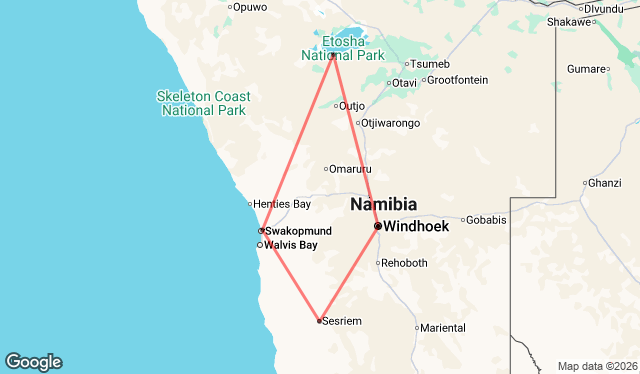
Our goal is to be on the road by 07h30 this morning after breakfast. The Skeleton Coast is on our way, and we are taking the scenic route. Leaving Outjo on the main road, we head west through Damaraland to pick up the gravel road as we travel through an area known as Damaraland, then south on the main road.
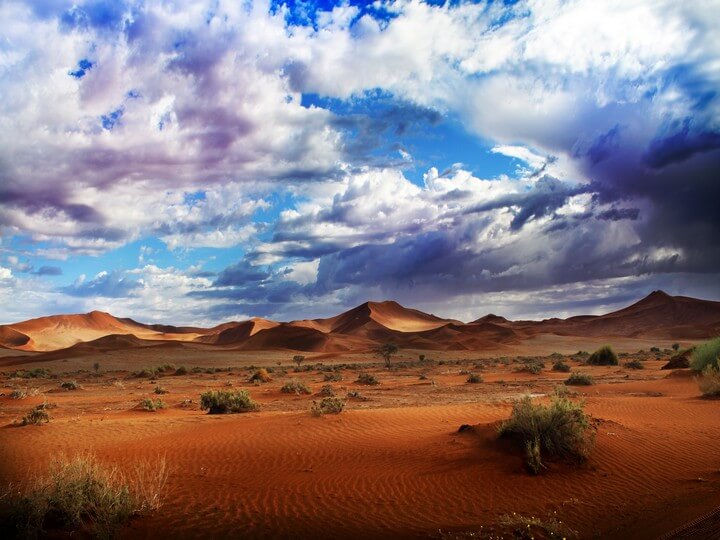
The scenery in Damaraland is beautiful, with mountains, open grasslands, tall pink granite koppies (little hills), wide open spaces and a big sky. Our road today is lined with informal shops selling locally made, handcrafted souvenirs, so we could also meet some of the locals. Our pictures here usually feature ladies wearing traditional clothing from the Himba, Herero, and Damara tribes. Among these colourful characters who live in this harsh environment are some of the locals. Directly contributing to the local economy is as simple as buying a small item here.
While driving through Namibia’s beautiful landscape, we stop for a picnic lunch under the shadow of Namibia’s highest peak, the Brandberg. A giant monolith of pink tinged granite rising from the desert floor, it rises 2,573 m above sea level. Arriving at the Atlantic Ocean and the coast, we continue our journey west. Due to Namibia’s forbidding mountains and barren beaches, the entire coastline is known as the Skeleton Coast. Ships are driven onto the beach by the wind, waves and fog banks. A shipwrecked mariner facing no water, food, rescue, or the prospect of exposure faced, in olden days, a slow death. They considered themselves lucky to have gone down with their ship.
Continuing south, our next stop is a more recent shipwreck. The Zeila, a fishing trawler, was beached 15 km south of Henties Bay in 2008. A scrapped old vessel, she was currently under tow. In the swell and currents, and like so many vessels before her, she ended up on the beach. It’s a good photo opportunity since she’s close to the shore.
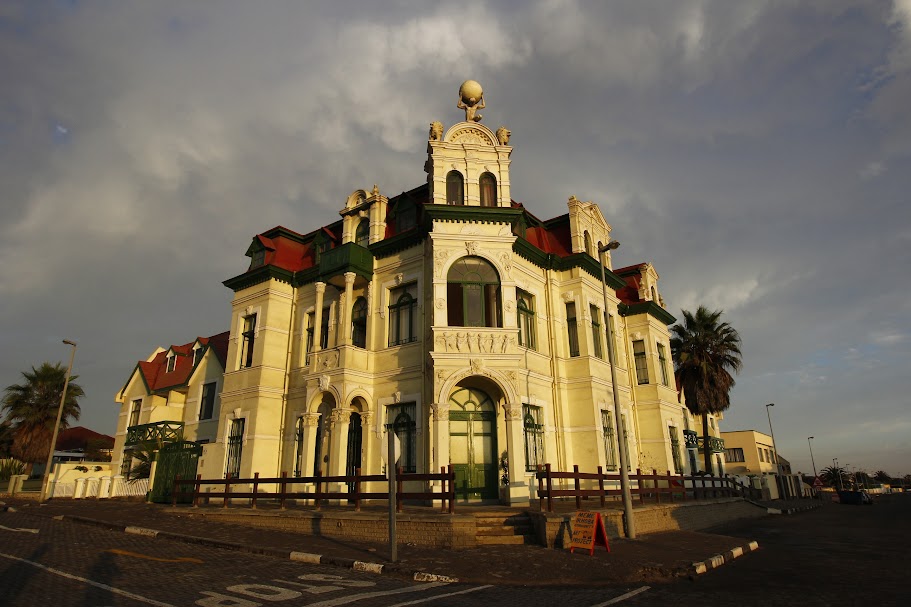
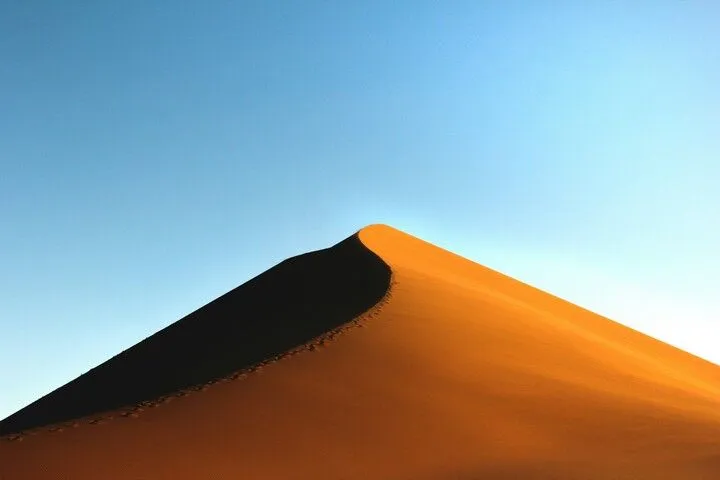
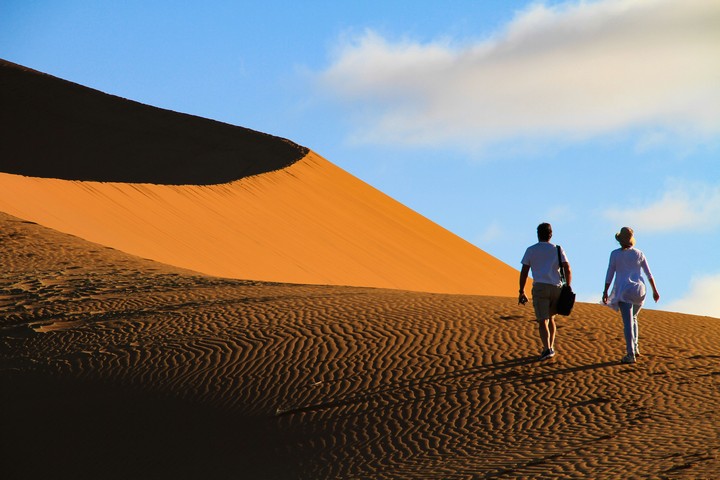
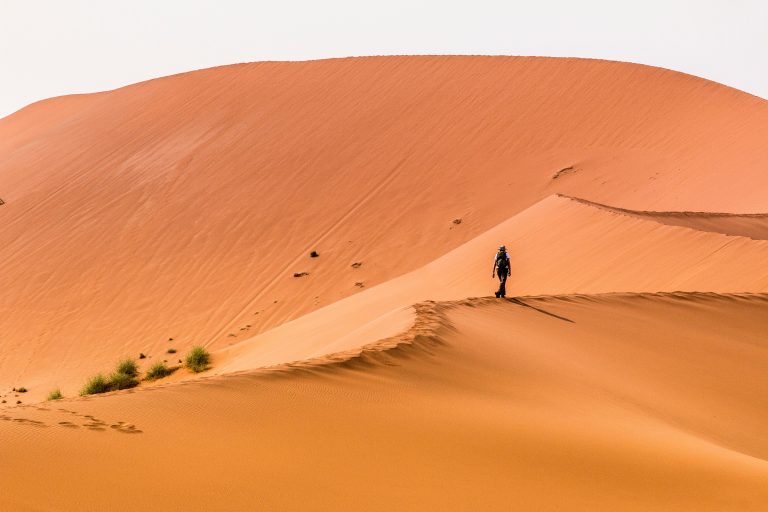
After our journey into Swakopmund, we check into our accommodation, Hotel Al la Mer, which is centrally located and offers easy access to the town on foot. The German Empire founded Swakopmund in 1892 by Captain Kurt von François. His other city was Windhoek. The mighty sand dunes of the Namib Desert surround this town to the north, east, and south, while the Atlantic Ocean borders it to the west. German is still widely spoken and colonial German architecture can be seen.
You can book restaurants and get recommendations from your guide in Swakopmund.