


African Overland Tours
https://www.facebook.com/AfricanOverlandTourscom/
https://www.instagram.com/african_overland_tours/
https://www.youtube.com/@africanoverlandtoursandsafaris
+27 (0) 21 448 0997
Customer Service
Worldwide

African Overland Tours
https://www.facebook.com/AfricanOverlandTourscom/
https://www.instagram.com/african_overland_tours/
https://www.youtube.com/@africanoverlandtoursandsafaris
+27 (0) 21 448 0997
Customer Service
Worldwide
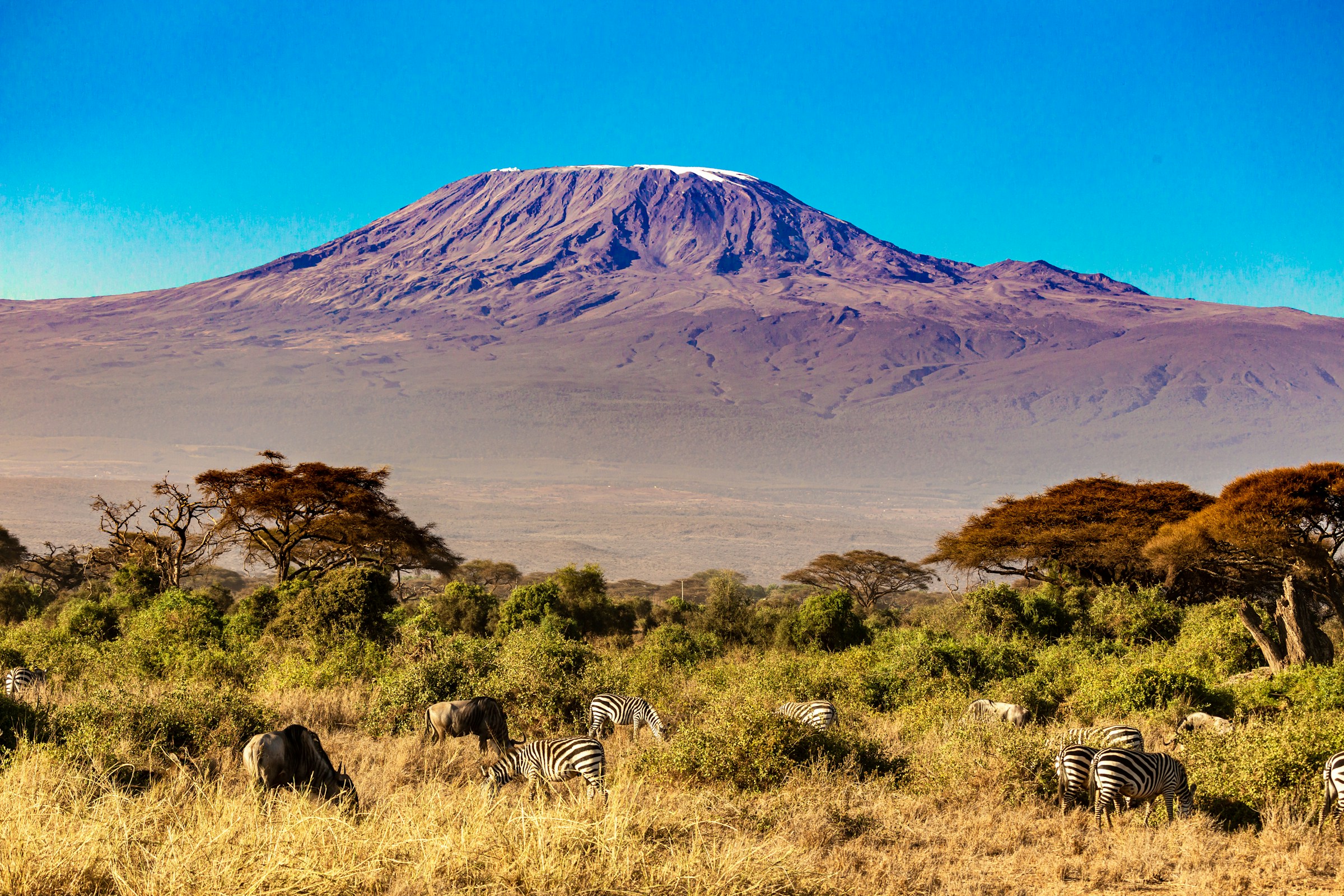
Mount Kilimanjaro soars out of the plains of northern Tanzania to reach 19,341 ft (5,895 m) above sea level. It’s not only the tallest free-standing mountain in the world, it’s also the tallest mountain in Africa, making it one of the world’s Seven’s Summits.
Excitingly, unlike most mountains of similar height, Kilimanjaro is a non-technical climb. This means you don’t need any mountaineering experience or equipment to reach the summit. It’s therefore the highest peak you can climb as a regular (albeit fit) hiker, and so it naturally attracts adventurers from all over the world!
Mount Kilimanjaro National Park exists to protect the mountain. The base of the mountain is covered in settlements, like the sprawling city of Moshi to the south, as well as villages and banana and coffee plantations. The park’s boundary line begins just above this cultivated land, in the forested zone.
The park is 1,688 sq km (or 652 sq mi). That’s about half the size of Yellowstone. It’s administered by the Tanzania National Parks Authority (TANAPA), which reports receiving over 50,000 visitors per year.
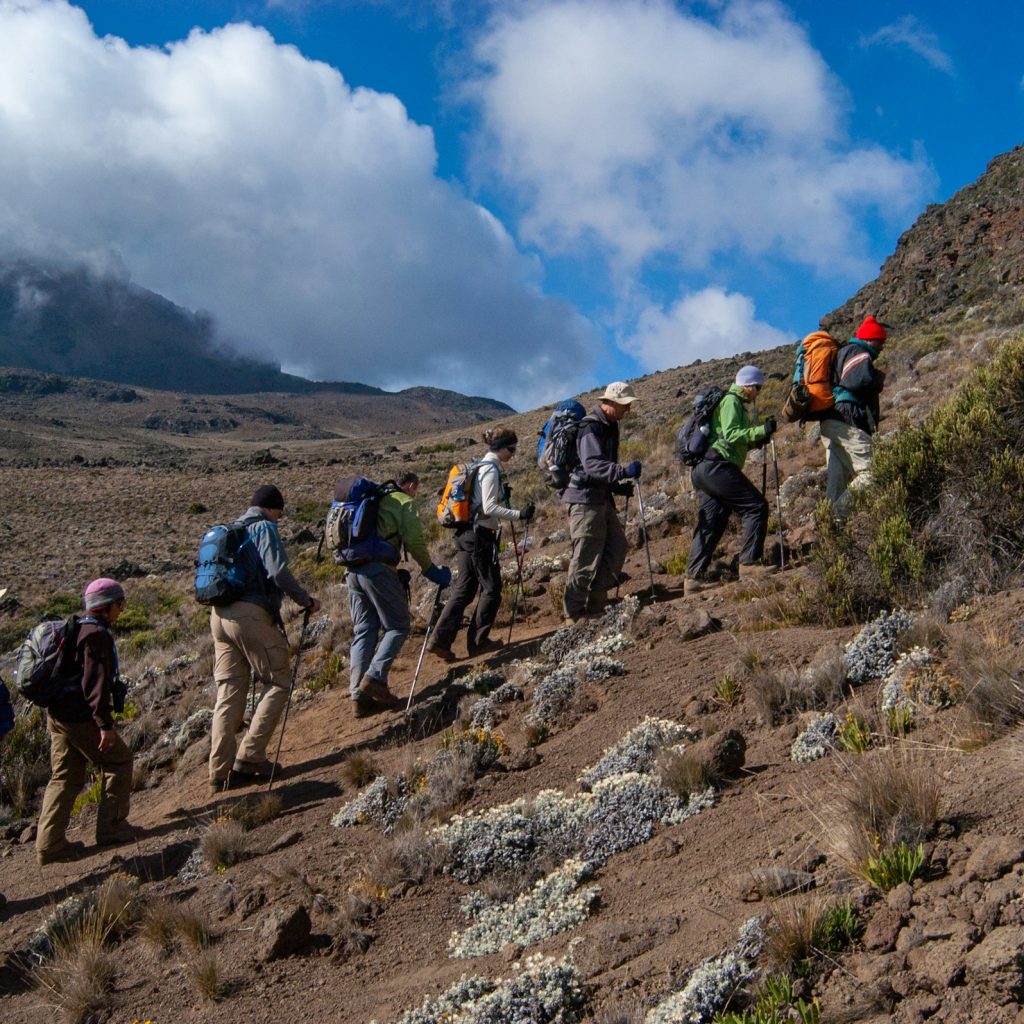
Kilimanjaro is a dormant volcano. It’s one of the many volcanic peaks, both active and dormant, that stud the Great Rift Valley, an enormous geographical feature running through East Africa that was created by tectonic forces trying to pull the African continent apart.
The mountain has three, widely spaced cones, giving it a unique profile from afar: Shira, Kibo, and Mawenzi. The central cone, Kibo, is the tallest by far, with its highest point (a spot on its crater rim) serving as the mountain’s summit. Called Uhuru Peak, the summit spot is celebrated with a signpost, and those who manage to reach it and look out over the clouds or plains far below can tell you how exhilarating and unforgettable that moment is.
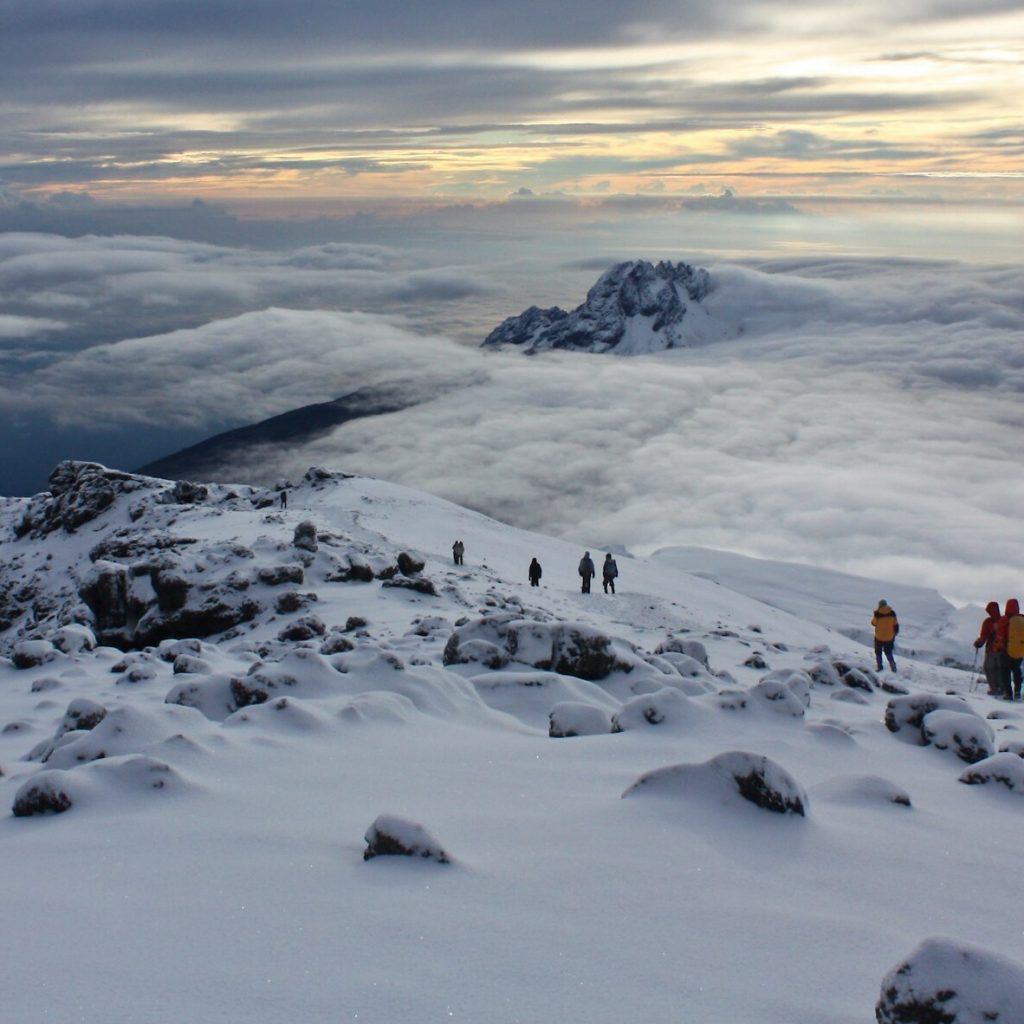
Kilimanjaro is just north of the Equator, so the surrounding plain has a warm subtropical climate. The mountain is so tall, however, that its summit is a world of ice, glaciers, and seasonal snow. This means when you climb Kilimanjaro, you usually start in shorts and a shirt and then transition to long johns, ski gloves, and a woolly hat in a matter of days. That’s pretty wild.
The five concentric climate bands on Kilimanjaro look like this, working from the bottom up:
3,200 to 5,900 ft / 1,000 to 1,800 m
Here you find many settlements as well as farms growing the likes of coffee, bananas, maize, and vegetables. As mentioned, this band isn’t part of Mount Kilimanjaro National Park – only the top four bands are protected land.
5,900 to 9,200 ft / 1,800 to 2,800 m
This band is warm and humid. Some of the forest is very ancient, and supports a wonderful diversity of plants and animals. Wonderfully, the forest is home to the Kilimanjaro impatiens, a delicate, red-and-yellow little flower found nowhere else in the world.
9,200 to 13,100 ft / 2,800 to 4,000 m
This is the most unusual vegetation band as it has many unusual and striking plants like giant groundsels and giant lobelias. There are also many striking rock formations, like Lava Tower and Barranco’s Wall. There’s often mist at this elevation, and it can make the oversized plants appear even more otherworldly.
13,100 ft to 16,400 ft / 4,000 to 5,000 m
The environment here is harsh, with little water, hardy shrubs, and truly chilling night-time temperatures. The wind can be fierce, as there’s almost no protection. On many days, the view below is simply that of a thick carpet of cloud, which gives a sense of being truly apart from the world.
16,400 to 19,341 ft / 5,000 to 5,895 m
The arctic zone is as cold and inhospitable as its name sounds. There are some (shrinking) glaciers near the top. Trekkers usually see Rebmann Glacier, and it’s pure magic to watch its walls reflect the changing colours of dawn.
Most people don’t travel to Mount Kilimanjaro National Park especially for the wildlife. Nearby Arusha National Park is a much better site for traditional game viewing. That said, I don’t wish to undermine the wildlife that can be found in the park – it’s just about having realistic expectations.
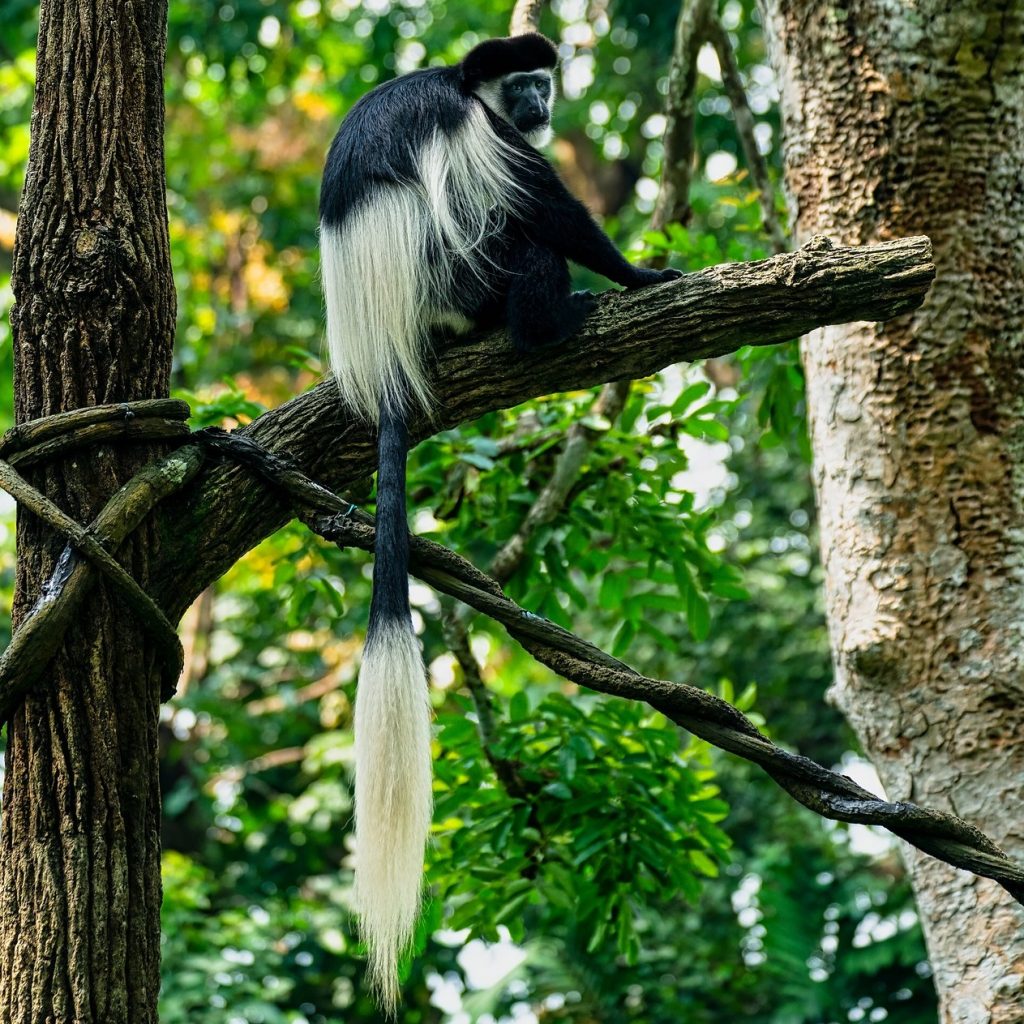
The majority of the animals live in the rainforest and moorland. They include black-and-white colobus monkeys, which are the most striking of the monkey species and are happily seen quite often. The other primates living in the trees are blue monkeys, baboons, and bush babies. Servals, white tailed mongooses, and even leopards live on the mountain, but they’re outrageously hard to find.
The park has several antelope species. Be on the lookout for elands, klipspringers, bushbuck, red and grey duikers, and Abbot’s duikers, among others. Abbot’s duikers are endangered and live in only three small pockets within Tanzania, so if you spot one, you’re lucky indeed!
Also, keep your eyes peeled in the forest for two endemic chameleon species. Firstly, there’s the three-horned chameleon (or Jackson’s chameleon). Then there’s also the slightly smaller Kilimanjaro two-horned chameleon (or Dwarf Fischer’s chameleon). But do note that only the males actually have horns.
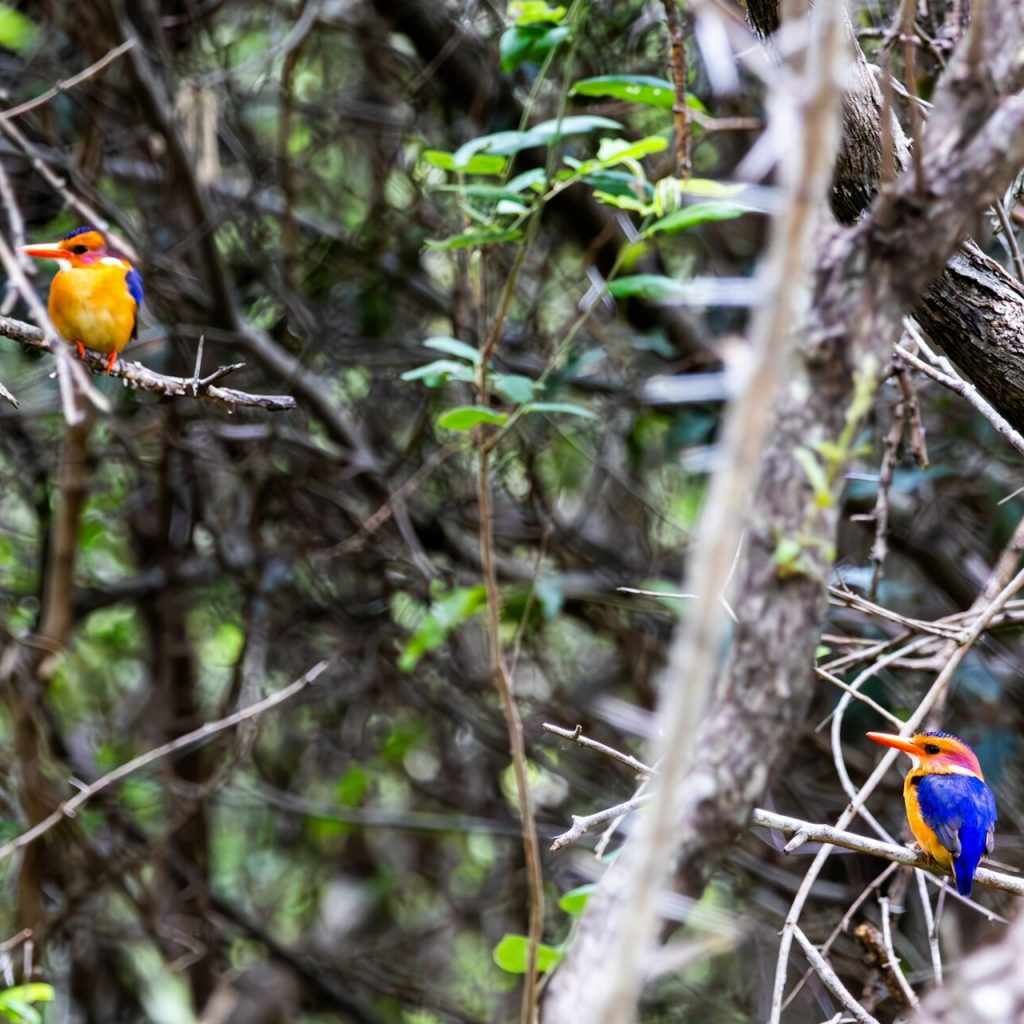
The birding opportunities inside the park are really great, as there are 179 known species.
On the lower half of the mountain, you can find silvery-cheeked hornbills, malachite sunbirds, and African pygmy kingfishers, among others. Excitingly, the rainforest is home to rare Abbot’s starlings and dazzling African pittas.
When you’re above the treeline, you should see some raptors cruising above you at times. These might include crowned eagles, giant bearded vultures, and augur and mountain buzzards.
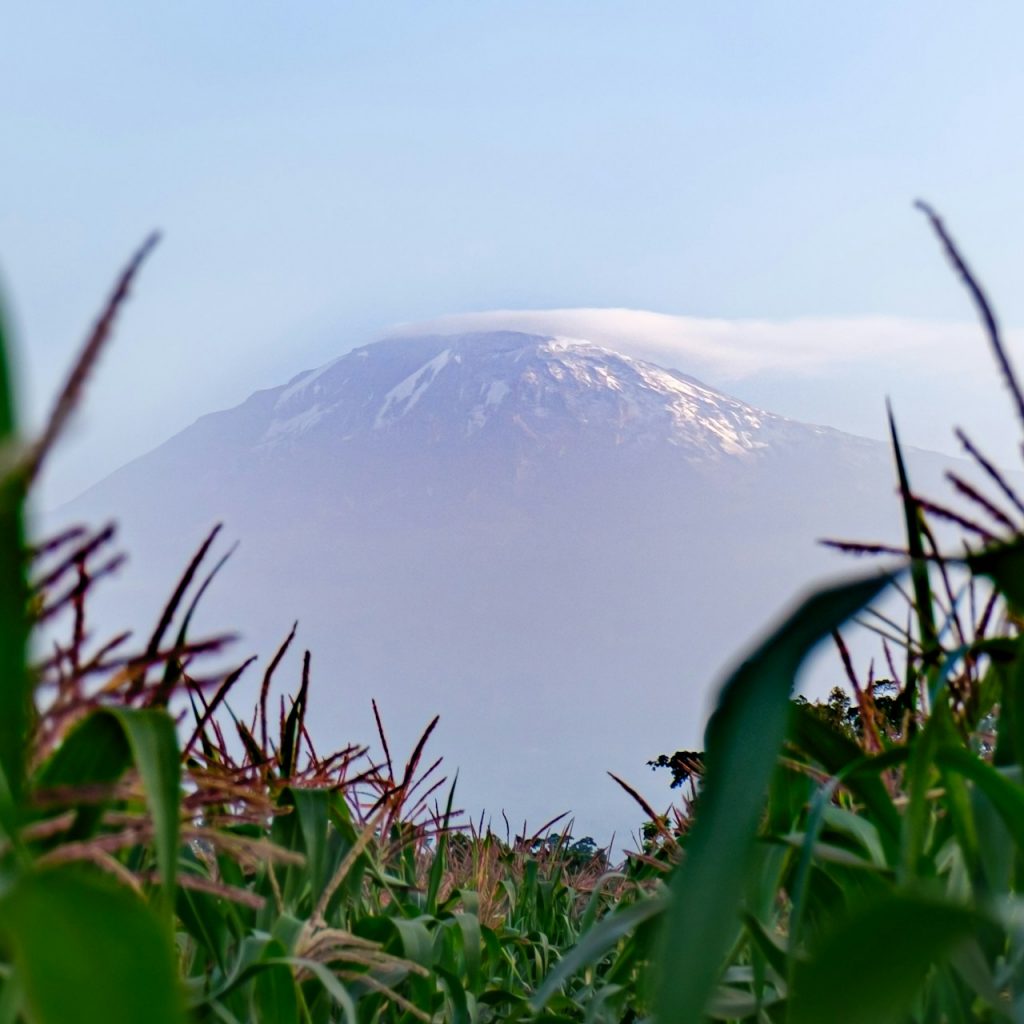
Mount Kilimanjaro sits in the far north of Tanzania, with its northern slope running into Kenya. Just 43 miles to the west is Mount Meru, Kilimanjaro’s shorter cousin and another popular multiday trek.
Those coming to climb Kilimanjaro usually fly into Kilimanjaro International Airport (JRO), which is located within sight of the mountain. But you can also fly into nearby Arusha Airport (ARK), which is only 50 km (31 miles) away from JRO.
Most Kilimanjaro climbers head to Moshi upon arrival in the region, as it occupies the plain south of the mountain. The drive from JRO to Moshi takes between 30 minutes and an hour, depending on traffic and where in the city you’re staying. Moshi prides itself on its award-winning cleanliness as well as its love of gardening, so you’ll see countless nurseries along the roadside during the drive.
Hiking on Mount Kilimanjaro, whether on a half-day outing to swim in the pool at Materuni Falls or on a multiday trek to the summit, is a rewarding and sometimes life-changing experience. If you’d like to know more, please check out these tour packages that include Kilimanjaro on offer from African Overland Tours.
Note: This blog post was rewritten on 18 December 2025.

"*" indicates required fields