

African Overland Tours
https://www.facebook.com/AfricanOverlandTourscom/
https://www.instagram.com/african_overland_tours/
https://www.youtube.com/@africanoverlandtoursandsafaris
+27 (0) 21 448 0997
Customer Service
Worldwide

African Overland Tours
https://www.facebook.com/AfricanOverlandTourscom/
https://www.instagram.com/african_overland_tours/
https://www.youtube.com/@africanoverlandtoursandsafaris
+27 (0) 21 448 0997
Customer Service
Worldwide
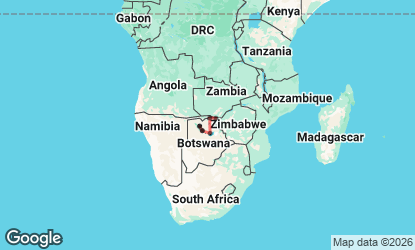
Makgadikgadi Pans in northeastern Botswana is a massive salt pan system that sustains a surprising variety of wildlife
Once upon a time, Makgadikgadi Pans was covered by a vast lake. Today, that lake is gone, and what’s left in its place is a collection of enormous salt flats interspersed with grasslands and tough trees and inhabited by hardy wildlife.
Covering 16,000 square kilometres, Makgadikgadi Pans is one of the world’s largest complexes of salt flats. Its biggest basin is Ntwetwe Pan in the west of the complex. Ntwetwe is roughly 160 km (95 miles) long and 120 km (75 m) wide. Sua (or Sowa) Pan in the east isn’t much smaller. The other of the most famous basins is Nxai Pan in the north of the complex.
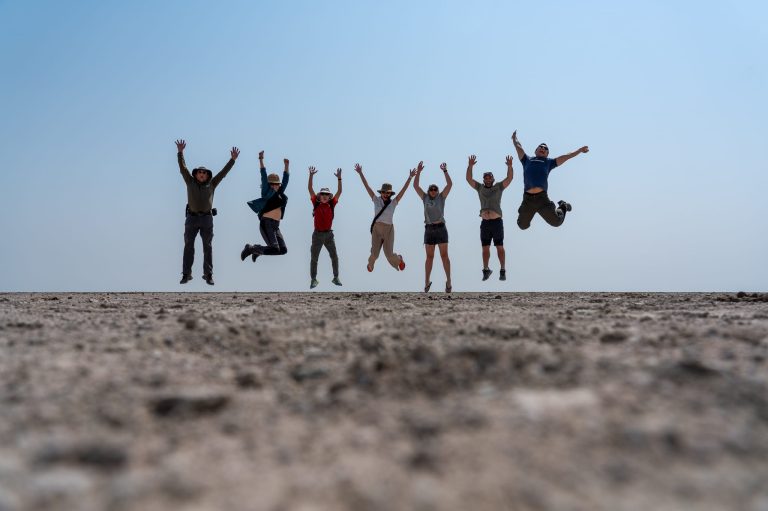
The entire Makgadikgadi complex is a remarkable place of austere beauty, grand scale, and surprising wildlife biodiversity. And given the pans’ extreme size, visitors can dissipate, as it were, allowing you to explore this far-removed world in wonderful solitude and stillness. If you ever have the opportunity to visit this unique ecosystem, be sure to jump on it!
Here are the five most compelling reasons (in my opinion) to plan a Botswana overlanding trip that includes Makgadikgadi Pans …
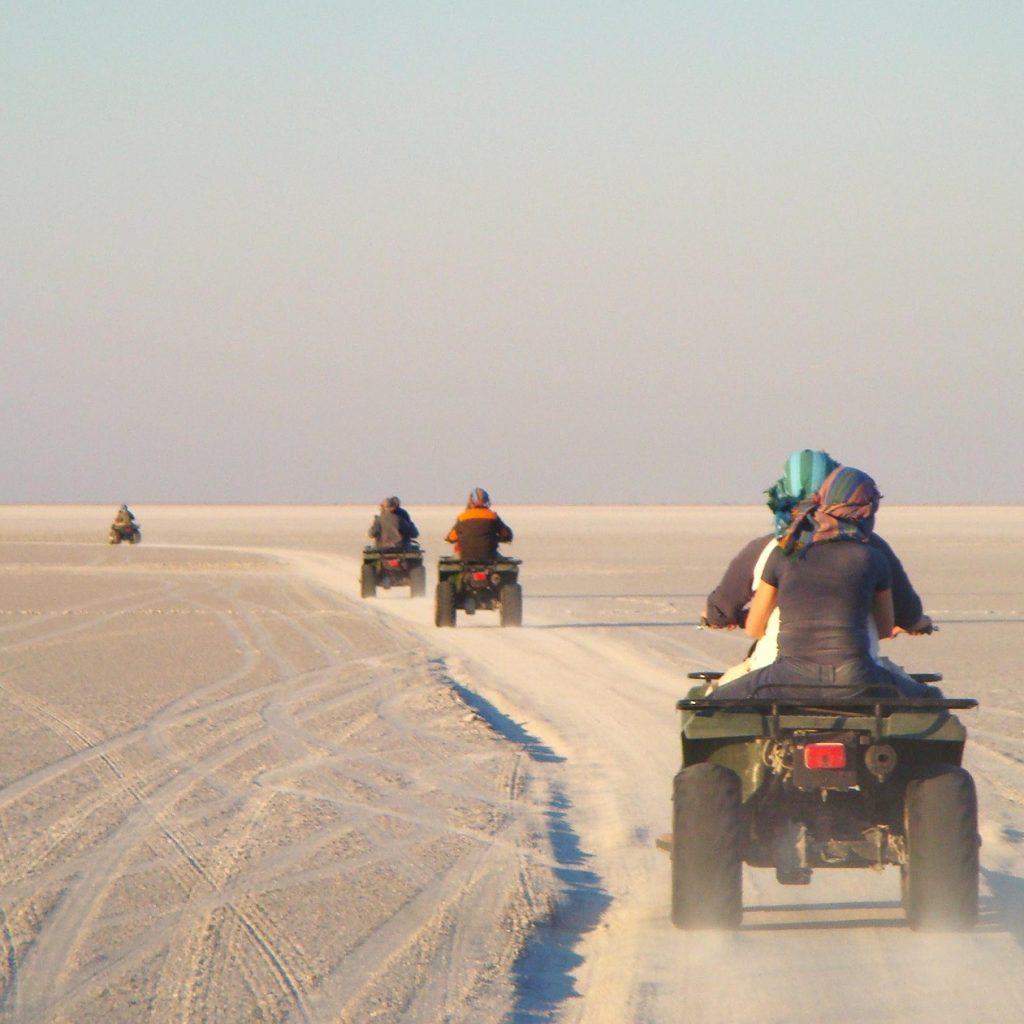
In the dry season, when the salt flats of the Makgadikgadi Pans are bone dry, you can walk for endless miles towards an ever-receding heat mirage. You eventually reach a space that feels like an otherworldly void – a near-white, cracked land that extends without variation to the horizon in every direction. Seldom in life have I ever experienced such far-reaching silence and exhilarating solitude.
Of course, your visit certainly doesn’t have to be all about quiet moments. You can do a fun quad biking tour, as the above picture shows.
I must also add that sunrises and sunsets in the Makgadikgadi Pans are showstoppers. Shades of orange, pink, red, and purple burn the sky, while the hard floor becomes a wash of deep orange.
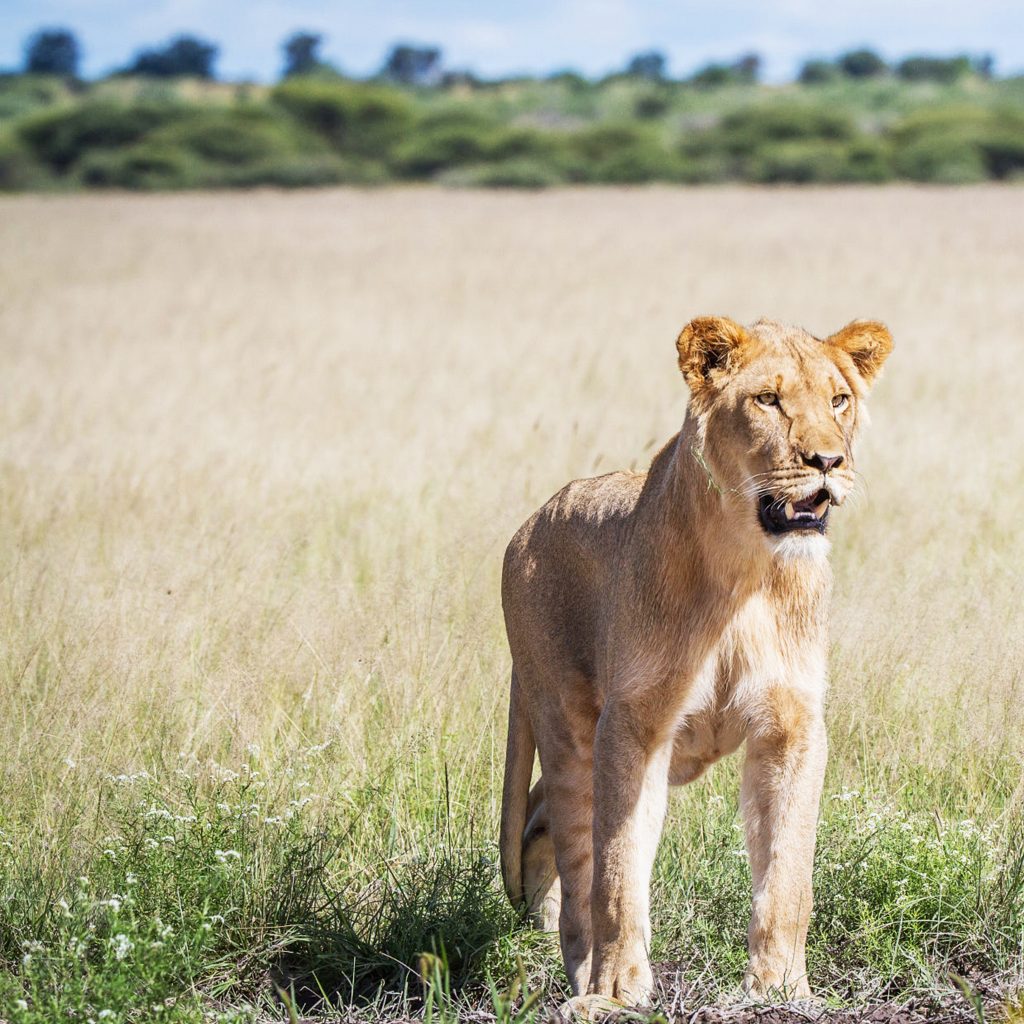
For a few months every year (roughly December to March), rains come to Makgadikgadi Pans and the salt flats are transformed into mirror-like lakes and wetlands. The grasslands on their fringes spring back to life. Migratory birds arrive, including thousands of flamingoes and pelicans, which settle across the salty waters and speckle them with colour.
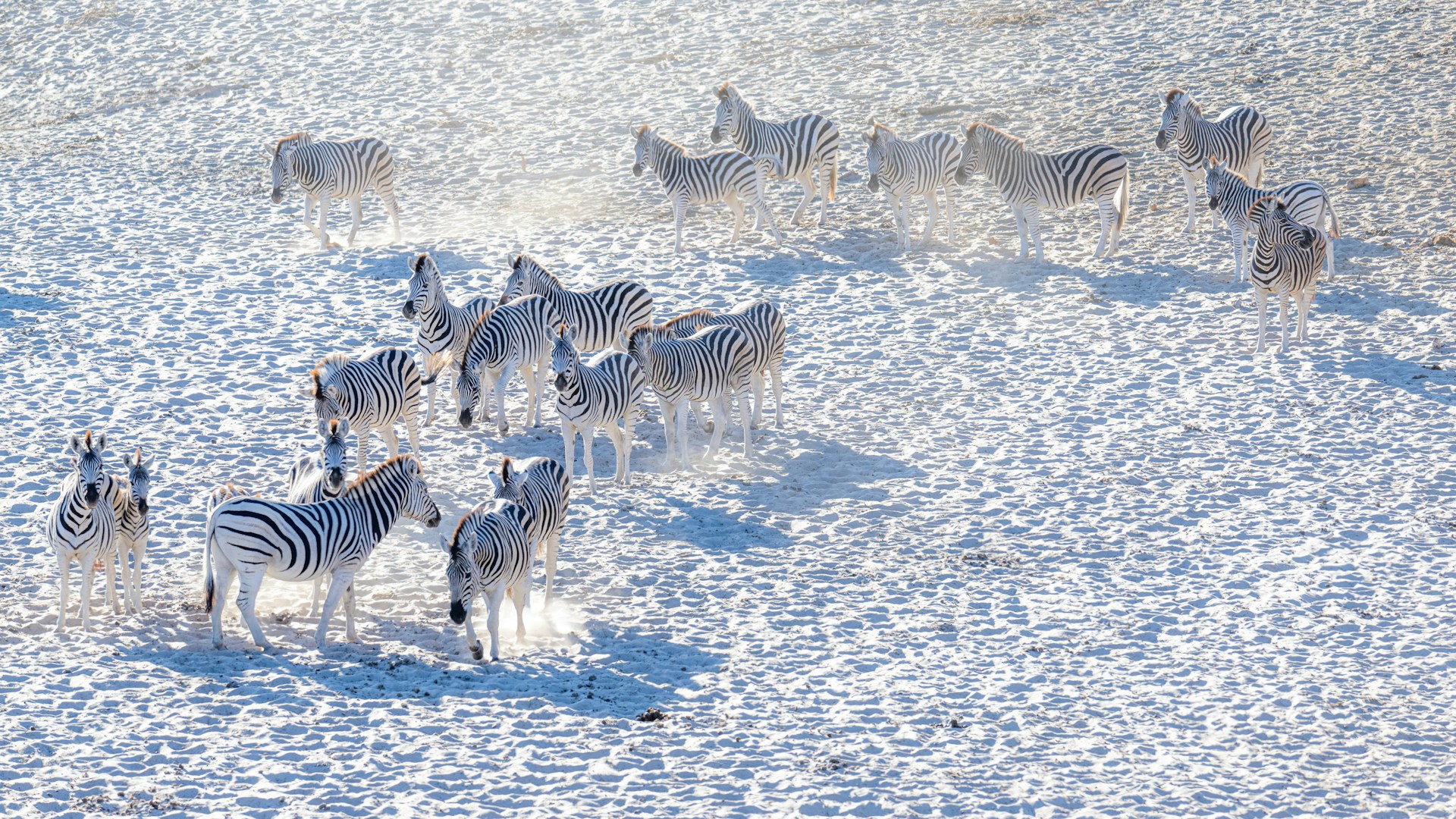
What’s more, this verdant landscape attracts large herds of migrating plains zebras, wildebeests, oryxes (gemsboks), bush elephants, and others.
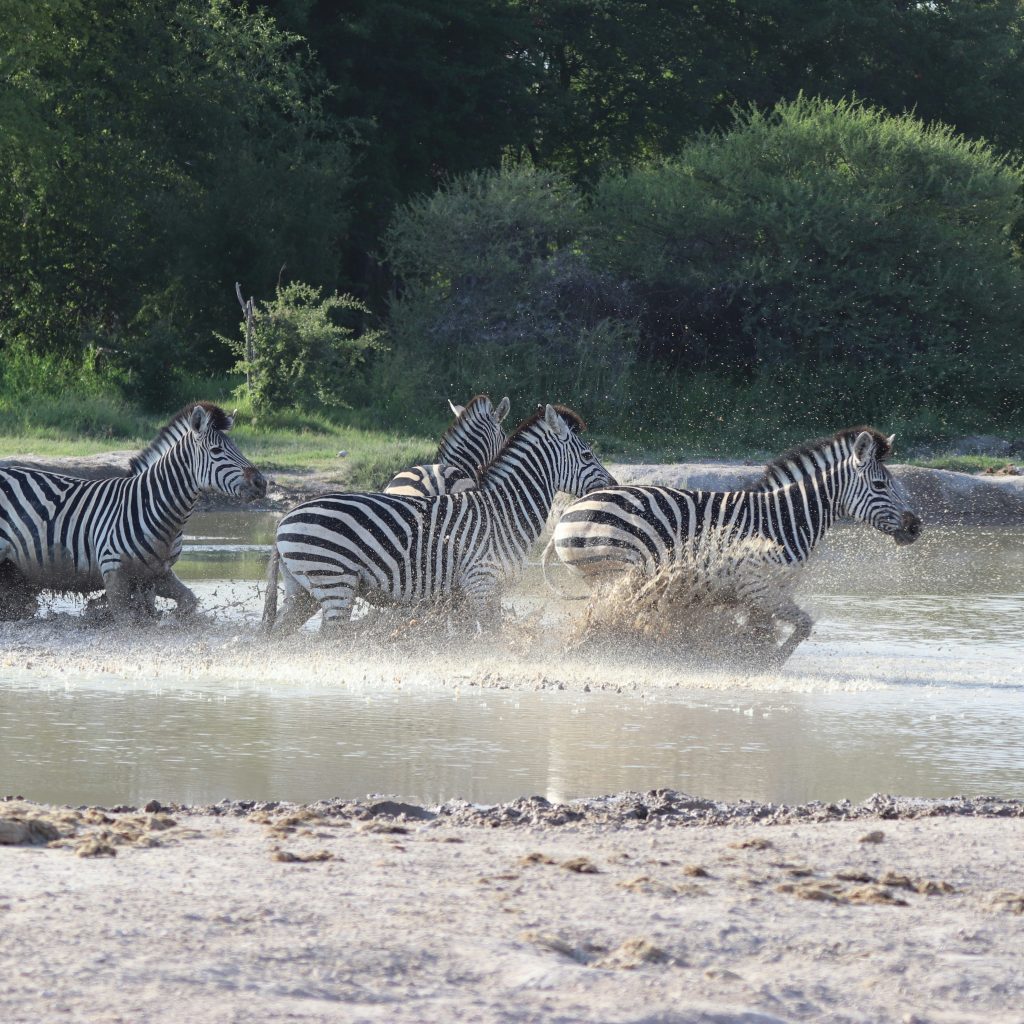
Some of these migratory zebras do, in fact, travel to Makgadikgadi Pans all the way from Chobe River in the north. According to the Global Initiative on Ungulate Migration, they can cover up to 250 km (155 miles) on this journey, making it Africa’s longest known mammal migration.
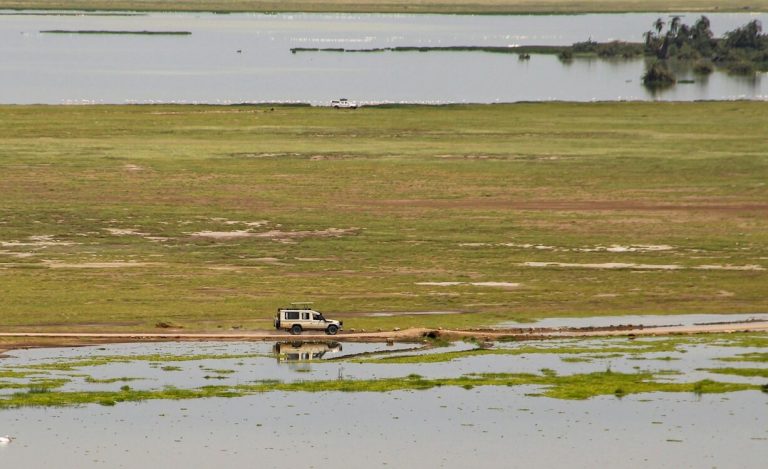
The rainy season is particularly popular with safarigoers, given the softened landscape and presence of migratory animals. But the reality is that you can enjoy incredible year-round game drives and walking safaris in Makgadikgadi Pans, as there are many resident species too.
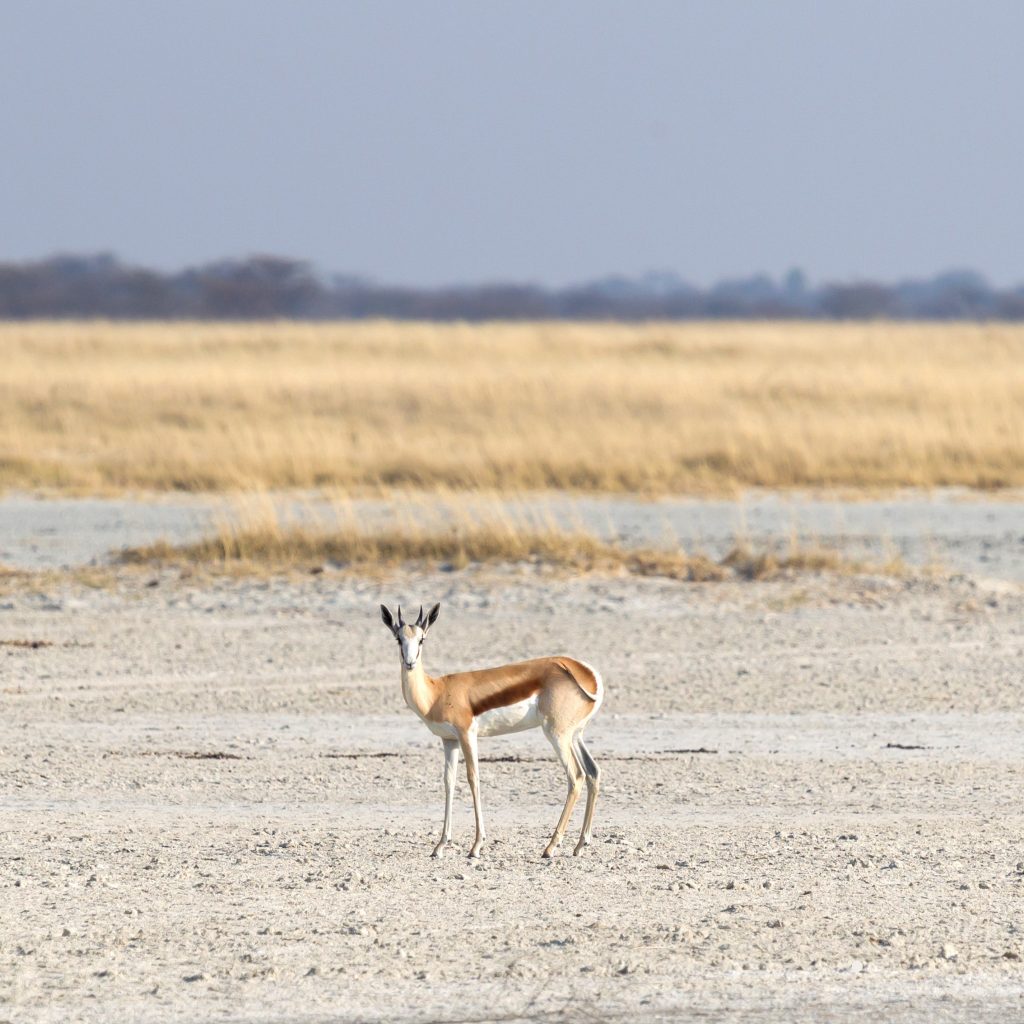
Some notable resident species you can spot on a Makgadikgadi safari are giraffes, elands, hartebeests, oryxes, impalas, and springboks. Various predators can also be found in the region. These include lions, leopards, brown and spotted hyenas, cheetahs, black-backed jackals, Cape foxes, and endangered painted dogs.
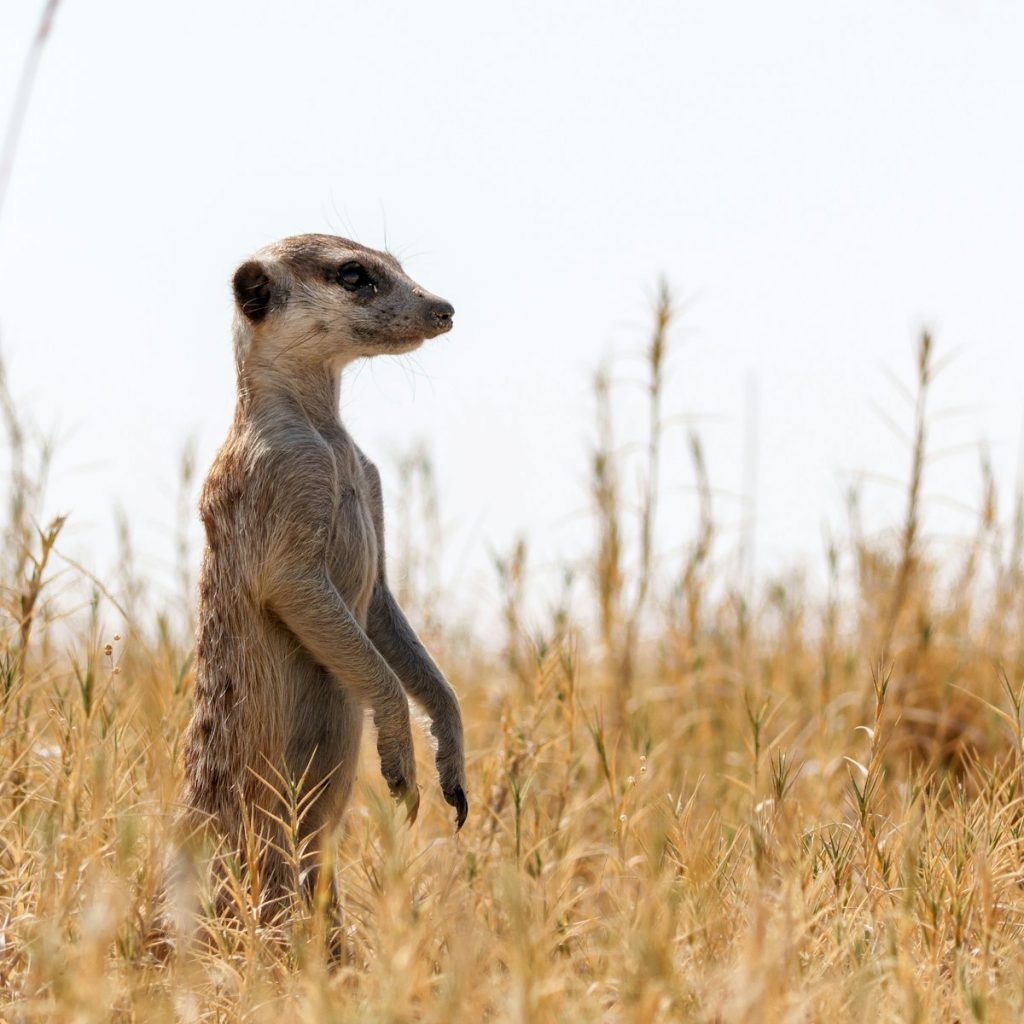
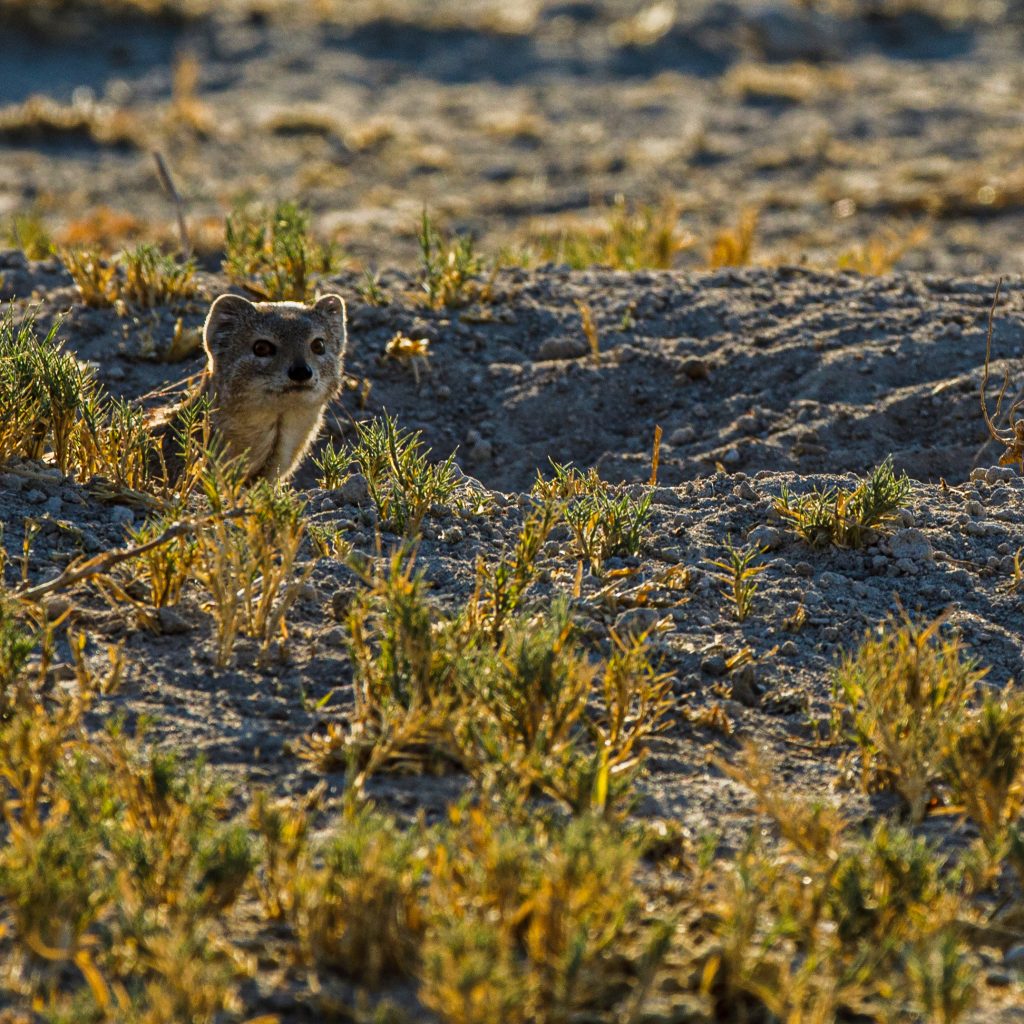
Another wildlife attraction of the pans is their meerkats. These curious creatures have become habituated to the presence of humans, so visitors often have plenty of time to appreciate their antics and take snaps of the neat little tableaus they frequently create.
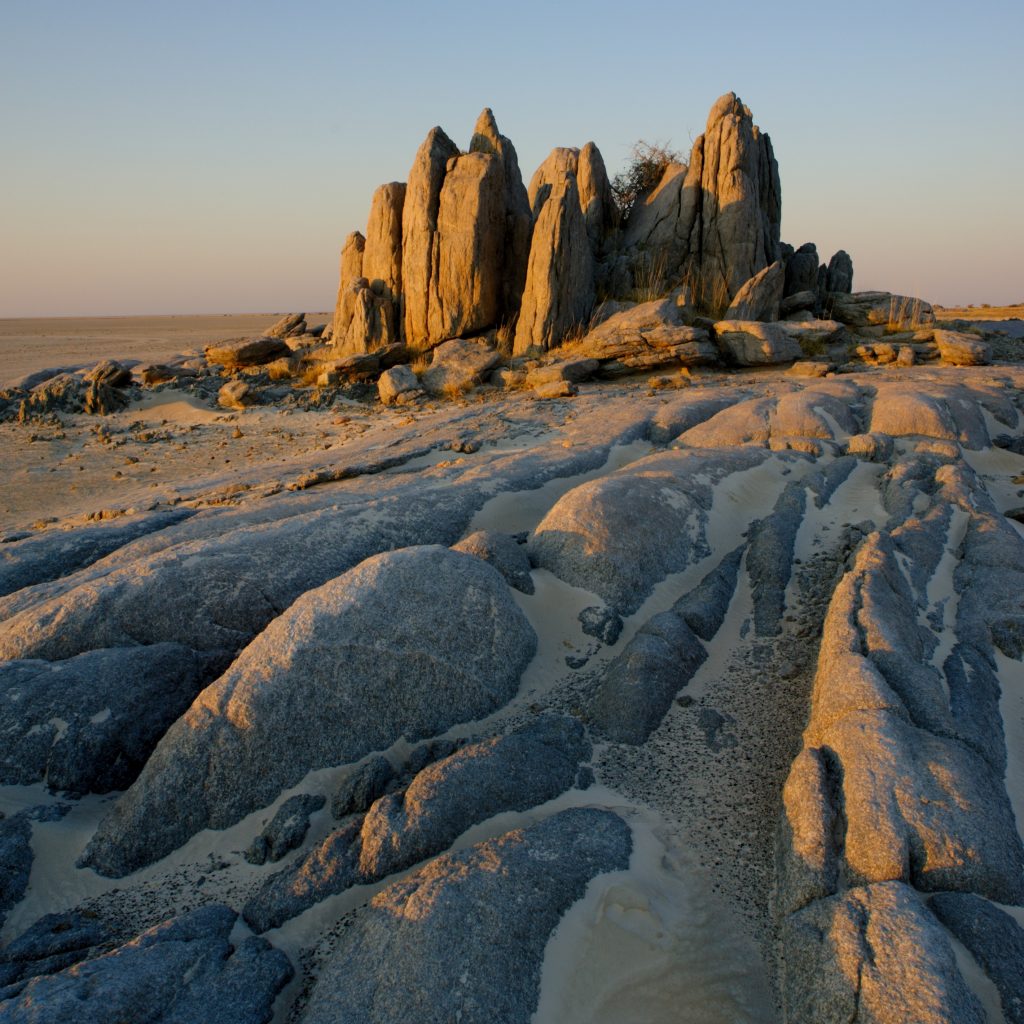
While the calling card of Makgadikgadi Pans is undoubtedly its salt pans, there are also some austerely beautiful ‘land islands’ – marginally raised areas within the complex that support the likes of thorn, acacia, palm, and baobab trees.
Of special note within Sua Pan is Lekhubu Island, or Kubu Island. This is a breathtaking, one-kilometre-long granite outcrop punctuated with ancient baobabs. It’s sacred to the local San people.
Then there’s also Brown Hyena Island on the edge of Ntwetwe Pan. This is a delightful oasis of shade that supports acacias and 20-metre-tall mokolwane (fan palm trees).
A further special land island is Baines’ Baobabs. This is a collection of seven baobabs on a sandy island that were painted by English explorer Thomas Baines in 1862. This island sits within Kudiakam Pan, which is inside Nxai Pan National Park.
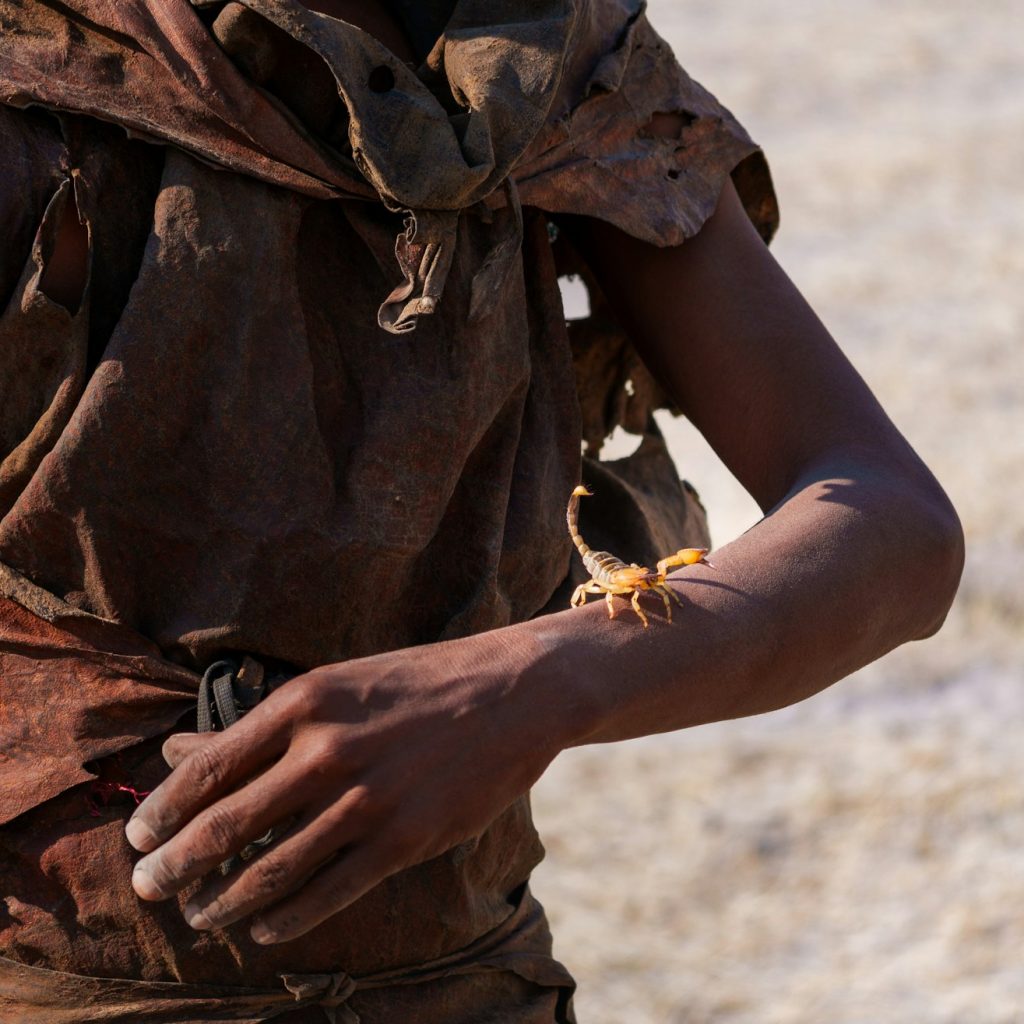
Note that the best way to explore the islands is on a walking tour with a local San guide.
The San (also known as Bushmen) are one of Africa’s oldest indigenous communities. A walking safari lets you learn from your guide about the San’s hunter-gatherer lifestyle within the pans. This includes how they track wildlife and forage for water roots to enable them to survive in the harsh desert climate.
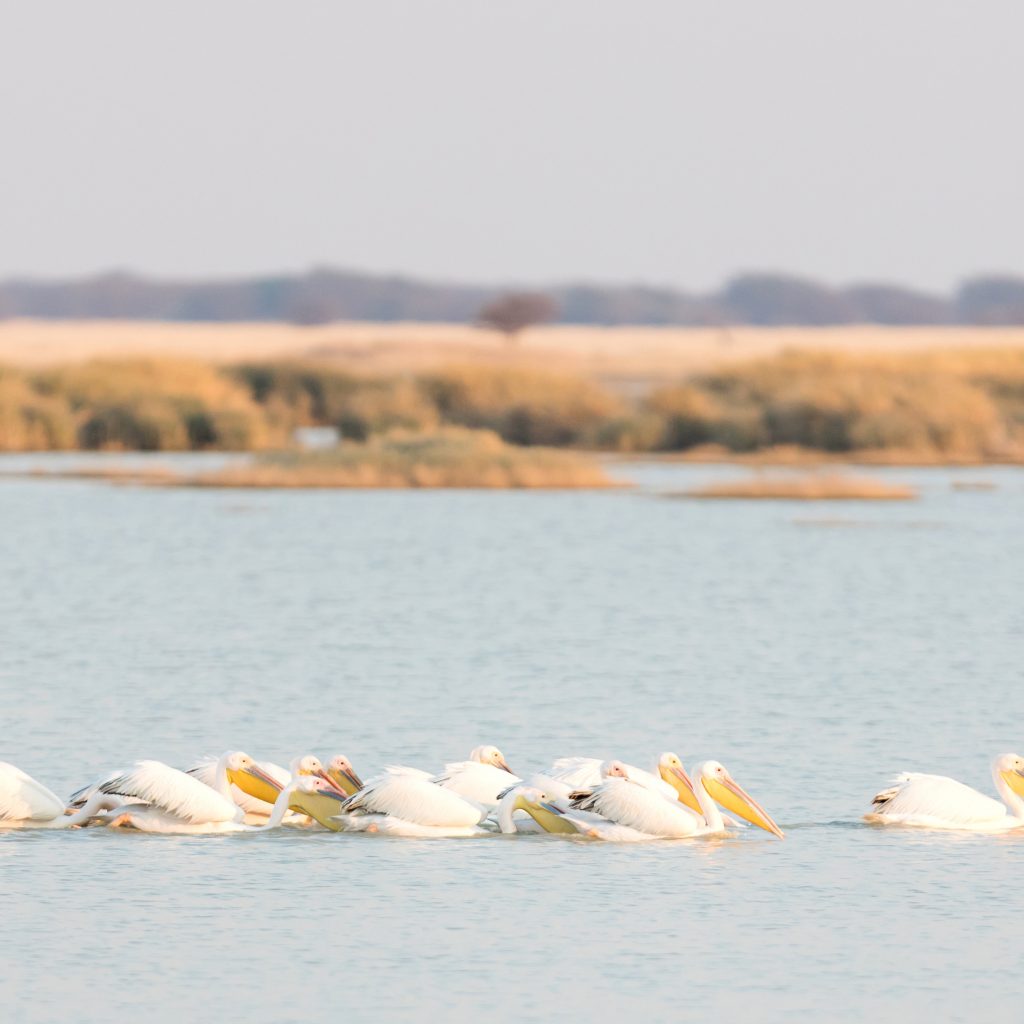
At the mouth of the Nata River, found on the edge of Sua Pan, is a truly special sustainable tourism initiative: Nata Bird Sanctuary.
Founded in 1992 and covering about 250 square kilometres of salt pans and grasslands, the sanctuary was Botswana’s first community-based conservation project. It was spearheaded by four local communities: the Nata, Maphosa, Sepako, and Manxotae. According to Botswana Tourism, these communities voluntarily removed roughly 3,000 head of cattle from the area to create the bird sanctuary.
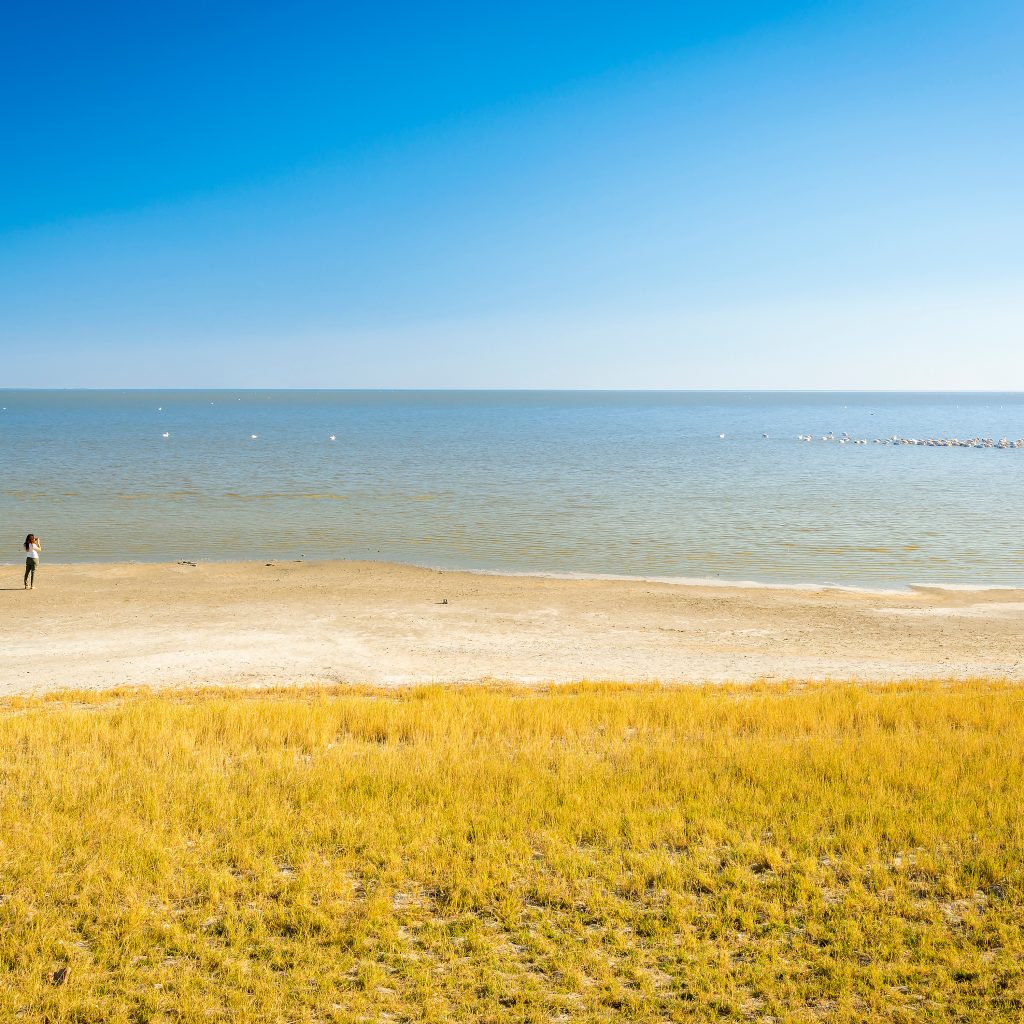
In the wet season, countless birds descend onto the sanctuary’s lakes and rejuvenated surrounds. About 165 species have been recorded in the migratory season. The waterbirds include greater and lesser flamingoes, great white and pink-backed pelicans, white-faced whistling ducks, African spoonbills, Cape teals, black-winged stilts, and black-necked grebe. There’s an elevated bird hide by the pan for viewing this colourful and breathtaking scene.
Other migratory birds that you might find are African fish eagles, martial eagles, black-chested snake eagles, secretary birds, kori bustards, pied kingfishers, and blue-cheeked bee-eaters.
What’s more, Nata Bird Sanctuary and its various facilities, which include a campground, are managed and staffed by residents of the abovementioned communities. So you can feel really good as a visitor that you’re supporting a grassroots ecotourism initiative.

There is plenty to do and see in Botswana besides Makgadikgadi Pan. Key among these is an Okavango Delta safari, as you’re relatively close to this world-renowned oasis when in Makgadikgadi. Check out these budget safaris on offer from African Overland Tours to see how to combine a Makgadikgadi adventure with other great destinations in and around Botswana.
This blog was originally written by Bronwyn Paxton 31 August 2017. It has since been rewritten by Megan Abigail White on 18 February 2026.
Chobe National Park in northern Botswana is one of the very top safari destinations in Africa thanks to its incredible concentration and diversity of large wildlife. In fact, it’s believed to have the highest density of elephants anywhere in the…
Let’s be honest, booking your first safari is a mix of pure excitement and a healthy dose of “What have I gotten myself into?” You’ve seen the stunning photos, dreamed of the wildlife, but the reality of camping in the…
If you’ve ever dreamed of visiting the Okavango Delta, here’s what you need to know to start planning your adventure The Okavango Delta is the world’s largest inland delta. It’s also a true oasis, offering a water-rich habitat in the…
Practical and personality considerations to help you choose between a self-drive or group tour on your African overlanding adventure Overlanding is one of the most affordable, thrilling, immersive, and environmentally friendly ways to approach a multi-country African adventure like that…
At AOT, our mission is simple: to help people step outside their lives and experience the magic of Africa’s wild spaces accessible, affordable, and unforgettable — without cutting corners on quality or adventure. We believe the best safaris don’t have…
So you want to go travelling in Africa? Of course you do! But there are different ways to do it. And some are smarter than others, as they’re safer, more cost-effective, more immersive and sustainable, and just more fun. The…
Makgadikgadi Pans, Botswana: Scorched Salt Flats and Resilient Wildlife
4
2


Price From
R127,530
3
Price From
was
R145,150
R130,635
4


Price From
R76,310
"*" indicates required fields