


African Overland Tours
https://www.facebook.com/AfricanOverlandTourscom/
https://www.instagram.com/african_overland_tours/
https://www.youtube.com/@africanoverlandtoursandsafaris
+27 (0) 21 448 0997
Customer Service
Worldwide

African Overland Tours
https://www.facebook.com/AfricanOverlandTourscom/
https://www.instagram.com/african_overland_tours/
https://www.youtube.com/@africanoverlandtoursandsafaris
+27 (0) 21 448 0997
Customer Service
Worldwide
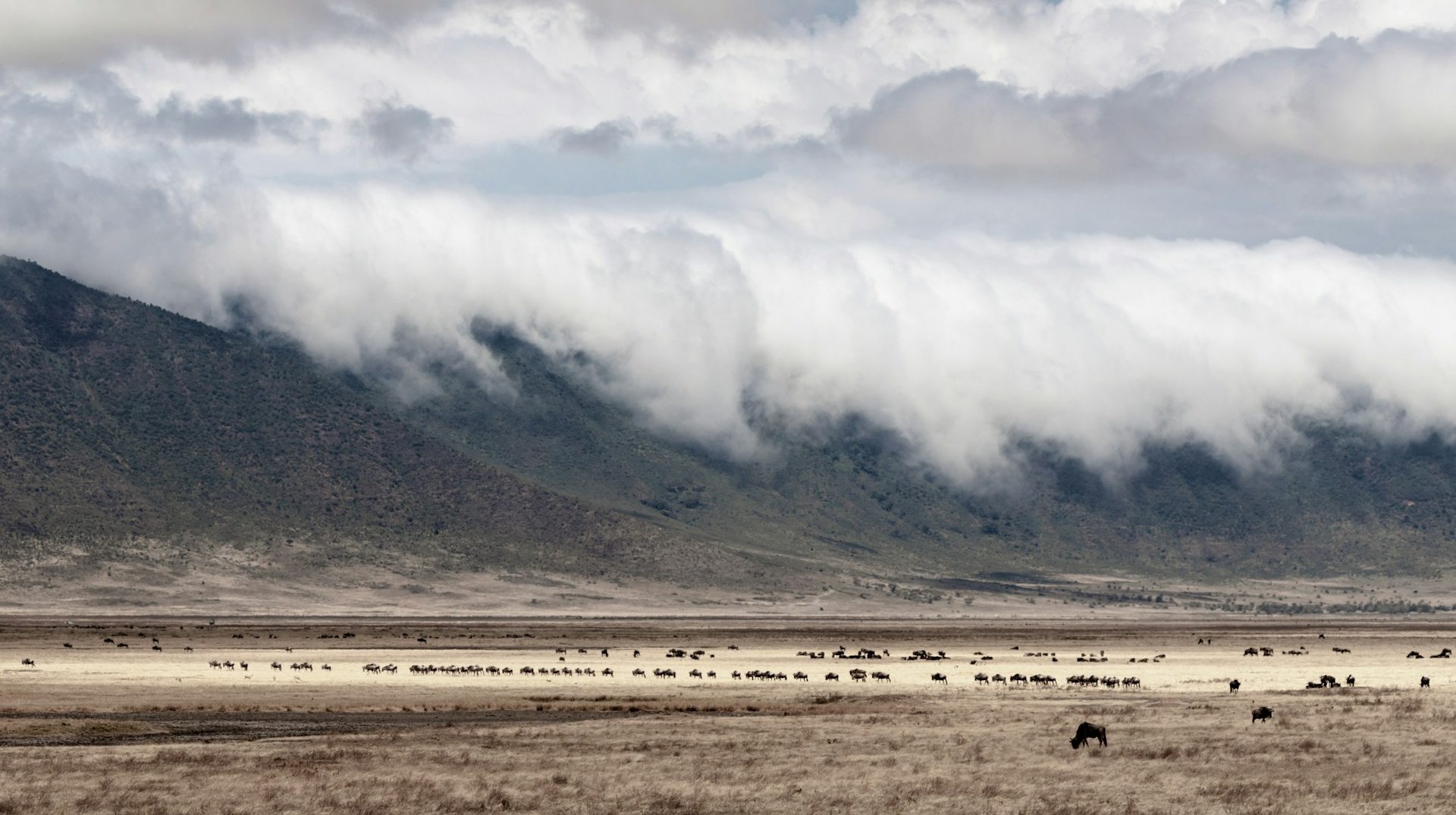
Ngorongoro Crater offers a one-of-a-kind safari experience
Not only is Ngorongoro Crater in Tanzania home to an astounding density of big game, including the Big Five, it’s also a geological wonder. Often spoken of as the eighth wonder of the world, the crater is more strictly speaking a caldera (a bowl-like depression formed when a volcano collapses in on itself). Importantly, it’s the largest intact caldera on Earth.
Measuring 2 miles (20 km) across and 2,000 ft (610 m) deep, Ngorongoro Crater has become a kind of Garden of Eden because no matter the time of year, it’s absolutely chockfull of a range of large game and other wildlife.
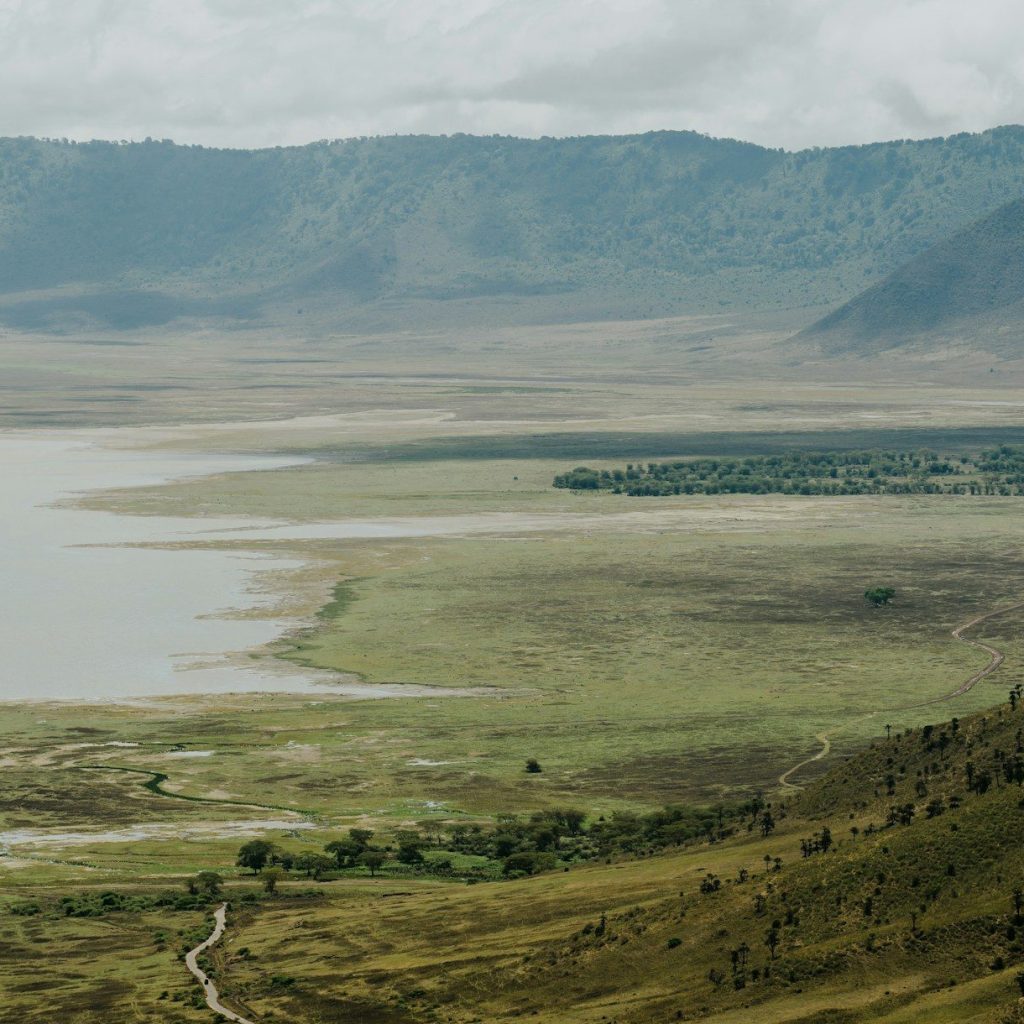
The true scale of Ngorongoro Crater is hard to comprehend until you see it for yourself.
Your first glimpse usually comes from the viewing platform on the southern rim. From here, the bowl sweeps to the left and right as the very definition of a panorama. The grasslands below appear devoid of wildlife, but that’s only because you’re too far away to see them – even the elephants vanish from such a height.
Yet the illusion of emptiness disappears the moment you descend into the bowl, and you start spotting wildlife at almost every turn.
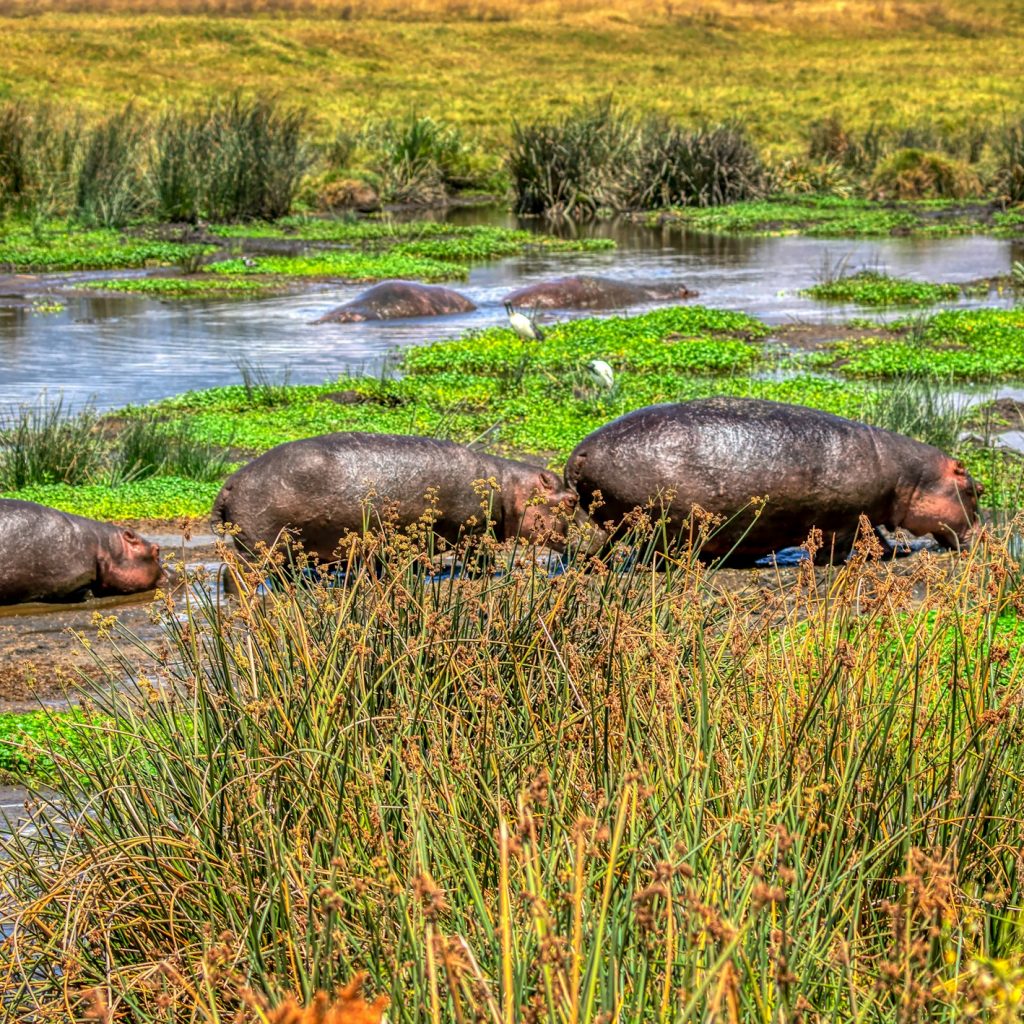
Once again, your first impression of the crater changes when you descend into it. What at first appeared to be an endless plain actually reveals additional features, including woodlands, wetlands, and rolling hills.
These different ecosystems support an exciting range of animals. There are leopards and monkeys, among others, in the tangled forests lining the crater wall. The basin’s Lake Magadi and swamps are home to the likes of hippos, flamingoes, and spoonbills.
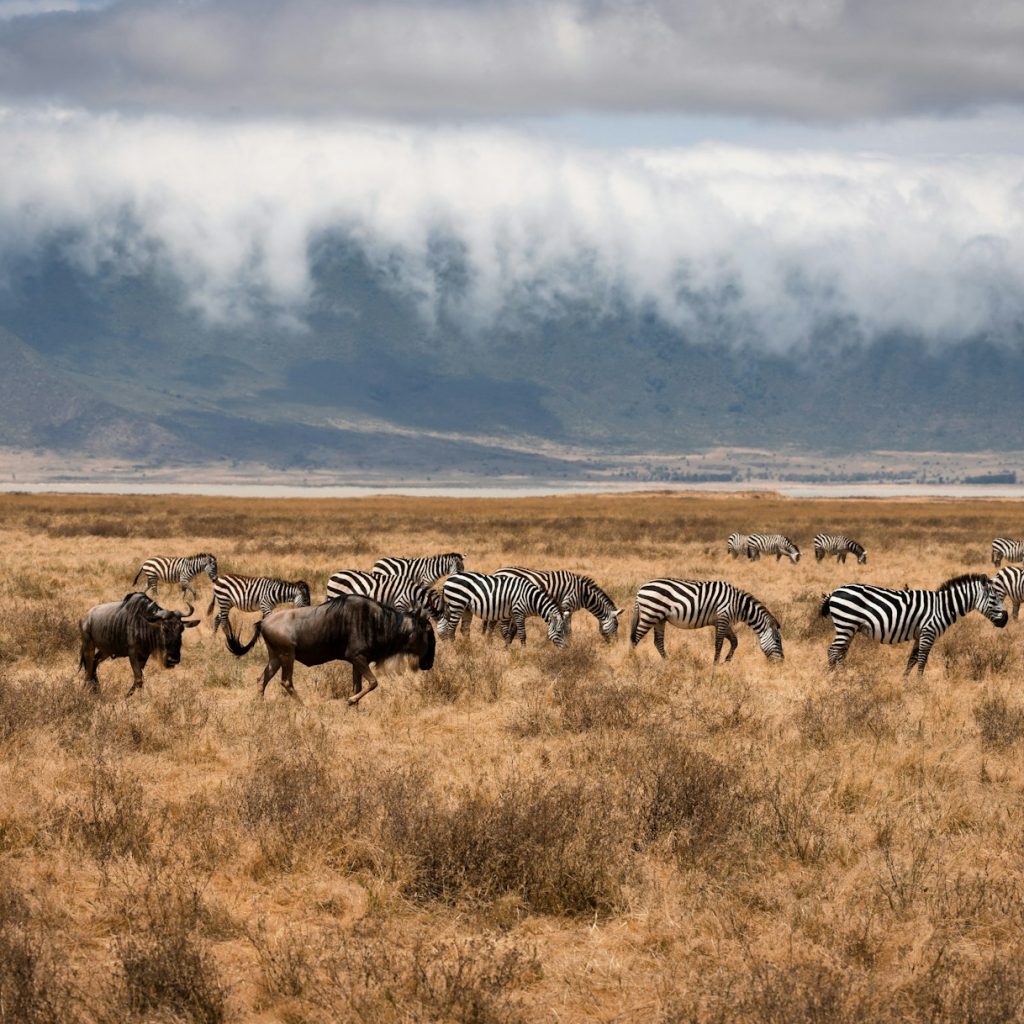
The woodlands are popular with elephants and buffaloes seeking shade, as well as baboons and many birds, including turacos, hornbills, and owls. The rolling hills and far-reaching plains are where you’re most likely to spot lions, black rhinos, zebras, elands, cheetahs, and many more iconic species.
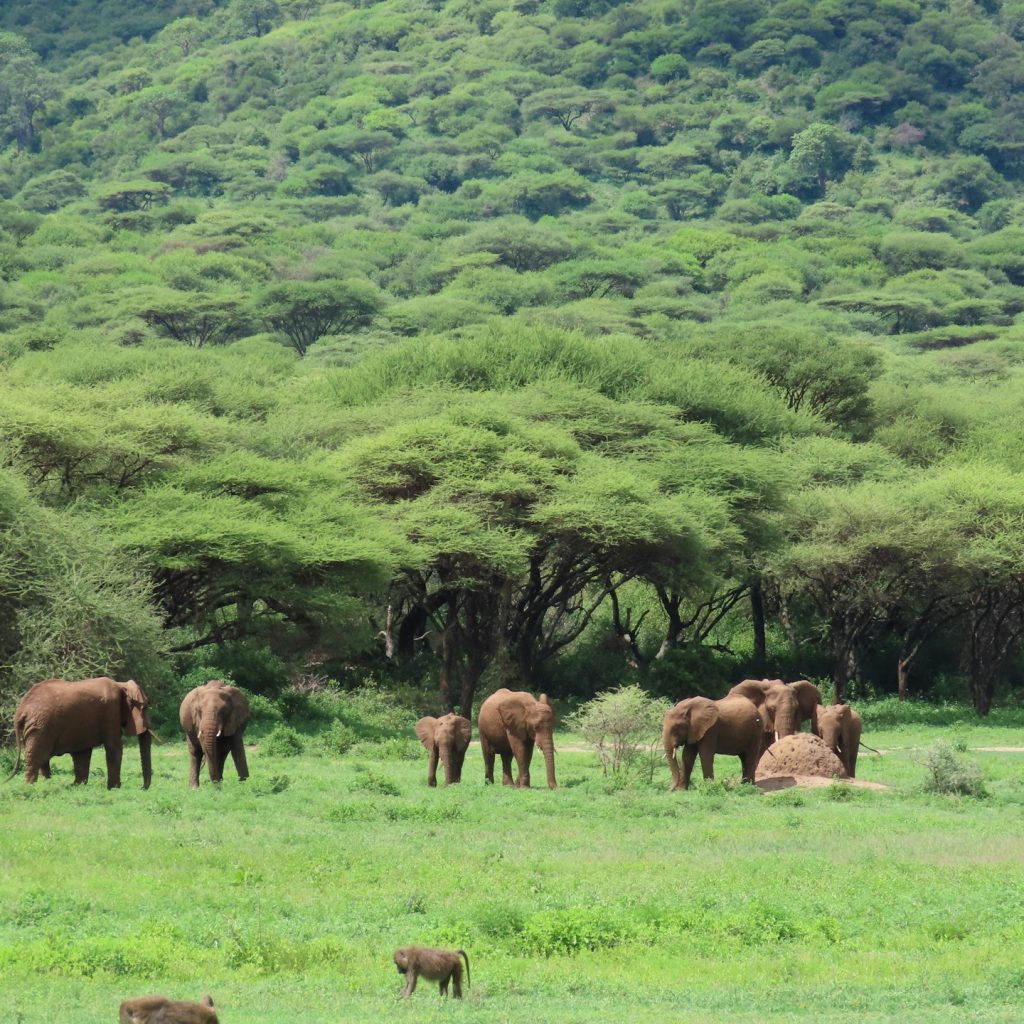
Ngorongoro Crater is undoubtedly one of Africa’s most unique safari experiences. For starters, it’s also one of its most thrilling, as you begin by slowly descending one of the crater wall’s steep, zigzagging, thickly forested roads.
When you reach the bottom, you’re likely to see far more animals and species than normal. One reason for this is that the crater and its wildlife are heavily protected. For instance, no human settlements or permanent developments (beyond the crater wall roads and an ablution block) have been permitted. Also, rangers are stationed within the crater 24/7 to ensure no poaching. Ngorongoro Crater is consequently a veritable wildlife sanctuary.
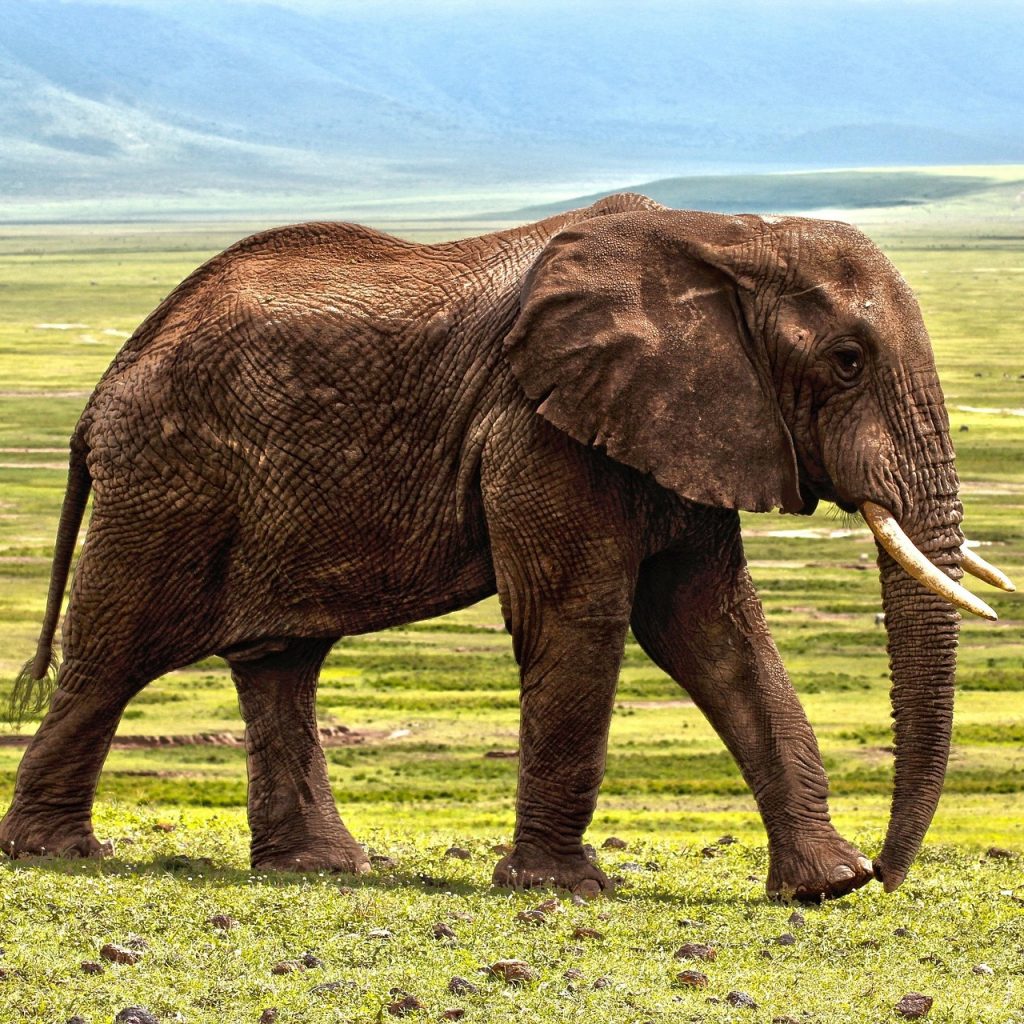
What’s more, Ngorongoro Crater is one of the only places in Africa where you stand a decent chance of spotting all of the Big Five – lion, leopard, bush elephant, Cape buffalo, and black rhino – during a single game drive. It’s the closest thing there is to a sort of ‘Big Five fish bowl’, if you will. The crater also has one of the highest densities of lions anywhere in the world.
There’s also a rich range of other wildlife. Apart from the species already mentioned, you can hope to find cheetahs, Grant’s zebras, black-backed jackals, elands, wildebeests, hartebeests, spotted hyenas, and Thomson’s and Grant’s gazelles.
The most notable ‘missing’ species in the crater is the giraffe. Nobody is 100% sure why they don’t migrate here; it’s speculated that the crater walls are too steep for them.
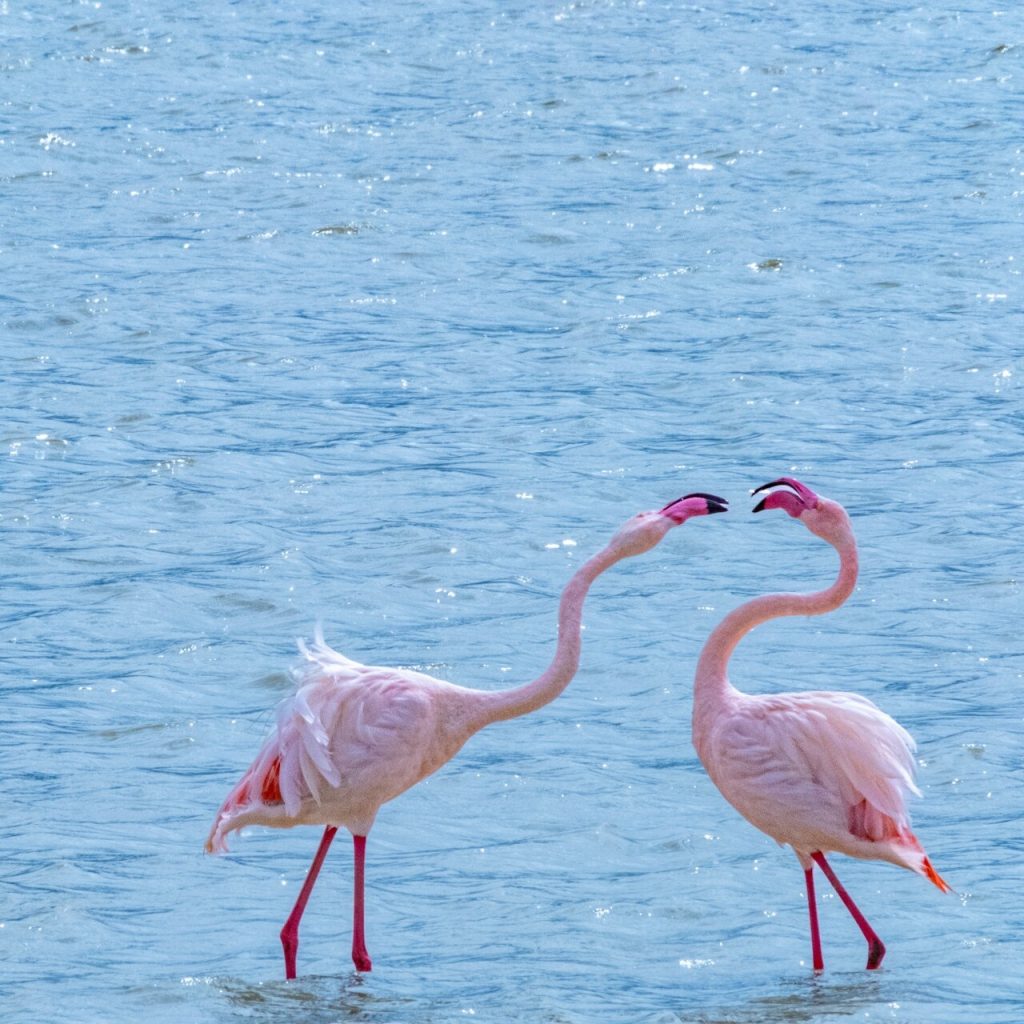
Ngorongoro Crater is an absolutely fantastic destination for birders.
Over 500 species (maybe even as many as 550 species) have been recorded within the broader Ngorongoro Conservation Area. Even non-birders will be excited by the many large species visitors very often see on the crater floor, like ostriches, lesser flamingoes, great white pelicans, kori bustards, and secretary birds.
On the crater’s jungle-clad rim you can hope to spot many rare or threatened birds, including white-headed, hooded, and white-backed vultures and Rüppell’s griffons. On the crater floor, there are Maccoa ducks, Rufous-tailed weavers, grey crowned cranes, and many other rare and exciting species.
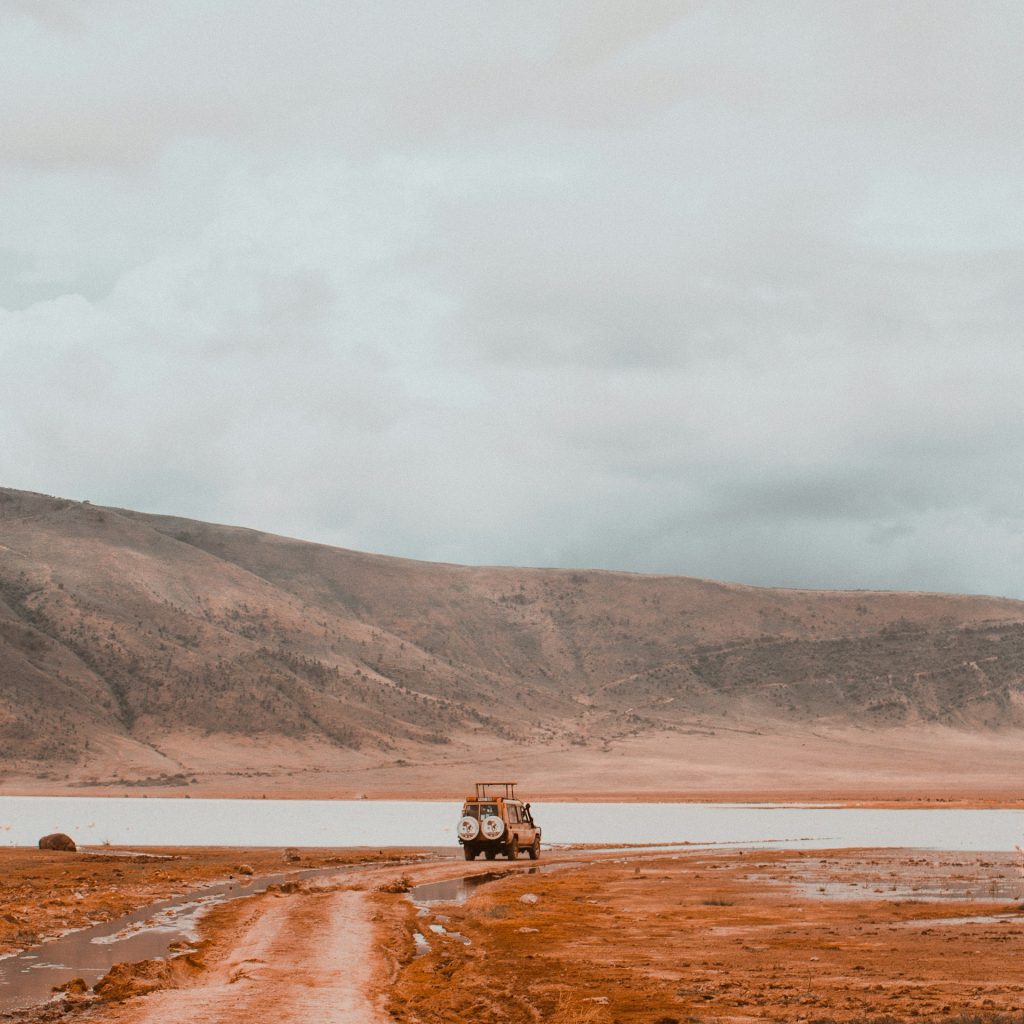
Even without the animals, Ngorongoro Crater would remain a bucket-list destination. The enormity of the depression is astonishing, and the view from the rim utterly spellbinding. The steep roads leading in and out offer drives that are both exciting and visually arresting. And exploring the largely untouched ecosystems of the basin, surrounded by the towering crater walls, offers a calming and inspiring sense of both remove and connection.
Ngoronogoro Crater is the calling card of the Ngorongoro Conservation Area (NCA), which became a UNESCO World Heritage Site in 1979 for its rich biodiversity and dramatic volcanic landscape.
In 2010, the NCA’s designation was expanded to make it a mixed natural and cultural heritage site, thereby also recognising the importance of the Maasai culture as well as the area’s significant archaeological sites like Olduvai Gorge and Laetoli, where early hominin footprints were found.
Most folks visiting Ngorongoro Crater pair the experience with a visit to a traditional Maasai village, followed by some days in Serengeti National Park. There are also other fantastic opportunities within close proximity, like going on a guided walking safari in Empakaai Crater.
I clearly haven’t done my job well if you’re still in doubt!
If you’re ready to plan your Ngorongoro safari, let African Overland Tours help you. They offer a range of affordable small-group tours that include Ngorongoro Crater.
From the thrilling drive down one of the crater’s hidden forest roads to lunch and a hot coffee from the food stand by the lakeside picnic site, where you’re allowed to get out of your vehicle, an Ngorongoro Crater safari is a truly unforgettable experience. In fact, every moment feels like a scene from a nature documentary. And every moment also etches itself into your memory as part of one of your greatest African adventures ever.
Please note that this blog post was first written and published by Andrew Walton in April 2013. It has since been rewritten and republished by Megan Abigail White in December 2025.

"*" indicates required fields