

African Overland Tours
https://www.facebook.com/AfricanOverlandTourscom/
https://www.instagram.com/african_overland_tours/
https://www.youtube.com/@africanoverlandtoursandsafaris
+27 (0) 21 448 0997
Customer Service
Worldwide

African Overland Tours
https://www.facebook.com/AfricanOverlandTourscom/
https://www.instagram.com/african_overland_tours/
https://www.youtube.com/@africanoverlandtoursandsafaris
+27 (0) 21 448 0997
Customer Service
Worldwide
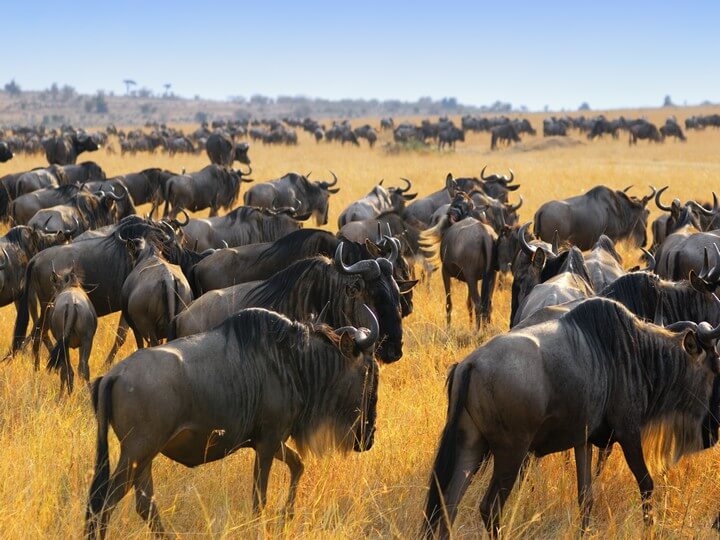
The Great Wildebeest Migration in Africa is known as ‘Africa’s Greatest Wildlife Show’. It is one that will leave you amazed and flabbergasted at this African spectacular!
But it can be confusing to most, as it isn’t a show you can book tickets to and be guaranteed your front-row seat. So let’s help you understand when the best time to see the wildebeest migration is.
The Great Migration is the largest herd movement of animals in the world. In fact, it is so large that it can be seen from space! Guided by survival instincts, herds of Wildebeest, Zebra, other Gazelle move through the Serengeti-Mara for water and greener patches. Predators, like the cheetah, crocodiles, hyena, leopard and lion are on the move too, making this natural spectacle a test for survival.
The Migration of animals resembles a circular route covering Kenya’s Masai Mara Tours and Tanzania’s Serengeti Tours. The migration is a constant movement and occurs naturally thus the route adjusts every season and depends on the rains and weather.
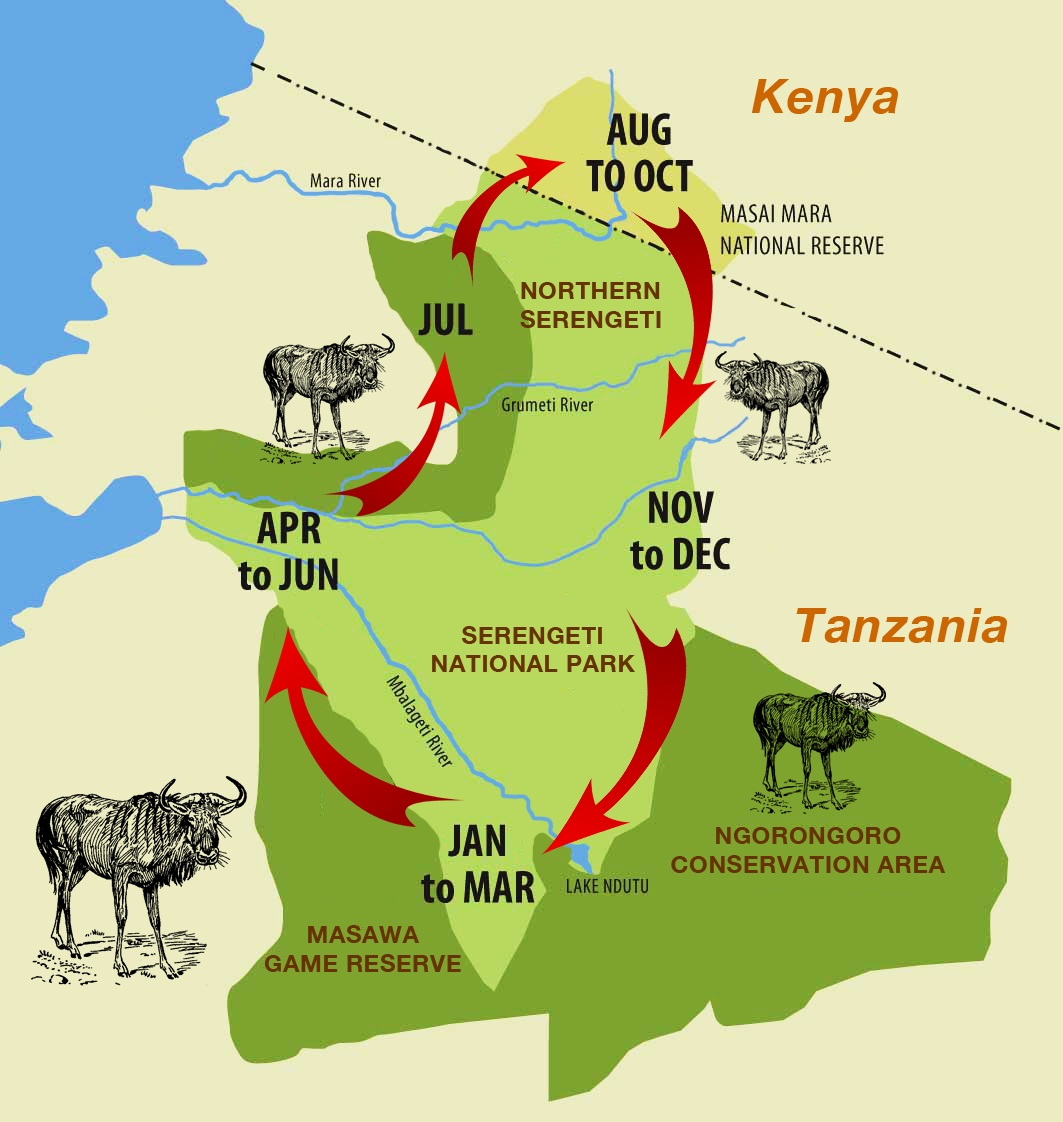
With no real start or end to the migration (as it moves in a constant circle), you will be forgiven for not knowing when to book your migration safari. This pilgrimage of nearly 2 million wildebeest and thousands of zebra in search of food and water will blow your mind for sure. The wildlife is followed by a variety of predators such as lions, leopards, cheetah, hyenas which makes this a once-in-a-lifetime experience.
You can say the migration may start with the birth of nearly 400,000 wildebeest, as they embark on their journey of survival. The herds’ movements are largely determined by the rains, which can be both unpredictable and spontaneous.
These rains are vital for the herd’s movements and calving season.
The calving season takes place in the Serengeti National Park and Ngorongoro Crater Conservation Area. Look out for the action from early January to late February, when nearly 80% of the wildebeest give birth over a period of a few weeks.
The herds are concentrated in the Ndutu and Salei plains which are in the southern Serengeti and Ngorongoro Conservation area. The young, bewildered calves attract the attention of predators such as lion, cheetah, hyenas. This results in an action packed safari filled with all the classic chase and battle stereotypes.
From March through to mid May the herds reside in south-western Serengeti and Maswa Reserve. Settled here, they take full advantage of the vegetation as the young calves gain strength and grow stronger. Their second biggest challenge awaits, as they enter the Masai Mara.
The herds start moving further north into Mbalageti / Grumeti region of the Serengeti (also known as the western corridor) grazing from late May to mid July. This is possibly the best time to see the wildebeest migration in a beautiful region of the Serengeti. What better than waking up for an early morning balloon ride watching the sun warm up the day and unveiling the herds scattered across the golden plains!
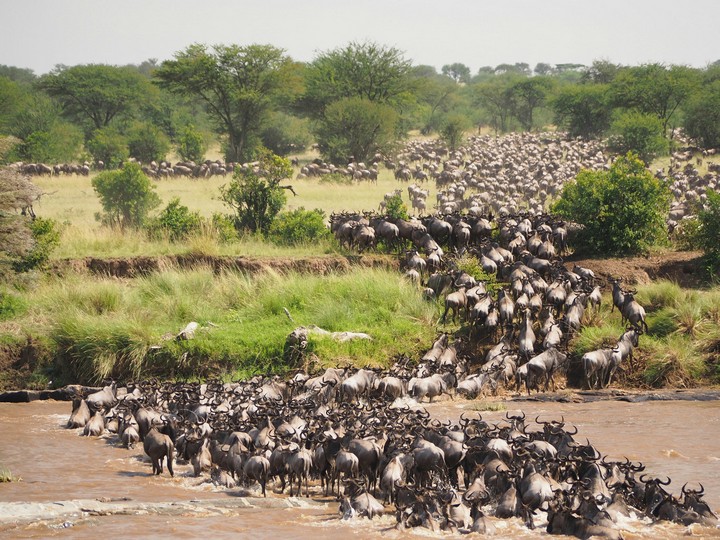
From mid-July to mid-October the wildebeest herds, zebra, and wildlife following in hot pursuit, reside in the Masai Mara Game Reserve in Kenya. One of the biggest challenges for their survival is crossing the Grumeti River, which stands between them and the fertile rolling plains of the Masai Mara. The stronger of the wildebeest will outsmart the crocodiles lying and waiting for the straggler to cross on their own, making them an easy target.
Mid October to November marks the end of a full circle traveled, making their way back to the Serengeti National Park.
So you have been watching National Geographic for years, and you have your heart set on see the great migration as it has been shown on TV. Well in June and July, the herds start amassing along the Grumeti River in the Serengeti, preparing to head northwards to the Masai Mara.
The simple answer is no, as the animals arrive at different times. Some wait and hang around, while others cross. For this reason the longer you spend in the Masai Mara the better.
However, in August and September, the herds reach the Mara River and start to make the famous crossing. Yet many will die in the process, and many more will be eaten by crocodiles.
These are the quintessential migration scenes you may have seen in nature documentaries. Picture hordes of animals moving at once with single-minded purpose, and the drama that follows.
By October the herds start moving from the Masai Mara southwards back to the Serengeti.
Often with changing weather patterns, the migration is not always predictable and the movement patterns vary.
The end of August to the end of September is a safe bet for the best time to see the Wildebeest Migration if you want to witness the big river crossing.
Important Note: The table emphasizes that the migration is a continuous circle driven by rainfall, so these timings are approximate and can vary from year to year based on weather patterns.
| Months / Time Period | Migration Activity, Location & Key Events |
| Early Jan – Late Feb | Calving Season • Location: Southern Serengeti & Ngorongoro Conservation Area (Ndutu and Salei Plains). Activity: Around 400,000 wildebeest are born in a few weeks. The vulnerable calves attract predators like lions and cheetahs, resulting in action-packed safaris. |
| March – Mid-May | Grazing and Growth. Location: South-Western Serengeti & Maswa Reserve. Activity: The herds settle to graze on the long rains’ vegetation, allowing the young calves to grow and gain strength for the journey ahead. |
| Late May – Mid-July | Moving North & Grumeti River Crossing. Location: Serengeti’s Western Corridor (Mbalageti / Grumeti region). Activity: Herds move north, grazing as they go. They face a major challenge crossing the Grumeti River, where crocodiles lie in wait. |
| Mid-July – Mid-Oct | Residence in the Masai Mara. Location: Masai Mara Game Reserve, Kenya. Activity: The herds cross into and reside in the fertile plains of the Masai Mara. |
| Late Aug – Late Sept | The Famous Mara River Crossing. Location: The Mara River (border of Serengeti & Masai Mara). Activity: This is the best time to see the dramatic, large-scale river crossings often seen in documentaries, as hordes of wildebeest face the crocodile-infested waters. |
| Mid-Oct – November | The Return Journey South. Location: Moving from the Masai Mara back towards the Serengeti. Activity: The herds begin their journey south, completing the full circle as they follow the rains back to the Serengeti plains for the next calving season. |
If you find yourself asking “what is an African safari?” then you are in the right place. A safari is an exciting and adventurous way of seeing the ‘real Africa’ because it invites you to view a variety of wildlife in their natural habitat. We believe that going on a safari gives you an authentic experience of African culture.
At African Overland Tours, we take you through the wilderness on walking safaris, driving in custom-built 4×4 vehicles and flying in a light aircraft. Why all three options? To get YOU to experience an intimate journey with the landscape, scenery, and wildlife. That is the purpose of a safari!
Start by chatting to our expert consultants to help you book the best tour to see The Great Migration. They will ensure you find the tour suited to you, and advise you on your safari experience. Speaking of experience, our expert guides are hand-picked by us to ensure you are in the best of hands. From sharing information, to organizing your needs, our guides are professionals at what they do. Tempted to book to see The Great Migration and experience an African safari? Let’s chat and make your safari dreams come true.
[button link=”https://meet-with-african-overland-tours.zohobookings.com/#/africanoverlandtourscom” type=”big” color=”orange” newwindow=”yes”] Book a 20-Minute Meet[/button]
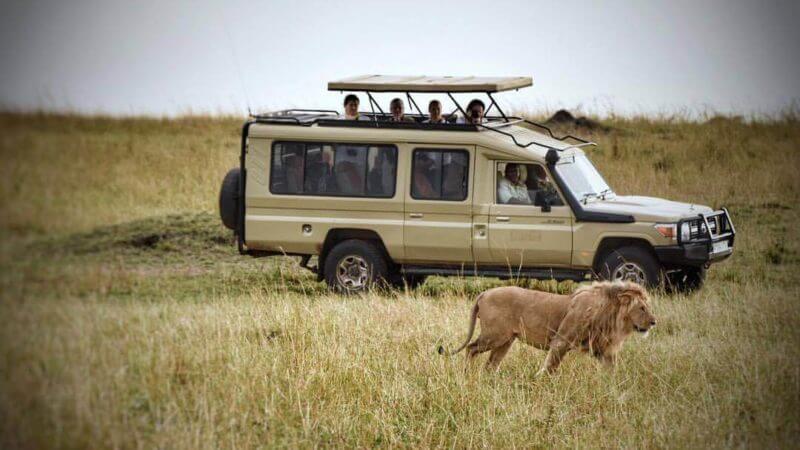
If the Great Migration and the diverse landscapes and wildlife appeal to you then let us help you plan your overland adventure. We strive to take the load off your shoulders, so you can sit back, relax and let us find the best tour suited to your travel style and budget. Our expert consultants will answer your every question, and ease your every concern so that you will experience the most amazing East African safari!
See our guide on the 12 things you need to know before you go on overland tour and how to pack in our detailed safari packing guide.
https://africanoverlandtours.com/facts-about-tanzania/how-to-travel-to-the-serengeti-on-a-budget/
This post was originally published on [March 14, 2024] and has been updated on [July 21, 2025] to reflect the latest information.
"*" indicates required fields