


African Overland Tours
https://www.facebook.com/AfricanOverlandTourscom/
https://www.instagram.com/african_overland_tours/
https://www.youtube.com/@africanoverlandtoursandsafaris
+27 (0) 21 448 0997
Customer Service
Worldwide

African Overland Tours
https://www.facebook.com/AfricanOverlandTourscom/
https://www.instagram.com/african_overland_tours/
https://www.youtube.com/@africanoverlandtoursandsafaris
+27 (0) 21 448 0997
Customer Service
Worldwide
Tanzania is one of the best countries in the world for thrilling wildlife experiences
Those who go on a safari in Tanzania return home with indelible memories – of the countless wild animals and birds, of the breathtaking landscapes, of the exceptionally warm hospitality, and more. Yet there are many African countries offering wonderful safari experiences, so why include Tanzania in your overland adventure? Here are four reasons to go on a Tanzania safari …
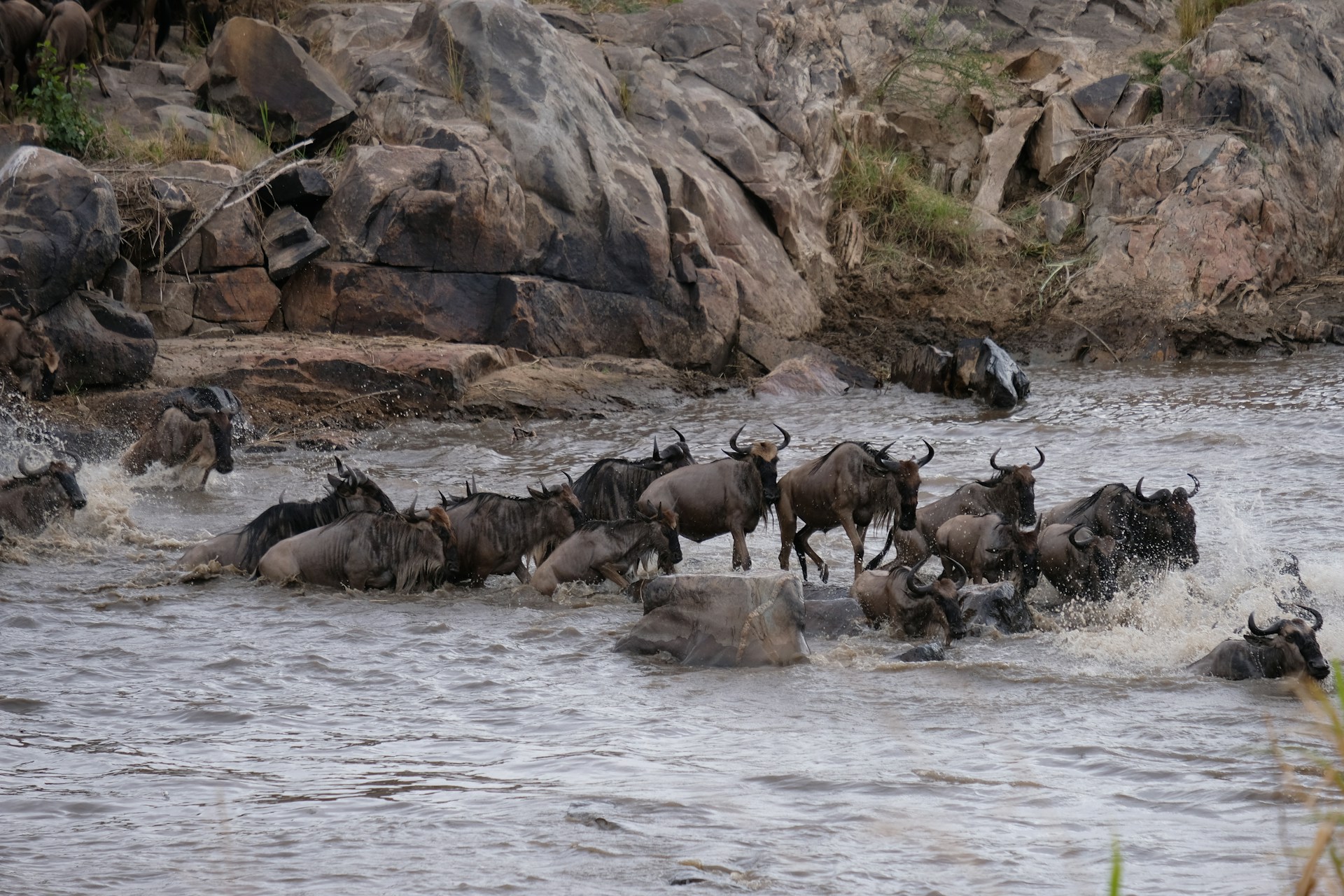
Perhaps the most obvious reason to go on safari in Tanzania is the Great Wildebeest Migration. This spectacular phenomenon – the second largest land-based migration in the world – takes place in only two countries: Tanzania and Kenya.
For roughly three quarters of the year, the enormous herds of the migration are in Serengeti National Park in Tanzania. So depending on the timing of your trip, you’ll likely want or need to experience the Great Migration in Tanzania, not Kenya.
Please note that the Great Migration isn’t a once-off event, as some believe, but rather a never-ending cyclic activity. Throughout the year, the herds instinctively follow a roughly circular route in search of better grazing lands. This means the Great Migration can be visited at any time of the year.
What’s more, many marketers have unhelpfully sold the idea that the rowdy river crossings which take place when the herds head north into Kenya constitute the Great Migration experience. This is far from the truth.
In fact, the river-crossing season can attract too many spectators, which is problematic from an environmental (and also enjoyment) standpoint. Please consider if another season might suit you better.
For instance, the birthing season is wonderful as it’s a time of baby animals, wildflowers, and migratory birds, and the park is also quieter. You can also feel good knowing that when visitors are spaced out, the negative impacts of tourism are reduced while the positives (like stable income flow) are increased.
Africa is a continent of wildly diverse landscapes, but some of its most iconic scenes belong to Tanzania.
Take, for instance, Ngorongoro Crater, which sits in the north of the country and is a cornerstone of the Northern Circuit safari. This immense natural depression is the world’s largest unfilled, unbroken caldera.
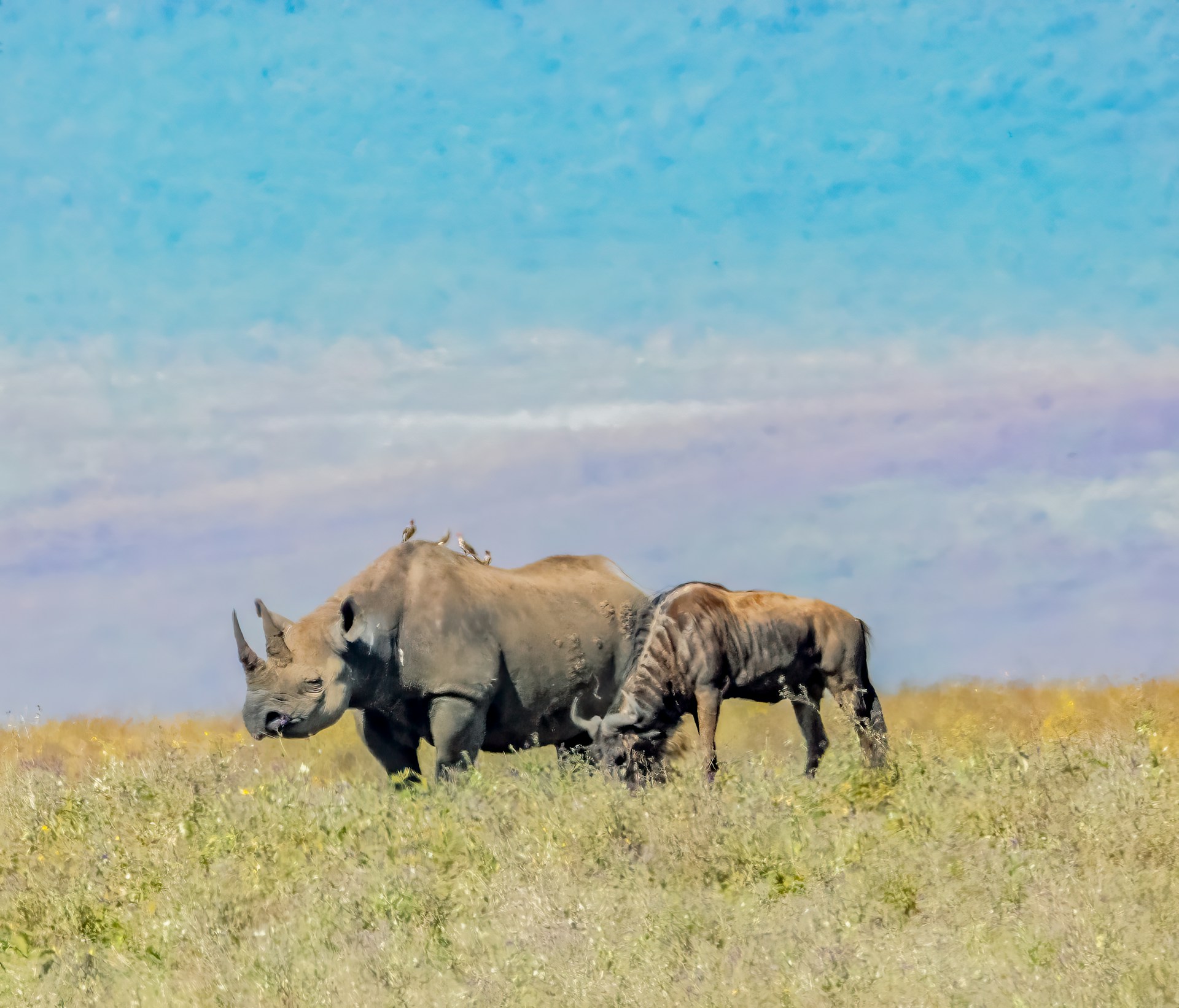
Visitors to Ngorongoro Crater are driven down a zigzagging road into the crater basin, where you find yourself surrounded by an incredible density of wildlife, which includes the Big Five. There’s nothing better than watching endangered black rhinos munch peacefully on grass with the towering crater wall as a backdrop.
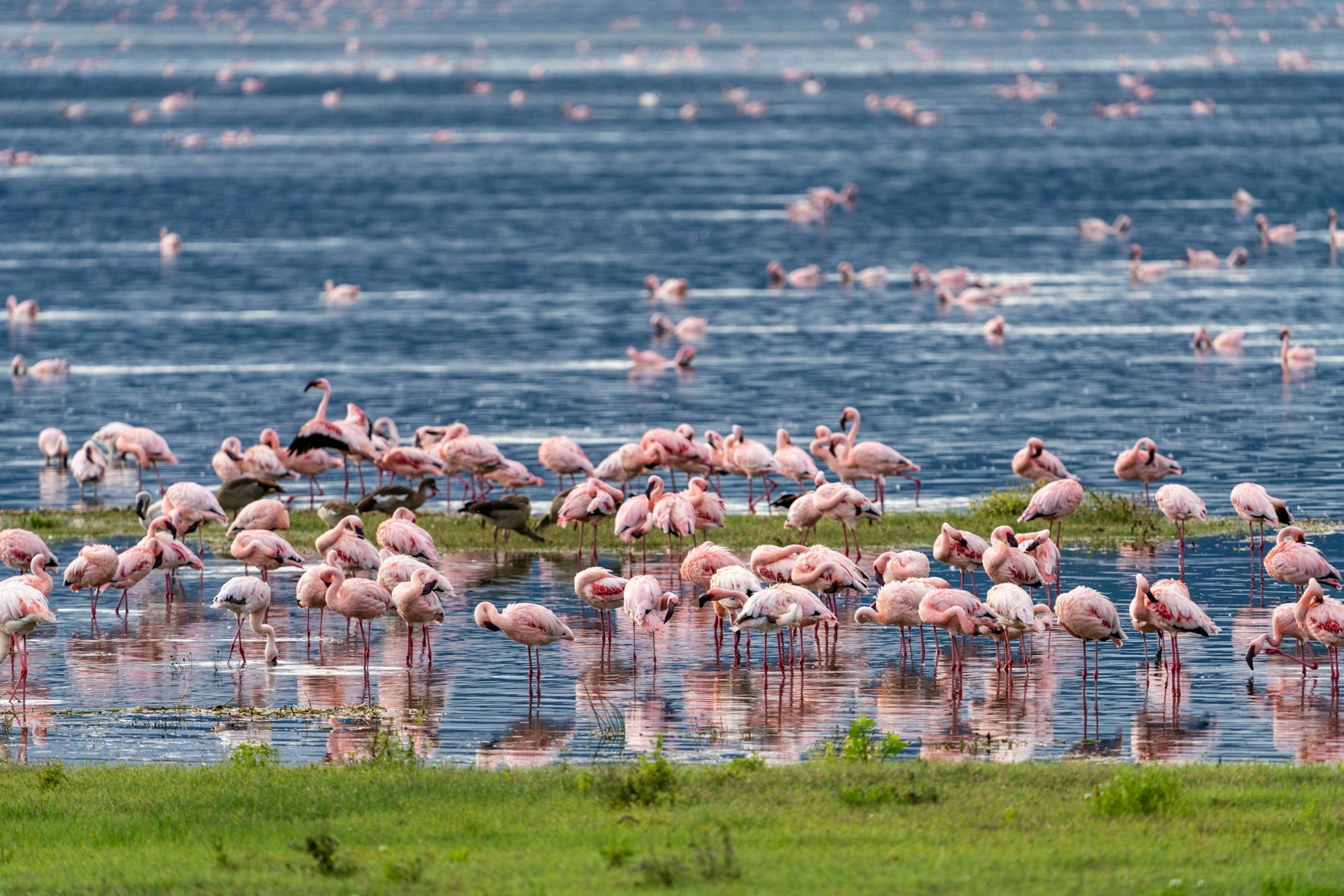
Not far from Ngorongoro Crater is Lake Natron, a caustic lake that sits at the base of the Great Rift Valley escarpment wall and nearby Ol Doinyo Lengai, an almost perfectly conical active volcano. Birders can enjoy an incredible safari here as the lake becomes blanketed in pink when over two million lesser flamingoes descend for the breeding season each year.
You can also look for wildlife in yet another nearby iconic location: the lower slopes of Africa’s tallest mountain, Mount Kilimanjaro.
Yet the Northern Circuit isn’t the only safari region with striking and beautiful landscapes.
Visitors to Ruaha National Park, for instance, which is part of the Southern Circuit, can go game spotting on the highland plateau as well as in the lowland savannah as the Great Rift Valley’s escarpment wall runs through the park. Meanwhile, those visiting the forested mountains and waterfalls of Udzungwa Mountains National Park will be looking for wildlife in one of Africa’s most edenic ecosystems.
Another reason to go on a Tanzania safari is its astounding number of wildlife species.
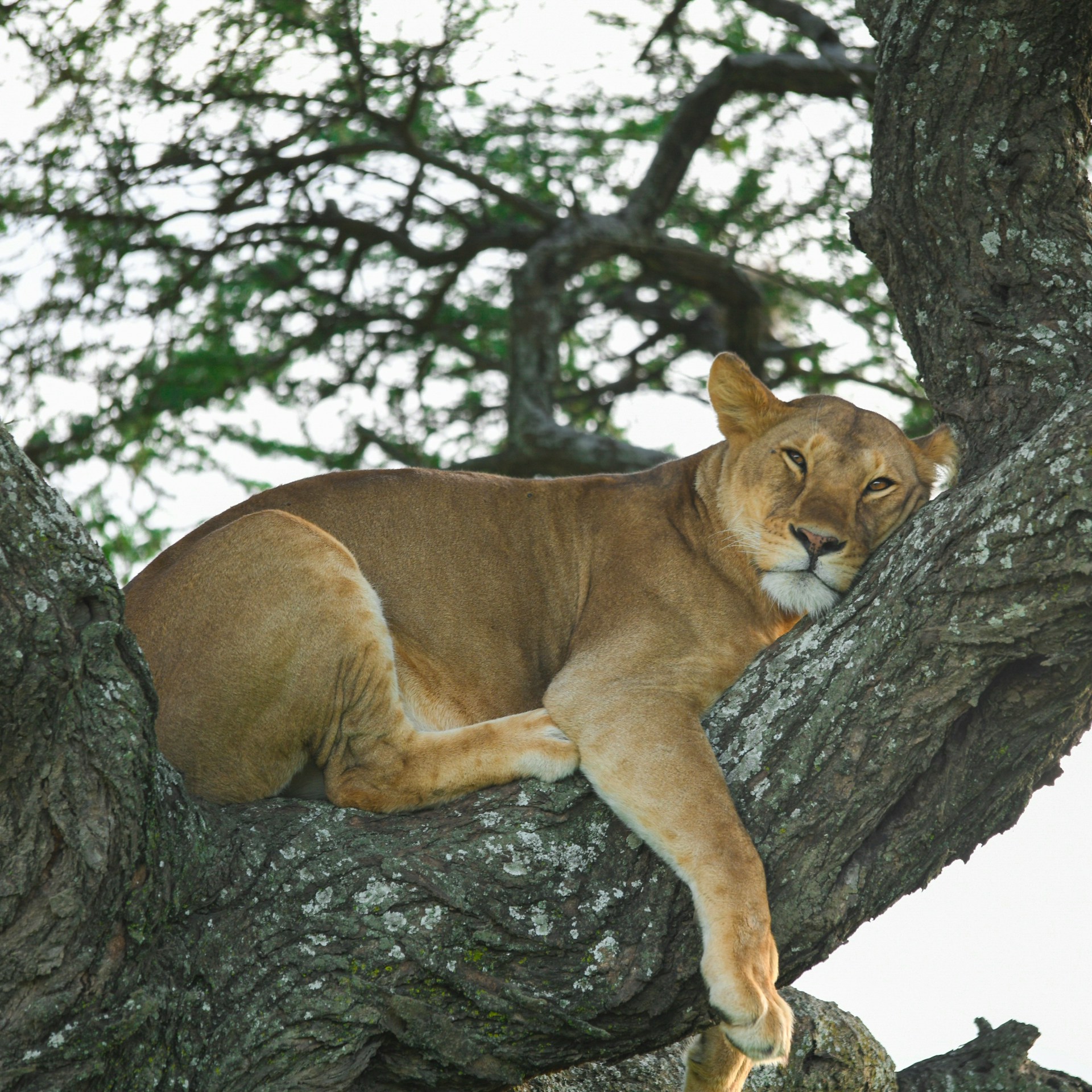
For a start, yes, you can find the Big Five here, which are lion, leopard, elephant, black rhino, and Cape buffalo – and often in just one park or location.
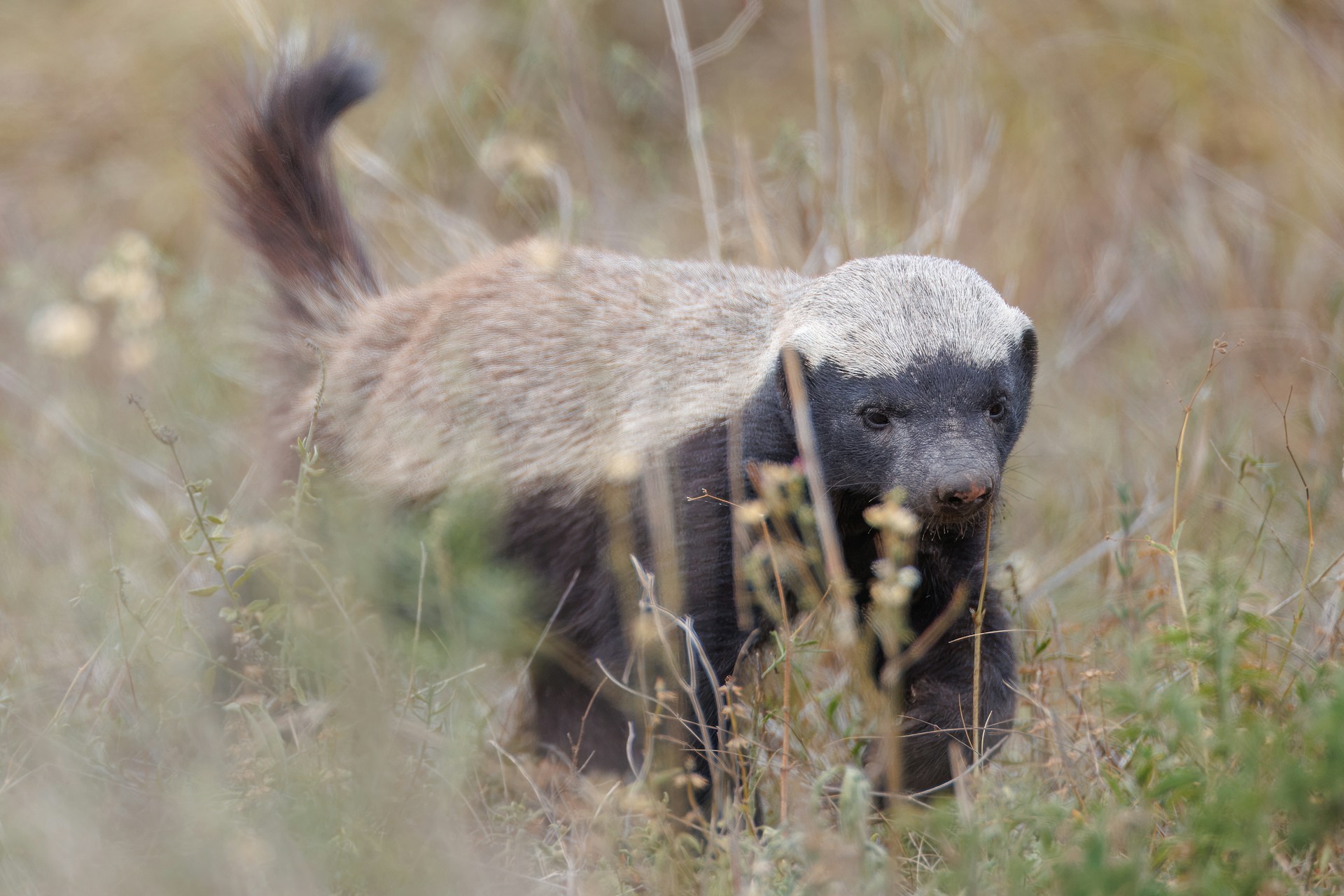
You can also find all of the Elusive Eleven. If you haven’t heard of the Elusive Eleven, they’re a group of exciting but harder-to-spot mammals. Among their ranks are the aardvark, caracal, honey badger, pangolin, and side-striped jackal. Only five African countries host all of the Elusive Eleven, with Tanzania being one of them thanks to its many diverse and protected ecosystems.
In fact, Tanzania has over 300 mammal species. This is an astonishing number that perhaps only pales in impressiveness when you start talking about the country’s bird species.
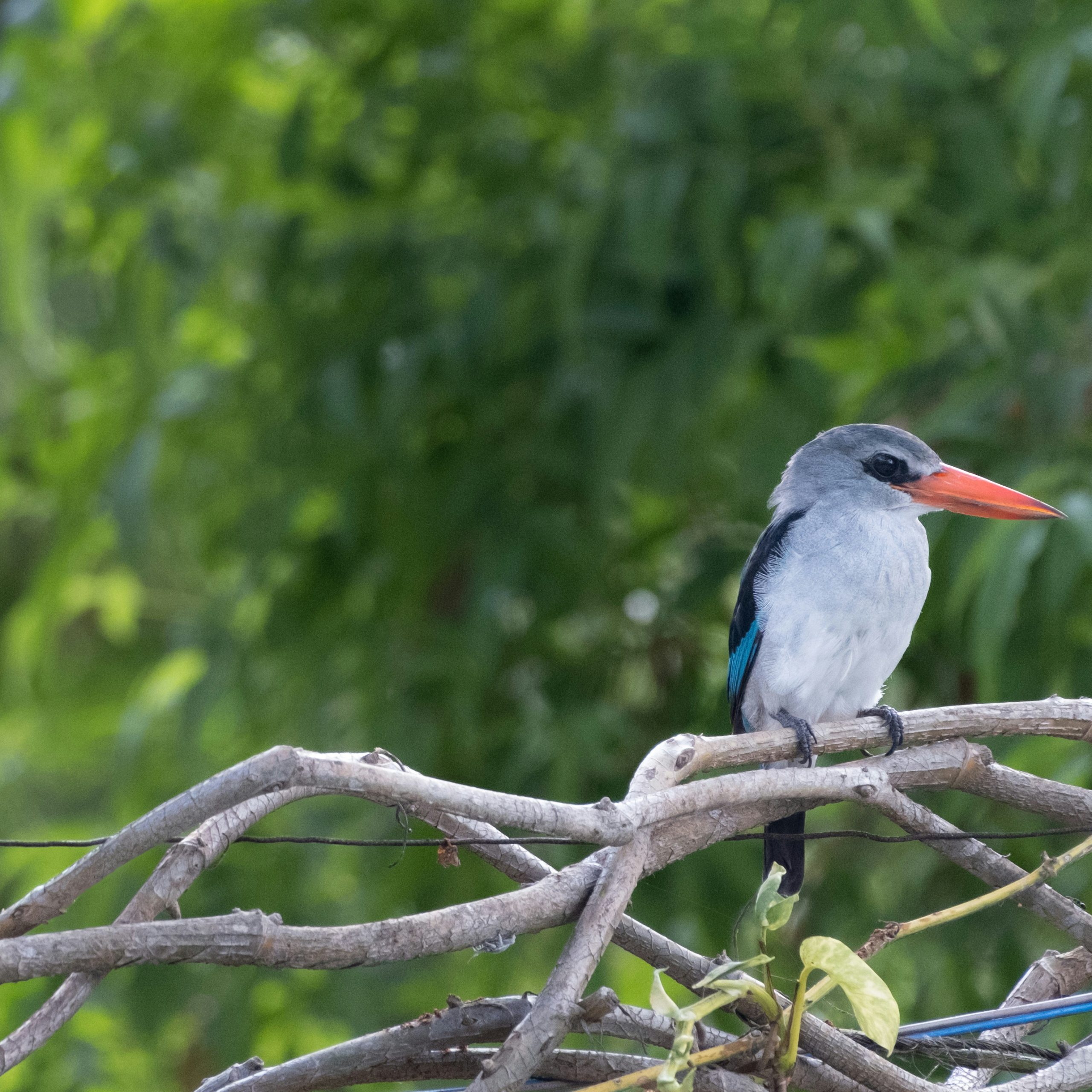
Around 1,100 bird species have been recorded in Tanzania, of which about 800 are residents. Among these are iconic gems like African fish eagles, shoebill storks, secretary birds, kori bustards, and lilac-breasted rollers. There are also a whopping 29 endemic species. These include the Pemba scops owl, ashy starling, Tanzanian red-billed hornbill, and Udzungwa forest partridge.
I should perhaps point out that if you’re keen to see as many wildlife species as possible, you should ensure your overland adventure extends beyond just the obvious places (like the Serengeti, Ngorongoro Crater, and Zanzibar). There’s so much more wildlife to find if you’re willing to make the effort to venture further afield. For instance, if you head to Lake Tanganyika in the far west of the country, you can find chimpanzee and red colobus monkey troops living in the forested Mahale Mountains.
Tanzania is an enormous country – it’s roughly the size of Texas and New Mexico combined. What’s more, around 40% of its terrestrial extent is in some way protected.
What this means is that there are vast swathes of wilderness across the country that you can explore on safari. For those looking for a back-to-basics overland adventure, where you venture to places where there’s virtually no traffic, no settlements, and no other people – you can have that. There are many highly remote eco-camps throughout Tanzania that offer incredible and immersive wildlife experiences.
This is especially true in the east, south-central, and western parts of the country, which see far fewer foreigners. For instance, Ruaha National Park and Nyerere National Park in southern Tanzania are utterly enormous by anyone’s standards. You can explore parts of these vast wildernesses without seeing anyone else – just fathomless numbers of animals, including elephants, lions, giraffes, leopards, and crocodiles.
In fact, you could explore the remote corners of Tanzania for a lifetime and not have seen it all. It’s a wonderful thought for anyone who’s ever wished that the world still had uncharted frontiers left to explore.
What’s more, when you visit the quieter and lesser-known wildlife spaces, you help to spread the impacts and benefits of tourism, which is a really good thing.
You also tend to approach the experience with fewer marketing ideas bouncing around in your head. This opens you up to being more present, ready to notice and appreciate whatever surprises nature has in store for you. Safaris shouldn’t be about seeking out specific hyped-up moments. Rather, they are – or I believe should be – about waiting to see what series of unique and serendipitous encounters come your way.
So there you have it – four reasons to go on a Tanzania safari. The best way to explore Tanzania – and much of it – while on a budget is on a small-group overland safari. African Overland Tours offers a range of Tanzania adventure tours, packages, and budget safaris.
"*" indicates required fields