Welcome to the heart of wild Africa, where rolling savannahs meet dramatic river crossings and an unparalleled abundance of wildlife roams free.
Mara Africa, often known as the Maasai Mara National Reserve and sometimes spelt Masai Mara, or locally as “The Mara”, is Kenya’s premier wildlife destination, contiguous with the Serengeti National Park in Tanzania. Named in honour of the Maasai people, the ancestral inhabitants who migrated to this area from the Nile Basin, “Mara” means “spotted” in their local language, a description of the landscape dotted with short, bushy trees. Prepare to be inspired by the sheer scale of life and the breathtaking beauty that makes the Mara a truly epic masterpiece.
Experience the Great Migration: A Natural Wonder of the World
The Maasai Mara is renowned globally as the stage for the Great Migration, one of the Seven Natural Wonders of Africa and among the ten Wonders of the World. Every year, typically between late-June and early August, over 1.5 million wildebeest along with hundreds of thousands of zebras, Thomson’s gazelles, topi, and elands journey north from the Serengeti plains in search of fresh pasture. This incredible spectacle involves dramatic and often dangerous crossings of the Mara River, teeming with Nile crocodiles. The migration usually peaks in the Mara between July and October. Witnessing these river crossings is a truly unforgettable and often “gut-wrenching” drama of life and death. While the migration is a highlight, the Mara offers rewarding safari experiences at any time of year.
Encounter the Legendary Wildlife of the Mara
The Maasai Mara is a wildlife conservation haven where you can encounter all members of the “Big Five” – lions, African leopards, African bush elephants, African buffaloes, and black rhinoceros – year-round.
Lions: The most dominant carnivores, found in large numbers throughout the reserve. There are approximately 400 lions resident in the reserve and neighbouring conservancies.
Leopards: Increasingly seen anywhere in the reserve where there are trees for them to escape to. Leopard Gorge is a familiar area to followers of Big Cat Diary.
Cheetahs: Found in high numbers on the open savanna, hunting gazelles and wildebeest. The Mara-Meru Cheetah Project actively monitors their population.
African Bush Elephants: Hundreds roam the region, a relatively recent increase dating back to the 1930s. There are currently around 1500 elephants.
African Buffaloes: Large herds are common throughout the bush.
Black Rhinoceros: The Maasai Mara is the only protected area in Kenya with an indigenous black rhino population unaffected by translocations. Their numbers were severely depleted by poaching but are slowly increasing.
Beyond the Big Five, the Mara teems with other fascinating wildlife, including:
Spotted Hyenas: Abundant carnivores often competing with lions. The Maasai Mara is a major research centre for spotted hyenas.
Jackals: Black-backed and side-striped jackals are regularly seen.
Wild Dogs: Though rare due to disease and competition, they are beginning to den in the region again.
Hippopotamuses and Nile Crocodiles: Found in large groups in the Mara and Talek rivers.
Plains Game: Magnificent Maasai giraffes, various antelopes like Grant’s gazelles, impalas, duikers, and Coke’s hartebeests, as well as zebras and warthogs are commonly sighted. The large roan antelope and nocturnal bat-eared fox, rarely present elsewhere in Kenya, can also be seen.
Birdlife: The Mara is an Important Bird Area with over 500 recorded species, including many migrants and almost 60 species of raptors. Look out for threatened species like vultures, marabou storks, secretary birds, and the endangered Martial eagle.
Immerse Yourself in the Maasai Culture
The Maasai people are an integral part of the Mara ecosystem. As traditional cattle-herders, they have historically lived in relative harmony with the wildlife. Today, while cattle ownership remains central to their culture, many Maasai have become expert safari guides and camp managers. You will have ample opportunities to interact with Maasai guides and staff, and optional visits to Maasai villages and schools offer a fascinating insight into their unique way of life.
Explore the Diverse Landscapes of the Mara
The Maasai Mara National Reserve covers an area of 1,510 km² (580 sq mi). The landscape is primarily open grassland with seasonal riverlets and clumps of distinctive acacia trees in the southeast. The reserve is part of the larger Mara-Serengeti ecosystem, which spans around 25,000 ha (62,000 acres) in Kenya and Tanzania. The Mara River and its tributaries, the Sand and Talek rivers, meander through the plains, dividing the reserve into three main sectors: the Mara Triangle, the Musiara sector, and the Sekenani sector. To the west, the dramatic Esoit (Siria)/Oloololo Escarpment forms a visible boundary. The eastern border is about 224 km (139 mi) from Nairobi, making the eastern regions the most visited by tourists.
Experience Unforgettable Safari Activities
The Mara offers a wide variety of activities to enhance your safari experience:
Game Drives: Conducted in the early morning and late afternoon for the best wildlife viewing opportunities. All-day game drives with picnic lunches are also popular.
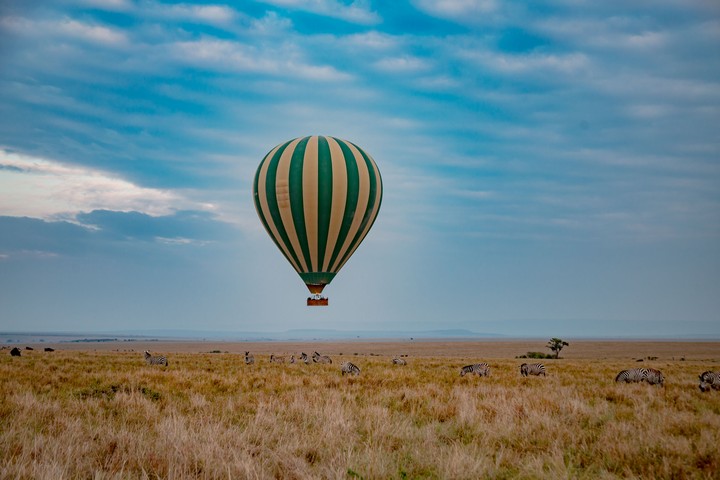
Hot-Air Balloon Safaris: A truly unique and breathtaking experience, offering a bird’s-eye view of the plains at sunrise, followed by a champagne bush breakfast.
Cultural Visits: Gain insight into the traditions and daily life of the Maasai people by visiting a local village.
Bush Meals and Sundowners: Enjoy the African wilderness with specially arranged meals and drinks in scenic locations.
Walking Safaris: Some areas offer the opportunity to explore the smaller wonders of the Mara on foot (though not explicitly mentioned as a primary activity in these sources).
Plan Your Visit to Mara Africa
The Maasai Mara experiences a semi-arid climate with biannual rains. The ‘long rains’ typically last for six to eight weeks in April and May, and the ‘short rains’ occur for around four weeks in November and December. There is a significant rainfall gradient, with more rain in the west.
Peak Season (July to October): Coincides with the Great Migration, offering spectacular wildlife viewing but also higher visitor numbers and prices.
Shoulder Seasons (June and November): Can offer a good balance of wildlife sightings with fewer crowds and often lower prices.
Low Season (April and May): The long rainy season can make some areas harder to access, but the landscape is lush and green, with lower accommodation rates.
Choose Your Ideal Mara Accommodation
The Maasai Mara boasts a wide range of lodges and safari camps to suit various preferences and budgets. Options include:
Tented Camps: Offering an immersive safari experience, many located within the National Reserve and in conservancies. Some are known for their prime locations near migration river crossing points. Examples include Little Governors’, Rekero, Tangulia Mara, Governors’ Camp, and Sala’s Camp.
Safari Lodges: Providing more permanent structures and amenities, such as Mara Serena Safari Lodge.
Eco-camps: Award-winning camps focused on sustainability, like Basecamp Maasai Mara.
Luxury Camps: Offering high-end experiences with exceptional service and comfort, such as Angama Mara and Cottars 1920s Safari Camp.
Consider staying in one of the private conservancies bordering the National Reserve for a more exclusive and less crowded experience, while still having excellent wildlife viewing opportunities.
Conservation Efforts and Challenges
The Maasai Mara faces several threats, including increased livestock grazing, poaching, human-wildlife conflict due to rising local populations, and habitat loss from unplanned infrastructure growth and fencing. Conservation organisations like the Mara Conservancy and the Mara Elephant Project are working to address these challenges through anti-poaching efforts, community engagement, and wildlife monitoring.
Why Mara Africa Should Be Your Next Adventure
A safari to Mara Africa in East Africa is more than just a holiday; it’s an immersion into a world of natural wonder, cultural richness, and breathtaking beauty. Whether you dream of witnessing the Great Migration, encountering the Big Cats in their natural habitat, soaring above the plains in a hot-air balloon, or connecting with the vibrant Maasai culture, the Mara promises unforgettable experiences and lifelong memories. Come and discover the epic masterpiece that is Mara Africa.