

African Overland Tours
https://www.facebook.com/AfricanOverlandTourscom/
https://www.instagram.com/african_overland_tours/
https://www.youtube.com/@africanoverlandtoursandsafaris
+27 (0) 21 448 0997
Customer Service
Worldwide

African Overland Tours
https://www.facebook.com/AfricanOverlandTourscom/
https://www.instagram.com/african_overland_tours/
https://www.youtube.com/@africanoverlandtoursandsafaris
+27 (0) 21 448 0997
Customer Service
Worldwide
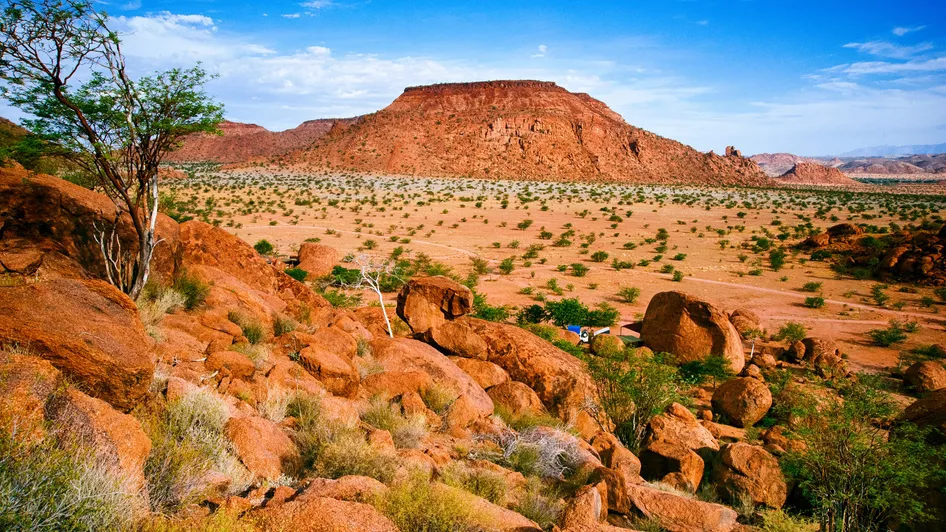
In Damaraland, the earth holds and breathes history.
This is a realm of profound humming silence, where time layers itself into a rust-red chronicle of the ancient world. Cradled in Namibia’s wild heart, between the shimmering mirages of Etosha and the Atlantic’s ghost-filled mists, the landscape feels less like a place and more like a hauntingly beautiful secret.
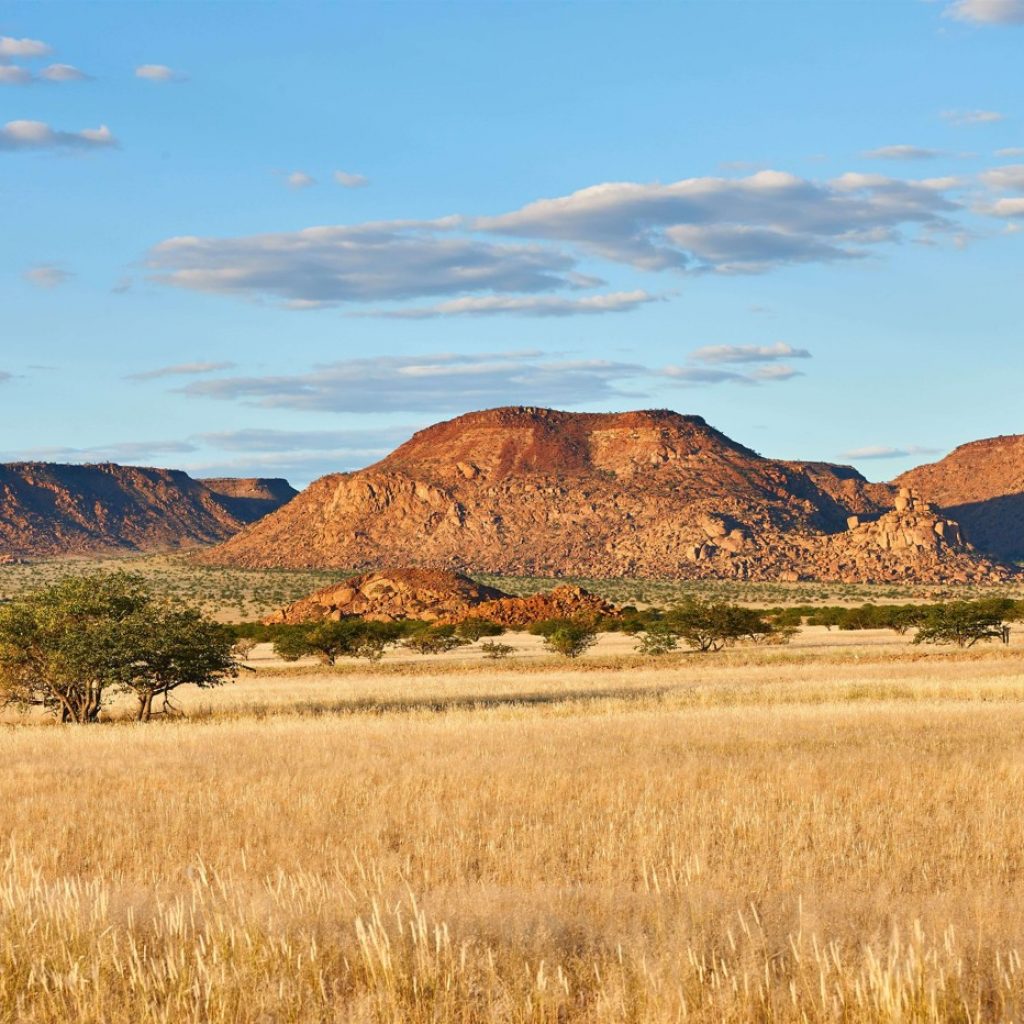
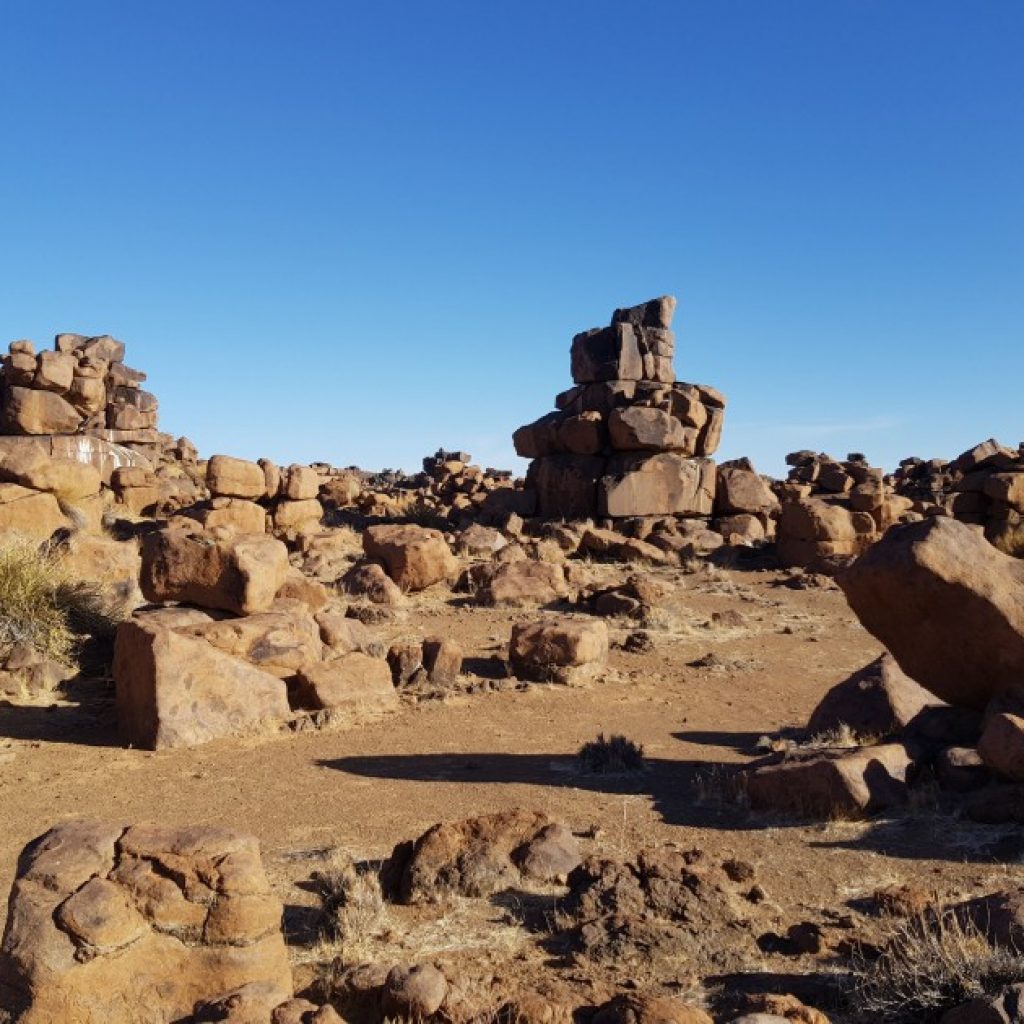
A place like Damaraland is to walk among the giants. Massive granite koppies rise like ancient, weather-beaten monoliths from the wide, open sandy plains, standing as silent sentinels over the vast desert floor. The mountains are living canvases of burnt orange and deep ochre, blushing and deepening as the sun drifts overhead, casting a spell of light and shadow that stirs the soul.
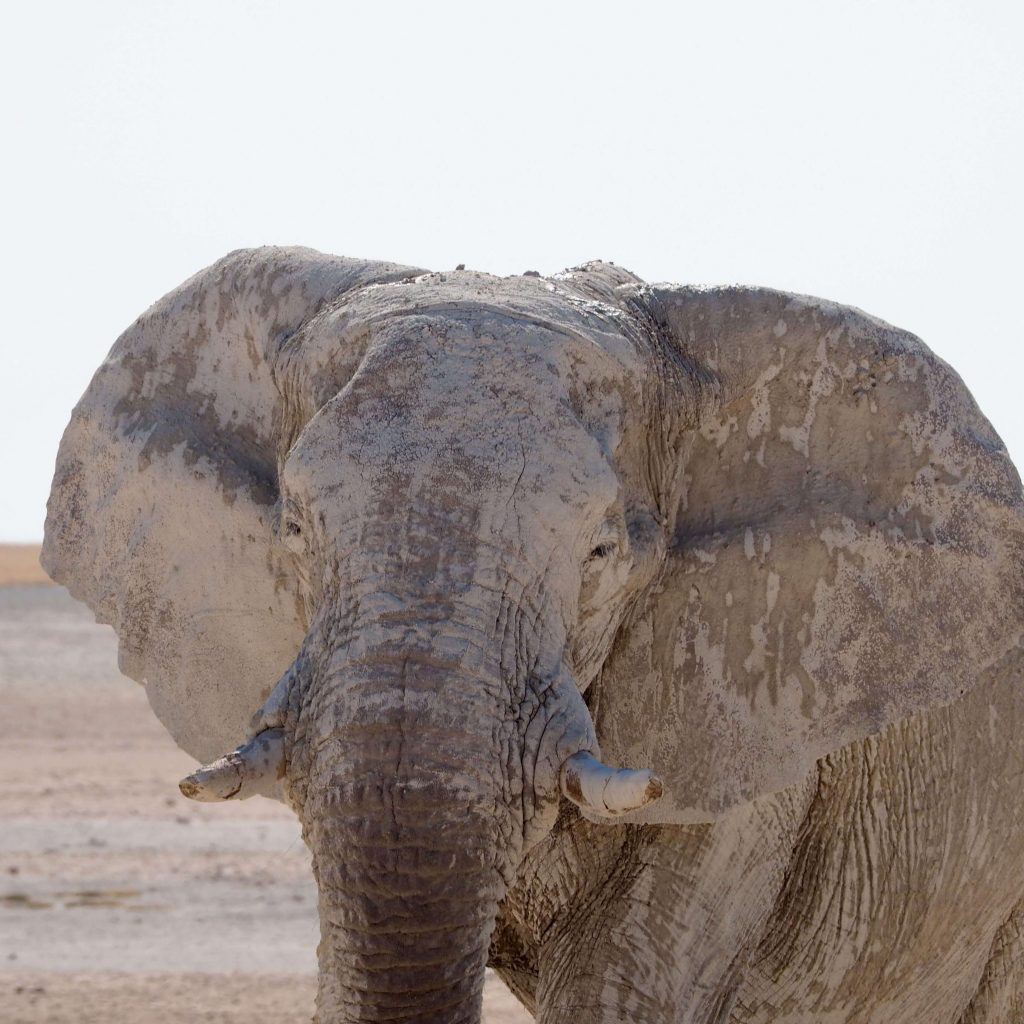
Damaraland is one of the few places on earth where you can witness the impossible: the desert-adapted elephant. These elusive “ghosts of the desert” have evolved smaller bodies and wider feet to navigate the scorching dunes and rocky riverbeds. Tracking them, along with the rare and prehistoric black rhino, is an experience that transcends the typical safari. There are no fences here. Instead, you follow your guide through the dust. When you finally spot a rhino silhouette against a red mountain, or watch an elephant herd move with surprising grace through a dry valley, you realize you are a witness to one of nature’s greatest survival stories.
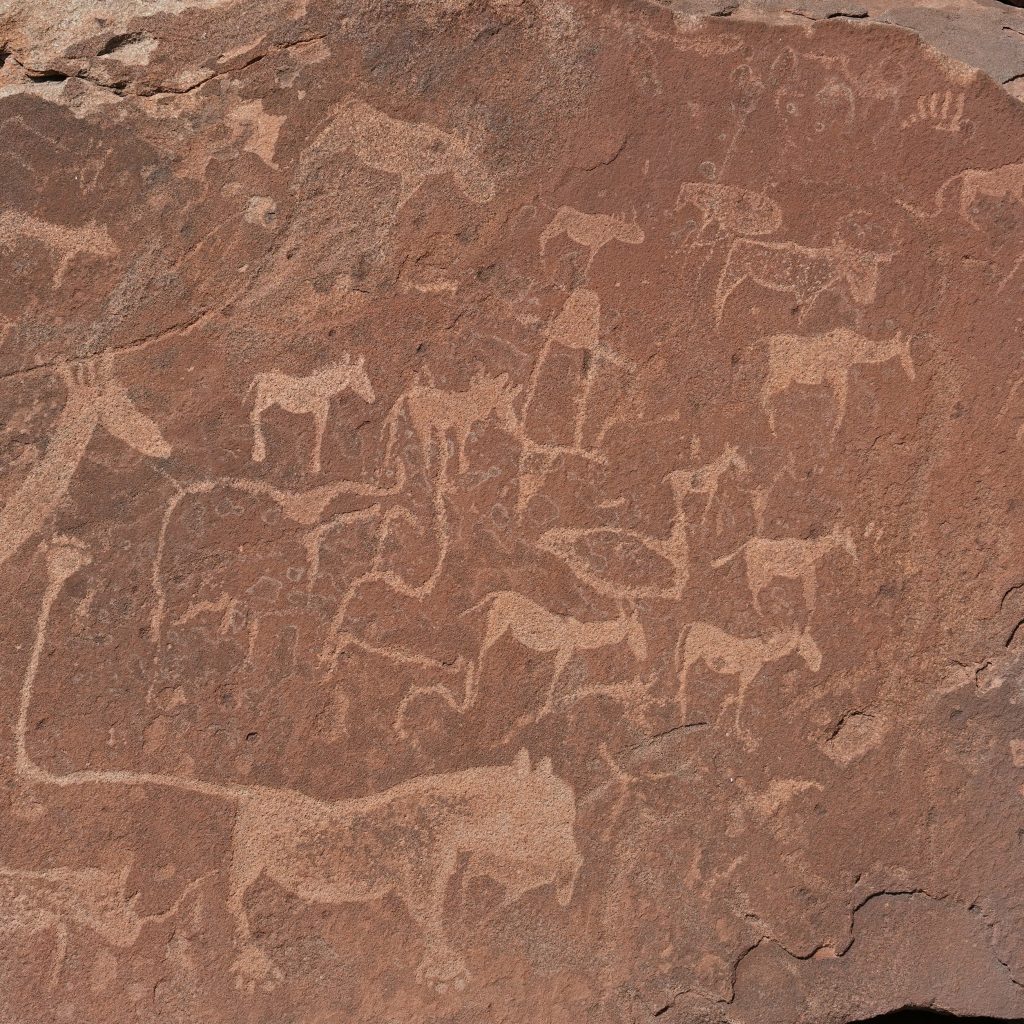
The true heartbeat of Damaraland is found at Twyfelfontein. This isn’t just an archaeological site; it is a sacred conversation with our ancestors. As Namibia’s first UNESCO World Heritage site, it holds one of the largest concentrations of Stone Age rock art in southern Africa.
Etched into the skin of ancient, petrified sand dunes, are over 2,500 engravings dating back to 3,000 BC. These carvings of giraffes, lions, and mysterious geometric shapes were maps, teaching tools, and shamanic visions.
To truly feel the power of Twyfelfontein, visit in the late afternoon. As the harsh midday sun mellows into a soft, honeyed glow, the engravings catch the “golden hour” light. The red rocks seem to ignite, and the carvings of the Bushmen stand out in sharp, emotive relief against the stone, just as they have for five millennia.
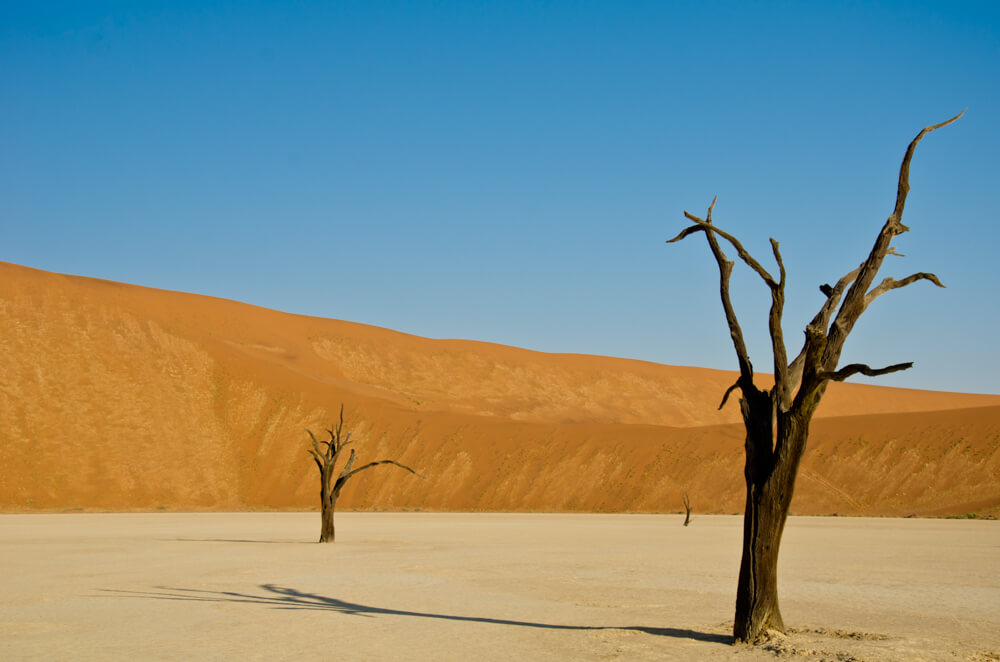
A short journey away lies the Petrified Forest, a place that challenges your perception of time. Imagine a lush, prehistoric forest from 250 to 300 million years ago. It’s speculated that a massive flood once washed giant logs down an ancient river system, burying them under a heavy blanket of silica-rich mud.
Over millions of years, through the slow alchemy of nature, the wood didn’t rot—it turned to stone. Today, about 50 of these fossilized giants lie scattered across the ground. Walking among them is a surreal experience. You can reach out and touch a trunk that is 30 meters long, feeling the rough texture of the bark and seeing the delicate growth rings of a tree that lived before the continents had even drifted apart. It is a humbling reminder of the world’s enduring spirit.
Before you leave, you must stand before the Organ Pipes. These striking dolerite columns were formed by volcanic activity millions of years ago, creating vertical rock formations that look like the pipes of a great, frozen cathedral. Nearby, the Burnt Mountain glows with a dark, volcanic intensity, offering a stark contrast to the surrounding red sands.
Damaraland is a place you feel. It’s in the stillness of the air, the grit of the sand, and the ancient wisdom etched into every rock face. It reminds us that we are part of a much older story—one of resilience, beauty, and the timeless whisper of the stone.
Whether you are tracking rhinos through the scrub or standing in awe of a 5,000-year-old engraving, Damaraland offers a rare sense of peace. In the vastness of these plains, you don’t just find adventure; you find a piece of yourself.
N.B: This blog was rewritten by Faatima Suliman on March 26, 2026.

"*" indicates required fields