


African Overland Tours
https://www.facebook.com/AfricanOverlandTourscom/
https://www.instagram.com/african_overland_tours/
https://www.youtube.com/@africanoverlandtoursandsafaris
+27 (0) 21 448 0997
Customer Service
Worldwide

African Overland Tours
https://www.facebook.com/AfricanOverlandTourscom/
https://www.instagram.com/african_overland_tours/
https://www.youtube.com/@africanoverlandtoursandsafaris
+27 (0) 21 448 0997
Customer Service
Worldwide
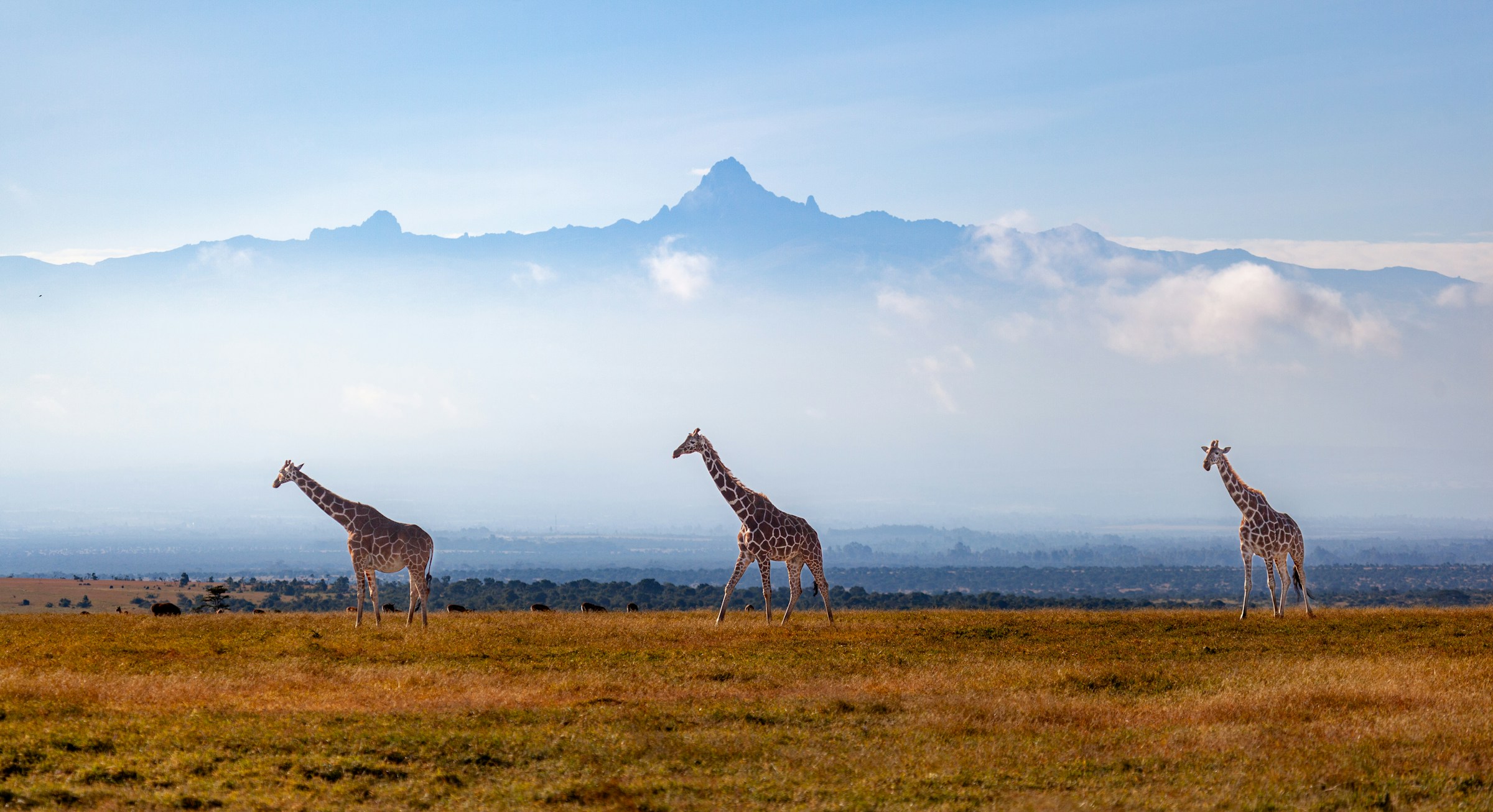
Kenya has two rainy seasons, which can impact on safari, beach, and trekking trips
It’s important to understand the weather in Kenya to help you plan the best possible holiday. You naturally want to ensure good game-viewing weather if going on safari, favourable conditions for any beach, island, or diving getaway, and safe trekking conditions if climbing Mount Kenya or doing any other hiking in the country.
So let’s look first at the seasons in Kenya overall. I then discuss the weather patterns relating to each type of holiday activity in turn. Armed with the knowledge, you’ll feel equipped to choose the best time of year for exploring Kenya with respect to your personal preferences and chosen destinations.
The two rainy seasons in Kenya are:
With that being said, please do note that Kenya is a big country with incredibly diverse ecosystems. For instance, you have a hot and humid coastline, interior mountains with snow-covered peaks, a desert in the far north, and an enormous lake lying within the East African Rift system. All of these regions and others besides have their own climates and weather patterns. And the weather in Kenya is, overall, unpredictable and changeable. So it would be unhelpful to think of its weather in terms of hard-and-fast wet and dry seasons. At high altitude in particular, it can rain at almost any time.
So depending on where in Kenya you go on safari, different weather norms will apply.
Note that the rainy seasons have their perks. So we’ll discuss what those are and how the rainy seasons in Kenya might actually suit your travel plans.
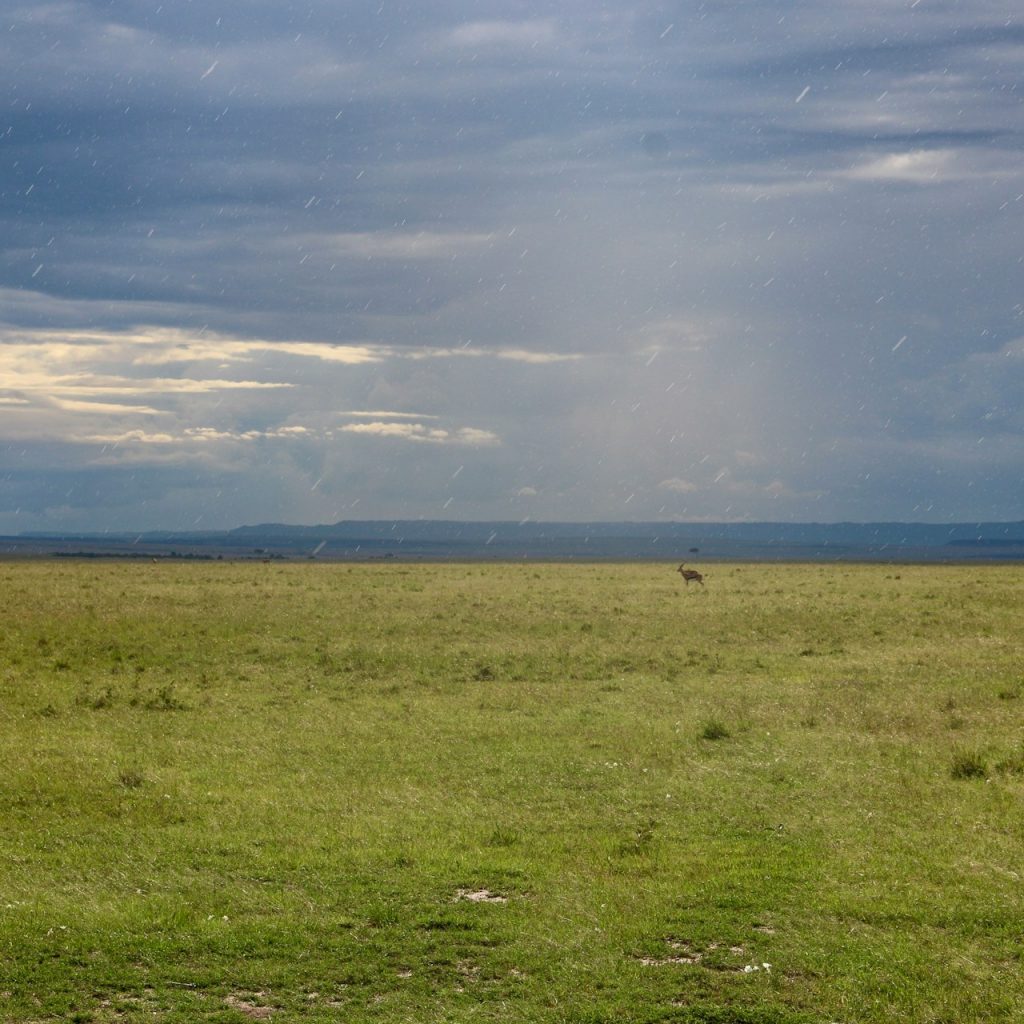
The long rains of late March to May are the least popular safari season in Kenya as they can make park roads impassable. Some parks will even close their gates as a consequence. It’s also obviously harder to spot wildlife when it’s raining or there’s thick haze. Furthermore, when the grass grows tall and the vegetation becomes very thick, wildlife is harder to spot. And finally, the animals are also more spread out as there are more water sources, so they don’t have to congregate at a few dwindling watering holes.
For all of these reasons, I wouldn’t suggest those who’ve travelled far for a safari experience book their trip during the long rains. While there are certainly advantages to rainy season safaris, which I discuss in just a moment, it’s just perhaps too risky if this is likely to be your one-and-only African safari or something like that.
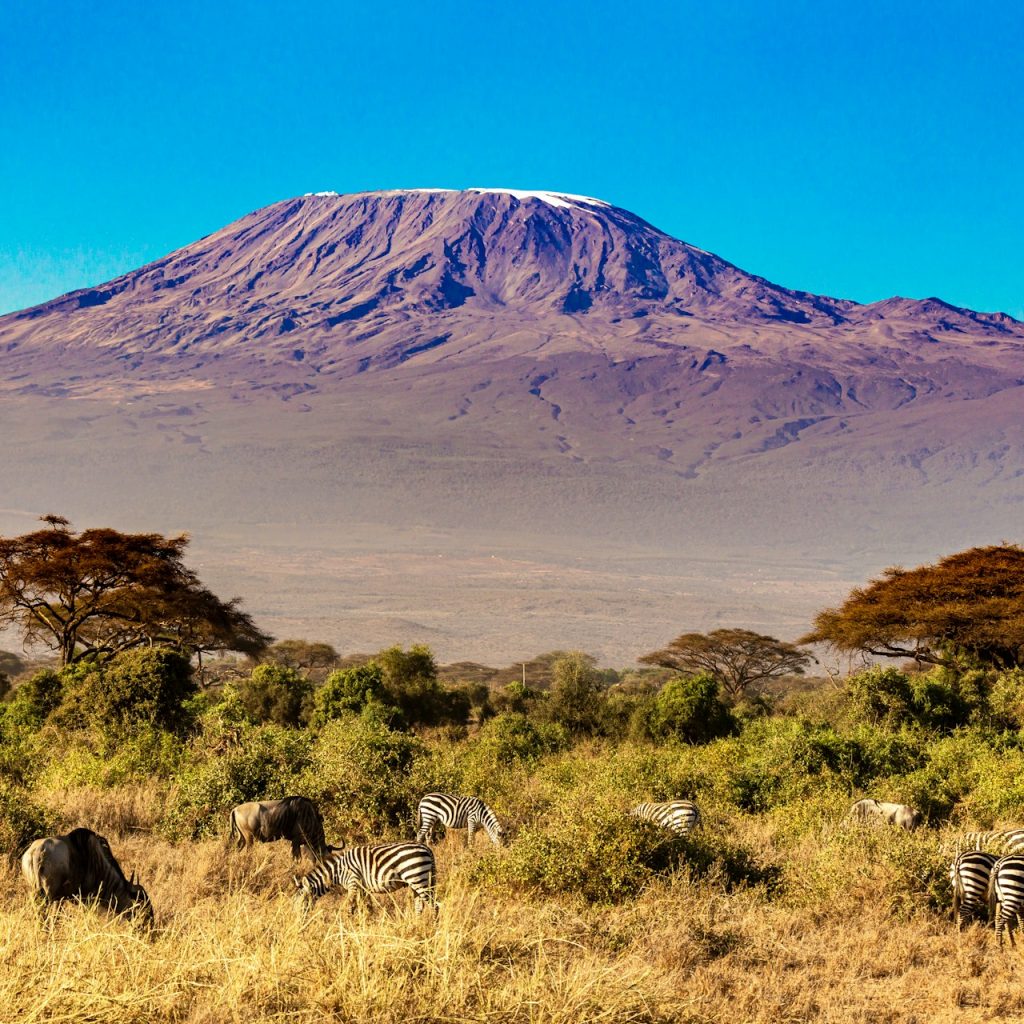
Most international visitors head to the famous southern and central game reserves of Kenya, like Masai Mara National Reserve, Amboseli National Park, Lake Nakuru National Park, and Samburu National Park.
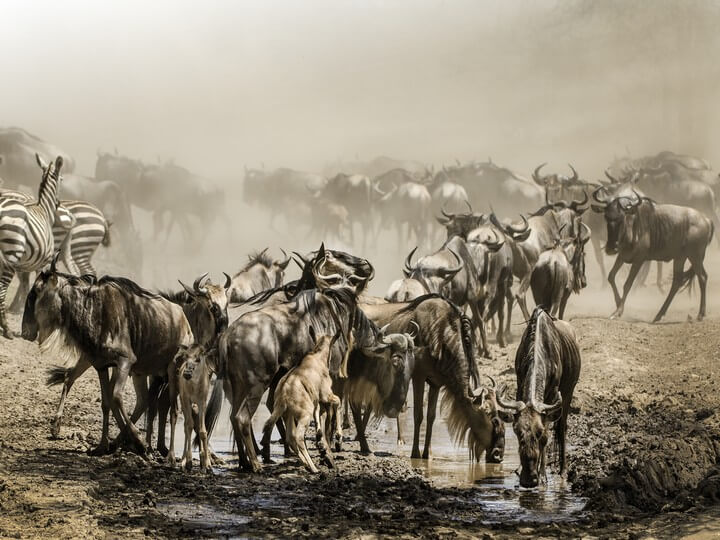
For the Masai Mara, most visit in September or October as this is when the Great Migration herds cross the Mara River from the Serengeti into the park. Note, however, that the herds are in the Masai Mara for longer than that – you can visit during the short wet season and still see them, just without the crowds. What’s more, the Mara River crossing season has become very busy, so if you’d like to be a more conscientious traveller by helping to lessen the environmental footprint of tourism while also spreading out its economic benefits, visiting during the short rains is a great decision.
The two dry seasons are the optimal seasons for all of the other game parks in the country in terms of seeing as much wildlife as possible. Note that the dry seasons in Kenya are:
You might, however, consider doing a safari during the short rainy season, for a few reasons which I’ll discuss below. It’s only the long rainy season that’s really risky in case a park’s roads become unpassable. The only major park I’d perhaps say should definitely be visited during a dry season is Amboseli. This is because you want no rain or haze so that you can see Mt Kilimanjaro in neighbouring Tanzania clearly, like in the photo above.
Amboseli aside, here’s why I wouldn’t necessarily rule out the short rainy season in your Kenyan safari planning …
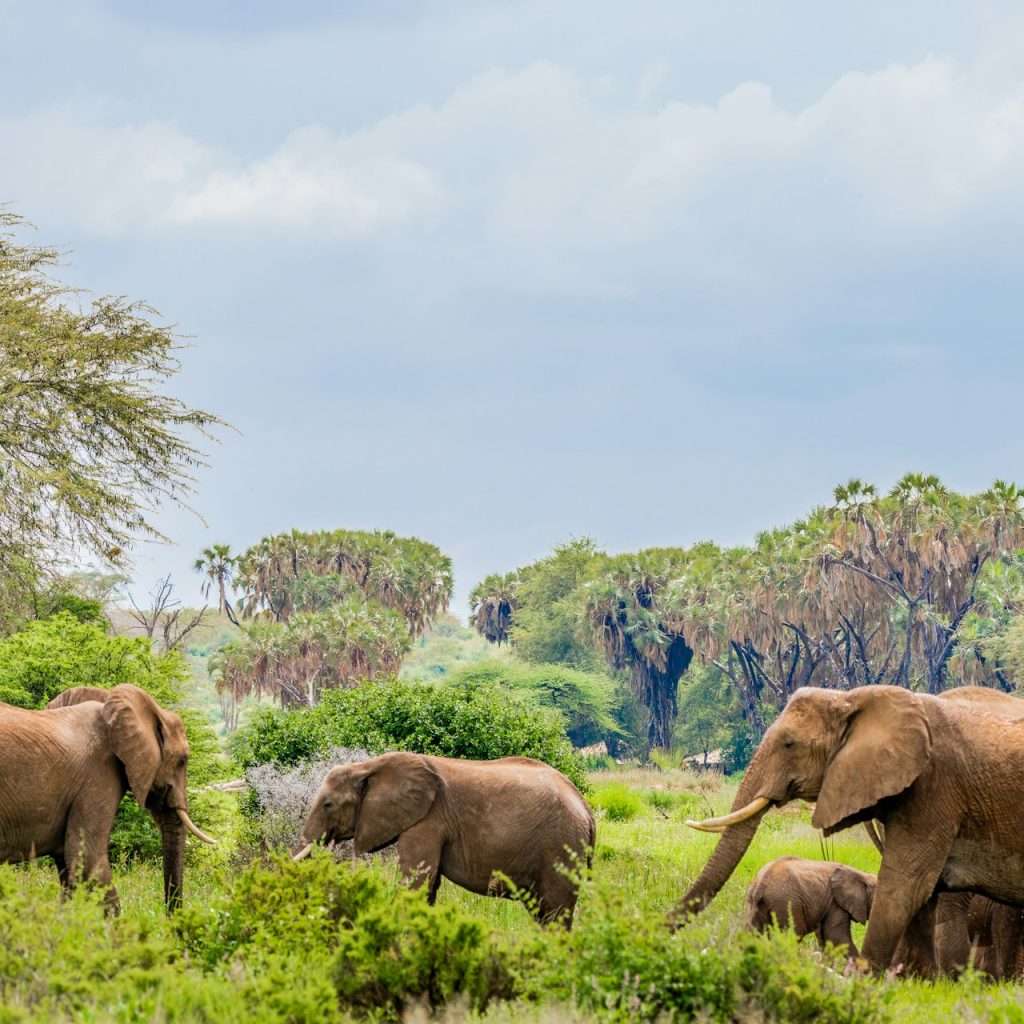
There are various valid reasons to consider choosing one of the rainy seasons for your Kenyan safari:
Most of Kenya’s national parks and reserves remain open throughout the year, even during the long rainy season. But some do close, or at least their lodges do, while others will close when road conditions become untenable. So it’s important to always check on specific parks before planning a rainy season safari in Kenya. If you’re considering a rainy season safari for one of the reasons mentioned above, it might be safer to book your trip during the short rains.
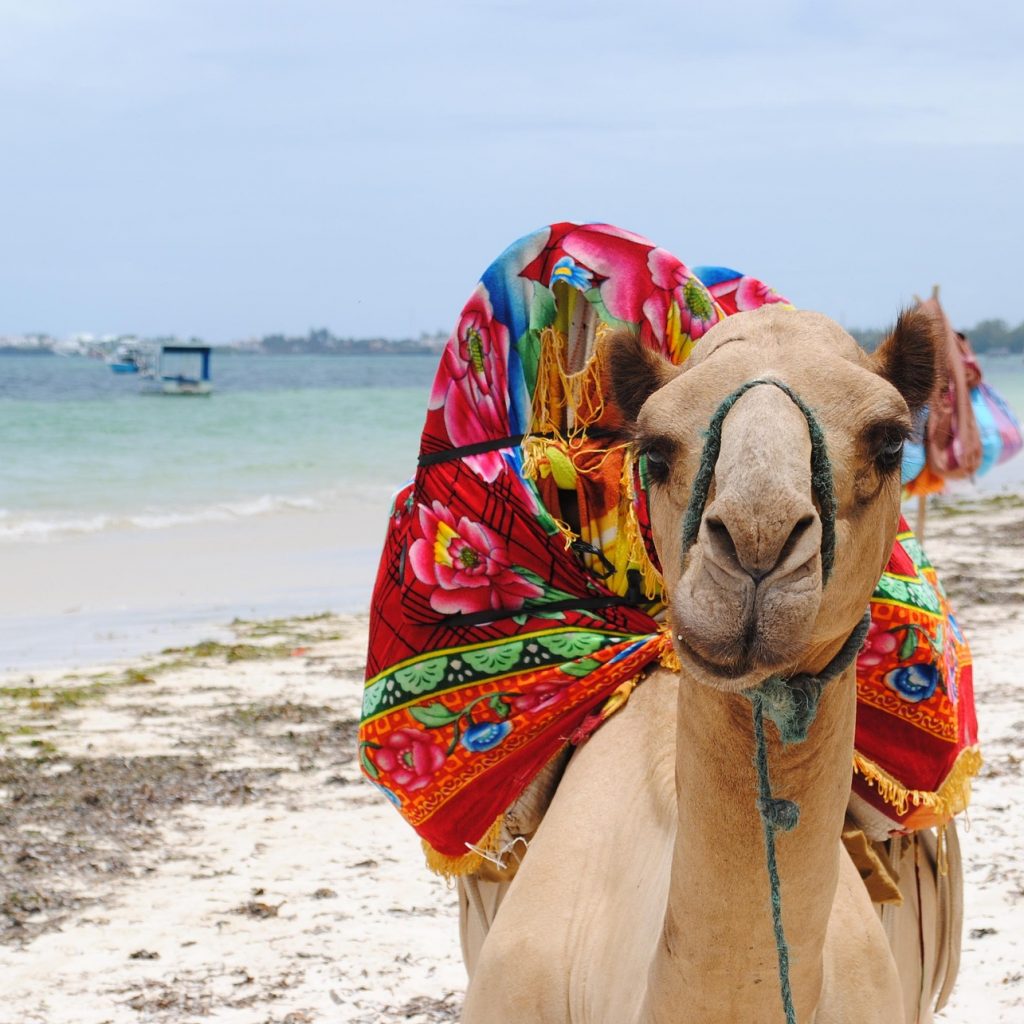
The east coast of Kenya is affected by two monsoon winds coming in off the Indian Ocean:
The biggest rains along the coast tend to come between April and June, as brought by the kusi. The months with the least rain are January and February. These are also the hottest months, with the air temperature often climbing above 30°C (86°F), which makes dips into the ocean all the more welcome!
The months that offer the best snorkelling and diving conditions are October, November, and March.
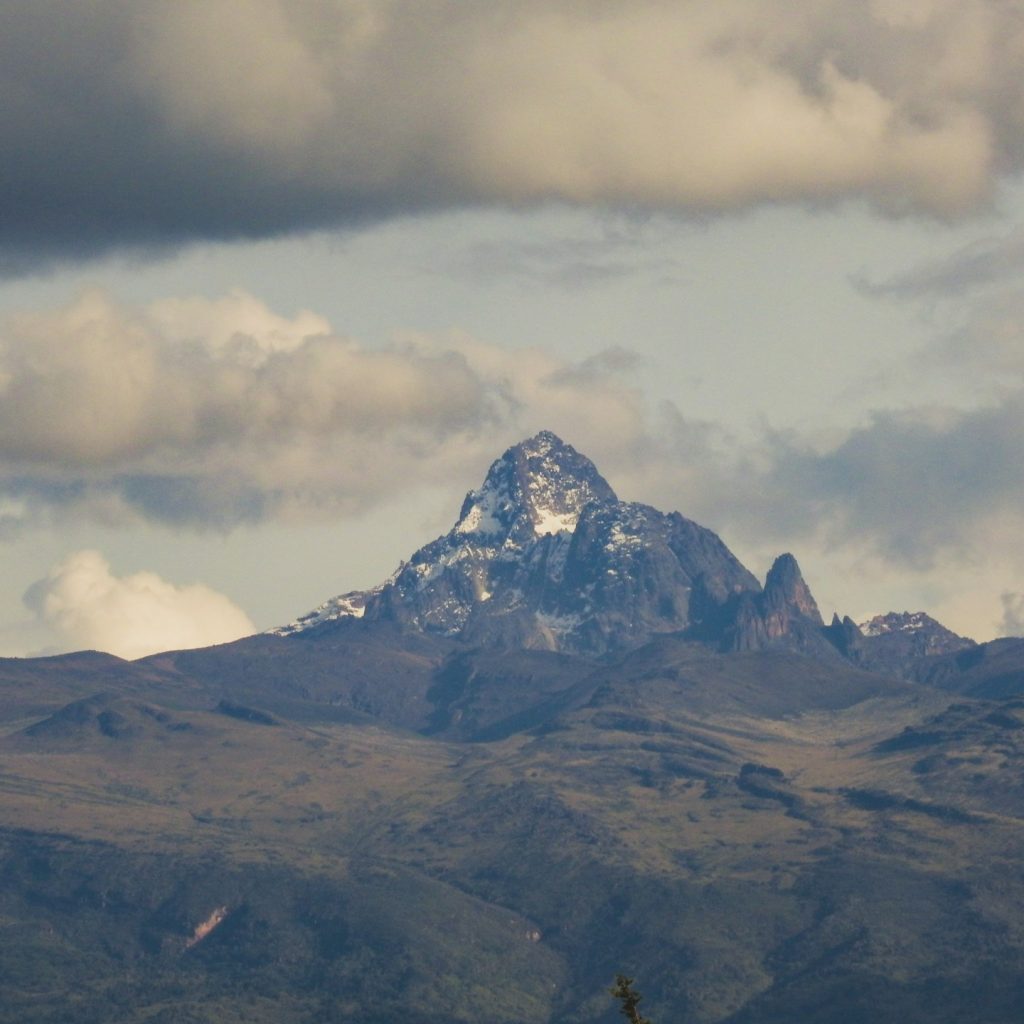
Kenya offers many incredible hiking trails as well as some exciting multiday trekking opportunities. Most famously of all, folks come from around the globe to tackle Mount Kenya, the second-highest mountain in Africa.
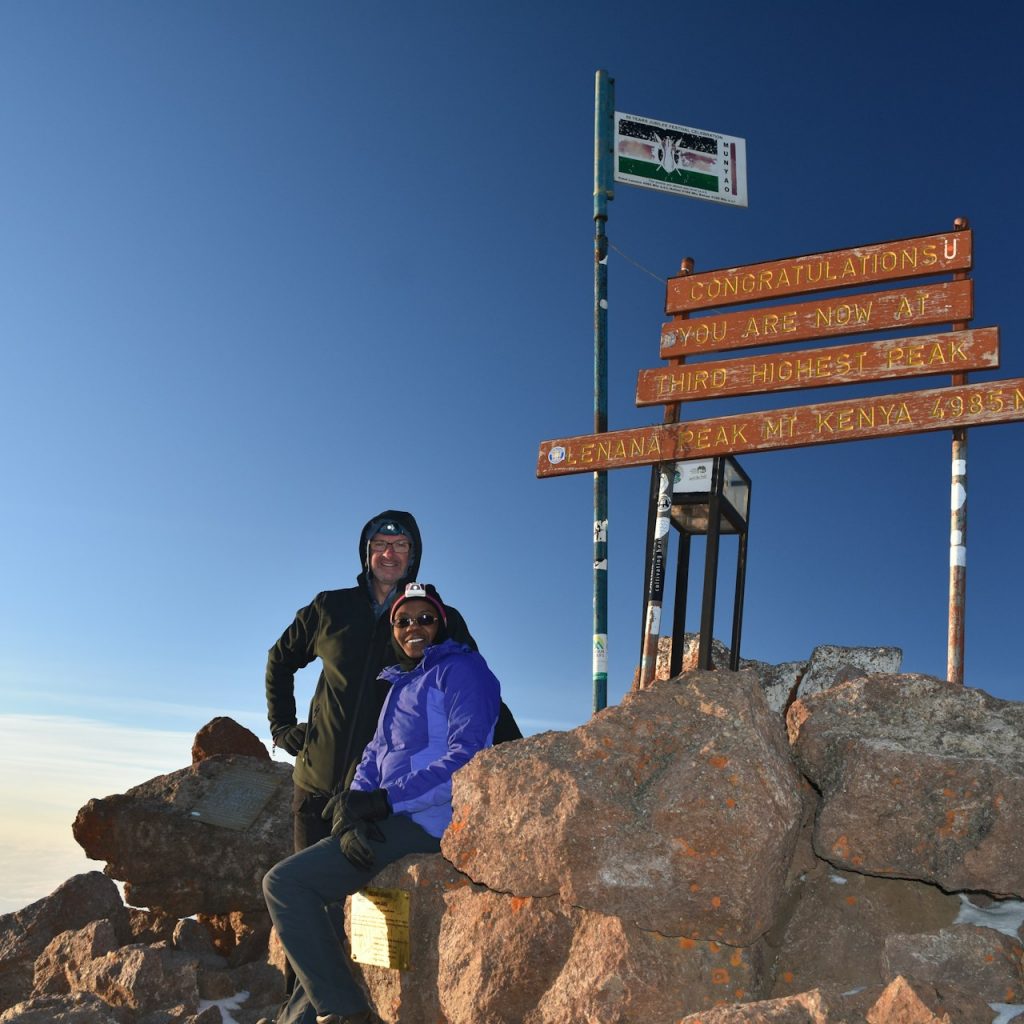
Experienced mountaineers head for the summit, Batian Peak (5,199 m), or the second-highest peak, Nelion (5,189 m). Those wanting a non-technical trek aim for the third-highest peak of Lenana (4,985 m), which also offers fantastic views.
Mt Kenya has notoriously unpredictable weather. Avoid the rainy seasons, if only because sometimes the mountain is closed to trekkers as the dirt roads leading into the park become undrivable. The best months for trekking Mt Kenya are mid January to February and then July and August, as they offer the most reliable weather.
As you can see, talking about Kenya’s rainy seasons and weather in general is not an uncomplicated matter! Key to making an informed decision about when to visit is deciding where in the coiuntry you want to visit, what sorts of activities you wish to do, and what matters most to you (for instance, is it budget or the least chance of rain?). Then make your plans, but after that, try to adopt a relaxed attitude of what will be will be. Weather is one of travel’s great variables, and it cannot be controlled. So a healthy dose of fatalism in this respect might not be amiss!
Note: This blog was first written and published by Leandra Slabbert on 23 January 2024. It was rewritten and republished by Megan Abigail White on 22 January 2026.
The Rainy Seasons in Kenya and When to Plan Safari, Beach, and Trekking Trips
3
1


Price From
R93,019
2
Price From
R104,950
3

Price From
R65,004
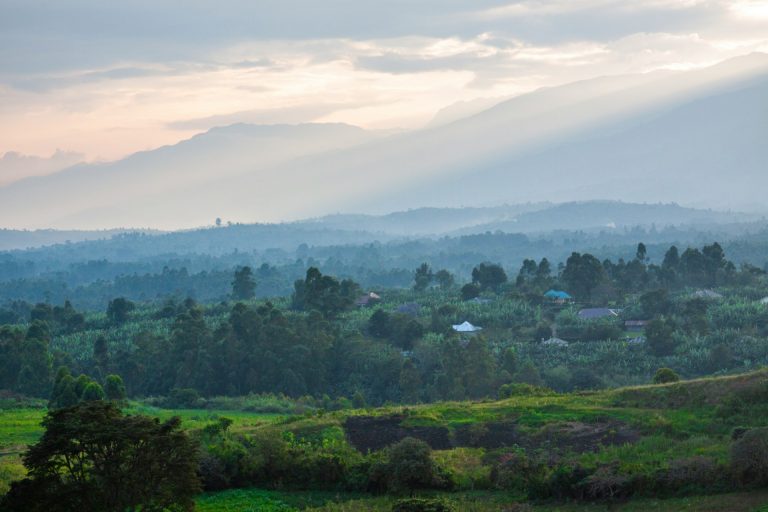
The Great Rift Valley is a storied location of geological wonders, iconic wildlife, and rich cultures What is the Great Rift Valley? The Great Rift Valley is a monumental geographic feature that runs for 7,000 km (4,300 miles) from the…
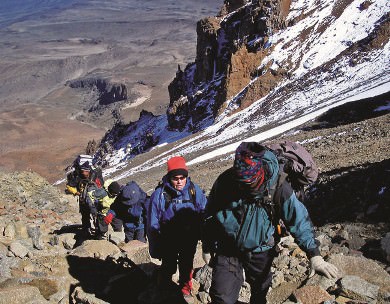
Whether you’re keen to climb snowy peaks, walk in remote desert landscapes or hike along pristine coastal cliffs, Africa has you sorted! From technical summit treks to coastal hikes, you’re spoilt for choice in this magnificent and diverse continent. Here…
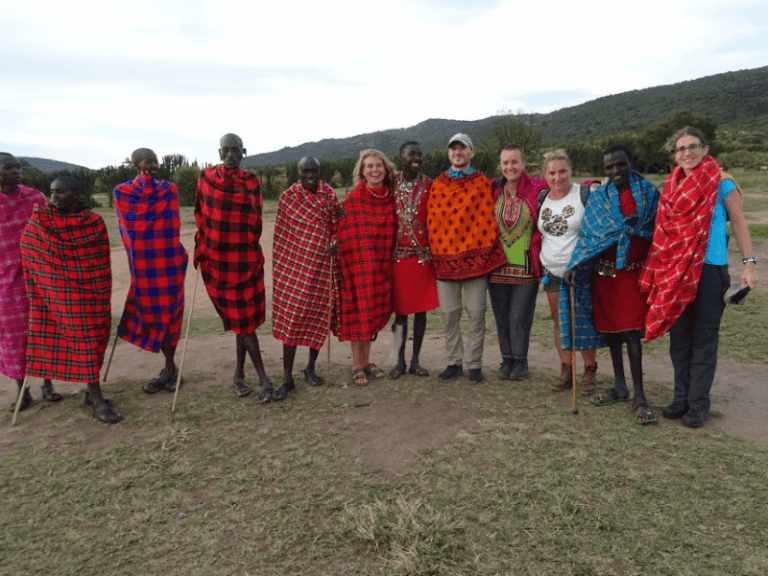
Our experience at Masai Mara There is no combination of words that can describe everything we felt on our first Masai Mara Safari. It is truly a unique experience, and one I recommend to everyone who can afford to do…

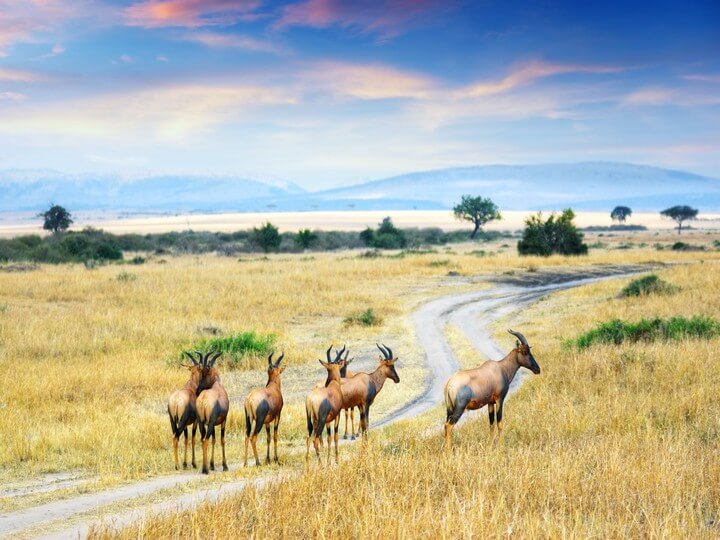
Kenya is one of Africa’s most popular safari destinations, and it’s easy to see why. The East African country has a lot to offer travellers, from spectacular game reserves to an abundance of wildlife (including the Masai Mara, where the…


"*" indicates required fields