


African Overland Tours
https://www.facebook.com/AfricanOverlandTourscom/
https://www.instagram.com/african_overland_tours/
https://www.youtube.com/@africanoverlandtoursandsafaris
+27 (0) 21 448 0997
Customer Service
Worldwide

African Overland Tours
https://www.facebook.com/AfricanOverlandTourscom/
https://www.instagram.com/african_overland_tours/
https://www.youtube.com/@africanoverlandtoursandsafaris
+27 (0) 21 448 0997
Customer Service
Worldwide

The Caprivi Strip in northeast Namibia is a striking geographical oddity
The Caprivi Strip is a panhandle of mostly flat land that forms part of the same water-rich ecosystem as the Okavango Delta. In fact, it’s sometimes referred to as the mini Okavango Delta. The strip of land rakishly off the side of an otherwise stockily shaped Namibia.
Let’s discuss the basics of the Caprivi Strip and why it even exists. We’ll then look at the game reserves, wildlife, and birds that make it a popular ecotourism destination.

The Caprivi Strip is a territorial protrusion that extends eastwards off the far northeast corner of Namibia. It’s about 450 km (280 mi) long and borders Angola and Zambia to the north, and Botswana to the south.
The tip of the Caprivi Strip serves as a meeting point (a tripoint) for Zambia, Botswana, and Namibia. On large maps, it looks like Zimbabwe is on the mix, making it a quadripoint. But there’s actually about 150 m (490 ft) separating the end of the Caprivi Strip from the westernmost point of Zimbabwe. So close.
The northern border of the Caprivi Strip is defined first by the Okavango River, and then further to the east by the mighty Zambezi River.

The Kwando River (also Cuando River), which originates in Angola’s central highlands, more or less bisects the Caprivi Strip. It flows into the Linyati Swamps in the south of the panhandle, and then continues as the Linyati River. This river, which eventually becomes the Chobe River, defines much of the southern border of the Caprivi Strip. At the tripoint, the Chobe feeds into the Zambezi.
Not far to the east of this important confluence is the renowned Victoria Falls. The Caprivi Strip is consequently a popular route for overlanding trips that include Etosha Pan in northern Namibia as well as Victoria Falls and the Okavango Delta.

The beguiling shape and location of the Caprivi Strip begs the question: why?
Near the end of the nineteenth century, most of what is present-day Namibia was part of the German colony known as South West Africa.
Then, in 1890, Britain and Germany signed the Heligoland-Zanzibar Treaty. This treaty was focused, as the name suggests, on the exchange of two archipelagos: Zanzibar in East Africa was handed over to Britain, and Heligoland in the North Sea was handed over to Germany. Thrown into the mix, however, was the pandhandle in Britain’s Bechuanaland that became the Caprivi Strip.
The reason why Germany wanted the Caprivi is debated. It’s often stated as fact that it’s because the Germans wanted access to the Zambezi River so they could have a navigable route to their colony of German East Africa. If this were the case, the joke was on them, as you can’t boat through Victoria Falls!

That said, I can’t find actual evidence backing this story. Moreover, David Livingstone clapped eyes on Victoria Falls in 1855 and brought it to the attention of the West. So I agree with those arguing it’s unlikely the Germans actually thought the Zambezi would make for a navigable way to the east coast. Was the real reason the hope to one day control contiguous land between their two colonies? Sadly, I can’t find a clear answer in this respect from the available info.
Lastly, let me mention that the Caprivi was named for the then German Chancellor Leo von Caprivi. As of 2013, the strip was renamed to the Zambezi Region, but more time is clearly needed for that to catch on in wider discourse.

The Caprivi Strip is sparsely populated.
Most inhabitants, known as Camprivians or Zambezians, are part of different Bantu-language people groups. They include the Mafwe, Masubia, Lozi, and Mayeye. These folks mostly live in small villages and rely on a mix of cattle herding, fishing, hunting, and subsistence farming. They tend to have strong historical and cultural ties with their neighbours in parts of Botswana and Zambia.
There are also some San (Khwe) people living in the drier, western half of the Caprivi Strip. They speak Khoisan, which is famous for its inclusion of unique clicking sounds. Believed to have lived in the Kalahari Desert for many thousands of years, the San remain nomadic hunter-gatherers, mostly disconnected from the rest of society.

The Caprivi Strip (also often simply called the Caprivi) is a fantastic safari destination. It’s especially suited to those who are keen to spot water-loving animals like hippos, crocodiles, and waterbucks, as well as avid birders.
One of the wildlife reserves you could visit is Popa Game Park at the very start of the panhandle. It’s named for the pretty sequence of rapids known as Popa Falls (shown below). There’s also lovely Nkasa Rupara National Park, which occupies the southward bulge in the east of the strip.

The biggest wildlife reserve by far is Bwabwata National Park. It protects the wildlife in the narrowest portion of the Caprivi, and has large populations of elephants and buffaloes. Here, you can enjoy traditional game drives as well as boating safaris, guided bush walks, and night safari drives.

The landscape of Bwabwata is largely untouched, the wildlife is plentiful, the roads in the park are good, and there are varying accommodation options. Yet it remains an under-the-radar safari destination. At least for now.
The Caprivi forms an integral part of the Kavango-Zambezi Transfrontier Conservation Area (KAZA TFCA). The KAZA TFCA is being marketed as a premier water-based safari, birding, and sustainable tourism destination. There are plans to make multivisa operations smoother so that visitors are encouraged to explore more reserves within the whole.

The Caprivi Strip is a beautiful mosaic of flat subtropical ecosystems. It’s dominated by wetlands, permanent papyrus swamps, seasonal floodplains, riverine forests, savannah (grasslands), mopane woodlands, and Kalahari bushveld (think acacias and thorny shrubs).
These ecosystems sustain a rich variety of wildlife.

For starters, you can find four of the Big Five, namely bush elephants, lions, leopards, and Cape buffaloes. There are also giraffes, hyenas, cheetahs, and endangered painted wolves (African wild dogs), among other notable mammals.
You can also spot various beautiful antelope species in the different reserves. These include sable, roan, kudu, red lechwe, reedbuck, and sitatunga.

Other regularly spotted wildlife includes warthogs, baboons, vervet monkeys, yellow-dotted Nile monitors (enormous lizards), and Nile crocodiles.

The Caprivi Strip is a phenomenal birding hotspot, along with the rest of the KAZA TFCA. Of particular interest to birders are the wetlands of Bwabwata as well as those of Nkassa Rupara National Park, which occupies the tip of the little southwards bulge in the southeast of the panhandle.
Exciting waterbird species that frequent the Caprivi are wattled cranes, African skimmers, white-faced whistling ducks, saddle-billed storks, slaty egrets, black crakes, and African darters.

Raptors abound in the Caprivi too. There are martial, bateleur, and western-banded snake eagles, for instance. There are also lappet-faced, hooded, and white-backed vultures, among other species. And as to owl species, these include Verreaux’s eagle, Pel’s fishing, and African wood.
Other bird species you might have the luck of spotting in the Caprivi Strip include the Narina trogon, Cape parrot, red- and yellow-billed oxpecker, Bradfield’s and southern ground hornbill, rufous-bellied tit, and chirping cisticola.

Are you keen to go on safari in the Caprivi Strip? Check out this very popular 20-day Cape Town to Victoria Falls overlanding itinerary that includes Etosha Pan, the Caprivi Strip, the Okavango Delta, and Victoria Falls!
Note: This blog post was first published in 2013. It was rewritten on 3 March 2026.
Understanding the Caprivi Strip, and the wildlife you can see there
4
1


Price From
was
R63,750
R57,375
2

Price From
R77,180
3

Price From
was
R62,950
R56,655
4
Price From
was
R166,150
R149,535
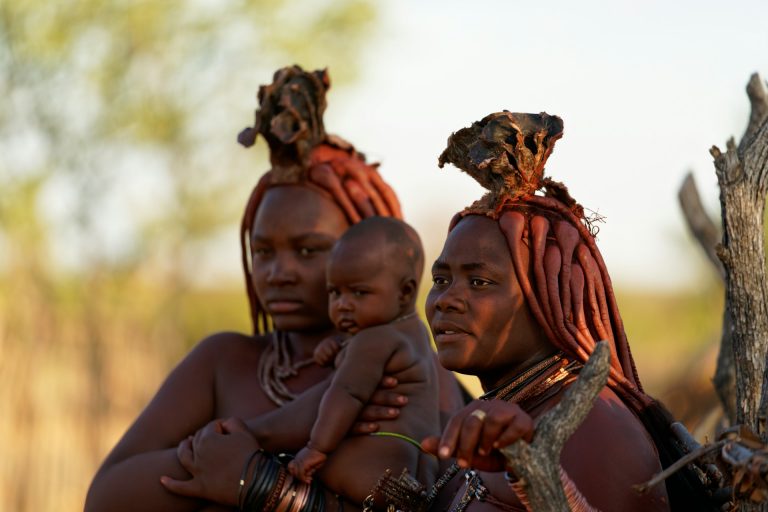
The Himba are a proudly traditional people who live in the coastal Kaokoveld Desert of northern Namibia and southern Angola Apart from the Herero, the Himba are probably Namibia’s most well-known ethnic group, not least because of the women’s distinctive…
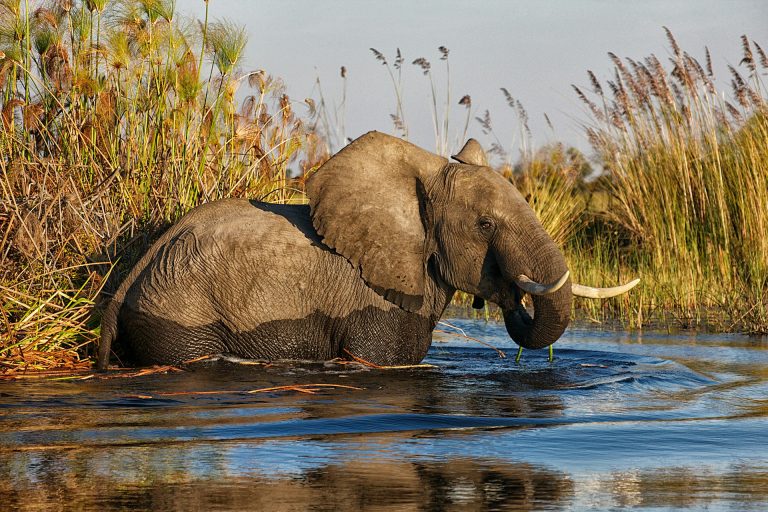
If you’ve ever dreamed of visiting the Okavango Delta, here’s what you need to know to start planning your adventure The Okavango Delta is the world’s largest inland delta. It’s also a true oasis, offering a water-rich habitat in the…
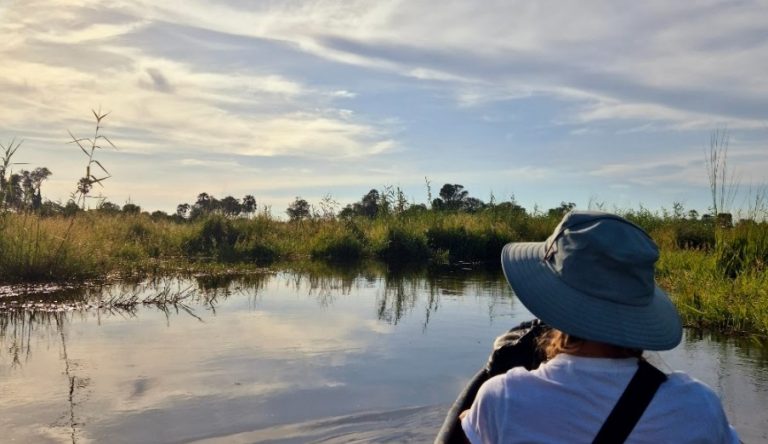
Let’s be honest, booking your first safari is a mix of pure excitement and a healthy dose of “What have I gotten myself into?” You’ve seen the stunning photos, dreamed of the wildlife, but the reality of camping in the…
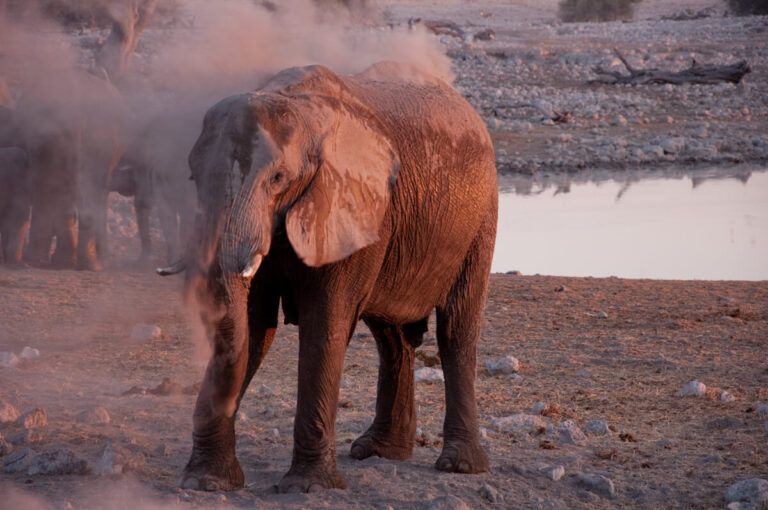
Namibia is often overlooked as a safari destination in favour of the more famous South Africa, Kenya and Tanzania. Namibia, a huge, sparsely populated country to the north west of South Africa, may not have the stereotypical safari settings of…

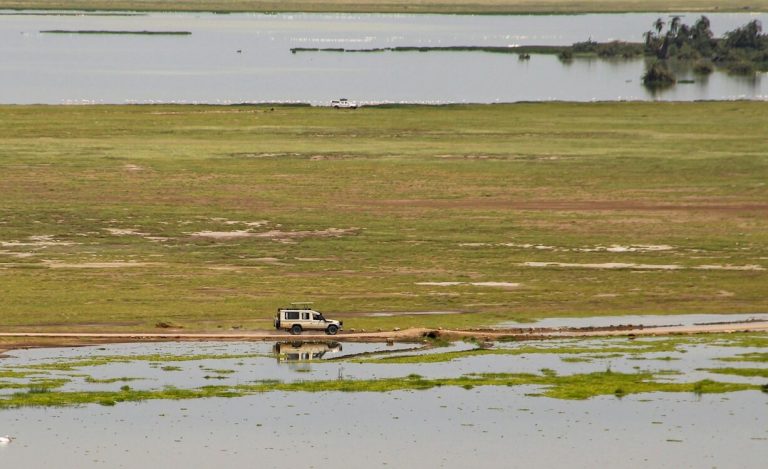
Practical and personality considerations to help you choose between a self-drive or group tour on your African overlanding adventure Overlanding is one of the most affordable, thrilling, immersive, and environmentally friendly ways to approach a multi-country African adventure like that…

Southern Africa is home to dozens of UNESCO World Heritage Sites – Here’s a List of 11 of the best From South Africa up to Malawi, and from Namibia on the west coast across to Mozambique, you can find many…
"*" indicates required fields