The Masai Mara is an expensive safari destination, but there are a few ways to lower the overall price tag.
The main costs involved in a Masai Mara safari are the reserve’s various tariffs, accommodation, transport and fuel, and an optional tour operator or guide fee. I discuss these different costs to help you understand which ones are outside of your control and which ones you can keep low, and how. If you read to the end, you’ll know how to visit the Masai Mara on a budget and also calculate a personal trip price tag.
Let’s first look at the reserve’s tariffs, and then at the other costs that are more within your control.
The unavoidable expense: the Masai Mara’s entry and conservancy fees
Unlike Tanzania’s national parks, which fall under a single national authority (TANAPA), the Masai Mara ecosystem is managed by several different bodies at once: the main Masai Mara National Reserve, administered by the Narok County Government; the Mara Triangle, the reserve’s western sector, managed separately by the nonprofit Mara Conservancy; and a ring of private conservancies (Mara North, Naboisho, Olare Motorogi, Ol Kinyei, Enonkishu, and others) on community-owned land bordering the reserve, each setting its own fees. This split system is genuinely more fragmented than Tanzania’s, and it catches out a fair number of first-time visitors who assume one fee covers everything.
If you don’t wish to deal with the calculations explained below, consider travelling with a tour operator. Tour operators include the tariffs in their package price and then arrange and pay for these on your behalf. It’s a great win, in my opinion, to have someone who understands the system and knows how long is a good time to spend in each place to take care of these matters for you.
List of Masai Mara fees
The Masai Mara’s entry tariffs were significantly restructured in late 2024, taking full effect through 2026, and now run on a two-tier seasonal system rather than a flat year-round rate. Bear in mind that fees are set by the Narok County Government and can change, so treat the figures below as a solid planning guide rather than gospel for your exact travel dates.
Note: Unlike many East African parks that run on a 24-hour entry cycle, Masai Mara National Reserve tickets are valid on a 12-hour, single-calendar-day basis — gates operate 6am to 6pm, and your ticket expires at 6pm regardless of what time you entered. This is a genuinely important difference from Tanzania’s parks to budget and plan around.
1. Entrance fee
Non-resident adults pay USD 100 per day from January to June (low season) and USD 200 per day from July to December (high season) — which not coincidentally covers the Great Migration’s river-crossing months. Non-resident children aged 9–17 pay a flat USD 50 year-round, and children eight and under enter free. East African resident adults pay KES 2,500 (low season) or KES 5,000 (high season); Kenyan citizen adults pay KES 1,500 or KES 3,000 respectively.
The Mara Triangle sector runs the same seasonal fee structure but is cashless only — payment by Visa, Mastercard, or M-Pesa at the Oloololo Gate, Purungat Bridge Gate, or Serena Airstrip. The main reserve’s gates (Sekenani, Talek, Sand River) accept cash in USD or KES as well as card payments.
2. Private conservancy fees
This is the fee category with no real Serengeti equivalent. If your safari includes time in one of the private conservancies bordering the reserve — a common choice for a more exclusive, lower-vehicle-density game-viewing experience — expect a separate conservation fee on top of anything paid to the reserve itself, typically USD 80–150 per person per night for non-residents, varying by conservancy, lodge, and season. These fees are usually built into the nightly rate quoted by conservancy lodges and camps rather than paid separately at a gate, but it’s worth confirming exactly what’s included before booking, since a headline lodge rate that looks similar to a reserve-adjacent option can turn out to be considerably more once conservancy fees are added.
3. Camping or accommodation fee
Camping is generally the most affordable way to overnight in or near the Mara. Public campsites run roughly USD 30–50 per person per night for non-residents. Private campsite bookings carry a KES 10,000 non-refundable booking fee, and campers at private sites are required to hire two armed rangers for night security — a mandatory cost, though it doesn’t include food or accommodation for the rangers themselves.
4. Vehicle fee
Vehicle entry fees range from roughly KES 1000 for a standard car up to KES 1500 for larger vehicles, depending on size and seating capacity, charged per entry per day. As with Serengeti, foreign-registered self-drive vehicles typically attract steeper fees than locally registered ones.
If you are staying inside the reserve and departing by road, you must exit through the gate by 10:00 AM. Leaving later or squeezing in a morning game drive on your final day triggers an automatic charge for an extra day’s ticket.
5. Special activities
A hot air balloon safari over the Mara — one of the signature bucket-list experiences here — runs at roughly USD 500 per person, generally inclusive of its own conservation fee. Private guiding services, where arranged separately from a lodge or operator, run from about USD 20 to USD 50 per day.
Three final notes on Masai Mara fees, mirroring the Serengeti’s rules but worth restating specifically: fees are non-refundable, tickets don’t roll over or offer an official multi-day discount (each new calendar day requires a fresh payment), and at gates using the electronic e-Citizen payment system, it’s worth generating your payment slip at least 48 hours ahead of arrival, since connectivity at remote gates isn’t always reliable.
How to plan a budget Masai Mara safari
Let’s now look at the costs that are more malleable, to see how you can bring down the price tag of a Masai Mara safari.
Note: I don’t discuss how to reach the Masai Mara in detail here, as your route is generally dictated by whether you’re flying into a Mara airstrip or driving from Nairobi (roughly five to six hours by road), and by whether you’re combining the trip with other parks like Amboseli, Nakuru, or Samburu.
1. Choose budget accommodation
There’s a wide range of accommodation both inside the reserve and just outside its boundaries, from ultra-luxury conservancy camps to simple public campsites. Budget camps and guesthouses cluster around the towns of Talek and Sekenani, just outside the main gates, and are noticeably cheaper than anything inside the reserve or in a private conservancy.
The trade-off is the 12-hour ticket rule: if you’re staying outside the reserve, you’ll need to factor gate opening and closing times (6am–6pm) into your game-drive planning, since a fresh ticket is required each calendar day and your access ends at 6pm sharp regardless of when you paid. Staying just inside a gate, even at a modest camp, buys you a bit more flexibility with early-morning and dusk game drives, which is when a lot of predator activity happens.
2. Visit in the low season
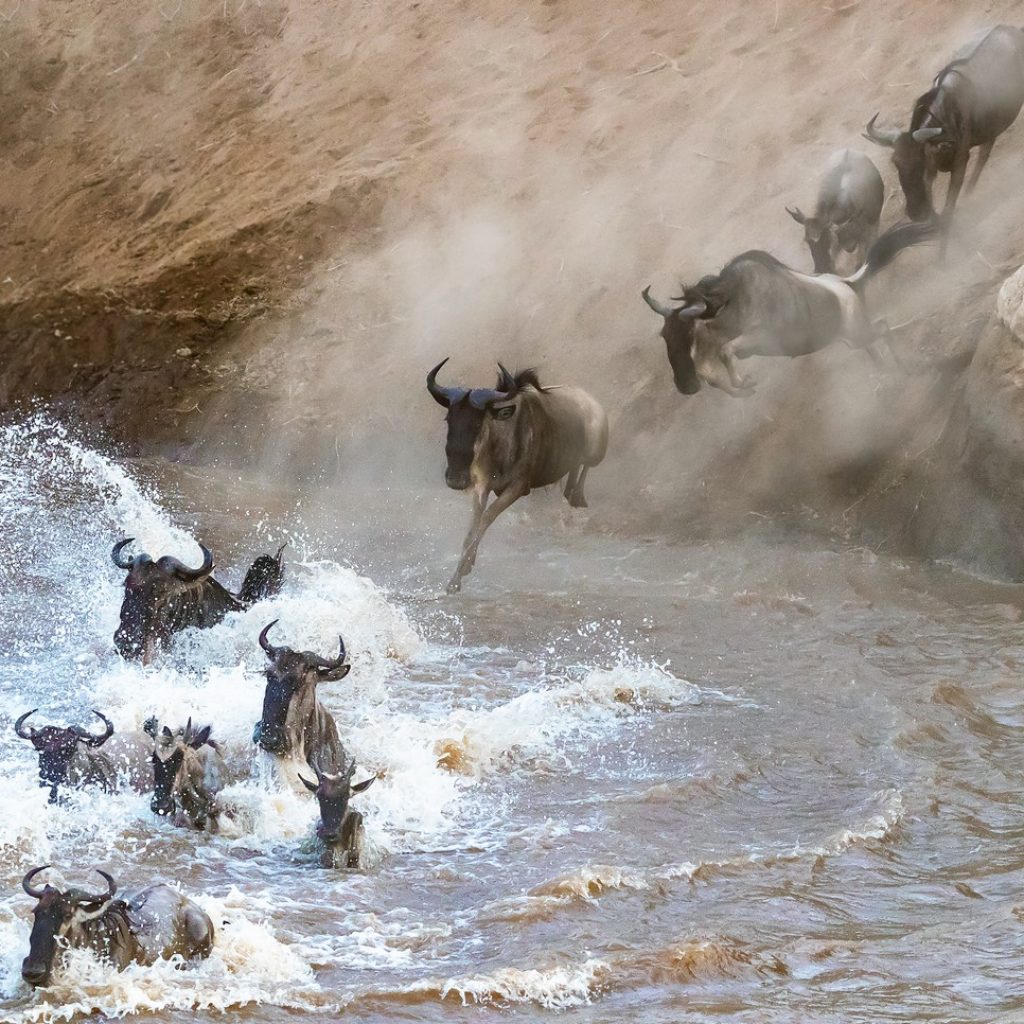
The Great Wildebeest Migration’s river crossings — the single most-marketed reason people visit the Mara — happen roughly between July and October, which is precisely the window when the non-resident entrance fee doubles to USD 200 per day. That’s a much sharper seasonal price jump than most East African parks, and it’s tied directly to the calendar months everyone wants to visit.
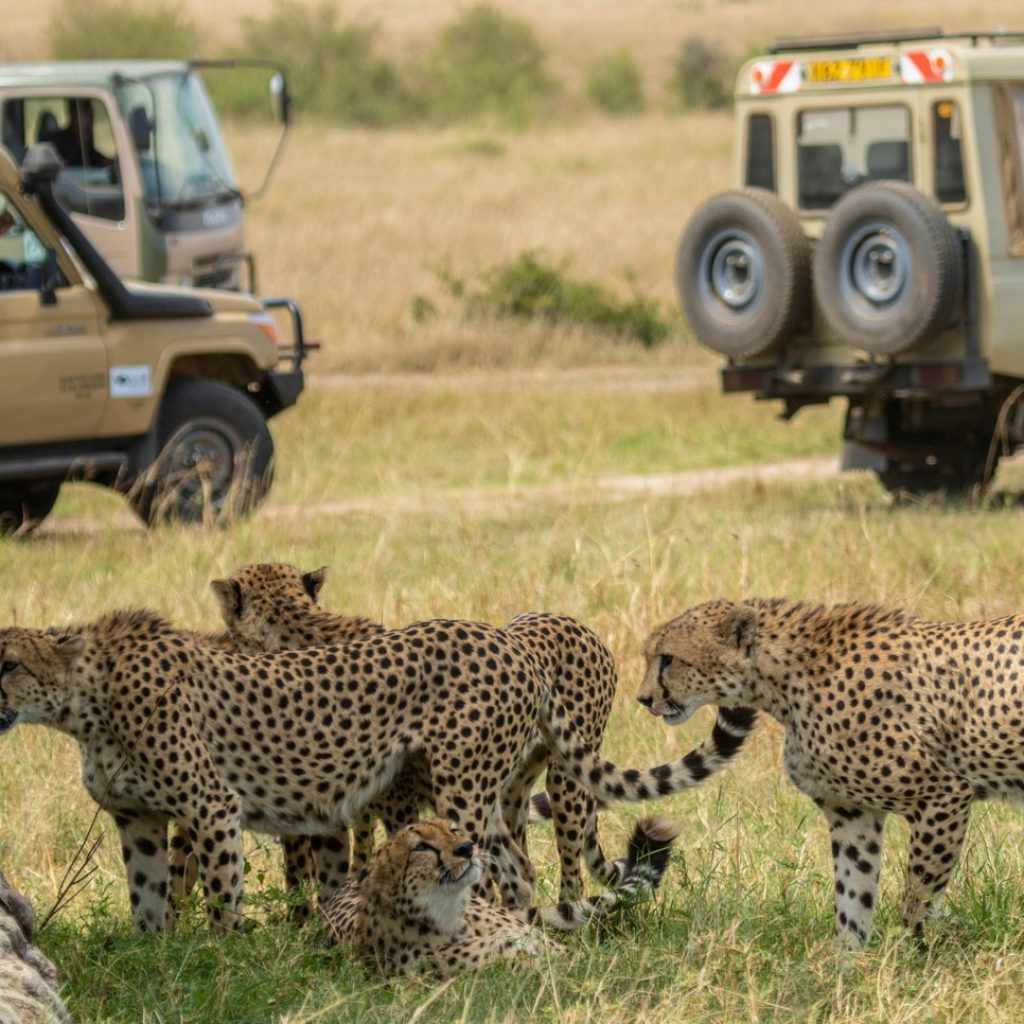
The good news is that the Masai Mara offers exceptional Big Five game viewing all year round, migration or not — lion, leopard, cheetah, elephant, and buffalo are resident populations, not seasonal visitors. If you’re willing to skip the river crossings specifically, travelling in the January–June low season halves your entrance fee, coincides with fewer vehicles at sightings, and still delivers a genuinely excellent safari.
3. Join a budget group tour rather than self-drive
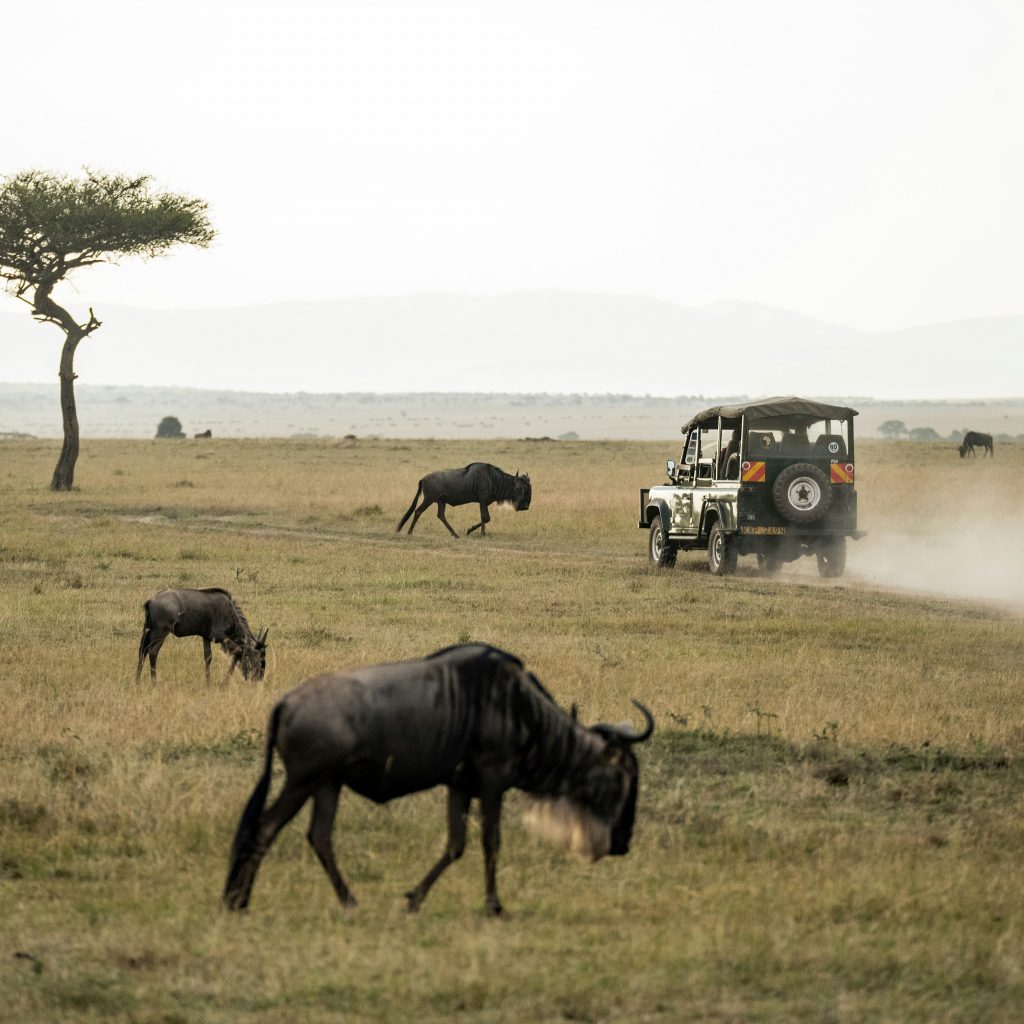
Self-drive safaris are technically permitted in the main reserve (though not always in private conservancies, many of which require a licensed guide). In practice, though, self-driving the Mara is far more strongly discouraged by operators and guides than the equivalent in Serengeti, largely because of the reserve’s dense wildlife concentrations at close range, strictly enforced rules around road use and vehicle numbers at sightings, and the general risk of getting lost or into a difficult situation without local knowledge.
For most travellers, a group safari with a budget-conscious tour operator like African Overland Tours is the more sensible affordable option, rather than attempting a self-drive to save the guide fee. Group travel shares the cost of a vehicle, fuel, and a guide across several travellers, and comes with someone who already knows which gate to use, how the 12-hour rule affects your itinerary, and which sightings are worth the drive.
4. Where to go based on the Ecosystem of the Mara
The Main Reserve (Narok Side)
High wildlife density, central action, but higher vehicle crowding.
The Mara Triangle
The western sector. Wild, scenic, managed tightly by a non-profit, great for river crossings.
The Private Conservancies (Mara North, Naboisho, Olare Motorogi)
Pricey, but allow off-roading, night drives, and walking safaris.
5. What to expect from a Month to Month basis
July–October
The Great Migration & dramatic river crossings.
November–December
The “Short Lains” and green season. Great birdwatching and newborn animals.
January–March
Peak predator action (lion/cheetah calving season on the plains).April–June: The long rains. Dramatic skies, cheap accommodation, and zero crowds.
6. Plan a shorter safari
Given the reserve’s daily fee structure, a shorter, well-planned safari keeps costs down without sacrificing much of the experience — the Masai Mara’s wildlife density means sightings come quickly and reliably compared with some larger, more sparsely populated parks.
I’d suggest two to three nights as a sensible minimum to properly explore different sectors of the reserve (the marshy Musiara area, the Mara River crossing points, the more open plains toward the Tanzanian border) without feeling rushed. Because the Mara sits considerably closer to Nairobi than the Serengeti does to Arusha, it’s also easier to combine with other stops — Lake Nakuru or Amboseli, for instance — without losing as much time to transit as a comparable Tanzania itinerary would.