The Definitive Guide to Choosing the Right African Safari
“The wilderness is not a luxury but a necessity of the human spirit.” — Edward Abbey
Why Most Safari Guides Fail You
Every year, thousands of travellers return from Africa having spent significant sums of money on an experience that didn’t quite match what they’d imagined. Not because Africa disappointed them — Africa rarely does — but because they went to the wrong place, at the wrong time, for the wrong reasons.
The problem is not a lack of information. Type “best safari in Africa” into any search engine and you’ll find 47 million results, each more confident than the last. The problem is that most of that information answers the wrong question.
This handbook answers a different one.
The wrong question
“What is the best safari?”
The right question
“Which safari is best for you?”
A safari is not a single thing. It is a family of experiences spread across 54 countries, dozens of ecosystems, hundreds of species, and an almost infinite range of travel styles — from ultra-luxury lodges where champagne arrives at the game vehicle to wilderness camping where the only roof between you and the Milky Way is canvas.
Adventure Traveller: Zambia’s Kafue or Liuwa Plain, Namibia self-drive, Zimbabwe’s Mana Pools on foot and by canoe.
Primate Seeker: Uganda’s Bwindi for gorillas in wilder terrain. Rwanda’s Volcanoes for a polished, premium experience. Uganda’s Kibale for chimpanzees.
Solo Traveller:Small group overland safari — no single supplements, built-in community, same wildlife as any lodge.
Budget-Conscious:Southern Africa overland or east Africa circuit. The wildebeest crossing the Mara cannot tell the difference between a $300-a-night lodge guest and an overland camper. Neither will you.
Family: South Africa (Kruger and private reserves), Kenya’s Amboseli and Maasai Mara. Avoid Zambia and Zimbabwe for children under 12 due to walking safari emphasis.
Part I Understanding Safari
What Safari Actually Means
The word safari comes from the Arabic safar, meaning journey. It passed through Swahili into common English use during the colonial era, carrying for many decades the connotation of big-game hunting. Today it means something entirely different: a wildlife journey into African wilderness, undertaken most often by people who want to observe, photograph, and simply be present with wild animals in their natural habitat.
In the Okavango Delta of Botswana, safari means gliding silently through papyrus channels in a mokoro — a dugout canoe — while a hippo surfaces twenty metres away. In the Serengeti, it means sitting at the edge of a river crossing while ten thousand wildebeest pour down a bank and plunge into crocodile-filled water. In Bwindi, Uganda, it means climbing through equatorial forest for four hours until you find yourself in the presence of a mountain gorilla family. In Namibia’s Damaraland, it means tracking desert-adapted elephants on foot across ancient volcanic landscapes.
None of these experiences resemble each other. All of them are, genuinely, safari.
Why Ecosystems Matter More Than Countries
Most safari planning begins with a country decision. Kenya or Tanzania? South Africa or Botswana? This is understandable, but it is often the wrong starting point. Wildlife does not observe international borders. The Serengeti and the Maasai Mara are the same ecosystem, separated by a line drawn by colonial administrators in 1886. The elephants that move between Botswana’s Chobe and Zimbabwe’s Hwange do not know they have changed countries.
When choosing a safari, the more meaningful question is: which ecosystem suits you? Each ecosystem has its own character, its own palette of species, its own rhythm of seasons, its own emotional quality. This handbook is therefore organised primarily by ecosystem. Countries appear as context and practical frameworks, but the real choices are between landscapes.
Part II The Safari Decision Framework
The Fundamental Trade-offs
Every safari choice involves trade-offs. The most important skill in safari planning is not finding the “best” destination — it is identifying which trade-offs you are willing to make and which you are not.
The four core tensions
Wildlife density vs. solitude. The places with the most reliable wildlife are also the most visited. The most solitary places require accepting that encounters may be fewer and less guaranteed.
Luxury vs. immersion. An ultra-luxury lodge is extraordinary — and inevitably a slightly cushioned experience. Mobile camping puts you much closer to the wilderness but requires tolerance for occasional discomfort.
Iconic vs. unusual. The Serengeti migration is the most famous wildlife spectacle on earth, and at peak season in August, one of Africa’s busiest safari destinations. Tanzania’s Ruaha offers encounters many guides consider more exciting, with far fewer vehicles.
Accessibility vs. remoteness. The Maasai Mara can be reached from Nairobi in 45 minutes by air. Zambia’s Liuwa Plain requires two flights, a long drive on sandy tracks, and a genuine commitment to adventure.
Choose Serengeti if… The migration is your priority. You want open-country photographic opportunities, the classic east African landscape, and a first safari that delivers on every cinematic expectation.
Choose Kruger if…Self-drive is important to you. You want reliable Big Five over one to two weeks at good value. You are happy with a more managed park environment in exchange for freedom and accessibility.
Choose Kenya if…You want extraordinary diversity within a compact circuit: the Mara, Amboseli, and Samburu cover wildly different ecosystems within a few days’ travel. Infrastructure is excellent and Nairobi is a well-connected hub.
Choose Tanzania if…Sheer scale matters to you. Tanzania contains Africa’s largest wilderness areas. For serious wildlife travellers, the combination of Ruaha, Nyerere, Serengeti, and Ngorongoro is unmatched.
Choose Botswana if…Budget is not a primary constraint and genuine exclusivity matters. The Okavango Delta, Chobe, and Linyanti offer world-class wilderness with strictly limited visitor numbers. High cost, extraordinary reward.
Choose Namibia if…Self-drive and landscape interest you as much as wildlife density. Namibia is the only African country where a road-trip safari genuinely rivals guided experiences, at a fraction of the cost.
Choose Zambia if…Walking safari is your priority. South Luangwa is the birthplace of the walking safari and remains its finest expression — intimate, expert-guided, and built around depth of observation rather than volume of encounters.
Choose Zimbabwe if…Canoe safari or elephant density is your priority. Mana Pools on the Zambezi offers a unique canoe-based wilderness experience. Hwange has southern Africa’s most concentrated elephant populations.
Stand on a koppie — a rocky granite outcrop — in the central Serengeti on a clear January morning, and the landscape extends in every direction to the horizon without a single man-made structure visible. The grass is short and golden, cropped by hundreds of thousands of wildebeest who have been moving through for the past two months. In the distance, a dust cloud rises: more wildebeest arriving from the south.
The Serengeti covers 14,763 square kilometres in northern Tanzania and forms the southern anchor of an ecosystem that extends north across the Kenyan border into the Maasai Mara. What it offers above all else is scale — a landscape that has not been fundamentally altered by human activity, where the ecological processes that governed it a million years ago still govern it today.
The migration calendar: The wildebeest migration is not a single event but an annual circuit spanning approximately 1,800 kilometres. The calving season on the short-grass plains (January–February) combines the vulnerability of 500,000 newborn wildebeest with extraordinary predator activity. The Grumeti River crossings begin in June; the famous Mara River crossings peak in July–September.
Decision Summary: Serengeti
Best for: First-time safari visitors; photographers wanting open landscapes; those for whom the migration is the primary goal; travellers wanting world-class infrastructure.
Consider elsewhere if: You seek genuine solitude; budget is a significant constraint; walking safari is your priority.
Key trade-off: The northern corridor and crossing sites can feel overcrowded in peak season (July–August).
Geographically an extension of the Serengeti, the Maasai Mara is distinctly different in character. The key distinction most visitors don’t anticipate: the Mara is significantly smaller than the Serengeti (roughly 1,500 square kilometres), and in August and September, when the migration herds are present, the concentration of vehicles at the river crossing sites can be intense. The private conservancies surrounding the national reserve — Olare-Motorogi, Naboisho, Ol Kinyei — offer a fundamentally better experience. Vehicle numbers are strictly limited, off-road driving is permitted, and the quality of guiding is typically exceptional.
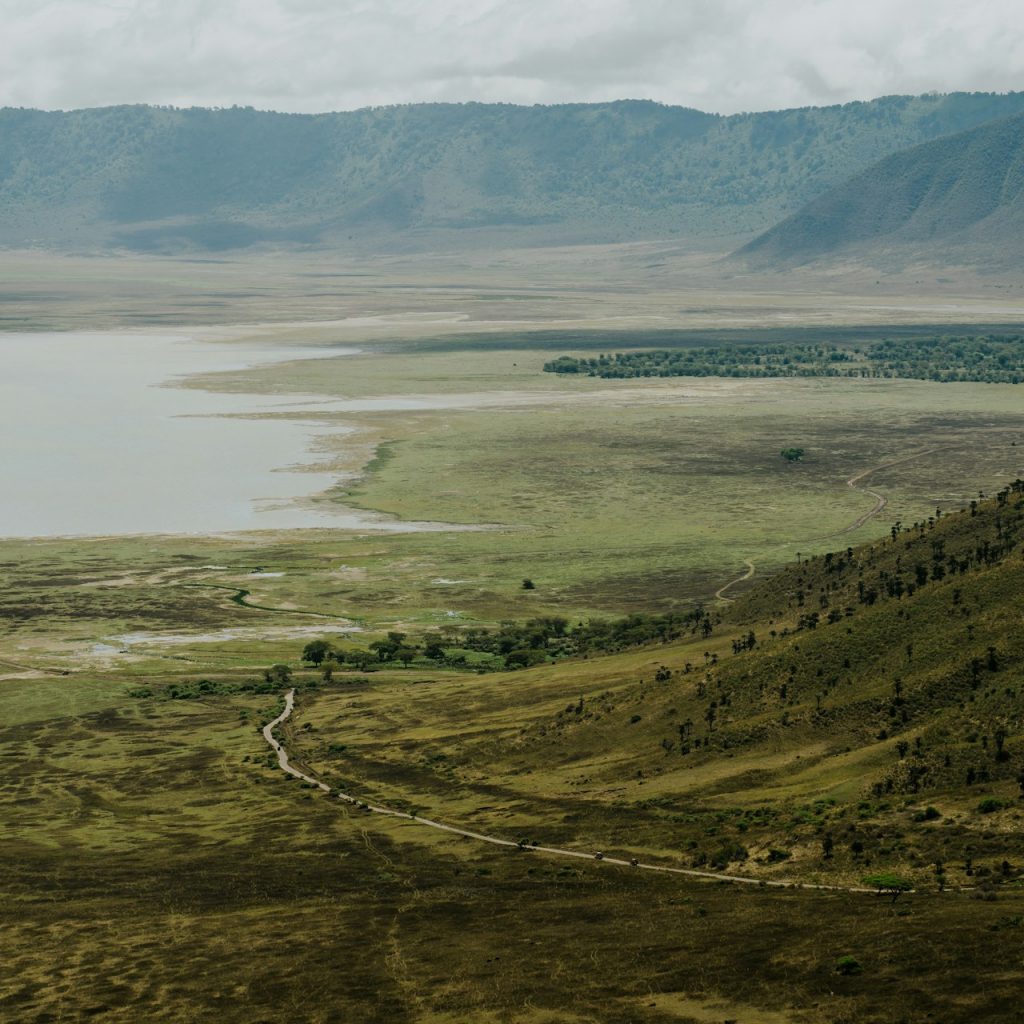
A collapsed volcanic caldera, roughly 19 kilometres across and 600 metres deep, containing one of Africa’s densest concentrations of wildlife — an estimated 25,000 large mammals, including the world’s highest lion density and one of Tanzania’s last resident black rhino populations. Coming over the crater rim for the first time is genuinely startling. The descent into the crater feels like entering another world: cooler, damper, rich with the smell of vegetation and the constant presence of animal sound.
Amboseli
Amboseli is defined by two things: elephants and Kilimanjaro. The largest free-roaming elephants in Africa — bulls whose tusks sweep close to the ground — move through open swampland and acacia woodland while Africa’s highest mountain rises behind them in ice-capped splendour. The Amboseli Elephant Research Project has been tracking individual animals since 1972; the sense of being among genuinely known individuals, with documented personalities and genealogies, adds a dimension to elephant watching that no other destination can match.
Drive north from Kenya’s central highlands and the landscape hardens and dries with each passing kilometre. Samburu National Reserve sits in Kenya’s northern frontier territory — a region that feels genuinely different from the more-visited circuits further south. The wildlife includes several species found nowhere else in Kenya’s main safari areas: reticulated giraffe, Grevy’s zebra, gerenuk, and Beisa oryx. The quality of light here — harder, more insistent, more beautiful — rewards photographers willing to venture beyond the southern circuit.
Kruger is South Africa’s flagship national park — enormous, exceptionally accessible, self-driveable in a standard vehicle. The private reserves bordering the western boundary (Sabi Sand, Timbavati, Thornybush) offer some of Africa’s finest guiding and accommodation alongside some of its most reliable leopard sightings. The limitation for some travellers: Kruger lacks the wild, untouched quality of Zambia or Botswana. The roads are paved, the camps have restaurants and swimming pools, and during South African school holidays the park can feel almost suburban. These are genuine trade-offs that suit some travellers enormously and frustrate others.
The Okavango River rises in the highlands of Angola, travels southeast for roughly 1,000 kilometres — and then, instead of reaching the sea, fans out across the flat Kalahari sands and simply disappears. The result is a vast, seasonal wetland of papyrus channels, palm-studded islands, lily-covered lagoons, and drowned woodlands. Being in the Okavango requires adjusting your expectations: game drives are possible in some areas, but the heart of the experience is water-based — mokoro trips through shallow channels, motorboat excursions to deeper lagoons, walking on permanent islands where lion tracks from the previous night are pressed clearly into damp soil. There is something genuinely transportive about moving silently through a landscape that seems to exist outside of ordinary time.
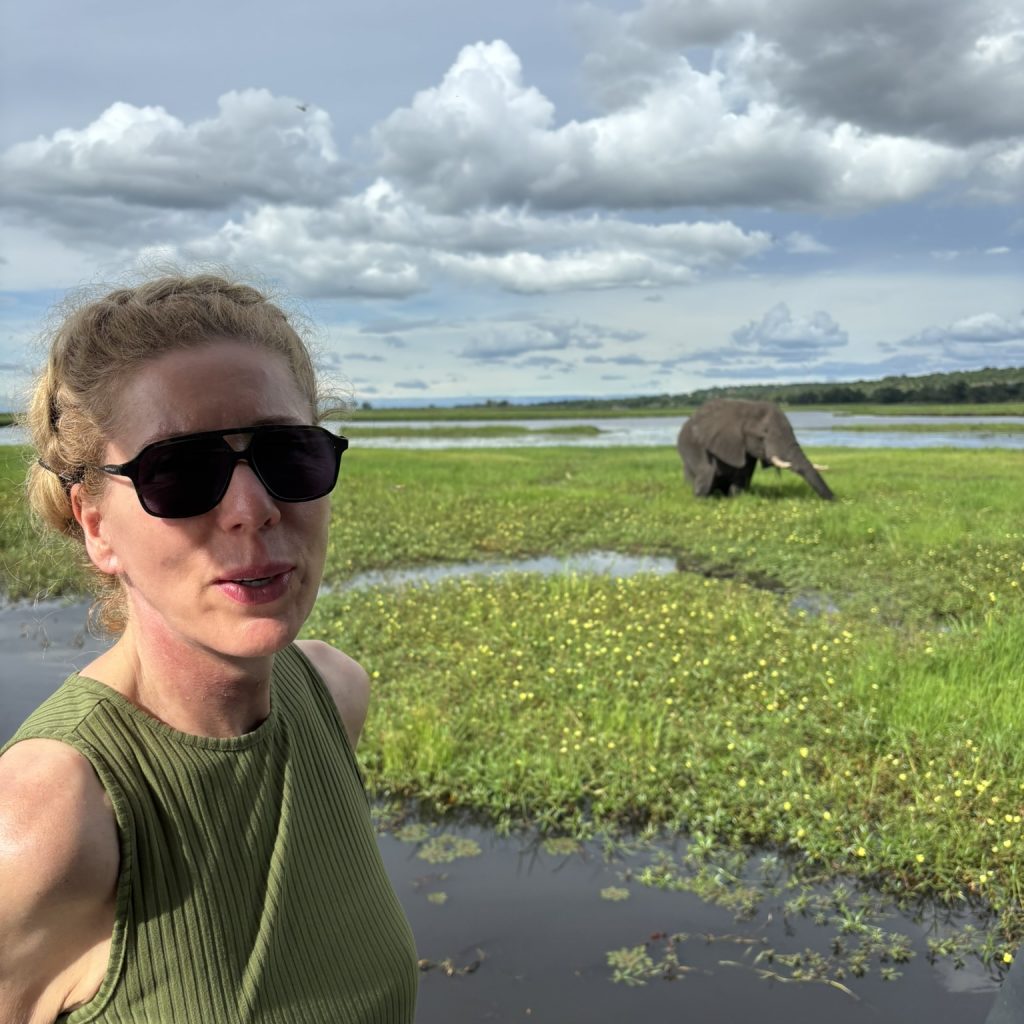
Chobe contains the highest concentration of elephants in Africa — an estimated 120,000 animals. During the dry season, the concentrations along the Chobe riverfront are staggering: game drives in the late afternoon, when elephant herds in their hundreds come down to drink and bathe, are among the most reliable and dramatic wildlife experiences on the continent. Boat safaris bring you within metres of hippo pods, swimming elephants, and basking crocodiles. For sheer biomass — the sense of being genuinely surrounded by wild animals in extraordinary numbers — Chobe is difficult to match anywhere in Africa.
Etosha is built around a concept so simple it seems obvious in retrospect: rather than searching for wildlife across an enormous area, let the wildlife come to you. The park’s vast central salt pan forces wildlife to concentrate at permanent waterholes around its edges. Some waterholes have floodlights for night viewing, and spending an evening on the viewing bench at Okaukuejo — watching elephant, lion, rhinoceros, and giraffe arrive and depart in the amber light — is an experience with no direct equivalent elsewhere on the continent. Patient, static, contemplative, and often enormously rewarding.
The Namib Desert
The Namib is the oldest desert on earth, its aridity maintained by 55 million years of the cold Benguela Current. There are no lion here. The Big Five are not the point. The Namib’s appeal is geological and sensory: the dunes of Sossusvlei, which rise to 325 metres and shift from pale apricot at sunrise to deep red at sunset; the Skeleton Coast where shipwrecks scatter 500 kilometres of coastline; Damaraland’s ancient volcanic terrain where desert-adapted elephants have developed distinct behaviours to survive in one of earth’s most demanding environments. Best experienced by those who have done conventional safari elsewhere and want to engage with a completely different dimension of African natural history.
The South Luangwa Valley in eastern Zambia is, by common consent among Africa’s most experienced guides, one of the finest safari destinations on the continent. The birthplace of the walking safari, where Norman Carr pioneered the concept in the 1950s, and the culture of expert, intimate guiding that he established persists. The best camps here are intimate — eight to twelve beds maximum — guided by extraordinarily skilled naturalists who have spent careers developing an understanding of a specific patch of bush. Very high leopard density, excellent lion and hyena, large elephant herds, hippo and crocodile in enormous numbers, and world-class birding.
Zimbabwe’s largest national park, with an estimated 40,000 elephants ranging across its 14,651 square kilometres. The artificial waterholes that Zimbabwe National Parks maintains throughout the park concentrate these animals in the dry season, producing extraordinary sightings. Also one of southern Africa’s best destinations for wild dog, with several resident packs. The open bush allows the kind of long-horizon game viewing that Zambia’s denser vegetation sometimes precludes.
A UNESCO World Heritage Site on the Zambezi floodplain, Mana Pools is famous for a behaviour found nowhere else in Africa: elephants that have learned to stand on their hind legs to reach pods high in the ana trees. The park is also renowned for walking safaris without mandatory guides, and for canoe safaris on the Zambezi itself — drifting past hippo pods and crocodile-lined banks with nothing but the current and a guide’s quiet paddle for propulsion.
Ruaha National Park
Tanzania’s largest national park, covering over 20,000 square kilometres in the country’s centre-south. Grossly undervisited relative to its quality. The Great Ruaha River concentrates elephant, hippo, crocodile, lion, leopard, and wild dog at its remaining dry-season pools. Over 570 bird species recorded. The isolation of the park gives even ordinary sightings a quality of undisturbed intimacy rarely available in more frequented destinations.
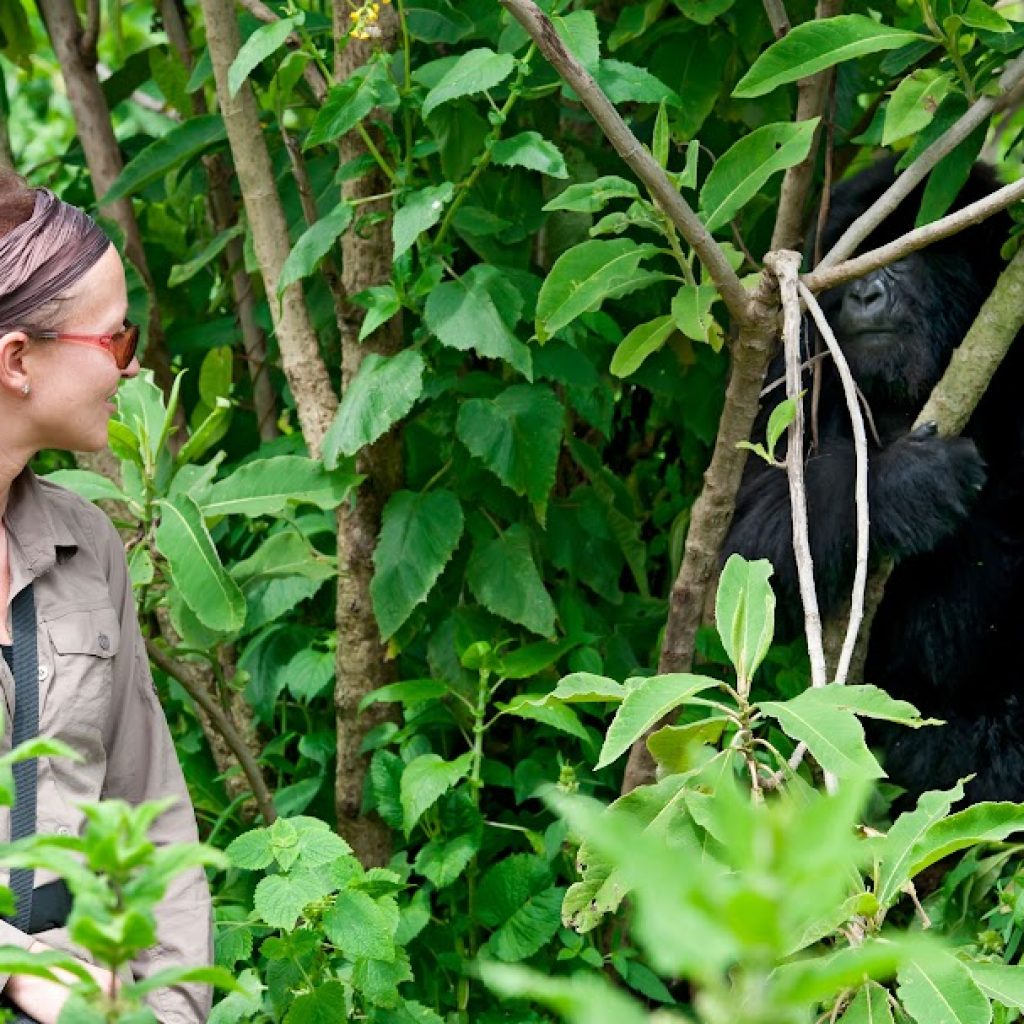
Bwindi is not a conventional safari destination. What it offers is a single, irreplaceable encounter: mountain gorillas in their natural forest habitat. The forest contains roughly half of the world’s remaining mountain gorilla population. Small groups of eight visitors are permitted one hour per day with each habituated family. The trek to reach them — sometimes thirty minutes, sometimes four hours — passes through equatorial forest of extraordinary beauty. When you find the gorillas, the encounter is defined by a quality of presence that no photograph adequately captures. A silverback who weighs 200 kilogrammes sitting three metres away, watching you with intelligent dark eyes, communicates something that exists outside the frame of ordinary wildlife experience.
Volcanoes National Park, Rwanda
Rwanda’s Volcanoes National Park offers gorilla trekking across the dramatic Virunga volcano range. Rwanda has positioned itself as a premium gorilla destination — permits are among the most expensive wildlife access fees in the world, at $1,500 per person. The justification is conservation: the revenue directly funds gorilla protection and benefits local communities. The experience is immaculately managed, exceptionally safe, and — once you are with the gorillas — no less moving for its organisation.
What remains of a lake that once covered an area larger than Switzerland. Salt pans of preternatural flatness, stretching to a horizon so distant that the curvature of the earth is almost perceptible. In the dry season, empty and white and silent in a way that has no equivalent in conventional safari experience. In the wet season, flamingos arrive in their hundreds of thousands. Jack’s Camp and Camp Kalahari have developed programmes — walking with Bushmen guides, quad biking across the pans, sleeping out under skies so unaffected by light pollution that the Milky Way casts a visible shadow — that offer an experience of Africa entirely unlike anything at a conventional game reserve.
✔ You’ll love the Serengeti if…
The migration is your primary reason for going to Africa
Open, photogenic landscapes matter to you
You want world-class infrastructure and reliable flights
This is your first safari and you want the classic east African experience
You can travel January–February (calving) or July–September (crossings)
✘ Choose somewhere else if…
Solitude and exclusivity are non-negotiable in July–August
Walking safari is your primary interest
Budget is a significant constraint (Tanzania has high park fees)
You want dense bush encounters rather than open-plain sightings
You’ve already done the northern Tanzania circuit and want something different
✔ You’ll love the Okavango if…
Water-based safari (mokoro, boat) appeals to you as much as game drives
Exclusivity and low visitor numbers are important
You want elephant encounters in a genuinely undisturbed setting
Photography of wetland species and birdlife is a priority
You are comfortable with significant expenditure for genuinely rare access
✘ Choose somewhere else if…
Budget is a primary concern — the Okavango is among Africa’s most expensive
You want open savannah and classic migration wildlife
You find water-based travel anxiety-inducing
You want self-drive: no self-drive permitted in Botswana’s concessions
You are looking for rhino: Botswana’s rhino population is limited
✔ You’ll love South Luangwa if…
Walking safari is your primary interest
Depth of guiding matters more than wildlife density per hour
Leopard is your priority species
You want an intimate camp (under 12 beds) rather than a resort
You value the sense of genuine wildness over polished infrastructure
✘ Choose somewhere else if…
You want open-country photography — the bush here is dense
Reliable cheetah sightings are important (not present here)
You need easy access — logistics are significant
You prefer the Serengeti’s cinematic scale over quiet intimacy
Budget is a significant constraint
✔ You’ll love Kruger if…
Self-drive independence is important to you
You want the Big Five at good value
Families or first-timers who want accessible, well-managed wildlife
You want to combine safari with South Africa’s other attractions
Reliable rhino sightings are a priority
✘ Choose somewhere else if…
Genuine wilderness feel is non-negotiable
You want night drives and off-road access (not permitted in the main park)
You prefer the solitude of Zambia or Zimbabwe’s remote parks
Walking safari is your focus
You’ve done Kruger before and want something wilder for your next trip
Part IV Country Safari Guides
Kenya
Strengths: Exceptional diversity within a manageable circuit; world-class guides; excellent infrastructure and connectivity; three distinct ecosystems within a few days’ travel (Mara, Amboseli, Samburu). Weaknesses: Popular areas can feel crowded; park fees have risen significantly. Best for: First-time safari visitors; wildlife photographers; those combining safari with a beach extension.
Tanzania
Strengths: Africa’s greatest concentration of wilderness; the Serengeti, Ngorongoro Crater, Ruaha, and Nyerere all in one country; exceptional landscape diversity. Weaknesses: Park fees among the highest in Africa; the northern circuit is crowded in peak season. Best for: Those for whom the migration is the primary motivation; experienced safari travellers wanting to explore southern Tanzania’s underrated parks.
Botswana
Strengths: Africa’s most committed high-cost, low-volume conservation model; extraordinary wilderness quality; the Okavango, Chobe, and Linyanti ecosystems are genuinely world-class. Weaknesses: Very expensive — daily rates at top camps regularly exceed $1,500 per person; no self-drive in national parks. Best for: Those for whom money is not a primary constraint; those wanting genuinely exclusive wilderness.
South Africa
Strengths: World-class infrastructure; excellent self-drive option in Kruger; good value across the price spectrum; exceptional birding; rhino populations. Weaknesses: Kruger can feel managed and suburban in busy periods. Best for: First-time safari travellers; self-drive enthusiasts; families; those for whom rhino sightings are a priority.
Namibia
Strengths: The only African country where self-drive safari is genuinely excellent; extraordinary landscape diversity; exceptional photography. Weaknesses: Wildlife density is lower than bush destinations; more landscape-focused than animal-encounter-focused. Best for: Independent travellers; photographers; road-trip enthusiasts; those interested in desert ecology.
Zambia
Strengths: Africa’s finest walking safari culture; South Luangwa for leopard and guiding depth; Lower Zambezi for canoe safari; Kafue for scale and solitude. Weaknesses: Expensive to access; limited infrastructure outside main park areas. Best for: Experienced safari travellers seeking depth over breadth; walking safari enthusiasts; canoe safari seekers.
Zimbabwe
Strengths: Mana Pools for canoe safaris; exceptional guiding culture; Hwange for elephant and wild dog; value significantly better than neighbouring Botswana; Victoria Falls as a dramatic add-on. Weaknesses: Political and economic uncertainty has affected some areas. Best for: Experienced safari travellers; those wanting canoe safaris; those for whom wild dog are a priority.
Uganda
Strengths: Mountain gorilla trekking at Bwindi; chimpanzee tracking at Kibale; extraordinary birdlife (over 1,000 species); compact circuit with excellent diversity. Best for: Those for whom primate encounters are the primary motivation; serious birdwatchers.
Rwanda
Strengths: Best-managed gorilla trekking experience in Africa; extraordinary lodge quality; genuine conservation success story. Weaknesses: Most expensive gorilla permits in Africa; limited safari diversity beyond primates. Best for: Those for whom the experience matters more than the cost; those wanting impeccable organisation.
Myth Vs Reality
Myth
“The migration is always crossing rivers.”
Reality: River crossings are the migration’s most dramatic moments — and they occupy only a tiny fraction of the annual circuit. The herds spend the majority of each year grazing on open plains or moving between water sources. A visitor in February watching 500,000 wildebeest calves on the Serengeti’s short-grass plains is witnessing the migration too — just a different, often more emotionally powerful chapter of it.
Myth
“The Big Five are Africa’s five most important animals.”
Reality: The Big Five — lion, leopard, elephant, buffalo, rhino — were categorised by trophy hunters as the five most dangerous animals to pursue on foot. They became a marketing convenience for the safari industry. Wild dogs are more endangered than any Big Five species. Pangolins are more ecologically unusual. The shoebill stork provokes more wonder in experienced naturalists than a distant buffalo. The Big Five checklist is a useful shorthand; it is a poor philosophy for a safari.
Reality: A $1,500-a-night lodge and a well-run overland camp two kilometres away enter the same national park, observe the same wildlife, and follow the same rules. What a luxury lodge buys is a superior bed, better food, a higher staff ratio, and usually a private vehicle — none of which changes what the lion chooses to do that morning. The quality of the guide matters far more to the wildlife experience than the quality of the mattress.
Myth
“You should always go in the dry season.”
Reality: The dry season (May–October in southern Africa, July–October for the Mara migration) is the most marketed season because wildlife concentrates around water and is easier to find. But the wet season offers newborn animals, extraordinary migratory birdlife, lush landscapes ideal for photography, dramatically fewer tourists, and prices that are typically 20–40% lower. Many experienced safari travellers consider January in the Serengeti or December in the Okavango Delta among the continent’s finest wildlife experiences.
Part V The Wildlife Decision Guide
If a specific species is your priority, here is where to go — and why sightings differ between ecosystems.
If lions are your priority
East Africa (Serengeti, Maasai Mara, Ngorongoro Crater) offers the finest lion viewing in open habitat — clear lines of sight, golden grass, dramatic light. Ngorongoro Crater has the world’s highest lion density. In southern Africa, South Africa’s Sabi Sand and Zimbabwe’s Hwange are excellent.
If leopards are your priority
South Luangwa (Zambia) has Africa’s highest leopard density, with deeply experienced guides who know individual animals. South Africa’s Sabi Sand is the most reliably frequent destination. For wilder, less habituated encounters, Ruaha and the Maasai Mara are excellent.
If cheetah are your priority
The Serengeti’s short-grass plains — particularly the calving season between December and March — offer exceptional cheetah viewing. Namibia holds the world’s largest free-range cheetah population. Etosha is also excellent.
If wild dogs are your priority
Zambia’s South Luangwa, Botswana’s Linyanti, and Zimbabwe’s Hwange and Mana Pools are among the most reliable destinations. Zimbabwe’s Painted Dog Conservation is one of Africa’s most successful dedicated conservation programmes and offers extraordinary behind-the-scenes access.
If elephants are your priority
Botswana’s Chobe is Africa’s elephant capital. Hwange is southern Africa’s finest elephant destination. Amboseli offers the finest elephant photography in Africa, with Kilimanjaro as backdrop. The Lower Zambezi provides the most intimate elephant encounters — by boat, within metres.
If rhinos are your priority
Etosha (Namibia) and Damaraland’s desert-adapted black rhino are exceptional. South Africa’s Hluhluwe-iMfolozi is the park most responsible for saving the white rhino from extinction and remains the best place to see both species in a single visit.
If gorillas are your priority
Uganda (Bwindi) for a wilder, more challenging trek with access to a broader Uganda circuit. Rwanda (Volcanoes) for a polished, premium experience with exceptional lodges. Both are genuinely extraordinary; neither will disappoint.
Part VI Safari Comparison Matrix
Ratings 1–5 are relative scores within each criterion context. All scores reflect typical conditions; individual experiences vary by season and operator.
Destination
Wildlife Reliability
Predators
Elephant
Photography
Walking
Boat/Canoe
Solitude
Budget-Friendly
First Safari
Self-Drive
Serengeti
5
5
3
5
2
1
2
2
5
1
Maasai Mara
5
5
3
5
2
1
2
2
4
1
Ngorongoro
5
4
4
4
1
1
2
2
5
1
Amboseli
4
3
5
5
2
1
3
3
4
2
Kruger (private)
5
5
3
5
3
1
3
2
5
1
Kruger (self-drive)
4
4
3
4
1
1
2
5
4
5
Okavango Delta
4
4
5
5
4
5
5
1
3
1
Chobe
5
3
5
4
2
5
3
3
4
2
Etosha
4
4
3
4
1
1
3
4
5
5
South Luangwa
5
5
4
4
5
2
4
2
3
1
Hwange
4
4
5
4
3
1
4
3
3
2
Mana Pools
4
4
5
4
5
5
5
3
2
1
Ruaha
4
4
4
4
3
2
5
3
2
1
Bwindi (gorillas)
5*
1
1
4
4
1
4
2
3
1
Namib Desert
3
3
2
5
3
1
5
4
3
5
*Gorilla encounter success rate only. 5 = highest relative score for that criterion.
Part VII The Safari Personality Quiz
Work through the questions below honestly. Each answer narrows your shortlist toward destinations that are genuinely right for you.
Q1 Is this your first safari?
If yes: Prioritise accessibility, reliable wildlife, and good infrastructure. Kenya (Maasai Mara + one other ecosystem), Tanzania’s northern circuit, or South Africa’s Sabi Sand all deliver on first-safari expectations.
If no: You have latitude to explore less conventional destinations. Consider Zambia, Zimbabwe, Namibia, or Tanzania’s southern parks, where the depth of experience often exceeds what more commercial destinations can offer.
Q2 Are predators your primary interest?
Lion: East Africa (Serengeti, Mara, Ngorongoro) or South Africa’s Sabi Sand.
Leopard: South Luangwa (Zambia) or Sabi Sand (South Africa).
Wild dog: Zambia’s South Luangwa, Zimbabwe’s Hwange or Mana Pools, or Botswana’s Linyanti.
Cheetah: Serengeti (calving season) or Namibia.
Q3 How important is photography?
Primary motivation: Prioritise open habitats (Serengeti, Amboseli, Etosha) with good golden-hour light. Consider private conservancies where off-road driving is permitted for better vehicle positioning.
Secondary interest: Dense bush environments like South Luangwa or Mana Pools may offer more intimate encounters, even if the images are technically less clean.
Q4 What is your comfort threshold?
Luxury essential ($500–$1,500+/night): Botswana’s Okavango concessions, Kenya’s private Mara conservancies, Tanzania’s top Serengeti camps, South Africa’s Sabi Sand.
Comfortable but flexible ($200–$500/night): Mid-range camps across Zambia, Zimbabwe, Kenya, and Tanzania offer excellent value — en-suite tents, good food, attentive service.
Adventure over comfort: Small group overland safari is the most immersive format available — and, for the right traveller, the most authentic. See Part XII.
Q5 Do you want to walk?
Essential: Zambia (South Luangwa, Lower Zambezi) and Zimbabwe (Mana Pools, Hwange) have the finest walking safari cultures in Africa.
Appealing but not essential: Most southern and east African destinations offer walking as an option alongside game drives.
Q6 What is your budget?
Under $150/night: Self-drive Kruger or Namibia. Small group overland safari covers comparable wildlife at this price point. See Part XII for the full overland case.
$150–$400/night: Zimbabwe, Zambia, and Tanzania’s southern parks all offer excellent mid-range options.
$400–$800/night: The sweet spot for most quality guided safari experiences — access to private reserves in South Africa, quality camps in Botswana’s accessible areas.
Over $800/night: Botswana’s top concessions, Kenya’s private Mara conservancies, Rwanda’s gorilla lodges. Genuine exclusivity and exceptional guiding.
Q7 How important is solitude?
Essential: Zambia’s Kafue or Liuwa Plain, Zimbabwe’s Mana Pools, Tanzania’s Ruaha or Nyerere, Botswana’s Okavango (away from the main delta).
Preferred: South Luangwa (low camp density by design), Namibia (vast distances), Hwange’s quieter sections.
Not important: The Maasai Mara in August, Serengeti migration crossing sites, South Africa’s private reserves — excellent wildlife in contexts where you will share sightings with others.
Q8 Are you travelling solo?
If yes: Most luxury lodges charge a single supplement (25–50% extra). Some of our Small group overland safari have no supplement penalty, includes a built-in community of fellow travellers, and accesses the same wildlife areas. See Part XII for the full case for overland safari as the natural home of the solo traveller.
Part VIII Seasons and Timing for your Safari
The fundamental principle
There is no single “best time” to go on safari. Every season has genuine advantages, and every traveller has different priorities. What follows is a destination-by-destination guide to the key seasonal trade-offs.
East Africa (Kenya and Tanzania)
Long rains (March–May). Low season with lower prices. Rains tend to fall in heavy late-afternoon bursts, leaving mornings clear. Vegetation is lush, newborn animals are everywhere, and the photographic skies are dramatic. Limitation: some camps close; roads in heavily visited areas can become impassable.
Long dry season (June–October). Peak season for the Maasai Mara migration. Short grass makes wildlife easier to find. July and August are the busiest months in east African safari — the river crossing sites can feel overcrowded.
Short rains and beyond (November–February). The calving season in the Serengeti (January–February) produces extraordinary predator activity. Far less crowded than peak season, and significantly better value.
Southern Africa (Botswana, Zambia, Zimbabwe)
Wet season (November–April). The landscape turns green almost overnight after the first rains. Migratory birds arrive. Breeding activity and newborn animals create drama of a different kind. Some camps close in peak rains.
Dry season (May–October). The classic safari season. As surface water retreats to rivers and permanent waterholes, wildlife concentrates predictably. July to September: most reliable for wildlife, most expensive, busiest.
Green season (November–December). Combines lushness with wildlife still somewhat concentrated. Significant discounts at some operators.
Namibia
Etosha is best during the dry season (May–October), when animals concentrate at waterholes. The Namib Desert is accessible year-round. Damaraland is best in the dry season when tracks are accessible and desert wildlife is concentrated near water sources.
Gorilla Trekking (Uganda/Rwanda)
Both countries are accessible year-round. The drier months — June to September and December to February — are generally better for trekking. Wet season forest trails are slippery and the trek more physically demanding. Gorilla encounters in the rain have their own extraordinary quality.
When to Book: Safari Planning Timeline
Safari requires more forward planning than most travel. The best camps have limited beds; the most sought-after permits are finite; migration-season slots sell years in advance. Here is a realistic planning window for each type of trip.
18–24 Months before departure
Book Now — Highest Demand
Luxury Botswana camps (Okavango, Linyanti) in peak dry season (Jul–Sep)
Gorilla trekking permits in Uganda and Rwanda — limited daily numbers
Top Serengeti and Maasai Mara migration camps (Jul–Aug river crossing season)
Private conservancy lodges in Kenya during peak migration weeks
12 Months before departure
Book Flights and Core Accommodation
International flights to Africa — prices rise significantly within 6 months
Any peak-season camp in east or southern Africa
South Africa’s Sabi Sand private reserve lodges (peak months)
Light aircraft charters between camps in Botswana and Zambia
6 Months before departure
Practicalities and Shoulder Season Bookings
Travel insurance — essential for high-value safari bookings
Vaccinations (Yellow Fever, Typhoid, Hepatitis A/B) — some require multiple doses over weeks
Malaria prophylaxis prescription from your GP or travel clinic
Mid-range and shoulder season camp bookings — still good availability
Overland safari bookings — most dates available but popular departures fill
3 Months before departure
Gear and Preparation
Safari clothing: neutral tones (khaki, olive, beige) — avoid white and bright colours
Camera gear: lenses, memory cards, dust protection, spare batteries
Binoculars: 8×42 or 10×42 are the standard safari choice
Visas: research requirements for every country on your itinerary
Currency and payment logistics for remote areas
1 Month before departure
Final Checks
Confirm all bookings and check transfer logistics between camps
Begin malaria prophylaxis if required (some start 1–2 weeks before travel)
Download offline maps of your route
Share your detailed itinerary with a trusted contact at home
Pack light: most light aircraft have a 15kg soft bag limit
Overland Safari Planning Window
Small group overland safaris operate on a more flexible timeline than lodge-based trips. Most reputable operators can accommodate bookings 3–6 months out, and last-minute availability (under 8 weeks) is occasionally possible. The exception is peak migration season (July–September for east Africa) — popular departures fill 6–9 months ahead.
The game drive — typically in an open-sided 4WD — remains the dominant safari format across Africa. The quality of a game drive depends almost entirely on the quality of the guide. A mediocre guide with good wildlife will produce a mediocre experience. An exceptional guide in territory they know deeply — even if wildlife is sparse — will produce something memorable. Early morning and late afternoon drives align with the crepuscular activity patterns of most predators.
Walking Safaris
The walking safari changes everything about how you engage with the bush. Moving at human pace, at human level, forces an entirely different quality of attention. Tracks become text. The small things invisible from a vehicle — the dung beetle rolling its ball, the hornbill watching you with one golden eye — become vivid and significant. Walking safaris require reasonable fitness, the ability to move quietly, and tolerance for the genuinely (if professionally managed) unpredictable nature of wildlife encounters on foot. Most suitable for adults and older teenagers.
Small Group Safaris (up to 16 travellers)
Between the exclusivity of a private safari and the independence of self-drive lies what many experienced travellers consider the sweet spot: the small group safari. Typically limited to no more than sixteen guests, these journeys combine the knowledge of professional guides with the camaraderie of travelling alongside people who share a common interest in wildlife and exploration.
Unlike larger coach tours, the experience remains personal. Guides quickly learn individual interests—whether you’re captivated by birds, fascinated by predators, or passionate about photography—and can tailor commentary accordingly. Evenings around the campfire often become as memorable as the game drives themselves, with conversations stretching late into the night as travellers compare sightings and stories from across the continent.
Small group safaris also unlock exceptional value. By sharing transport, guides and accommodation, travellers gain access to destinations that might otherwise be prohibitively expensive when arranged privately. Rather than spending the entire budget on a single luxury lodge, many choose to experience several countries and ecosystems within the same journey, discovering how landscapes, wildlife and cultures change across Africa.
For first-time visitors, solo travellers and couples, small group safaris often provide the ideal balance between comfort, affordability and authentic adventure.
Overland Safaris
An overland safari is not simply a means of reaching wildlife destinations—it is a journey through Africa itself. Instead of flying between isolated lodges, travellers experience the continent as a connected landscape, watching deserts give way to wetlands, savannah merge into woodland, and cultures shift gradually with every border crossed.
The rhythm is different. There are longer driving days, early mornings, and a deeper appreciation for the geography that binds Africa together. You witness not only the famous national parks but also the villages, markets, mountain passes and quiet stretches of road that reveal the continent beyond its wildlife.
This broader perspective creates something impossible to achieve through fly-in safaris alone. Arriving in Botswana after crossing Namibia by road, or reaching Victoria Falls after days of travelling through Zimbabwe, gives each destination a sense of context and anticipation. The journey becomes part of the story rather than merely the space between highlights.
Boat and Canoe Safaris
Water-based safari changes the perspective entirely. From a low boat or canoe, you approach animals from a direction they are less conditioned to perceive as threatening. Hippo become genuinely impressive at close range. Elephants swimming between islands show a playfulness that land encounters rarely reveal. The Zambezi’s canoe safaris — particularly in Zimbabwe’s Mana Pools — represent the finest expression of this format: drifting with the current over several days, camping on sandbanks, moving through a world defined by the river’s own logic.
Mokoro Safaris
A mokoro is a traditional dugout canoe, propelled by a poler standing at the back with a long pole. Moving through the Okavango Delta by mokoro — through channels so narrow the reeds close overhead, past lily pads, through floodplains where the water is inches deep — is one of African safari’s most distinctive and peaceful experiences. The format rewards patience and a willingness to find meaning in the small.
Fly-In Safaris
The fly-in model — arriving at a camp by light aircraft, often changing between camps by air — has become the standard format for high-end safari in Botswana, Zambia, and remote Tanzania. Its advantages: no long overland drives; multiple ecosystems in a single trip; the bird’s-eye view from a small aircraft crossing the Okavango provides context that ground-level travel cannot. The limitation is cost: light aircraft charter rates are substantial, making fly-in safari among the most expensive travel formats in the world.
Self-Drive Safaris
Available in two principal African destinations: South Africa’s Kruger National Park and Namibia’s Etosha and surroundings. In both, the infrastructure, road quality, accommodation options, and wildlife density are sufficient to make self-drive genuinely rewarding. The advantage is freedom and cost. The disadvantage is knowledge: without a guide, you will miss a great deal that an experienced naturalist would have identified and interpreted.
If You Only Have Limited Time…
One of the most practical questions in safari planning: how do you match your available time to the right experience? This section is not about compromising — it is about making the most of the time you have. Each window has a genuinely excellent option.
Best use if you only have 5–6 Days
One ecosystem, done properly.
Pick a single destination and stay. Five days in the Maasai Mara’s private conservancies, or at a quality Kruger private reserve, produces a better safari than five days split across three destinations. The animal encounters deepen as you learn the terrain.
Alternatively: 5 days at a single Sabi Sand lodge (South Africa) — leopard virtually guaranteed, excellent Big Five, easy international access via Johannesburg.
Best use if you only have 7–10 Days
Two complementary ecosystems.
Kenya: Maasai Mara (4 nights) + Amboseli (3 nights). Two completely different experiences — predators and open plains, then elephant under Kilimanjaro — within a logical geographical progression.
Or Tanzania: Serengeti (4 nights) + Ngorongoro Crater (2 nights). Classic northern Tanzania in under ten days.
A full southern Africa circuit — or depth in east Africa.
Southern Africa: the 20-day Cape Town to Victoria Falls overland (or lodge equivalent) covers Namibia, Botswana, and Zimbabwe in a coherent geographical journey. Three countries, three flagship ecosystems.
East Africa: Serengeti + Ngorongoro + Zanzibar beach extension — wildlife followed by Indian Ocean coast.
Cross a full region — or combine safari with gorillas.
East Africa: Maasai Mara + Uganda gorilla trekking + optional Kilimanjaro or Zanzibar. The combination of open savannah and forest primates in three weeks covers Africa’s two most distinctive wildlife experiences.
Southern Africa: longer Cape Town → Victoria Falls circuit with more time at each destination.
The 57-day Cape Town to Nairobi (or reverse) crosses 10 countries. With 4–6 weeks, you can do the southern Africa half (Cape Town → Victoria Falls) or the east Africa half (Nairobi → Tanzania → Uganda) in depth.
Or: complete the 57-day journey if you have the full time — the definitive Africa overland experience.
The 64-day Cape Town to Maasai Mara adventure is the most ambitious circuit in African overland travel — covering southern Africa, the Zambian-Zimbabwean border, Tanzania, Uganda, and Kenya in a single continuous journey. Every major ecosystem in this handbook, in one trip.
Myth 1: The Big Five is the best metric for a successful safari. The Big Five — lion, leopard, elephant, buffalo, rhino — were identified by hunters as the five most dangerous animals to pursue on foot. They are not the five most interesting, most beautiful, or most ecologically significant. Wild dog is more endangered than any Big Five species. The experience of watching a family of banded mongooses interact at their burrow has qualities that a distant rhino sighting cannot match.
Myth 2: The Serengeti migration happens in one place. The migration is a continuous annual circuit spanning 1,800 kilometres. There is no single moment, no single crossing, no single place where “the migration” can be seen. Every month offers a different stage of the same story.
Myth 3: More animals equals a better safari. Some of the most profound wildlife experiences on record have involved very little: a leopard sleeping in a tree, undisturbed, for three hours; a breeding herd of elephants crossing a river at dawn. The quality of observation matters more than the quantity of animals encountered.
Myth 4: Dry season is always better. The wet season offers newborn animals, extraordinary birdlife, dramatic skies, and lush vegetation that the dry season cannot match. Many experienced travellers consider January in the Serengeti or December in the Okavango among Africa’s finest times to visit.
What Guides See That Tourists Don’t
A good safari guide sees the bush in a completely different register from an untrained observer. They see the flattened grass that indicates a leopard rested here overnight. They notice the way a herd of impala has formed — with one or two individuals staring intently in the same direction — and know from the quality of that attention whether the predator is close or distant, moving or static, lion or cheetah.
When a guide points at a patch of apparently undifferentiated bush and says quietly, “leopard,” and you cannot see anything, and then the shape resolves — there, the rosette pattern, the tail tip just visible — and you realise that this animal has been watching you for two minutes: that is what good guiding produces. Not just the sighting, but the understanding.
Ethical Wildlife Viewing
Surrounding a sighting with multiple vehicles, each attempting to position itself optimally, creates genuine stress for prey species and can affect predator hunting success. Responsible operators wait rather than pursue. Slow approaches and the patience to read an animal’s body language for signs of stress are the markers of genuinely ethical guiding. If an animal moves away, it is not an invitation to follow — it is a clear communication that the appropriate response is to remain still or retreat.
For Returning Travellers
How Safari Changes After Your First Trip
One of the most consistent observations among experienced Africa guides is this: what travellers want from a safari changes profoundly after each trip. The first safari and the fifth safari are genuinely different experiences — and understanding that evolution helps returning travellers avoid making first-safari choices on their fourth visit.
If it is your First Safari
See the Big Five — especially lion
Photograph everything
Maximise sightings per day
Tick off species
Famous destinations (Mara, Serengeti, Kruger)
Luxury accommodation to cushion the adventure
Reassurance of reliable wildlife
If it is your Second Safari
See leopard (properly, not briefly)
Wild dogs — the one that got away
Understanding behaviour over counting species
Walking safari — finally ready
Smaller, more intimate camps
Southern Africa to complement east Africa
Less drive-to-the-next-thing urgency
What we recommend if it was your Third Safari and Beyond
Birding — suddenly visible and compelling
Ecology over spectacle
Remote, undervisited destinations
Solitude as the primary luxury
Walking as the primary format
Returning to places known well
Gorillas, primates, the non-savannah world
One destination, deeply, over two weeks
What this means for planning
If you are booking your second or third safari, resist the pull of the destinations that felt right the first time. The most common error among returning travellers is rebooking the Maasai Mara when what they actually want now is Zambia’s South Luangwa — or rebooking a full-board lodge when what they actually want is a walking safari camp with eight beds and a guide who knows every tree. The evolution is real: honour it when you plan.
Part XI Real Journey Case Studies
A Circuit That Connects Ecosystems: Southern Africa Overland
Consider a traveller whose curiosity about Africa is broad — who wants to understand how different ecosystems relate to each other, how the Kalahari connects to the Okavango, how Victoria Falls fits into the same geological story as the Zambezi floodplain. A southern Africa overland journey satisfies this curiosity in a way that flying between isolated camps cannot. Travelling overland, the changes in landscape and ecology are visible and comprehensible. The journey becomes its own education.
East Africa’s Complementary Ecosystems: Mara to Gorillas
Beginning with the Maasai Mara in Kenya — the open savannah experience, the migration context, the classic Big Five predator sightings — and ending in Uganda’s Bwindi or Rwanda’s Volcanoes for gorilla trekking creates a journey between two experiences that have almost nothing in common except their extraordinary quality. The contrast is part of the point. This circuit demonstrates the full range of what east Africa offers, and the two experiences illuminate each other.
The Self-Drive or small group Namibia Experience
A Namibia self-drive or small group safari is one of Africa’s great road trips. A two-week circuit from Windhoek — southwest to Sossusvlei and the Namib dunes, northwest through the Naukluft Mountains, north through Damaraland to the Skeleton Coast, east to Etosha National Park, and back to Windhoek — covers an extraordinary range of terrain and provides a complete introduction to Namibia’s natural history.
Part XII The Safari That Nobody Told You About
Safari’s accessibility problem — and how overland travel solves it
Safari has been marketed almost exclusively as a luxury product for so long that the wider world has largely accepted that as fact. The glossy imagery, the infinity pools overlooking the Mara, the $1,200-a-night rack rates posted prominently on travel sites — all of this creates the impression that if you cannot afford those things, you cannot go on safari at all.
That impression is wrong.
The same lion pride that parades past a $1,500-per-night lodge in the Maasai Mara also walks past the small-group overland truck that has camped two kilometres down the road. The wildebeest river crossings are visible to travellers whose total ten-day trip cost is less than a single night at those camps. Africa’s wildlife does not have a velvet rope. The overland safari is the one that lets almost everyone through it.
What Small Group Overland Safari Actually Is
A small group overland safari is not a compromise. It is a distinct style of travel with its own genuine advantages. The format typically involves a group of between six and twenty-four travellers moving through multiple countries in a purpose-built overland vehicle — a robust, high-clearance truck with elevated seating and open sides, carrying camping equipment, food supplies, and everything needed for weeks of independent travel through remote Africa. An experienced guide-leader accompanies the group throughout, handling permits, border crossings, camp setup, and the interpretation of wildlife that transforms a journey into an education.
In all cases, the wildlife experience is indistinguishable from what premium guests experience at lodges nearby. The Serengeti does not reserve its lion prides for five-star guests.
The Real Cost Comparison
A seven-night stay at a mid-range tented camp in Kenya’s Maasai Mara typically costs between $2,800 and $5,000 per person, inclusive of accommodation, meals, and game drives. A comparable overland safari covering the same Kenyan ecosystems over a similar period costs between $800 and $1,800 per person inclusive.
A longer southern Africa overland — Cape Town to Victoria Falls over three to four weeks, covering Namibia, Botswana, and Zimbabwe — can be done for $2,500 to $4,500 per person inclusive of accommodation, most meals, and park fees. The equivalent journey designed around luxury lodges at each destination would comfortably exceed $30,000 per person.
The animals encountered at these price points are the same animals. The sunrises are the same sunrises. The stars — and this is worth emphasising, because camping in African national parks often means sleeping under skies of extraordinary clarity — are the same stars.
Safari for Solo Travellers
The safari industry, as most commonly sold, has a quiet but significant problem with solo travellers: most luxury lodges charge a single supplement — an additional fee for occupying a room alone — that typically adds 25% to 50% to the per-person rate. For a seven-night trip, that supplement alone can exceed $2,000. The message, however unintentionally delivered, is that solo travel is an aberration to be penalised.
Small group overland safaris are structurally designed for solo travellers. The group format means that a solo traveller joins others — typically a mix of couples, friends travelling together, and other solo adventurers — and shares costs, meals, experiences, and often genuine friendship across the weeks of a journey. There is no single supplement because the shared format is the default, not the exception.
Beyond cost, the overland format solves a problem that solo safari travellers in lodges often encounter: arriving at meals alone while couples and families fill the other tables; sitting in a game vehicle with strangers absorbed in their own conversations; feeling, despite the magnificence of the surroundings, oddly isolated. The overland group is, by design, a community.
Who Overland Safari Is Perfect For
The traveller for whom safari has always felt financially out of reach. The overland format is both accessible and genuinely adventurous — not a budget compromise but an authentic, physical engagement with the continent.
The solo traveller at any age who wants a rich social experience alongside wildlife encounters, and who has no desire to pay luxury supplements for the privilege of being alone in beautiful surroundings.
The traveller with more time than money: overland journeys are typically two to six weeks — and that duration transforms the experience from a highlight reel into something closer to genuine immersion.
The group of friends who want to share an adventure that is impractical to organise independently — multiple countries, border crossings, camping equipment, park permits — but that a professional overland operator handles entirely.
Common Misconceptions
“You don’t get proper game drives on overland trips.” Many overland safaris include dedicated game drives in addition to wildlife encountered from the vehicle itself. In destinations like the Maasai Mara, overland groups typically transfer to standard open-sided 4WDs for game drives — the same vehicles, the same guides, the same access as guests from lodges nearby.
“The camping ruins the experience.” Camping inside an African national park is not a compromise imposed by a limited budget. Sleeping in a tent inside Etosha listening to lions calling near the fence, or waking before dawn in the Okavango to the sound of hippo moving through the camp’s perimeter, provides an immediacy and intimacy with the wilderness that no lodge can fully replicate.
“You’re stuck with a group of strangers.” On a well-run overland trip, the strangers typically become something else within the first few days. The shared experience of wildlife, the daily rhythms of breaking camp and setting up again, the collective hilarity and occasional inconvenience of communal travel — these things create connection with unusual speed.
Finding Your Trip: Real Overland Journeys by Traveller Type
The following are actual journeys available through African Overland Tours — selected to illustrate how the overland format maps onto the decision-making framework throughout this handbook.
20 Days · Southern Africa
Cape Town to Victoria Falls
Etosha
Okavango
Chobe
Namib Desert
The most popular overland circuit in southern Africa. Covers three of the ecosystems in Part III — Etosha, the Okavango, and Chobe — in a logical geographical progression. Available in both camping and accommodated versions.
A continuous traverse of the continent through 10 countries. Every major ecosystem in this handbook visited in a single overland journey. Also available in reverse as Nairobi to Cape Town.
The same 10-country overland journey — guesthouses, lodges, and chalets throughout instead of camping. The overland range and price advantage without the tent. Most popular accommodated circuit on the route.
The most ambitious circuit in the catalogue: nine weeks from Cape Town through southern and east Africa to Kenya. Wildlife coverage that would require multiple separate fly-in safaris to replicate as a luxury itinerary.
East Africa circuits combining the open savannah predator experience with mountain gorilla trekking. The group format makes these ideal for solo travellers — no supplements, instant community.
A middle ground between standard overland and private safari. Guides give more individual attention, game drives feel more exclusive. For those who want the multi-country range with a tighter group dynamic.
There is something you should know before you go on safari. Something the brochures won’t tell you, and that most guidebooks don’t adequately convey.
You will probably not see everything on your list.
You may not see the leopard. Or the migration crossing — the river can go three days without a wildebeest crossing at all. The wild dogs may be ranging sixty kilometres to the east. And yet — the safari you will actually have, versus the safari you imagined having, will very probably be better. Not because Africa always delivers the expected spectacle. But because the unexpected encounters — the ones that no brochure predicted and no checklist planned for — are the ones that become the permanent fixtures of memory.
A lion calling at four in the morning. Not a dramatic roar but something softer and stranger: a series of grunts, almost human in their cadence, that travel across the dark plain and reach you in your tent with a quality of presence that no recording captures. You lie still and understand, in some way that bypasses rational analysis, that you are in Africa.
The silence of elephants moving through mopane woodland at dusk. The smell of rain on dry earth. A fish eagle calling over the Okavango. A leopard disappearing into golden grass.
These are not things you can plan. They cannot be guaranteed by any operator or included in any itinerary. They are the gifts that Africa gives when you show up with the right kind of attention.
The only question worth asking, after all the research and comparison and planning, is this: which landscape calls to you?