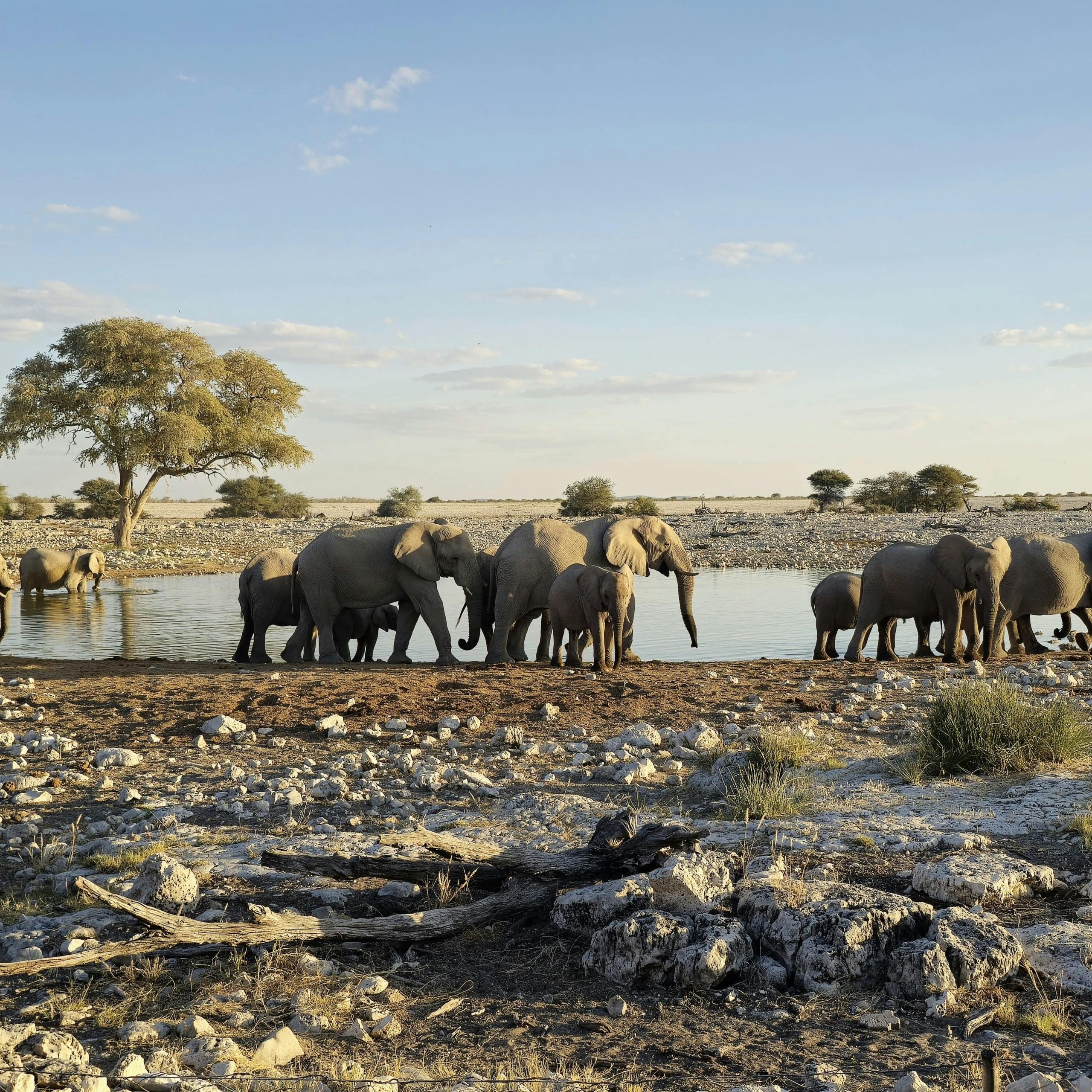
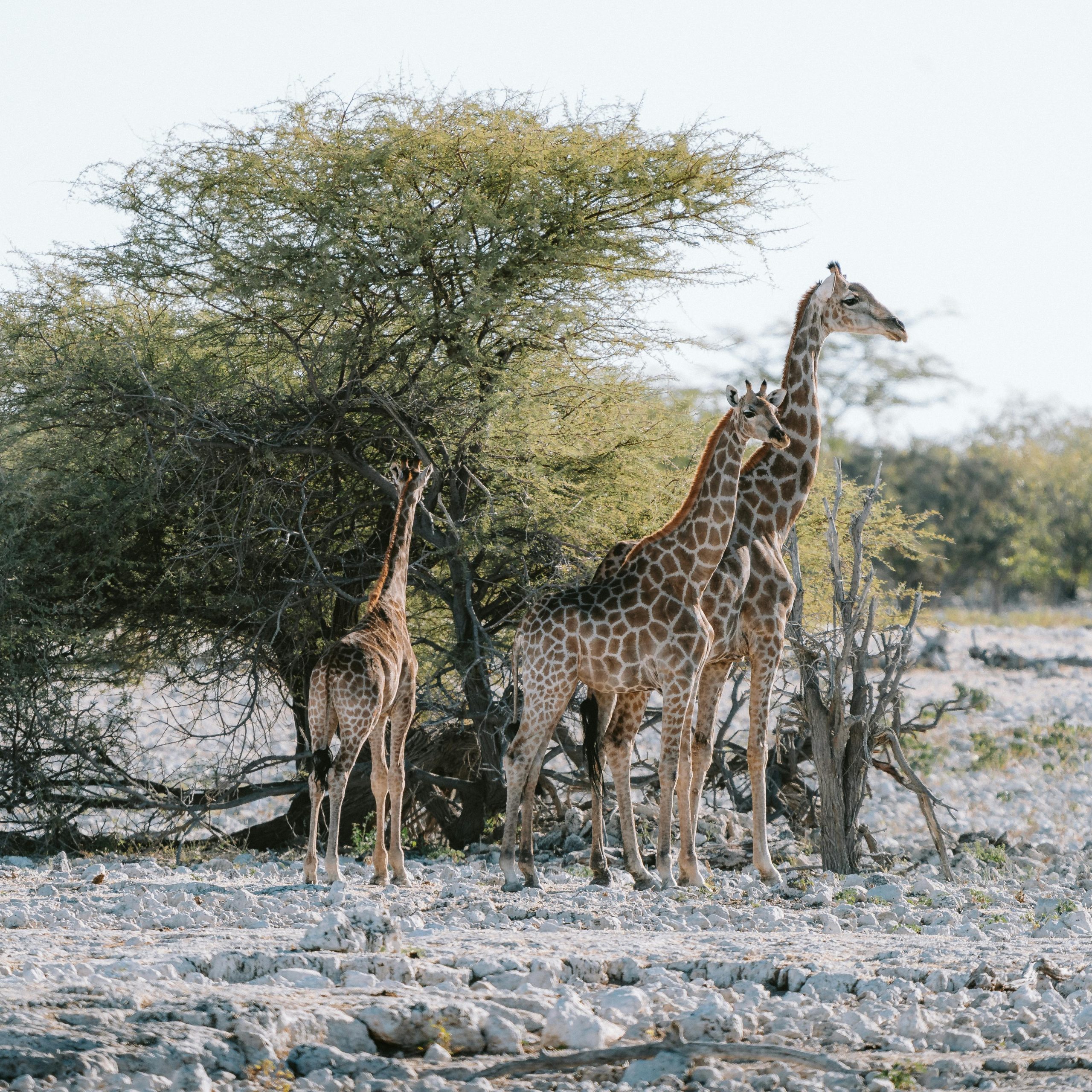
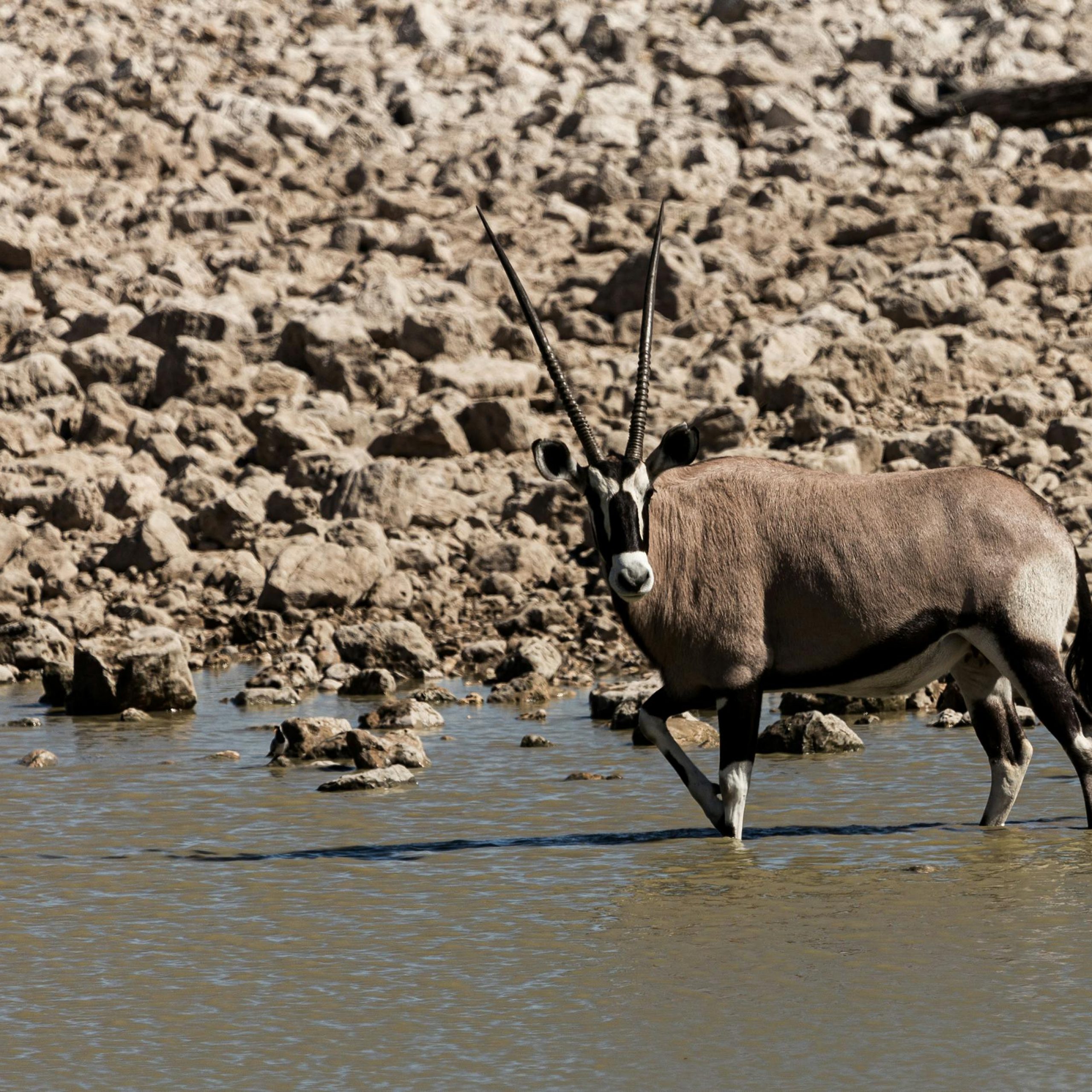
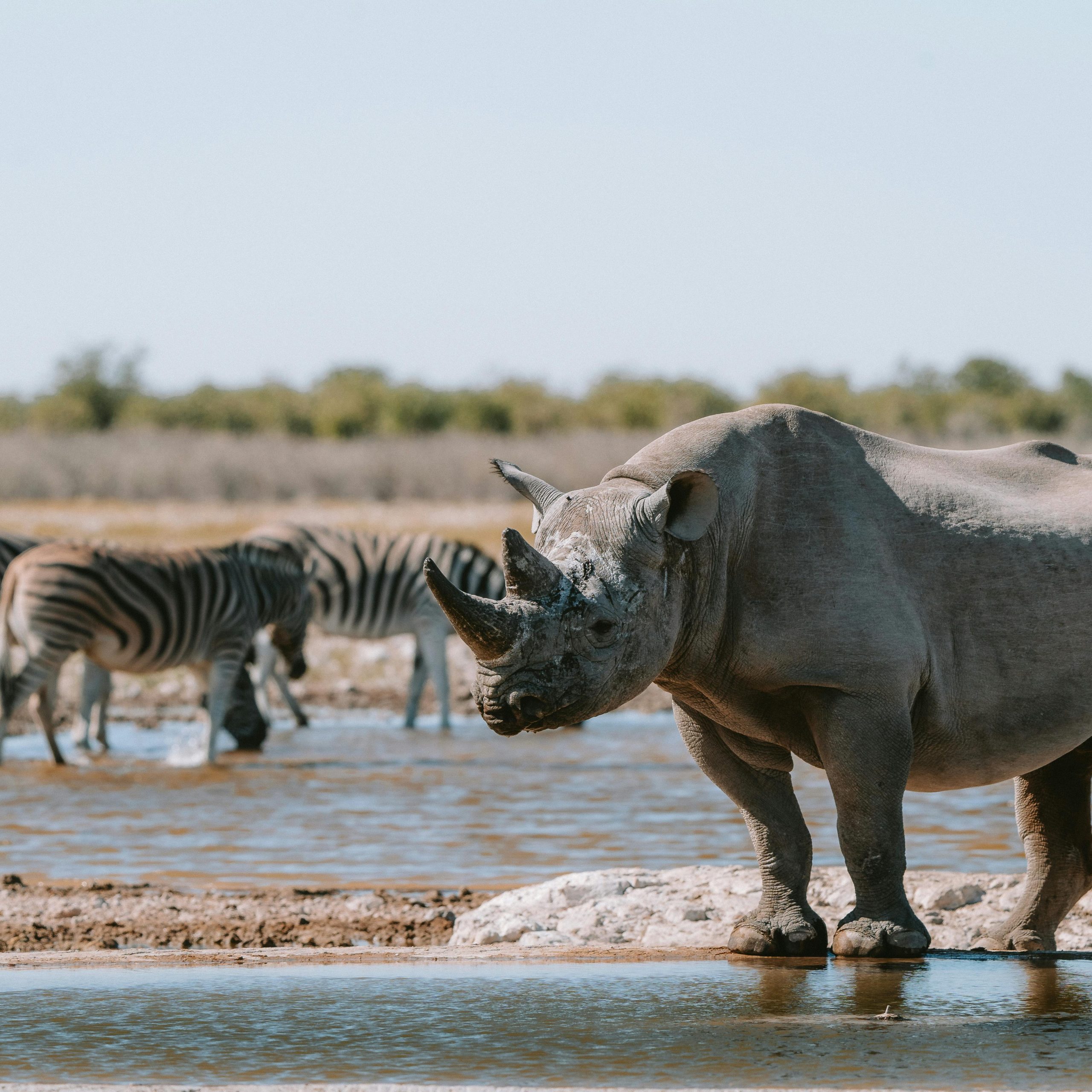
Imagine sitting in the silence, with a cold drink in your hand, as a herd of thirty elephants emerges from the dust, followed shortly by a pride of lions and a solitary black rhino. In Etosha National Park, you don’t go looking for wildlife. All you have to do is find a spot close to a waterhole, sit back and let the wild come to you.
Etosha National Park is arguably one of Africa’s easiest self-drive safari destinations. The Etosha Pan – the heart of the National Park – is a vast, shimmering salt crust that is so large it can be seen from space! For most of the year, it appears as a ghostly, cracked white puzzle. After the rains, it transforms into a mirror-like lagoon. It is a bucket-list sight to see a giraffe or an ostrich trek across this breathtaking horizon. At African Overland Tours, we are ready to show you how to experience the magic of the wild on a budget. Here is how to make the most of Etosha…
Where to Bed: Inside or Outside
One of the biggest decisions you will make is deciding where to get the best night’s rest. Staying inside the park is a safari-pro choice. There are three main campsites:
Okaukuejo is famous for its incredible floodlit waterhole .
Halali is centrally located with great leopard sightings.
Namutoni is an old German fort in the east.
Our budget advice: Book at a campsite. These are inexpensive, are spacious, have power points and give you access to the park’s best feature: night viewing! You can sit at the floodlight waterholes until 02h00 am watching lions drink water or rhinos battling it out – an experience that can only be lived if you reside in the park.
Staying outside the park is the value choice. The park camps do get full with travellers booking them months in advance. Just outside the gates are the:
Etosha Safari Camp, which is located just south of the Andersson Gate. This spot features the legendary “Shebeen” bar which hosts a groovy atmosphere and live music.
Community Campsites are run by local communities further from the gate, but at the lowest possible rate.
Travelling Around
You could fly into Windhoek and rent a fully equipped 4×4, but this is not necessary. The roads in Etosha are well-maintained gravel. To save a fortune in rental costs, a standard 2WD vehicle is often recommended for driving during the dry season.
An even easier option is a budget overlanding tour! At African Overland Tours, the ultimate stress-free way to see the park is through our tours where we take care of the vehicles you travel in for you. This also includes your park fees, meals, gear, and the expert advice and insights from a professional guide who knows exactly which waterholes animals are frequenting.
When to Go on Safari
This depends on what you want to see, essentially. The Dry season (May to October) is considered prime time. Animals congregate in massive numbers around the water holes, which means great wild viewing. The weather is mild during the day, and chillier at night. The Green season (November to April) is when the landscape turns green and lush! It is a bit more challenging to spot animals in the thick vegetation, but it is the best time for birdwatching to witness newborn calves entering the world. It is also a quieter time, which means prices drop extensively.
Our Top 10 Insider Tips for a Budget Etosha Safari
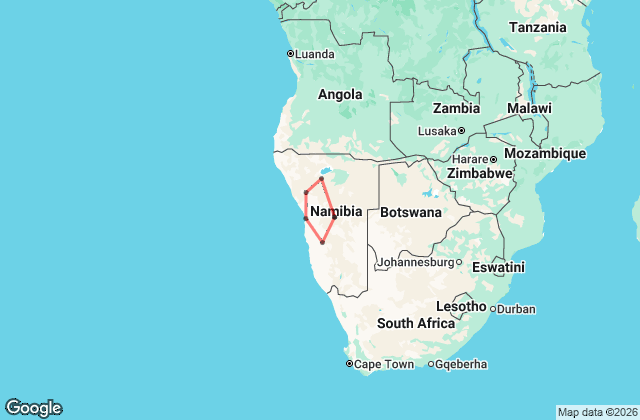
The campsites in Etosha are the best value in Namibia, and they fill up 6-12 months in advance! Plan ahead and book the campsites early. Instead of staying in only one camp, use the stay-in-the-middle strategy. Spend a night at all three campsites: Okaukuejo (South), Halali (North) and Namutoni (East). You get to see the entire park and it saves you fuel.
Be your own Master-Safari-Chef! The restaurants inside the park are pricey. Every campsite has a braai (BBQ) stand and a communal kitchen, so why not visit the local grocers in Windhoek or Outjo, stock up on wood and meat, and have a braai under the stars.
Wildlife is most active at sunrise and sunset, so make the most of the free golden hours. You don’t need the expensive guided night drives; just be at a waterhole when the gates open at dawn, or around sunset and watch the wild come to you.
It’s easy to get a bit lost and unsure when driving from one place in the National Park to the next. That is why it is essential to use the Etosha App or buy a paper map at the gate. It shows you the distances between the waterholes, making navigating a whole lot easier!
The worst feeling is being out and about and needing a quick charge. And while the campsites have power points, they can sometimes be temperamental. Pack a power bank and carry it with you while you explore, keeping your camera charged and ever ready to capture something magnificent.
No safari is complete without bringing binoculars. You will also save money by having your own eyes and not needing those of a guide. With your trusty binoculars you will easily be able to spot a leopard in a tree from 200 meters away – so come prepared.
If you need to fuel up your vehicle (or fuel up on water, snacks, charcoal), visit the town of Outjo or Tsumeb before you enter the park. The prices are cheaper compared to those in the park.
If you are a solo traveller, renting a car can be pricey. Check the hostel boards in Windhoek to find a safari mate! You can split the vehicle and fuel costs, share snacks and stories, and possibly make a new friend. If you don’t mind the costs, you could also opt for a self-drive safari, or if you prefer company, join a budget group safari instead of booking an expensive guided tour. Renting a vehicle does give you freedom to explore the park at your own pace, and invites more flexibility to your budget and schedule.
The best way to see the animals (which is completely free) is to enjoy and respect the silence. Turn off your engine at a waterhole and wait – enjoy the silence that surrounds you, and in time the sights that come in front of you too.
If you decide to camp in the park, make sure to bring your own camping gear to avoid rental fees. You’ll need to bring your own tent, sleeping bag, cooking utensils, and other camping essentials. Remember to adhere to the park regulations and rules, as fines and penalties can impact your budget. A quick check on the park’s regulations and guidelines will ensure you are in the clear.
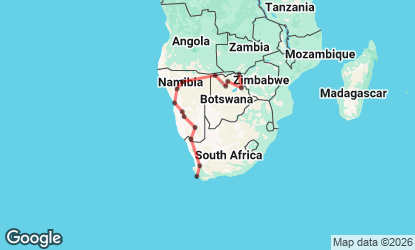
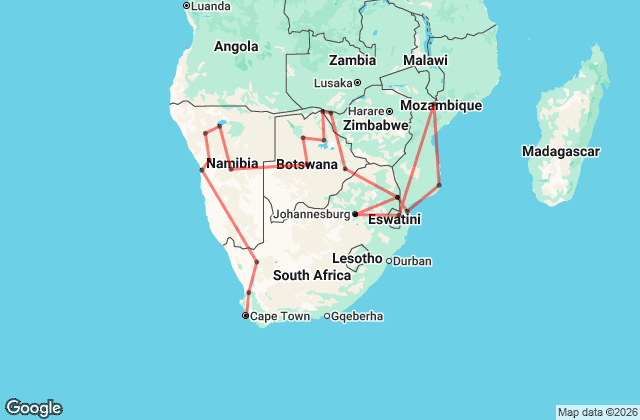
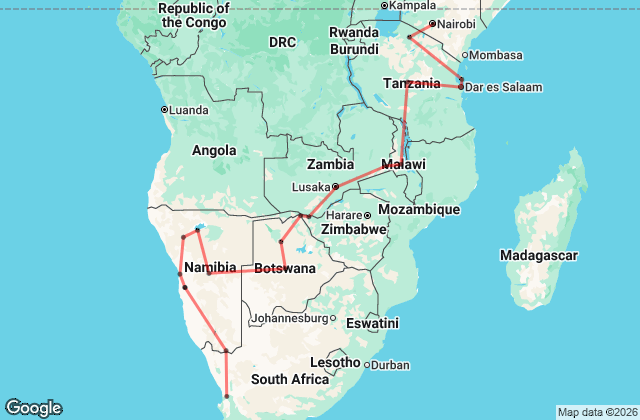
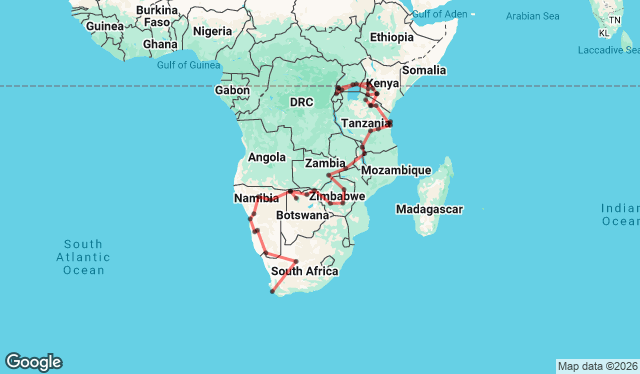
At African Overland Tours, traveling on a budget is not just doable. We make sure you capture every moment of a safari tour, without compromising on the adventure or breaking the bank. Whether you’re feeling for a quick 3-day getaway or a 25 day epic adventure, we’ve got a budget safari that stops in Etosha!
N.B: This blog was first written by Sarah Duff on November 18, 2025. It was rewritten and republished by Faatima Suliman on February 26, 2026.