

African Overland Tours
https://www.facebook.com/AfricanOverlandTourscom/
https://www.instagram.com/african_overland_tours/
https://www.youtube.com/@africanoverlandtoursandsafaris
+27 (0) 21 448 0997
Customer Service
Worldwide

African Overland Tours
https://www.facebook.com/AfricanOverlandTourscom/
https://www.instagram.com/african_overland_tours/
https://www.youtube.com/@africanoverlandtoursandsafaris
+27 (0) 21 448 0997
Customer Service
Worldwide
A Great Migration safari doesn’t come cheaply, but here are some ways to reduce the overall price tag
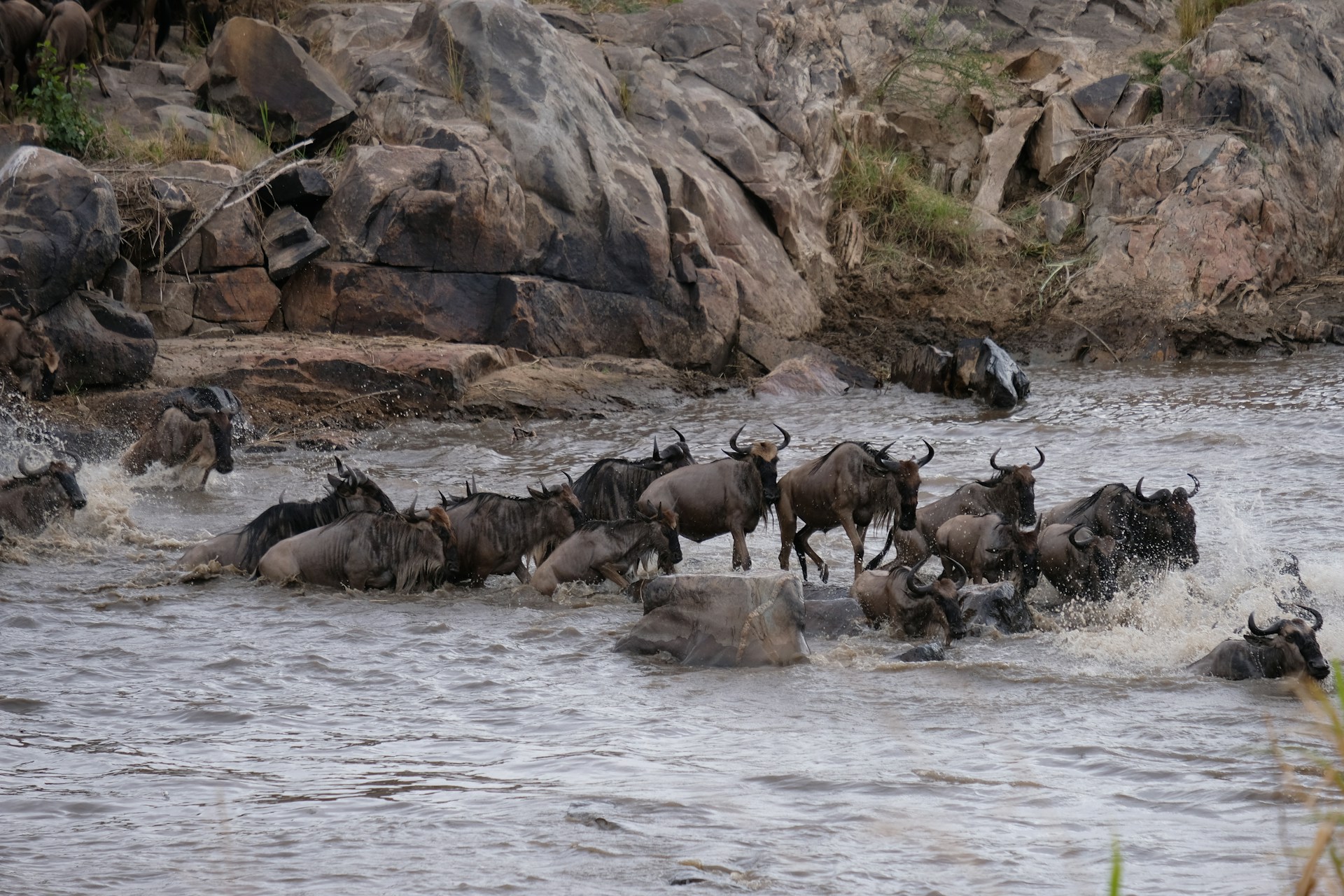
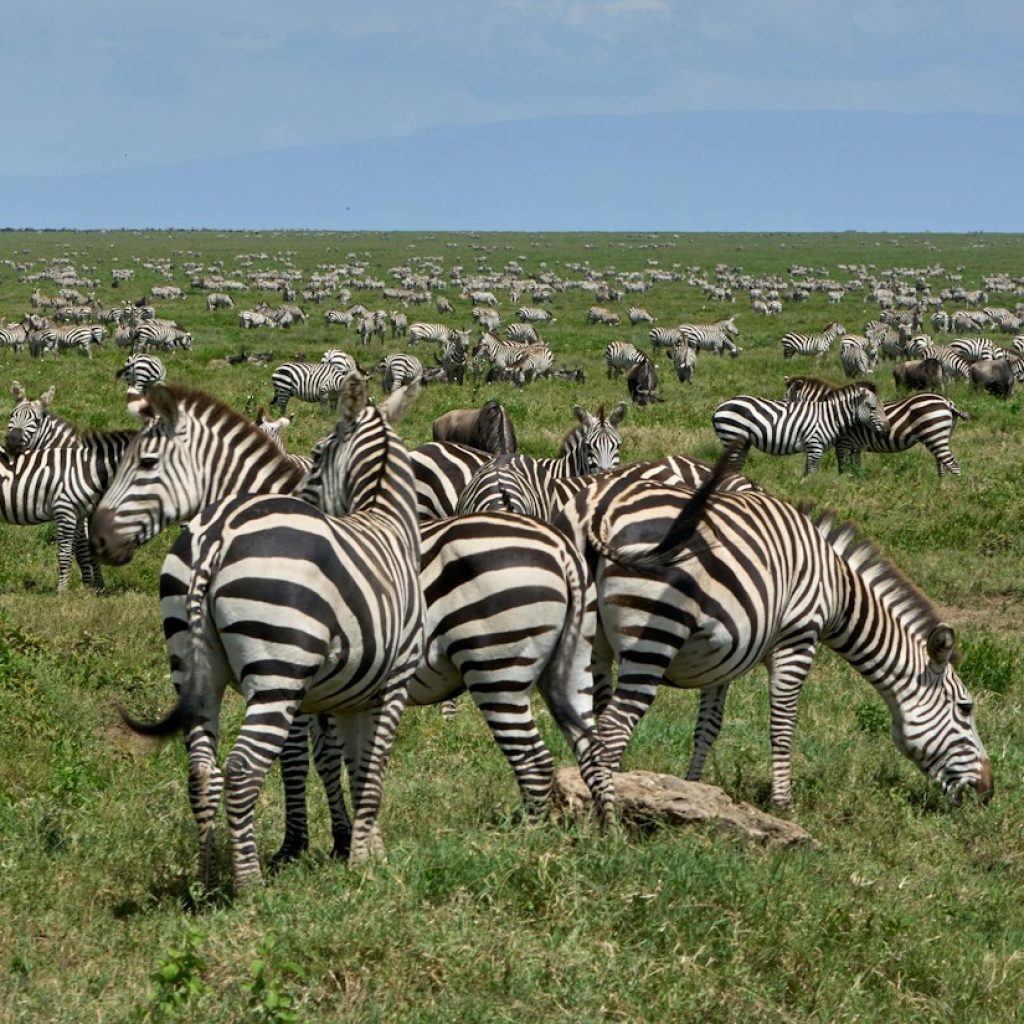
There are two places you can visit to witness the spectacle that is the Great Migration: Serengeti National Park in northern Tanzania and Masai Mara National Reserve in southern Kenya. The Serengeti hosts the migrating herds from roughly December to August. The herds then move into the plains of the Masai Mara from roughly August to December of each year.
The Serengeti and Masai Mara offer equally incredible Great Migration safari experiences. So for many travellers, the decision to head to Kenya or Tanzania is dictated by the time of year when they have leave, or where else in East Africa they wish to visit before and after. If, however, you wish to choose a country based on which offers a cheaper Great Migration safari overall, then know that the Serengeti is cheaper overall because of its significantly lower daily park tariffs. I elaborate on this below.
First, however, I outline four cost-saving principles that apply to Great Migration safaris in both Kenya and Tanzania.
I discuss below the main ways to keep your costs down on a Great Migration safari.
Two of the daily tariffs charged by both the Masai Mara and the Serengeti can be eliminated if you choose to stay outside of the park.
That said, as I discuss in How to visit the Serengeti on a budget, sleeping outside of a very large park isn’t always practical, nor desirable. If your wallet is very lean, however, then this might be a necessary choice, as it reduces your daily tariff total substantially.
Specifically, a foreign adult overnighting in a public campsite in the Great Migration sector of the Masai Mara during peak season must pay US$240 in conservancy and camping fees for that privilege. For the Serengeti, you must pay US$106 in peak season to overnight at a public campsite inside the park. (Note that sometimes the camping fee is included in the campsite’s booking fee.)
So you can save a great deal per night by staying outside of either park.
The better option when you take all factors into consideration (versus only thinking about the budget) is camping in one of either park’s public campsites. The cheapest public campsites in both parks let you camp for around US$30 to $45 per person per night.
There are other affordable accommodation options on offer in both parks, like budget glamping and budget lodges. These range greatly in price depending on facilities, but yet again, there isn’t much difference between the Kenyan and Tanzanian offerings.
If you can afford to stay inside one of the parks, do that. It’s a more immersive and enjoyable experience than staying outside of the park. It also means a little less driving each day.
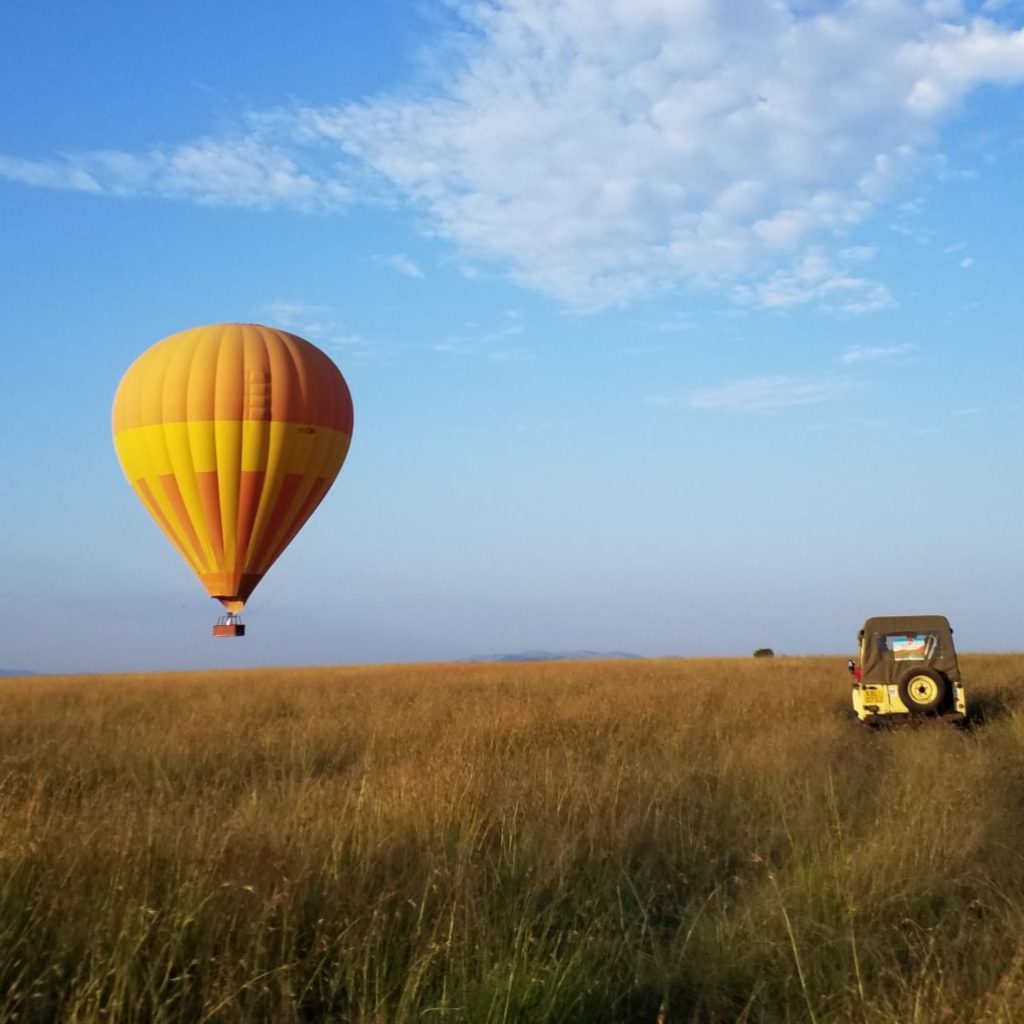
If your Great Migration safari is part of a long overlanding trip, then a self-drive safari is the cheapest option. This is because you eliminate the tour operator’s fee, which includes paying the salary of a driver-guide.
Do, however, consider how much research and admin you’re adding to your plate if you do a self-drive safari, especially if that safari includes crossing national borders. Also note that you pay slightly higher tariffs at both the Serengeti and Masai Mara if entering in a vehicle registered outside of the country.
If you don’t wish to handle the various and time-consuming logistics of a self-drive safari (which are many, as discussed here), then the most affordable way to see the Great Migration is with a budget group tour operator.
Tour operators are often able to access agent discounts not open to the public. Moreover, group travel offers various savings, which I’m sure I don’t need to explain. That said, I will point out that the 24-hour vehicle tariff at both parks (which is around US$8 to $9 per day for locally registered vehicles) is reduced when split between a group. So whether joining an organised group safari or doing a self-drive, you want your vehicle to be full if you’re at the point of counting pennies.
Finally, remember that, as is the case around the world, you’re going to be charged extra if you want your own room. So if you’re going to be staying in permanent accommodation, travel with someone else or ask your operator if there’s another solo traveller you can bunk with.
African Overland Tours is a budget small-group tour operator that offers affordable, value-for-money Great Migration safaris. Check out their affordable Great Migration safaris.
The cheapest catering option is buying and preparing your own meals. Note, however, that you’ll need to have a refrigeration system, and not every public campsite has reliable electricity. What’s more, you’re going to need to purchase most of your foodstuffs in a city or town before heading into the park.
Most budget tour operators put you up at pemanent campsites or budget lodges where all meals are inclusive. The meals are usually tasty and generous, and great value for money. Do consider carefully the value you place on ease and convenience when it comes to meals.
Whether you choose to do your own meals and book an all-inclusive accommodation, bring your own snacks to the park. The foods on sale inside the park come with understandable markups.
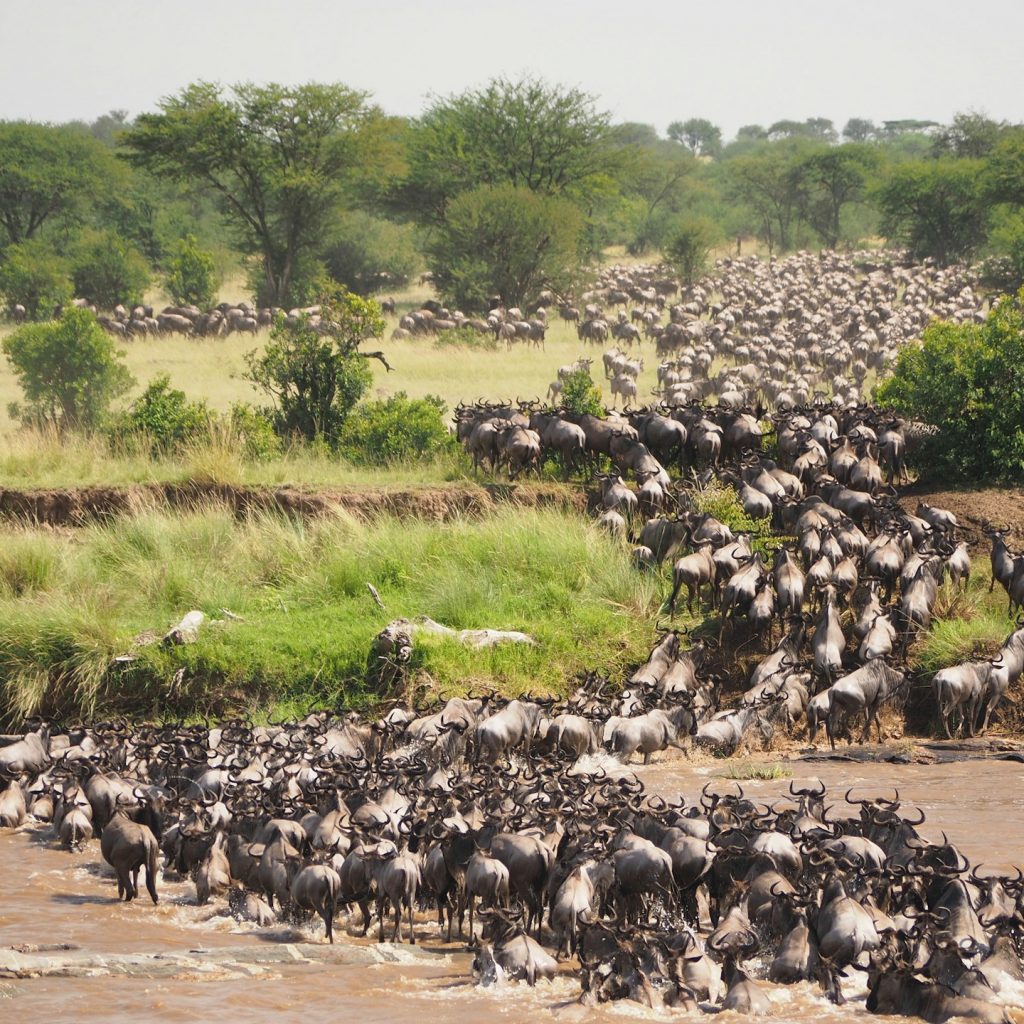
As I discuss in just a moment, both the Serengeti and the Masai Mara charge visitors multiple daily tariffs just to be in the park. So the number of days you visit either increases your trip budget notably.
In the Masai Mara, the 2026 peak season entrance fee is US$200 per adult. The Serengeti charges US$83 for the same. And this is just the entrance fee – there are other daily fees too, as discussed below.
I recommend giving yourself at least two full days for viewing the Great Migration. You want to balance saving money with the fact that you’ve already invested a great deal of time and money in getting to the region to see the phenomenon.
Both the Serengeti and the Masai Mara charge 24-hour entrance, conservancy, accommodation, and vehicle tariffs. These tariffs do, however, add up to far more in the Masai Mara.
A non-East African adult who enters the Masai Mara in a smaller, locally registered vehicle and overnights at a public campsite is going to pay about US$450 in total tariffs every 24 hours. Someone doing the same in the Serengeti is going to pay about $200. So as you can see, you pay more than double per day in tariffs to be in the Masai Mara than to be in the Serengeti.
Given the fact that the other significant monetary considerations (like accommodation) aren’t particularly different by park, you can see that the Serengeti offers notably more affordable Great Migration safaris than the Masai Mara.
Note: This blog post was first written and published by Sarah Duff on 19 May 2024. It was rewritten by Megan Abigail White on 3 February 2026.
"*" indicates required fields