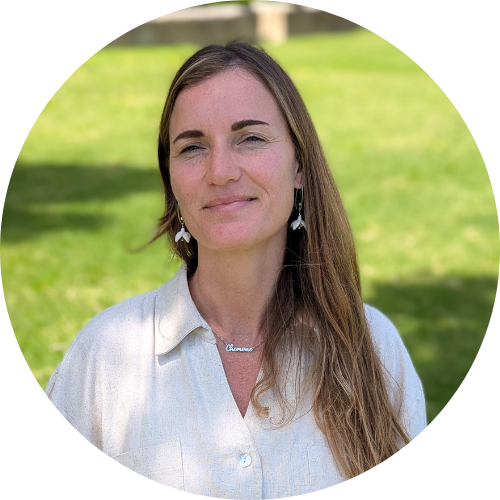
Is the feeling of selling everything and starting a new life growing on you? Then Gina’s story is just for you.
Gina Harlow is a US-based Project Manager who has spent four years working remotely while travelling solo through 57 of 197 countries, including a 14 day Namibia and Botswana overland tour. Her story shows how to pitch remote work to an employer, budgeting for long-term travel and moving through the world confidently as a solo female traveller.
Who is Gina?
Job: Project Manager at a US software company, working remotely full-time since 2021
I would like to think that Gina’s story starts like a lot of digital nomad stories: a breakup that cracked something open. At 30, working as a Project Manager and living in a small US town, she realised she’d been “Humpty Dumpty-ing” herself back together after every setback instead of actually changing anything. So she sold almost everything she owned and turned travel into a full-time way of life.
Four years later, she’s visited 54 countries, kept her career intact, and built a financial system that lets her save money while living out of a single suitcase.
Gina’s 4-Step Framework on How to Pitch Remote Work to Your Employer
This is the question Gina gets asked most, and her answer is more practical than “just ask.” Before she ever left the US, she worked backward from every objection her company might raise and built a proposal that pre-empted each one.
Be indispensable first. Do excellent work and provide real value before you ask for flexibility. It gives your employer a reason to want to keep you happy.
Pitch smart, not big. Gina didn’t open with a full-time nomadic pitch. Her first proposal was six months in Latin America specifically because the time zones aligned with US business hours, minimising disruption to clients and colleagues.
Address every concern upfront. She worked backward from likely objections, tax implications, IT security, time zones, and brought in HR, tax specialists, immigration specialists, and IT before she ever asked for a final yes.
Start with a “workation.” If full-time nomadism feels like too big an ask, Gina suggests proposing one week per quarter working from a different location first, proof of concept for both sides if you will.
Twelve years and roughly 15 roles later, she’s stayed with the same company throughout, proof that remote flexibility and career growth aren’t mutually exclusive.
Catch The Full Interview Here
4 Lessons from 4 Years of Full-Time Travel
People are mostly good. Despite what the news and internet strangers say about “dangerous” places, Gina consistently finds people are kind, helpful, and less different from her than she expected.
Balance prevents burnout. As a self-described “bucket list traveller,” she learned that trying to do everything leads straight to burnout, and an unfinished list is just an excuse to go back.
Flexibility is freedom. A self-professed planner, Gina now only books the first couple of weeks in a new place, leaving room to follow a local’s tip or a new friend’s suggestion.
Pack less than you think you need. The cliché is true, most of what feels essential at the start of a trip turns out not to be.
Budgeting for Long-Term Travel: A Digital Nomad’s Financial Toolkit
Gina calls a strong “financial ecosystem” one of the most important parts of sustainable long-term travel. Her key habits:
Travel to build savings, not deplete them. She avoids overspending on luxury accommodation specifically so her travel funds her future rather than draining it.
Budget for pre-booking spikes. Peak-season months often mean paying for flights, accommodation, and excursions all at once, she plans for the higher credit card bills that come with it.
Function over aesthetics. A workspace and a washing machine beat a “cute” Instagram-worthy room every time when you’re staying somewhere for weeks, not days.
Use the right financial tools. An international ATM card that reimburses withdrawal fees and a local SIM or eSIM (instead of $10-a-day international roaming) can save hundreds of dollars a month.
Solo Female Travel Myths, Debunked
Gina has heard every warning in the book about travelling alone as a woman, usually from people who’ve never actually been to the place in question. Her response: go and find out for yourself.
“That fear dissipates over time, or you compartmentalise it. Before I go to a new region I don’t know, I get nervous, my parents have seen my meltdowns before trips. I just do it anyway.”
She’s candid that the fear doesn’t disappear — it’s not that solo travel is “easy” for her and hard for everyone else. The difference is she moves through the nerves instead of letting them stop her: what she calls doing it scared. It’s the same idea her AOT contact described as moving from your comfort zone to your growth zone — the discomfort is the point, not a reason to avoid it.
Why She Chose to Overland Africa
By her mid-thirties, Gina’s travel style had shifted from the fast-paced group tours and $6 hostel dorms of her twenties toward something slower. For her Southern Africa trip, she worked with AOT consultant Celia rather than planning it herself — a deliberate choice, since researching and booking every detail is exactly the kind of work she does all day as a Project Manager.
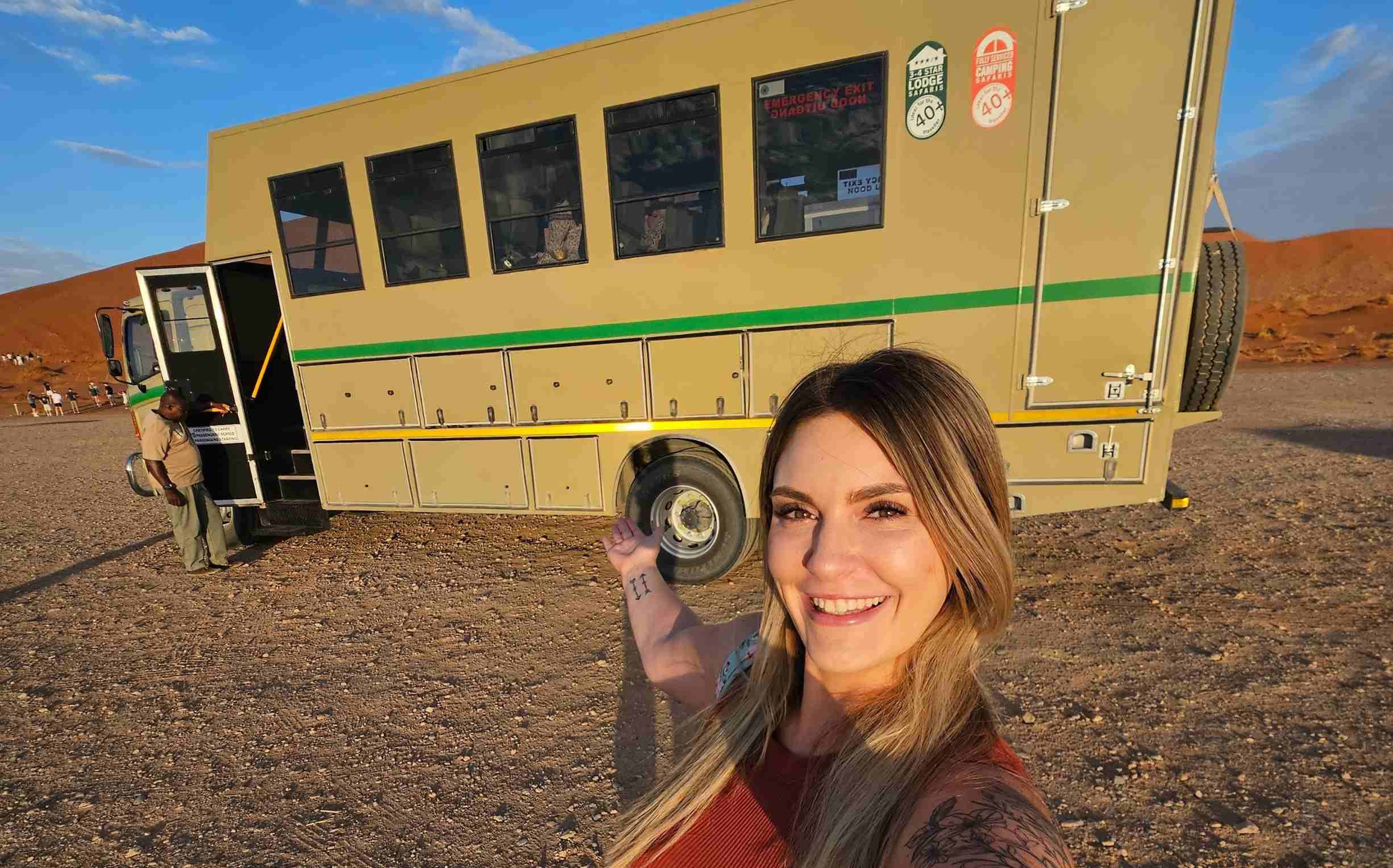
She compared the experience directly to other operators like G Adventures and chose African Overland Tours for the pace: mid-tier accommodation, her own room and bathroom where possible, and built-in downtime every day, rather than a packed, go-go-go itinerary.
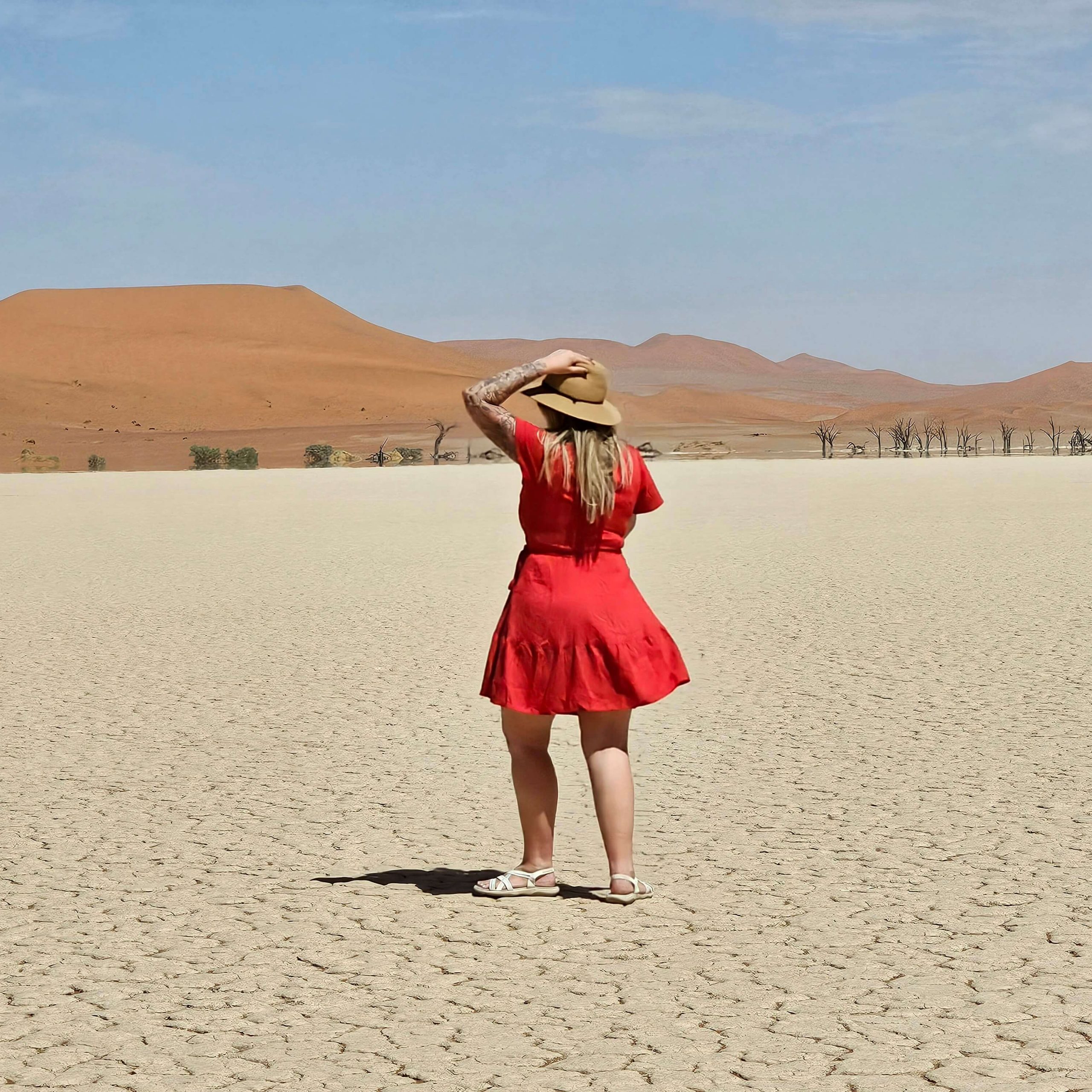
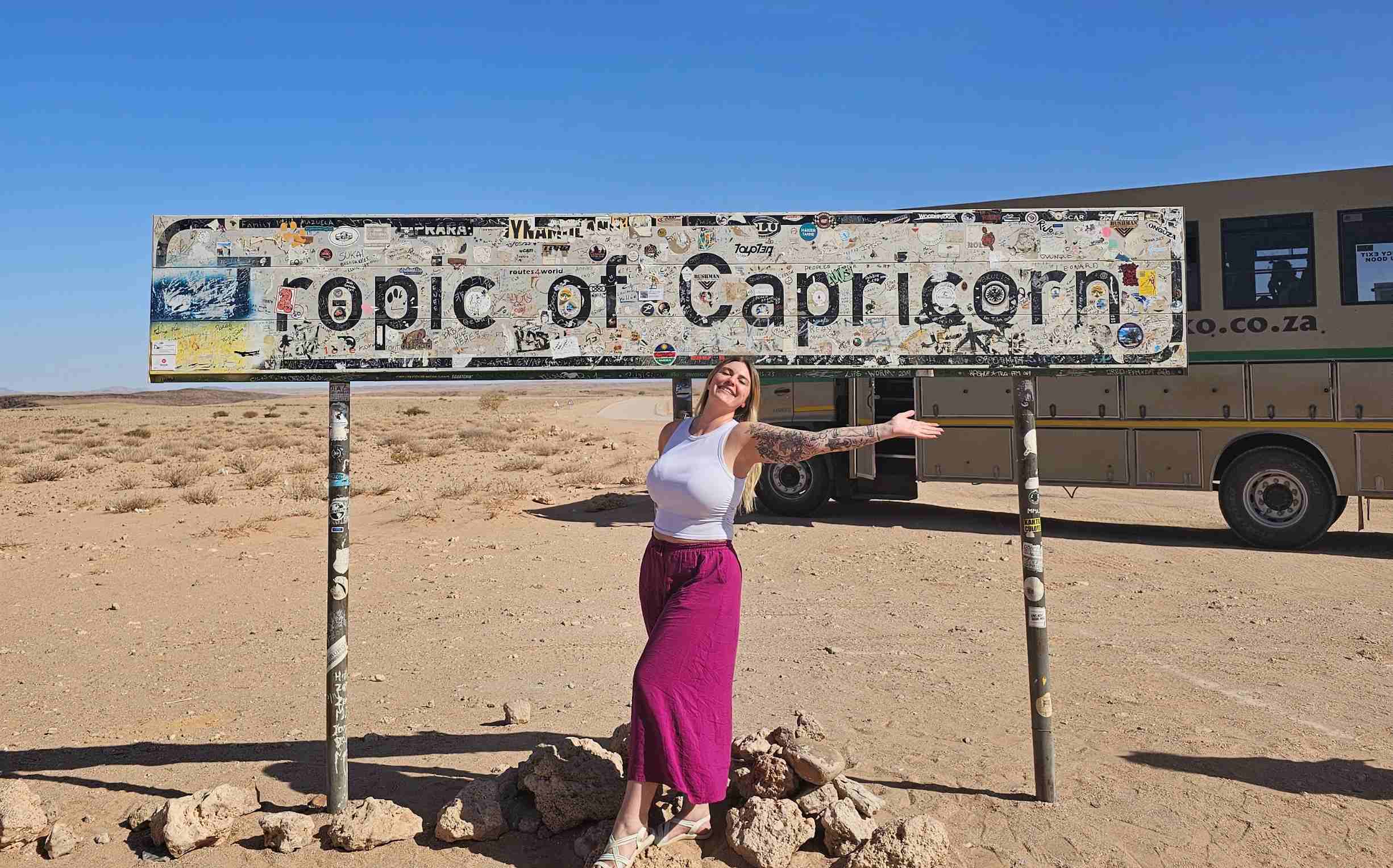
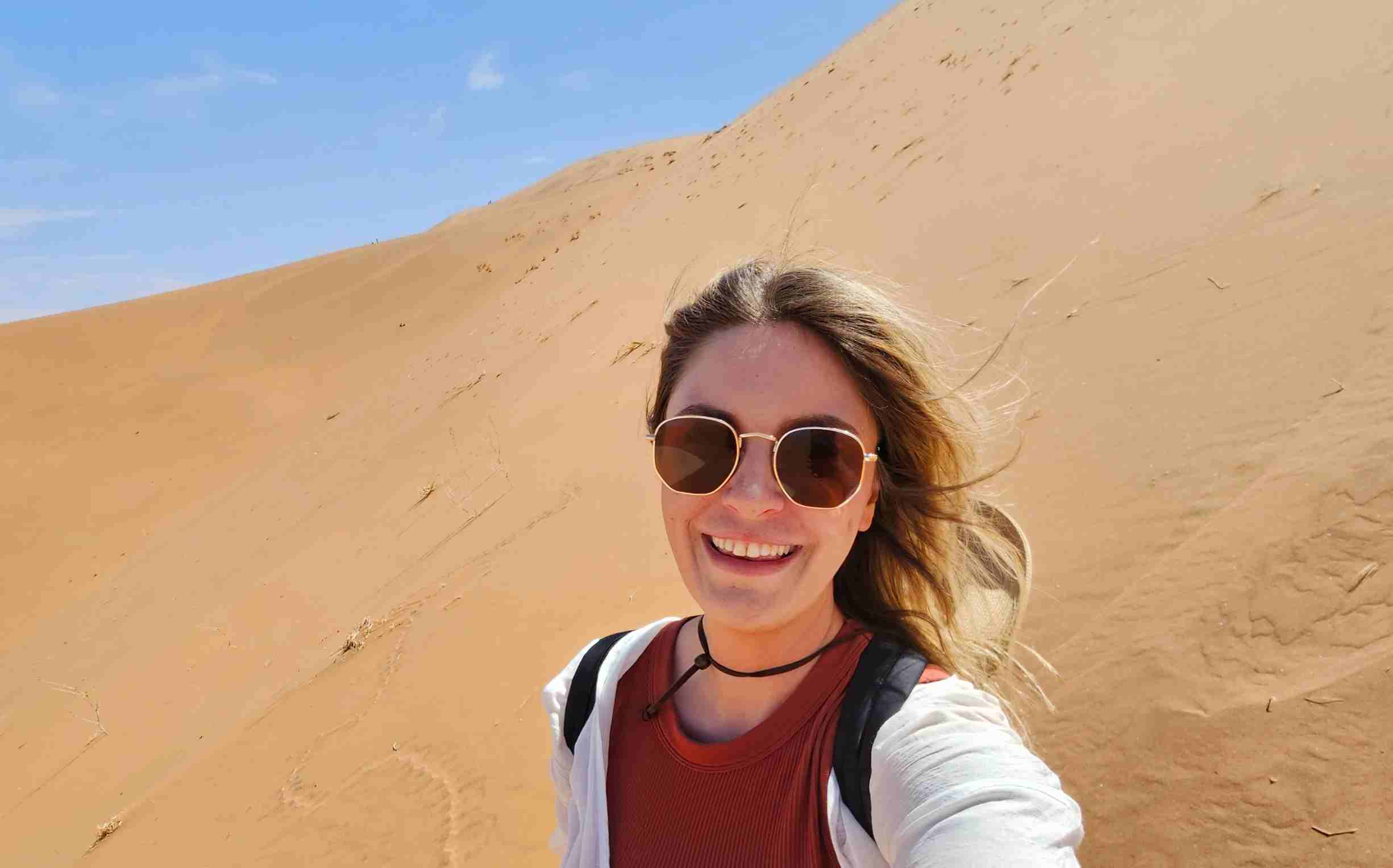
Her route was the 14-Day Namibia & Botswana Tour, 13 nights in 3-4 star accommodation from Windhoek to Victoria Falls, taking in Sossusvlei, Etosha National Park, the Okavango Delta, and Chobe National Park. She’d based herself in Cape Town for two months beforehand, working during the week and exploring on weekends, and specifically carved out this stretch as a true, offline holiday.
Namibia’s vast desert landscapes stood out as somewhere she doubts she could have worked from as a nomad, given the limited WiFi infrastructure — which made experiencing it as a dedicated trip, rather than a work base, the right call. On safari, one encounter stayed with her: her vehicle was surrounded by a herd of around 60 elephants with newborn calves, close enough that the curious babies came right up to the truck.
Gorilla, Golden Monkey & Chimpanzee Trekking in Rwanda and Uganda
For her birthday, Gina took on a bucket-list trip she’d wanted for years: a week combining gorilla trekking in both Rwanda and Uganda, golden monkey trekking in Rwanda, and chimpanzee trekking in Uganda. She expected the gorillas to be the highlight, and they were, but the chimps surprised her as an experience in their own right rather than an add-on.
Just as memorable were the community encounters in the highlands outside Uganda’s national parks, where she found people proud to share their communities with visitors, a reminder that the wildlife is only half the story on an African overland trip.
Her Most Memorable Experience: What If Something Goes Wrong?
Ask any nervous first-time solo traveller what they’re afraid of, and it’s usually some version of: what if something bad happens and I’m alone?
Gina’s answer to that fear is also her most memorable travel story. In 2021, she had emergency spinal surgery in Mexico City and was temporarily paralysed from the waist down for six days, alone, in a country where she didn’t speak fluent Spanish. A local Mexican couple got her to the right hospital and stayed by her side through the ordeal. She’s still in touch with them today; they message each other every year on the anniversary.
Her takeaway isn’t that nothing bad can happen. It’s that the worst-case scenario people fear about solo travel can happen just as easily at home, and when it happens on the road, strangers are far more likely to help than most people expect.