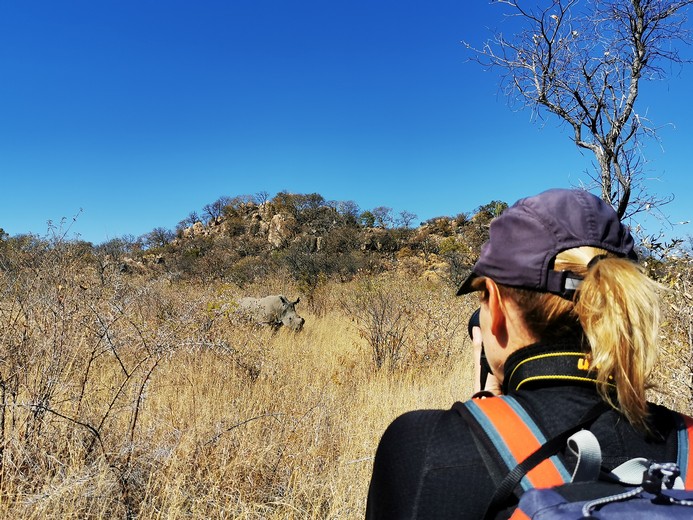
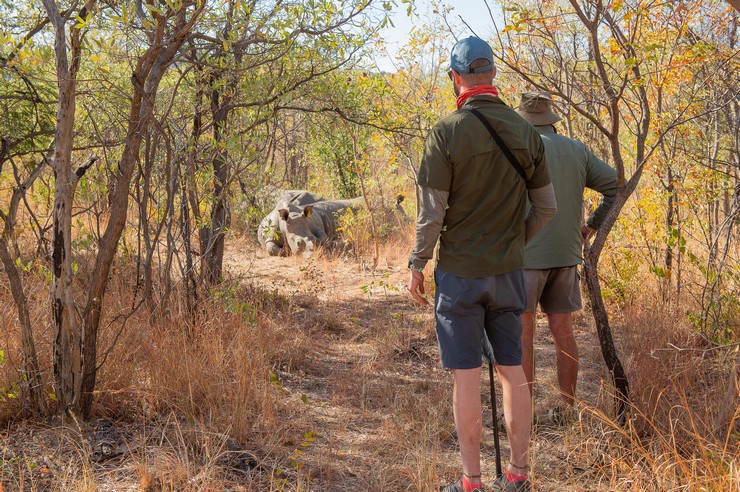
Seeing a wild rhino on an African safari is an unforgettable privilege. Whether it is a massive White Rhino grazing peacefully near your truck or a rare Black Rhino slipping into the dense thicket, these prehistoric giants are a highlight of any overland tour.
But behind the breathtaking sightings lies a desperate battle for survival. The African rhino is fighting a war against organized wildlife crime. To truly appreciate these animals, you need to understand the realities of the poaching crisis, the incredible work happening on the frontlines, and the controversial debates shaping their future.
Watch the Full Masterclass
Before you dive into the facts, watch our complete video breakdown of rhino conservation, including the difference between the species, the poaching crisis, and the ongoing legal debate.
Black vs. White Rhino: The Naming Myth
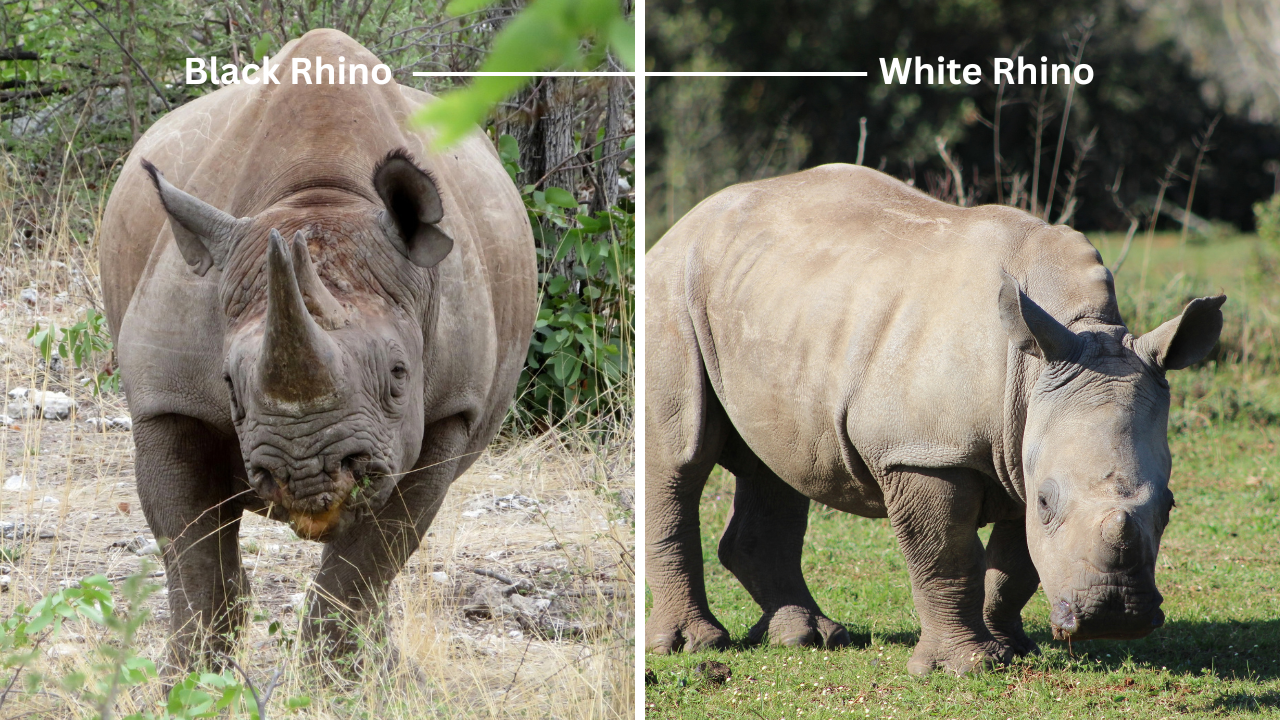
First, let’s clear up a major safari misconception: the difference between a Black Rhino and a White Rhino has absolutely nothing to do with color. Both are a dusty, slate grey.
The name “White” Rhino is actually a mistranslation of the Dutch word “wijd,” meaning “wide,” which described the animal’s broad, flat, square lip perfectly adapted for grazing grass. When the English arrived, they misheard “wijd” as “white.” Later, they simply called the other, smaller species the “Black” Rhino to distinguish it.
Behaviorally, White Rhinos are generally placid and tolerate vehicles well, while Black Rhinos are solitary, highly territorial, and prone to charging if they feel threatened.
White vs. Black Rhino: White Rhinos feature a wide, square lip for grazing grass, while Black Rhinos have a hooked, pointed lip for browsing trees and bushes.
The Poaching Crisis: What the Numbers Tell Us
Historically, an estimated 500,000 rhinos roamed the planet. Today, recent estimates from the 2026 State of the Rhino report place the global population at fewer than 27,000, including roughly 15,750 White Rhinos and 6,780 Black Rhinos remaining in the wild.
The modern poaching crisis erupted in 2008 and hit a devastating peak in 2015, when 1,349 rhinos were slaughtered across Africa in a single year. The driver of this crisis is entirely black-market demand, primarily in Asia, where rhino horn is falsely believed to have medicinal properties and is used as a status symbol. Tragically, a rhino horn is made of nothing more than keratin, the exact same protein that makes up your hair and fingernails.
Recently, official statistics have shown a decline in poaching. In 2025, South Africa recorded 352 poached rhinos, a 16% decrease from the previous year. While this is a hard-won victory for conservationists, the numbers are complex. Poaching rates are dropping partly because organized syndicates are being met with heavier security, but also because there are simply fewer rhinos left to poach in traditional strongholds.
The Frontlines: Private Landowners and APUs
Because massive state-run national parks like Kruger are incredibly difficult to secure against mobile crime syndicates, the survival of the species has increasingly shifted into the hands of private landowners.
Today, private reserves and farms manage over half of South Africa’s national rhino herd. These private custodians have gone above and beyond to hold the line. In 2025, only 25% of all rhino poaching occurred on privately owned land, despite them holding the majority of the animals.
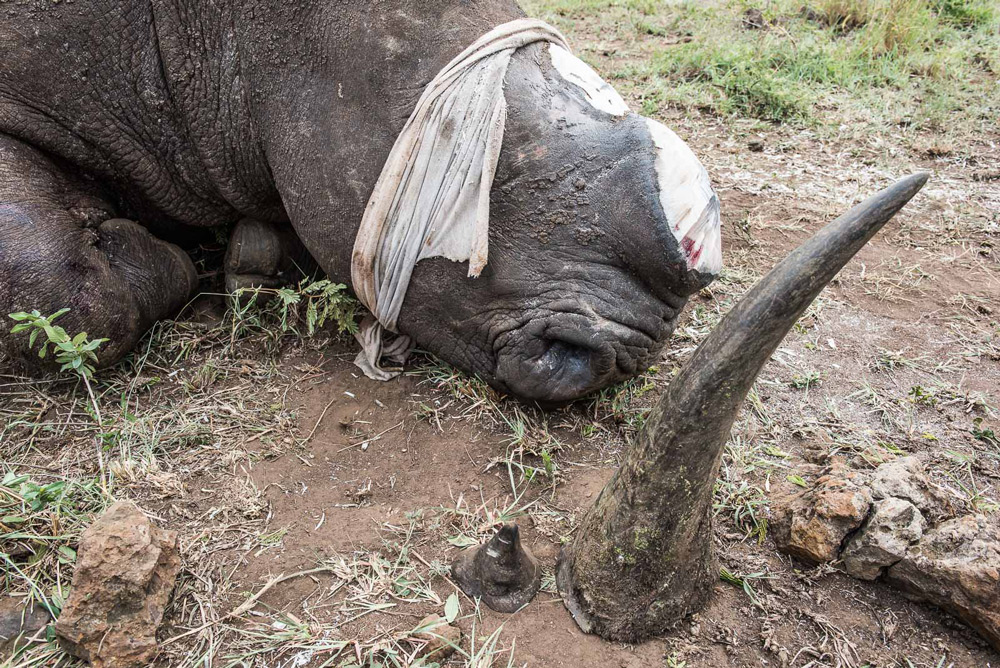
This success comes at a massive financial cost. Private reserves deploy military-grade Anti-Poaching Units (APUs). These heavily armed rangers live in the bush for weeks at a time, supported by high-tech surveillance, helicopters, and highly trained K9 tracking dogs that can run down poachers in the dark. Many reserves have also resorted to strategic dehorning, humanely trimming the keratin horn under veterinary supervision to make the animal worthless to a poacher.
Strategic Dehorning: To protect rhinos from poachers, many private reserves employ veterinary teams to humanely remove the horn, which grows back over time just like a fingernail.
Big 5 Safari, Nature & Wildlife, Waterways & Wetlands, Wilderness Walks, Cultural Immersion, Migration Safaris
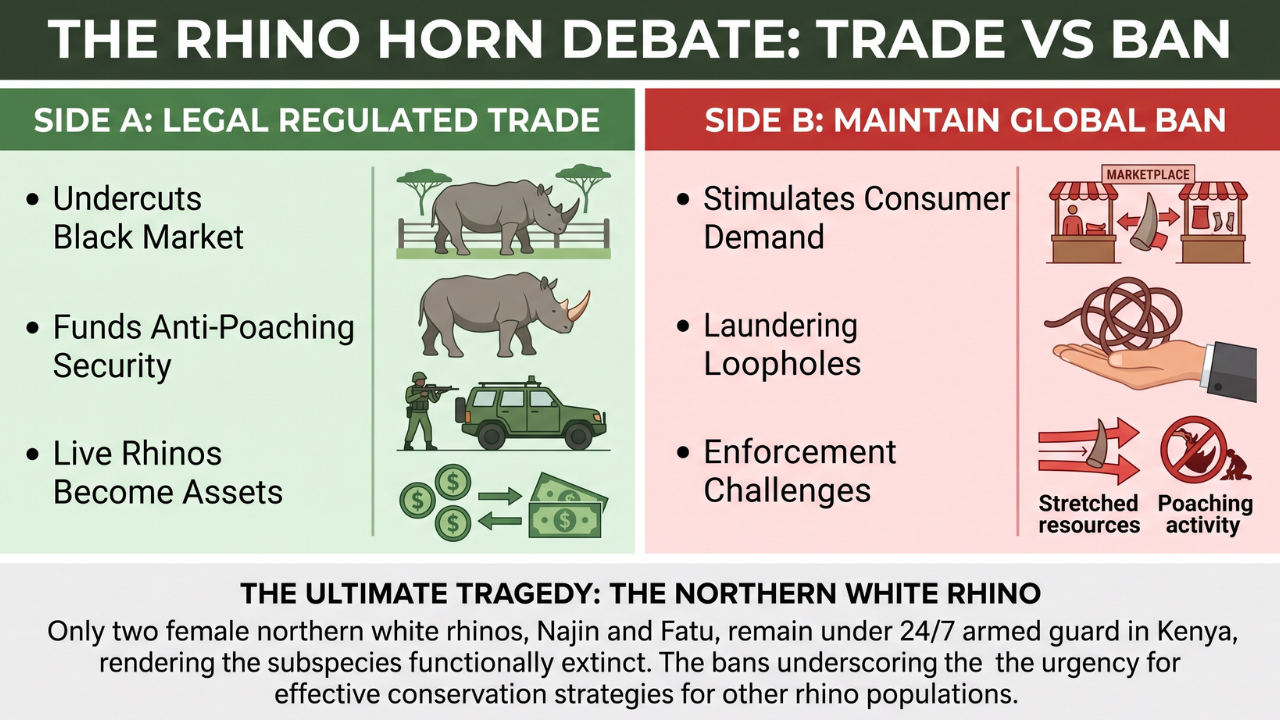
Because the crisis is driven by economics, it has sparked one of the fiercest debates in modern conservation: Should we legalize the international trade in rhino horn?
Side A: Legalize It
The argument for legalization relies on basic supply and demand. Proponents argue that we should flood the market with humanely harvested horns from living, farmed rhinos (since the horn grows back like a fingernail).
Crash the Price: A massive legal supply would theoretically crash the exorbitant black-market price, putting criminal syndicates out of business.
Fund Conservation: The millions of dollars generated from legal sales could be funneled directly back into APUs and reserve management, making live rhinos more financially valuable than dead ones.
Side B: Keep It Illegal
Most global conservation bodies firmly oppose legalization, arguing that a legal trade would spell extinction for the species.
Stimulates Demand: Removing the stigma of illegality could stimulate massive new demand in Asia—a demand that a limited supply of farmed rhinos could never satisfy.
Laundering Loopholes: A legal market creates a massive loophole for crime syndicates to easily launder illegally poached wild horns through legal channels.
Moral Validation: Legalizing the trade morally validates the consumption of endangered wildlife products, undermining decades of demand-reduction campaigns.
The debate over legalizing the rhino horn trade remains one of the most controversial topics in wildlife conservation.
How Your Safari Helps
When you book an African safari, you are actively participating in rhino conservation. The park fees, conservation levies, and accommodation costs you pay go directly toward funding the boots on the ground, the K9 units, and the veterinary care needed to keep these animals safe. Tourism gives the rhino an economic value alive, proving to local communities and governments that wildlife is worth protecting.
Want to see these magnificent animals in the wild and support their survival? Browse our itineraries to find the ultimate wildlife safari: https://africanoverlandtours.com/